


What are ACH payments: How they Work, Costs, and When to Use Them

Content Team

Summary
ACH payments are electronic transfers between bank or credit-union accounts through the U.S. Automated Clearing House Network, which is governed by Nacha. Businesses use them for payroll, supplier payments, recurring collections, tax payments, and other bank-to-bank transfers.
ACH payments are batch-based rather than real-time. Standard ACH may settle the same day, next banking day or within two banking days depending on the entry type, while eligible Same Day ACH can settle the same business day.
There are two types, ACH credits push money out (payroll, vendors). ACH debits pull money after authorization (subscriptions, recurring billing).
ACH payment processing is typically cheaper than cards. Flat or capped fees make it cost-effective for high-ticket invoices and recurring revenue.
ACH is lower cost and built for routine payments. Wires are faster and better for urgent, high-value transfers.
ACH becomes especially useful when a business handles recurring collections, payroll, supplier payouts, or larger bank-to-bank payments where card economics or manual payment workflows become inefficient.
One Aspire account to manage your business finances in one place.
Get a business account¹, issue corporate cards², manage expenses, and automate financial workflows, all from one powerful platform built for modern businesses.
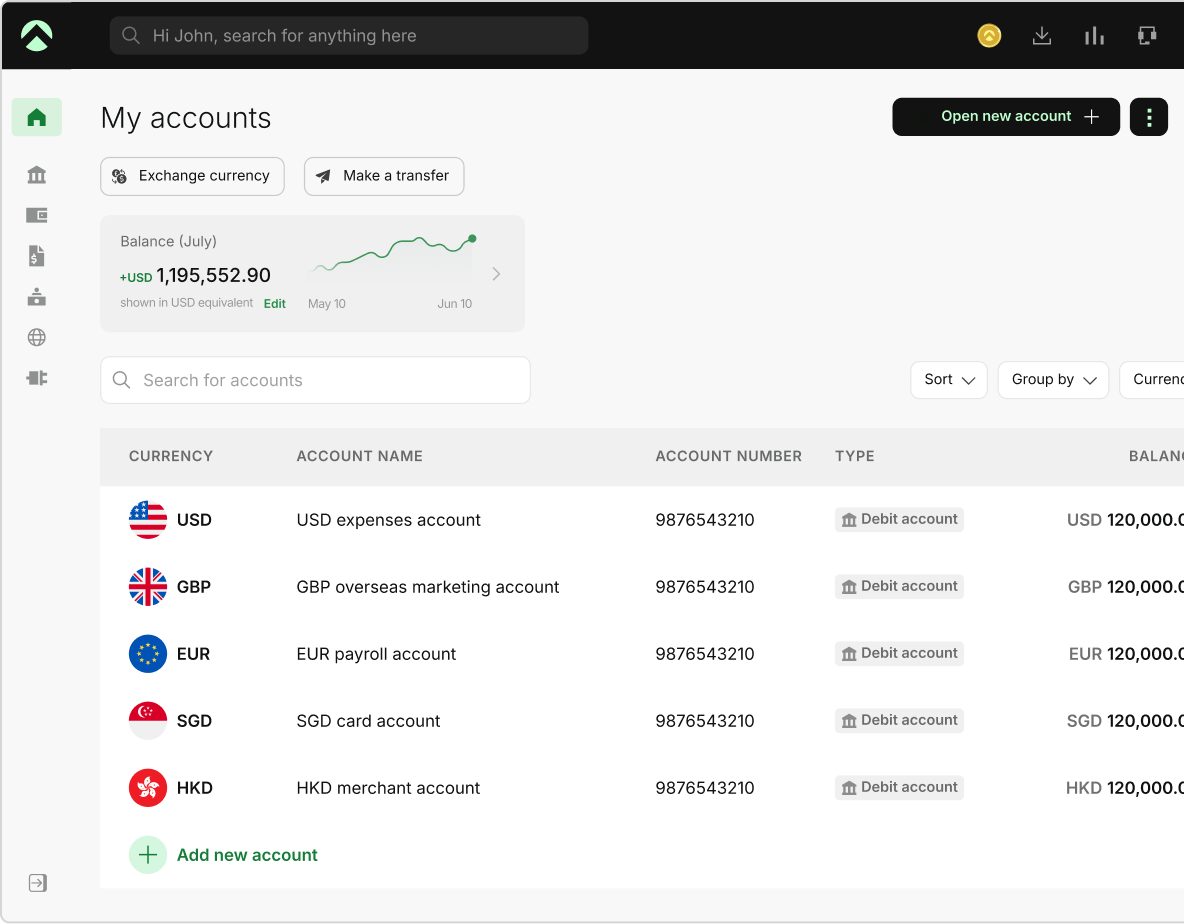
ACH payments are a type of electronic funds transfer that makes payments and deposits faster for US businesses using the Automated Clearing House network. Once transaction size and volume increase, it protects margin, improves predictability, and supports automation.
As you scale your business, you stop thinking of payments as a feature and start looking at them as infrastructure. Be it your first payroll run or the first large invoice, card fees may quietly cut into your margin. This is the stage where the flow of money becomes an operational activity that shapes margins, predictability, and control. This operational flow largely runs on ACH.
If you’re building a business in the US, ACH payments sit at the center of that system. Payroll, vendor payouts, subscription billing, and federal tax payments all move through the Automated Clearing House network. In 2026’s second quarter, the ACH network processed 9.3 billion transactions worth more than $25.9 trillion under Nacha, growing 6.2% in volume. This shows how extensively US-based companies rely on ACH payments.
Despite this, it is important to understand where ACH fits your business, which flows need to switch to bank-to-bank payments, what controls you need, and where a faster payment rail still makes sense.
What are ACH payments
An ACH payment is an electronic bank-to-bank transfer processed through the US Automated Clearing House network. It runs under standardized operating rules set by Nacha, an organization that governs the US ACH network. While the system is specifically built to move funds between US bank accounts and credit unions, certain cross-border transactions may use the International ACH Transaction (IAT) framework.
Unlike wires, ACH payments aren’t instant and don't cater to one-off urgency, and unlike cards, they don’t incur interchange fees or card network fees. These payments are designed for structured, repeatable money movement, such as payroll, recurring vendor payments, monthly/yearly subscription billing, government tax payments, etc. In other words, they support your business's operational flows so you can keep running.
ACH payments and your business
ACH payments don’t automatically fit with every business; they align well based on your business model and stage. The right decision often depends less on industry and more on stage, revenue model, and cash flow sensitivity.
When your business is in the earliest phase, speed matters the most. You are closing your first customers, testing pricing, and reducing friction at checkout. Card payments are easier because they are instant, faster, and more familiar. But ACH can be a better fit when
- payments are recurring or predictable
- transaction values are large enough that percentage-based card fees become material
- customers/vendors are comfortable paying by bank account
- immediate authorization/funds availability is not essential
- you want payroll, supplier payments, or recurring collections in a structured bank-payment workflow.
| Payment job | Typical ACH flow | Key decision |
|---|---|---|
Pay supplier or contractor | ACH credit | Timing, approval, provider fee |
Payroll | ACH credit / direct deposit | Funding + payday timing |
Collect recurring customer payment | ACH debit | Authorization + return risk |
Receive customer bank transfer | ACH credit | Account details + reconciliation |
Move funds between owned accounts | ACH credit/debit depending on setup | Provider limits + settlement |
As the contracts go from $2000 to $20,000, a 2.9% card fee costs USD $580 before any additional fixed fee. An ACH provider with capped pricing might be materially cheaper. Actual pricing depends on provider and payment method.
Where ACH payment services may not fit
ACH payments are not designed for instant finality. Settlements take time. ACH may be a weaker fit if
- your business model depends on releasing goods, inventory, or access the moment funds arrive,
- you or your customer expects card-like instant checkout;
- the transaction is urgent and cannot wait for ACH timing;
- international/cross-border requirements are better served by another rail.
Most founders don’t switch to ACH payments only because they are cheaper in theory. They switch when payment fees start becoming a recurring discussion in your board meetings or when their team spends too much time fixing payment failures. So the real question you should be asking is: “At my current stage, does ACH strengthen my margin and reduce operational friction?”
Types of ACH Payments
There are two types of ACH payments: credits and debits. The difference is quite simple, but it changes who controls the money and how risk shows up in your business.
ACH credit
An ACH credit means you initiate a payment, and money moves from your business account to someone else’s account. Payroll is the most common example. You initiate it via a bank portal, payroll provider, API, or a finance platform; the originating institution then sends the ACH entry into the Network. Vendor payments, contractor payouts, partner distributions, and tax payments fall under the same category.
With ACH credit, you get better control over the processes. You decide when to send funds and how to structure the payouts. ACH credits can still be returned for certain reasons, but unlike debits, they are initiated by the payer rather than pulled by the payee. As your company grows, this makes outbound payments predictable and easy to automate, which matters once you’re running payroll across states or managing multiple vendors on net terms.
ACH debit
An ACH debit is the opposite and flips the control dynamic. Instead of sending money, you collect it after the customer authorizes it. The authorization requirements depend on the ACH entry type and channel. For online consumer WEB debits, Nacha requires validation of first-use account information as part of fraud detection.
This is how many US businesses accept ACH payments online for subscriptions or contract billing. You can initiate the collection based on your billing cycle. This saves you time for recurring revenue, and you are less exposed to expired cards or failed authorizations. If your operations are B2B, where the contract size is larger, this stability helps in aligning the flows and establishing certainty.
But this can also be slightly risky. When funds are pulled, ACH debits can be returned for insufficient funds, revoked authorization, or disputes. Returns follow standardized rules set by Nacha, and the timing windows are different from card chargebacks. If you rely heavily on ACH debit, you need to understand those return periods before scaling collections aggressively.
How ACH payments work
One thing about ACH payment processing is that they don’t move in real time, but in batches by design. ACH payments work in four major steps:
Step 1: Your business, in this case, becomes the originator and initiates a fund transfer request through your banking institution, also called the Originating Depository Financial Institution (ODFI).
Step 2: The ODFI sends the payment request to an ACH operator like FedACH or EPN with the ACH payment files.
Step 3: The ACH operator aggregates transactions and distributes the payment files to the Receiving Depository Financial Institutions (RDFIs) during the scheduled processing windows.
Step 4: The Receiving Depository Financial Institution (RDFI) posts the credit or debit to the receiver's account according to the entry and settlement date, subject to applicable availability/return rules.
Nacha governs the network rules; ACH payments are processed by the two ACH Operators, the Federal Reserve, and The Clearing House.
How to send ACH payments
To send ACH payments, you need:
- Accurate bank information
- Recipient’s ACH routing number (https://aspireapp.com/us/blog/ach-routing-number)
- Recipient’s account number
- Proper authorization where applicable
- Access to ACH-enabled banking or ACH services
Most business banks, payroll platforms, and accounting systems support ACH payment processing directly. Once configured, you can
- schedule single transfers or recurring batches.
- automate recurring payroll runs, batch vendor payments on net terms, and issue contractor payouts at scale.
Your bank or payment platform may also support controls such as approval workflows, user permissions, payee management, and recurring payment scheduling. These are platform features rather than inherent ACH network functions.
How to receive ACH payments
To receive ACH payments, you can either share your bank details directly or integrate ACH payment processing into your invoicing or checkout flow.
If you want to accept ACH payments online, most providers allow you to:
- Offer ACH bank transfer alongside cards
- Set up recurring ACH debit billing
- Automate invoice collections
- Enable same-day ACH (where available)
If your business initiates a debit against a customer's account, you need valid authorization and must follow the applicable Nacha rules for that payment type.
Be cautious with pricing claims. “Free ACH” can mean different things. Some business-account providers charge $0 for specific ACH transfer types, while payment processors may charge a flat, percentage-based, or subscription fee for collecting ACH from customers. Check which ACH flow the advertised price applies to. There’s often a flat transaction fee or subscription model behind it.
The same goes for speed. You may also see offers to accept ACH payments (https://aspireapp.com/us/blog/ach-merchant-accounts) instantly. Be careful with “instant ACH” language. It can refer to faster availability, instant account verification, or a different bank-payment product; it does not necessarily mean the ACH Network itself settles instantly.
While for many founders, a 1–2 day settlement cycle is workable, the real question is whether faster access to funds justifies the additional cost.
How long does an ACH transfer take
ACH timing varies by payment type, provider submission time, and banking day. Standard ACH may settle same day, next banking day, or within two banking days; eligible Same Day ACH can settle the same day. Customer-perceived availability can still differ from network settlement.
For cutoff times, weekends, settlement vs availability, and Same-Day ACH timing, see our guide to how long ACH transfers take.
If you’re forecasting receivables or planning vendor payouts, the difference between same-day and two-day settlement affects liquidity. ACH payments are reliable and rule-based, but they’re not immediate. Designing your working capital strategy around that reality prevents surprises.
How much do ACH payments cost
As compared to card fees, ACH payment processing costs are lower, especially since these are high-ticket transactions. Common ACH pricing models include flat per-transaction fees, $0 or fees included with account, capped percentage fees, subscription-based ACH services with low marginal costs, and separate faster-payment or failure fees. Compared to typical card fees of 2–3%, ACH payments often reduce processing expenses dramatically for large invoices. Higher transaction volume often reduces per-payment costs, especially with negotiated processor rates.
Examples of ACH payment
- Stripe ACH Direct Debit: 0.8% per successful charge, capped at $5.
- GoCardless Standard US: 0.5% + $0.05, capped at $5 for domestic transactions.
- Aspire currently charges $0 for Standard and Same Day ACH from its US USD Checking Account, up to the published $1M per-transfer limit.
ACH cost depends on whether you're sending money from a business account or collecting money through a payment processor.
ACH payments vs bank transfers
“Bank transfer” is a broad category, not a synonym for ACH. ACH, wire transfers and some instant-payment rails are all ways to move funds between bank accounts, but they use different networks and rules. You can use it interchangeably, but not all bank transfers operate the same way. Some major differences affect the cost, speed, risk, and working capital strategy. Here is how ACH payments vs wire transfers compare:
| Feature | ACH payments | Wire transfers |
|---|---|---|
Processing | Batch-based | Individual processing |
Typical use | Routine and recurring payments | Urgent or high value payments |
Timing | Standard or Same-Day ACH | Often same business day |
Cost | Often low or capped | Usually higher |
Benefits of ACH payments
ACH payments are one of the most practical payment rails for US businesses. Especially when the transaction size and volume grow. Here is why most founders shift to ACH payment processing as their business scales:
- Lower transaction costs at scale: ACH payments typically use flat or capped fees instead of percentage-based pricing. That difference may not feel significant at small volumes, but it becomes noticeable as your invoice size grows. This is particularly useful for businesses dealing with high-ticket invoices or steady B2B payments; the savings can be meaningful over time.
- More stable recurring revenue: Recurring ACH debits avoid card-expiry issues, although bank-account debits can still fail or be returned. Instead of chasing declined payments, collections follow a structured billing cycle. If you deal in subscription-based or contract-driven models, this creates more predictable recurring revenue and fewer avoidable disruptions.
- Operational automation for payouts and collections: ACH services integrate with your business's established payroll systems, accounting platforms, and billing tools. You can use these platform integrations to automate the processes by scheduling batch payroll, vendor payments, and other recurring subscription payments.
- Predictable cash flow planning: ACH payments operate within defined settlement windows. Known settlement conventions can make payment planning more structured, provided the business accounts for returns and provider timing.
- Reduced reliance on card networks: By shifting large or recurring transactions to ACH processing, you reduce exposure to card network fees, interchange volatility, and chargeback risk. That diversification strengthens your payment infrastructure.
- Built-in rule framework and accountability: ACH operates under standardized Nacha rules covering authorization, processing and returns. That gives businesses a defined operating framework, although disputes and unauthorized-payment risks still exist.
ACH payments limitations
When using ACH payments for your business, there are certain limitations that you may need to work around.
- Processing time and speed: A standard ACH takes 1-3 working days to reflect in your account balances.
- Same-day payment cap: Same-day ACH is capped at USD $1 million. Nacha has approved a rise to $10M from September 17, 2027.
- Daily, weekly, or monthly transaction limits: Some banks cap the total amount that can be transferred in a day, week, or a month, based on the company’s risk profile. Banks or processors may set their own limits below network maximums.
- Geographical constraints: ACH is primarily designed for U.S. bank-account payments. Qualifying cross-border ACH transactions use the International ACH Transaction (IAT) format and carry additional compliance requirements, so businesses commonly use other payment rails for international payments.
- Returns or authorization: ACH debits can be returned, so businesses collecting payments need clear authorization, account validation where applicable, and a process for handling failed or disputed payments to avoid ACH fraud.
Choosing the right infrastructure for ACH payments
As your transaction volume grows, managing ACH payment processing directly from a traditional bank portal can become fragmented, especially when you coordinate with payroll, recurring collections, and cash visibility across systems.
A modern US business account built for you should support you with:
- Structured outbound ACH payments
- Recurring ACH debit collections
- Automated vendor and contractor payouts
- Clear visibility into settlement timing and cash position
Platforms like Aspire offer US business accounts designed to integrate ACH payments into a broader finance stack so you’re not managing money movement in isolation. The goal isn’t just to send or receive ACH payments. It’s to build a predictable infrastructure around them.
With the right setup, that infrastructure can include:
- Outbound ACH vendor and payroll payments
- Recurring ACH collections
- Domestic and international wires
- Corporate cards2 with spend controls
- Real-time cash visibility
- Accounting integrations and approval workflows
When these pieces work together, payments stop being a manual task and start becoming a structured system.
Key Takeaway
ACH works best when payment predictability and cost efficiency matter more than instant confirmation: payroll, recurring bank debits, routine vendor payments, and larger B2B transfers are common examples.
The right setup depends on the payment job. Use this page to understand ACH broadly, then compare timing, wire alternatives, or merchant-collection requirements in the dedicated guides where those details matter.
Frequently Asked Questions
ACH stands for Automated Clearing House, the U.S. electronic payment network used for bank-to-bank credits and debits such as payroll, bill payments, and recurring collections.
An ACH payment is an electronic bank-to-bank transfer processed through the US Automated Clearing House network, used for payroll, subscriptions, vendor payments, and other domestic transfers.
They can send an ACH credit to your bank account using the required account details, or they can authorize your business/payment processor to initiate an ACH debit. The second method requires the applicable authorization and processing setup.
ACH is one type of bank transfer. “Bank transfer” is a broader term that can also include wires and instant account-to-account payment rails.
ACH payments can fail or be returned because of insufficient funds, incorrect account details, or authorization issues. Businesses should also use appropriate approval, account-validation, and fraud controls for their payment flow.
ACH pricing depends on the product. Some business accounts include ACH transfers at $0, while merchant processors may charge a fixed fee or a capped percentage for collecting ACH payments. Check whether the quoted price applies to sending or accepting ACH.
EFT is the broad category for electronic fund transfers; ACH is one specific electronic payment network within that category. RTP is a separate real-time payment network that settles eligible payments immediately rather than in ACH processing windows.
ACH is a widely used bank-payment network with standardized operating and security rules, but it is not risk-free. Unauthorized debits, business email compromise, incorrect account details, and account takeover can still cause losses, so businesses should use authorization, verification, and approval controls appropriate to the payment type.
Nacha governs the operating rules, while both the Federal Reserve and The Clearing House process ACH entries.
ACH return codes identify why an entry was returned. They generally begin with “R”, such as R01 for insufficient funds, but the applicable response depends on the specific return reason and Nacha rules.
Direct deposit is a type of ACH credit. ACH is the broader Network and includes both credits and debits.
Sources
- https://www.consumerfinance.gov/ask-cfpb/what-is-an-ach-transaction-en-1065/ - Aug 28, 2026
- https://stripe.com/ae/resources/more/ACH-payments-101 - May 8, 2026
- https://www.nacha.org/content/how-ach-payments-work - Sep 5, 2026
- https://gocardless.com/en-us/guides/ach/what-is-an-ach-payment - Oct 2025
- https://blucurrent.org/blog/what-is-ach-transfers-payments-and-charges - Sep 5, 2026
- https://fiscal.treasury.gov/payments-from-government/automated-clearing-house-ach - Sep 5, 2026
- https://www.bankfivenine.com/everyday-money/what-are-ach-payments-and-how-do-they-work/ - Sep 5, 2026
- https://melio.com/blog/what-is-ach-payment/ - Jul 10, 2026
- https://ramp.com/blog/ach-payments-101 - Jul 9, 2026
This blog is for general information only and does not constitute financial, legal, tax, or professional advice. Aspire’s services are subject to the terms outlined in our ’Terms of Service’ and ’Pricing’ pages. We make no guarantees as to the accuracy, completeness, or timeliness of the content, and past results do not indicate future performance. Always consult a qualified professional before acting on any information provided.
Content Team
Aspire editorial
Content team at Aspire is a society of seasoned writers & experts specialising in finance, technology and SaaS space. With 50+ years of collective experience, they help make business finance more profitable for readers. They write about finance tools, finance insights, industry trends, tactical guides to grow your business & also all things Aspire.
Aspire Launchpad
Supercharge your finance operations with Aspire
Find out how Aspire can help you speed up your end-to-end finance processes from payments to expense management.

Latest articles

QuickBooks vs Xero: Key differences, costs and which is better
QuickBooks vs Xero compared on features, pricing, users, reporting, and ease of use. See which accounting software is a better fit for your business.

How general liability vs professional liability insurance works in the US
Small business guide to general liability insurance. Learn about costs and coverage, if you need it, and how to choose the right policy.

Best multi-currency business accounts in the US for 2026
Compare the best multi-currency business accounts in the US for 2026. Explore fees, FX costs, currencies, holding, receiving options, and key features.