


Best Banks for Nonprofits in 2026

Content Team

Summary
U.S. Bank, Truist, and Citizens offer nonprofit checking options with no monthly fee
Truist's USD $25,000 monthly cash-deposit allowance is 5 times the USD $5,000 allowance listed for PNC, Bank of America, and Wells Fargo, while Chase's USD $5,000 allowance applies per statement cycle
Chase has a Not For Profit account, but you can only open it at a branch
Relay, Bluevine, and Crowded aren't banks. They take some cash through ATM and retail networks and rely on partner banks for FDIC coverage
Wise covers nonprofits that receive grants or pay partners in other countries
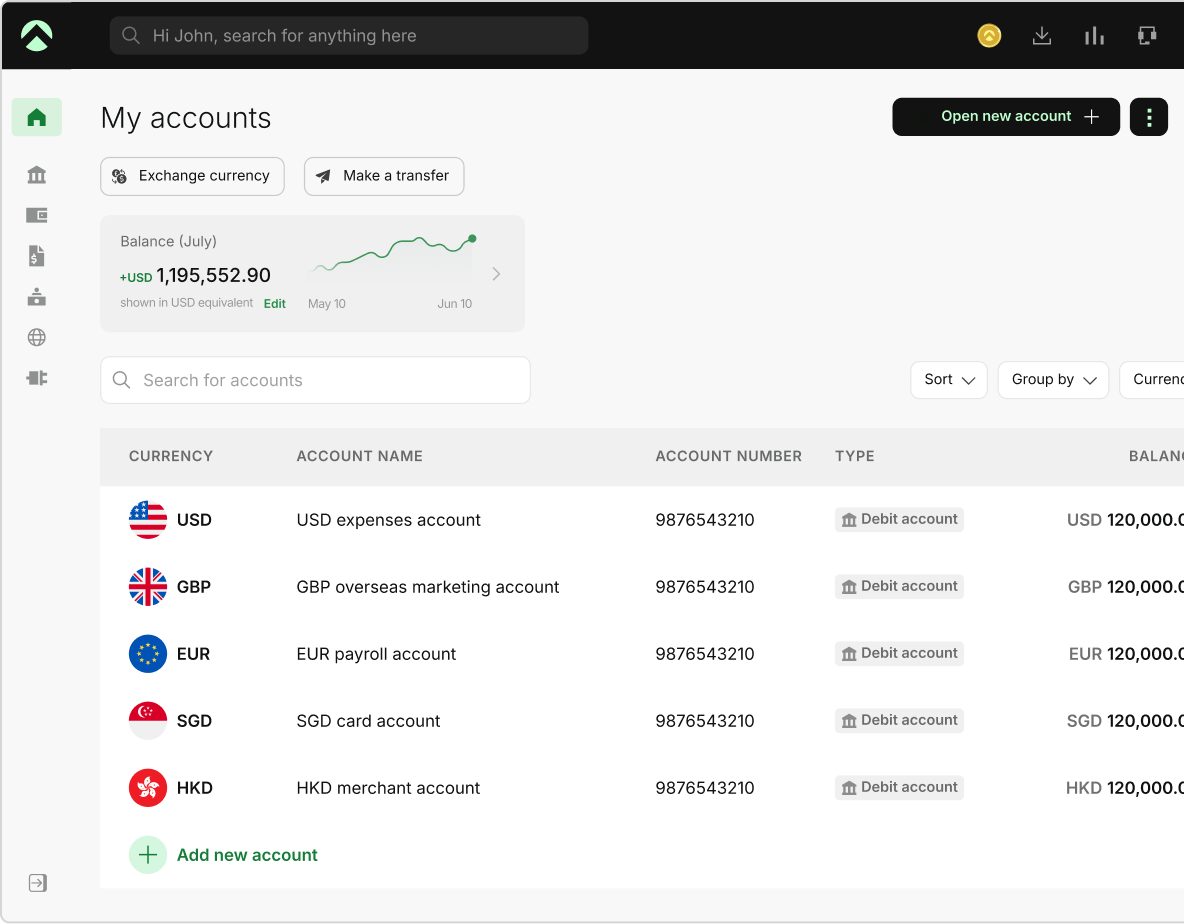
One Aspire account to manage your business finances in one place.
Get a business account¹, issue corporate cards², manage expenses, and automate financial workflows, all from one powerful platform built for modern businesses.
Most nonprofit bank accounts look alike on paper. The differences show up later, when a volunteer drops off USD $3,000 in cash from a gala, and your account only covers USD $5,000 a month. Or when a new treasurer needs access, and the bank asks for a fresh board resolution first.
Those details decide which account works for your 501(c)(3), and they're easy to miss on a product page. We compared 8 banks and 4 online platforms on the things nonprofits run into most: fees, cash limits, branch coverage, and who can get into the account.
What is a nonprofit checking account?
A nonprofit checking account is a business bank account held in your organization's name, under its EIN. Non profit checking accounts can be dedicated nonprofit products or standard business checking accounts that a bank makes available to nonprofit organizations. Donations and grants go in, and payroll and vendor payments go out. Some banks price these accounts differently for nonprofits. Others open standard business checking for you at the same price a for-profit company would pay.
A nonprofit business checking account can help keep donations, grants, payroll, and vendor payments separate from personal finances while giving authorized users access to the account.
Best banks for nonprofits: quick comparison
| Best for | Monthly fee | Fee waiver | Free transaction allowance | Free cash-deposit allowance | Branch access |
|---|---|---|---|---|---|
| Organizations wanting a dedicated nonprofit checking account | USD $0 | Not required | 1,800 free transactions/year | 300 free cash-deposit units per year | Branches in 26 states |
| Nonprofits receiving frequent cash donations | USD $0 | Not required | 225 free transactions/month | USD $25,000/month | Mainly Southeast and Mid-Atlantic |
| Established nonprofits needing branch banking | USD $12 | Waived with a USD $500 average monthly collected balance or other qualifying requirements | 150 free transactions/month | USD $5,000/month | Regional branch network |
| Small nonprofits that want a national branch network. Chase also offers a Not For Profit account through its branches | USD $15 | Waivable with qualifying balance or account activity | 20 teller/paper transactions; unlimited electronic transactions | USD $5,000 per statement cycle | Nationwide |
| Nonprofits seeking nationwide banking and relationship support | USD $16 | Waivable with qualifying combined balances | Unlimited electronic; 20 non-electronic | USD $5,000/month | Nationwide |
| Nonprofits that want a large branch network and lending at the same bank | USD $15 | Waived with a USD $2,000 minimum daily balance, USD $5,000 average combined business deposit balance, or qualifying linked account | 100 free transactions per fee period | USD $5,000 per fee period | Large national network |
| Digital-first nonprofits that rarely visit branches | USD $0 | Not required | Unlimited | Limited, with no branch deposits | Online only |
| Organizations that want multiple checking accounts for restricted and unrestricted funds | USD $0 | Not required | Unlimited | At Allpoint+ ATMs and Green Dot retailers, limits and fees apply | Online only |
| Nonprofits maintaining operating reserves | USD $0 | Not required | Unlimited | Up to USD $7,500 every 30 days at participating retailers | Online only |
| Multi-chapter nonprofits and organizations with multiple treasurers | USD $0 | Not required | No published cap | At participating Allpoint ATMs | Online only |
Relay, Bluevine, and Crowded are fintech platforms and not banks. Figures are current as of Oct 2026, so confirm terms with each provider before you apply.
What to look for in a nonprofit bank account
Monthly fees and minimum balances
Outside of the dedicated nonprofit accounts from U.S. Bank, Truist, and Citizens, expect monthly fees on many standard business checking accounts, although some banks waive them if you meet a balance or activity requirement. Balance-based waivers look easy until a grant payment runs late and your balance dips for a month.
Transaction and cash-deposit limits
Pull last month's statement and count every deposit, check, and payment. Then find your biggest cash month, usually the one with your largest event. Truist allows up to USD $25,000 in cash deposits per month at no charge, the highest stated cash-deposit allowance among the accounts compared here. PNC, Bank of America, and Wells Fargo list USD $5,000 allowances, while Chase includes USD $5,000 in cash deposits per statement cycle.
Branch access
A mobile app won't help when a volunteer is holding the cash box from Saturday's bake sale. They need a branch they can get to. That's the catch with the two fee-free nonprofit accounts here: U.S. Bank operates in 26 states, and Truist sits mostly in the Southeast and Mid-Atlantic.
User permissions and fraud controls
Your treasurer needs to send payments. Your board chair probably just needs to see the balance. Ask whether the bank supports view-only users, payment limits, and dual approval. Then ask about positive pay and ACH debit blocks by name, and what they cost.
ACH and wire fees
Large grants often arrive by wire, and banks usually charge for wires in both directions. When a funder or vendor offers to pay by ACH, take it. It usually costs less.
Interest on reserves
Reserves in a standard checking account usually earn nothing. A nonprofit organization savings account, money market account, or high-yield savings account can provide a place to hold reserves separately from day-to-day spending. Axos has a money market account specifically for nonprofits.
If you're comparing high yield savings for nonprofits, check the current APY, minimum balance requirements, monthly fees, withdrawal terms, and whether the account is available to your organization's legal structure.
Accounting integrations
If your bookkeeper still downloads statements every month, ask whether the account syncs with QuickBooks, Xero, or your fund accounting software. A live bank feed makes bank reconciliation far less tedious.
Best banks for nonprofits
1. U.S. Bank
U.S. Bank's nonprofit checking costs nothing to keep open. There's no monthly fee and no minimum balance, and you can open it with USD $25. Each year you get 1,800 transactions and 300 cash-deposit units. Want interest on your operating funds? U.S. Bank also has interest-bearing business checking, with a USD $100 opening deposit.
Pros
- Dedicated non-profit checking account
- No monthly maintenance fee
- No minimum balance requirement
- Interest-bearing account option available
- Online and mobile banking
Cons
- Branch network is limited to 26 states
2. Truist
Truist built Community Checking for nonprofits, civic groups, and small community organizations. The account requires a USD $100 minimum opening deposit. The number that stands apart is cash: up to USD $25,000 a month in deposits at no charge, plus 225 free transactions and no monthly fee. If your church collects cash every Sunday or your PTA runs a monthly fundraiser, look at this account first.
Once you exceed 225 combined transactions in a month, each additional transaction costs USD $0.35. Cash deposits above USD $25,000 in a month cost USD $0.0025 per dollar above the allowance.
Pros
- Designed for nonprofits and community organizations
- 225 free transactions per month
- Strong branch presence across the Southeast and Mid-Atlantic
- Online and mobile banking
Cons
- Few or no branches on the West Coast and in much of the Midwest
3. PNC
PNC treats nonprofits as business banking customers and doesn't offer a separate nonprofit checking account. You apply using the requirements for your nonprofit's entity type, and some accounts ask for a 501(c) tax form or state nonprofit registration.
Basic Business Checking costs USD $12 a month, but keep USD $500 in the account on average and PNC drops the fee. That's a low bar if your income is steady. You get 150 transactions and USD $5,000 in cash deposits a month, which may suit nonprofits whose transactions primarily occur by check, ACH, or debit card.
Pros
- USD $12 monthly fee, waived with a USD $500 average monthly balance
- Business checking available to nonprofit organizations
- Large branch and ATM network
- Free Visa Business Debit Card
Cons
- Charges apply after 150 monthly transactions
- Cash deposits above the monthly limit incur additional fees
- Wire transfer fees apply
- Documentation requirements depend on your nonprofit's entity type
4. Chase
Chase has a non-profit account, which you open at a Chase branch, as well as its standard business checking accounts. Its nonprofit banking team provides relationship managers, cash management, fraud controls, and payment tools.
Smaller nonprofits can also use Chase Business Complete Checking, which has a USD $15 monthly fee that you can waive with a qualifying balance or account activity. Larger organizations with higher transaction volumes can look at Platinum Business Checking, which Chase pairs with a nonprofit relationship manager.
Pros
- Extensive nationwide branch and ATM network
- Online and mobile banking
- Treasury management services
- Fraud prevention tools
- Dedicated relationship managers available for larger organizations
Cons
- Not For Profit accounts require a branch visit to open
- USD $15 monthly fee on Business Complete Checking unless you meet waiver requirements
- 20 free teller and paper transactions per month on Business Complete Checking
5. Bank of America
Bank of America doesn't offer a checking account specifically branded for nonprofits, but it has dedicated not-for-profit banking specialists and tailored financial solutions for nonprofit organizations. You can open Business Advantage Fundamentals Banking, while Bank of America's dedicated not-for-profit banking team provides specialized support and financial solutions for eligible nonprofit organizations. The fee is USD $16 a month unless you meet the combined balance requirement, and cash deposits are free up to USD $5,000 a month. It makes the most sense for nonprofits spread across several states that expect to need treasury or investment services later.
Pros
- Extensive nationwide branch and ATM network
- Online and mobile banking
- Dedicated nonprofit banking specialists for eligible organizations
- Treasury management and fraud prevention tools
- Investment and endowment management services available
Cons
- No checking account specifically branded for nonprofits
- USD $16 monthly fee unless you meet balance requirements
6. Axos Bank
Axos is an online bank with no branches. Its Basic Business Checking account has no monthly fee. It also offers a Non-Profit Money Market account for nonprofits and religious organizations. Run day-to-day spending through checking and park reserves in the money market account.
Opening the money market account takes USD $1,000. Keep an average of USD $2,500 in it, and you'll skip the USD $5 monthly fee. The account earns 0.20% APY as of Oct 2026, and you can write checks directly from the account when you need the money.
Pros
- Dedicated money market account for nonprofit organizations
- Earn interest on reserve or emergency funds
- USD $5 money market fee, waived above a USD $2,500 average daily balance
- Online and mobile banking
- No monthly fee on Basic Business Checking
Cons
- No physical branches
- Limited options for depositing large amounts of cash
7. Wells Fargo
Wells Fargo opens business checking for nonprofit corporations once you show proof of nonprofit status. Most small nonprofits start with Initiate Business Checking, which costs USD $15 a month and USD $25 to open. To skip the fee, keep USD $2,000 in the account every day, hold USD $5,000 on average across your business deposits, or link a qualifying account.
Each fee period covers 100 transactions and USD $5,000 in cash deposits. Outgrow that and you can move up to Navigate Business Checking at USD $25 a month, or Optimize Business Checking at USD $75 for high-volume organizations.
Pros
- Large branch network and more than 11,000 ATMs
- Business checking, lending, and payment services at one bank
- Mobile check deposit and online banking
- Philanthropic services through Wells Fargo's private bank
Cons
- USD $15 monthly fee unless you meet a waiver requirement
- 100 free transactions per fee period, fewer than Truist's 225 per month
- Requires proof of nonprofit status at account opening
8. Amalgamated Bank
Amalgamated has built its business around nonprofits and mission-driven organizations. Advocacy groups, social service providers, and community organizers bank there, so its teams know how nonprofits receive and spend money.
Pros
- Banking teams that work mainly with nonprofits
- Experience with advocacy groups, social service providers, and organizers
Cons
- Smaller branch network than national banks
- Fewer in-person options outside its main markets
Online banking alternatives for nonprofits
Relay, Bluevine, and Crowded are fintech platforms, not banks. FDIC-insured partner banks provide their banking services. FDIC insurance applies under FDIC rules and depends on each provider's partner-bank or deposit sweep structure. They work best when most donations come in online. All 3 take some cash through ATM or retail networks, but each sets its own limits and fees.
Relay
Thread Bank, Member FDIC, provides Relay's banking services. Thread Bank holds your deposits, issues Relay cards, and processes ACH payments, wires, and check deposits, and your deposits receive pass-through FDIC insurance.
Relay's main draw is structure. You can open up to 20 checking accounts under one login, each with its own account and routing number. Payroll gets one, reserves get another, and every restricted grant can have its own.
Pros
- Create up to 20 separate checking accounts
- No monthly fee on the Starter plan
- Multi-user access and permission controls
Cons
- Cash deposits at participating Allpoint+ ATMs and Green Dot retailers, with limits and fees
- No branches
- Wire transfer fees apply on the free plan
- Banking services run through Thread Bank, a partner bank
Bluevine
Coastal Community Bank, Member FDIC, provides Bluevine's banking services. Bluevine's Business Checking plans pay interest at these rates:
- Standard: 1.30% APY on balances up to USD $250,000, if you meet a monthly eligibility requirement
- Plus: 1.75% APY on balances up to USD $250,000
- Premier: 3.00% APY
Plus and Premier customers earn their APY automatically.
Pros
- Earn interest on checking balances
- No monthly fee on the Standard plan
- Cash deposits at participating retailers, up to USD $7,500 every 30 days
- Up to USD $3 million in FDIC insurance per depositor through Coastal Community Bank and its program banks
Cons
- Standard plan requires a monthly eligibility requirement to earn APY
- No physical branches
Crowded
Crowded is a fintech platform built for nonprofits. i3 Bank, Member FDIC, provides its banking services. i3 Bank's deposit sweep program spreads your balance across participating FDIC-insured banks, so eligible deposits can be covered up to USD $3 million. Crowded fits PTAs, booster clubs, and churches, as well as multi-chapter nonprofits where the treasurer changes often.
Pros
- Built for nonprofit organizations
- No monthly fees or minimum balance requirements
- Up to USD $3 million in FDIC insurance through i3 Bank's sweep program
- Role-based access simplifies leadership transitions
- AI-powered bookkeeping and Form 990 support
- Supports chapter and fund-based financial management
Cons
- No traditional branch network
- Limited lending products compared to national banks
- Not ideal for nonprofits handling significant cash deposits
Wise Business for international payments
Wise is a money services business, not a bank. If funders abroad send you grants or you pay partners in other countries, a Wise Business account lets you hold and convert multiple currencies. It also gives you local account details in several currencies, so overseas funders can pay you as they would a domestic transfer.
Wise converts at the mid-market exchange rate and shows its fee before you send. That makes it easier to compare costs against your bank's fees for international payments. Keep your main checking account at a US bank and use Wise for cross-border transfers.
Traditional banks vs online banks vs fintech platforms
| Traditional banks (U.S. Bank, Truist, PNC, Chase, Bank of America, Wells Fargo) | Online bank (Axos) | Business fintech platforms (Relay, Bluevine, Crowded) |
|---|---|---|
| Organizations that need branch access, cash deposits, and in-person banking | Digital-first nonprofits that prefer an online bank over a branch network | Nonprofits that want digital banking, fund segregation, expense controls, or multi-user access |
| Yes, typically with monthly fee-free allowances | Limited or unavailable, depending on the account | Limited or unavailable; policies vary by provider |
| Yes, network varies by bank | No | No |
| USD $0–USD $16, often waivable | USD $0 | Usually USD $0 |
| Limited; some checking, savings, or money market accounts may earn interest | Available on eligible savings or money market products | Available from some providers and account types |
| Generally separate accounts; some banks offer sub-accounts or treasury tools | Separate checking and savings accounts | Multiple accounts or sub-accounts on most platforms |
| Banks chartered and regulated in the US. Deposits are FDIC-insured up to applicable limits, subject to FDIC rules. | Chartered bank. Deposits are FDIC-insured up to applicable limits, subject to FDIC rules. | Fintech platforms, not banks. Partner banks hold customer deposits, and pass-through FDIC insurance applies when FDIC requirements are met. |
A traditional bank gives you a direct relationship with a chartered, FDIC-insured institution and, in most cases, a branch you can visit when something goes wrong. A fintech platform may give you better tools for separating restricted funds, setting user permissions, and handing over access when treasurers change. In exchange, you add a layer: you're a customer of the fintech, and the fintech is a customer of its partner bank.
Choosing the best banking option for your non-profit
To find the best bank for nonprofit needs, start with how your organization operates, then compare fees, transaction limits, cash-deposit allowances, branch access, and user permissions. A local charity that collects cash at events needs a different account from a national nonprofit managing grants in several states or an NGO sending payments overseas.
| Consider | Why it fits |
|---|---|
| U.S. Bank or Axos Bank | No monthly fee and low or no minimum balance requirements |
| Truist | Up to USD $25,000 in cash deposits per month at no charge |
| Chase or Bank of America | Large branch networks, treasury services, fraud controls, and relationship managers |
| PNC Bank | USD $12 monthly fee, waived with a USD $500 average balance, and a regional branch network |
| Axos Bank or Bluevine | No monthly fee on Axos Basic Business Checking or Bluevine Standard, plus interest on eligible balances |
| Relay | Multiple checking accounts under one login simplify fund segregation |
| Crowded | Built specifically for nonprofits with role-based permissions and chapter management |
| Wise Business | Multi-currency accounts and international transfers |
| Chase, Bank of America, or Wells Fargo | Relationship managers and treasury services for high-value incoming and outgoing transfers |
| Axos Bank or Bluevine | Axos's Non-Profit Money Market account and Bluevine's interest-bearing checking |
How to open a nonprofit bank account
Here's the typical process:
- Confirm your nonprofit's legal structure, such as a nonprofit corporation or unincorporated association
- Get an EIN from the IRS
- Gather your articles of incorporation, bylaws, and board resolution
- Name your authorized signers and collect their photo IDs
- Ask whether the bank needs your 501(c)(3) determination letter for the account you want
- Apply online or at a branch, depending on the bank and account
- Set user permissions and fraud controls once the account is open
Can you open a nonprofit bank account online?
Often, yes. PNC accepts online business checking applications, though the documents it asks for depend on your entity type. Chase opens its Not For Profit accounts only at a branch. Relay, Bluevine, and Crowded handle the full application online.
Documents you'll need
Most banks ask for the same core documents, though the exact list varies:
- EIN confirmation letter, either IRS CP 575 or Letter 147C if the IRS reissued it. Most banks ask for it, though requirements vary by bank and entity type
- Articles of incorporation or certificate of formation, depending on your state, filed with your Secretary of State
- Bylaws adopted by your board, which the bank uses to confirm that the people opening the account have the authority to do so
- Board resolution naming your authorized signers. Draft it before the board meeting and include the bank, the account type, and the full legal name of every signer to avoid delays
- 501(c)(3) determination letter. You may not need it for standard business checking if you already have your EIN and articles of incorporation. Some banks require proof of tax-exempt or nonprofit status for nonprofit-specific accounts or pricing
- If your exemption application is still pending, bring your submitted Form 1023 or 1023-EZ and the IRS confirmation. Ask the bank whether it accepts these while you wait for your determination letter
- Government-issued photo ID for every authorized signer
- Certificate of good standing from your state. Some banks ask for it as proof that your nonprofit is current on state filings
Before you visit a branch, ask whether the account you want requires an in-person application. Chase, for example, opens Not For Profit accounts only at a branch.
Common mistakes nonprofits make with banking
Avoid these 4 mistakes once your account is open:
1. Using a personal account for nonprofit funds
Keep your nonprofit's money out of any personal checking account, including while your paperwork is pending. Separate accounts give you a clean audit trail and reduce accounting, governance, and compliance risk.
2. Setting up fraud controls too late
Positive pay, ACH debit blocks, payment alerts, and dual approval for large payments help you catch unauthorized activity early. Ask your bank which controls it offers and whether any carry a fee, then turn them on before donations start coming in.
3. Giving too many people full account access
Every additional person with full transaction authority is another point of failure for both fraud and honest mistakes. Match access to each person's role. A program coordinator who submits expense requests doesn't need the ability to initiate wire transfers.
4. Keeping operating, reserve, and restricted funds in one account
When everything sits in one account, a bookkeeper has to reconstruct fund restrictions from memory or from a separate spreadsheet every time a board member or auditor asks "can we confirm the Johnson Grant money hasn't been touched?" Sub-accounts, or at minimum clean categorization in your accounting system, turn that question into a 5-minute lookup.
Where Aspire fits
Your bank handles deposits and payments. You still need a way to manage what your team spends.
Aspire1 works alongside your existing bank. You can issue virtual cards2 for each program, department, or fundraising event, set spending limits, and route purchases for approval. Program leads pay for what they need without full access to your business bank account1, and your finance team sees each expense as it happens.
Final thoughts
For a small nonprofit that handles cash, Truist, U.S. Bank, or Citizens can be a starting point, depending on your cash-deposit needs and branch access. Chase, Bank of America, PNC, and Wells Fargo charge monthly fees on the accounts compared here, although each offers ways to waive the fee. When donations mostly arrive online, Axos, Relay, Bluevine, and Crowded all have options with no monthly fee.
Before you apply, ask each bank for its full fee schedule and check it against your monthly transaction and cash volume. Once your account is open, Aspire gives your team virtual cards with spending limits and approvals, so program leads can pay for what they need without access to your bank account.
Frequently Asked Questions
Yes, many nonprofits use standard business checking accounts if a dedicated nonprofit account isn’t available. What matters more is whether the bank supports multiple users, low fees, and clear reporting for donations and expenses.
Not always. Some banks allow you to open an account with incorporation documents and an EIN while your tax-exempt status is still pending. Requirements vary, so it helps to confirm with the bank before applying.
Look for low monthly fees, easy online access, role-based permissions for team members, and simple donation processing. These features reduce admin work and help you manage funds more transparently.
They can be a strong fit if your organization works digitally and doesn’t handle much cash. Online banks often offer lower fees and faster setup, but you should check deposit options and support availability first.
Most nonprofit accounts allow multiple authorized users such as treasurers, board members, or finance leads. Setting clear permission levels helps maintain oversight while keeping daily operations smooth.
Most banks ask for your EIN confirmation letter, articles of incorporation, bylaws, a board resolution naming authorized signers, and photo ID for each signer. Some also ask for your 501(c)(3) determination letter or a certificate of good standing.
U.S. Bank and Truist are good starting points because their nonprofit accounts have no monthly fee. If you work mostly online and rarely deposit cash, Axos Basic Business Checking and Relay also have no monthly fee.
Dedicated nonprofit accounts at U.S. Bank, Truist, and Citizens have no monthly fee. Standard entry-level business checking at PNC, Wells Fargo, Chase, and Bank of America costs USD $12–USD $16 a month, and each bank waives the fee if you meet balance or activity requirements. Wires, cash deposits above your allowance, and transactions over your limit can cost extra.
Yes. Options include Axos's Non-Profit Money Market account, U.S. Bank's interest-bearing business checking, and Bluevine's interest-bearing checking. Rates vary widely, so compare the current APY and any balance requirements.
This blog is for general information only and does not constitute financial, legal, tax, or professional advice. Aspire’s services are subject to the terms outlined in our ’Terms of Service’ and ’Pricing’ pages. We make no guarantees as to the accuracy, completeness, or timeliness of the content, and past results do not indicate future performance. Always consult a qualified professional before acting on any information provided.
Content Team
Aspire editorial
Content team at Aspire is a society of seasoned writers & experts specialising in finance, technology and SaaS space. With 50+ years of collective experience, they help make business finance more profitable for readers. They write about finance tools, finance insights, industry trends, tactical guides to grow your business & also all things Aspire.
Aspire Launchpad
Supercharge your finance operations with Aspire
Find out how Aspire can help you speed up your end-to-end finance processes from payments to expense management.

Latest articles

QuickBooks vs Xero: Key differences, costs and which is better
QuickBooks vs Xero compared on features, pricing, users, reporting, and ease of use. See which accounting software is a better fit for your business.

How general liability vs professional liability insurance works in the US
Small business guide to general liability insurance. Learn about costs and coverage, if you need it, and how to choose the right policy.

Best multi-currency business accounts in the US for 2026
Compare the best multi-currency business accounts in the US for 2026. Explore fees, FX costs, currencies, holding, receiving options, and key features.