


Company registration in Delaware USA: Complete guide

Content Team

Summary
Delaware company registration is all about setting up a company structure that supports growth and fundraising as you scale beyond a local market
Founders need to make decisions on the entity type, company name, formation documents, registered agent, and US banking to get the foundation right
Costs and obligations vary based on your entity type and the services you use, and include the state formation fee, registered agent fees, and ongoing franchise taxes, annual reports, and compliance responsibilities. These affect cash flow and day-to-day execution if you don't plan for them upfront
Delaware gives you legal clarity and investor confidence, backed by flexible corporate laws. The downside is the extra filings and compliance, which may not be worth it if you're running a smaller or local business
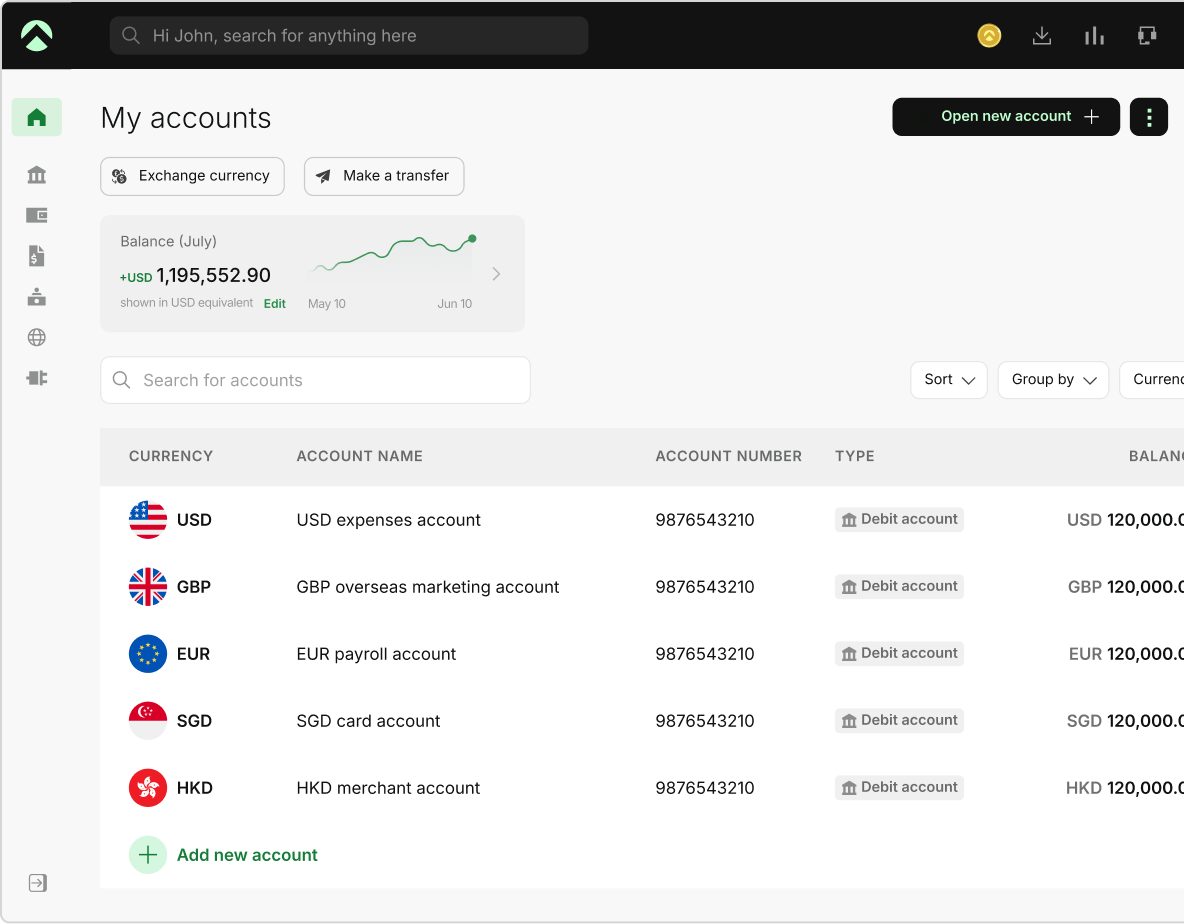
One Aspire account to manage your business finances in one place.
Get a business account¹, issue corporate cards², manage expenses, and automate financial workflows, all from one powerful platform built for modern businesses.
Incorporating in Delaware is usually a considered move. It comes up when founders start thinking about funding or shared ownership, especially once they're operating across jurisdictions. At that stage, where the company is registered becomes a deliberate structural choice.
Delaware has become a default option in the US startup ecosystem because its legal framework is already familiar to investors, and to the banks and acquirers a company deals with later. Over time, this familiarity has turned into an expectation in certain contexts, especially for companies planning to raise capital or scale beyond a single market.
That doesn't mean Delaware is the right answer for every business. For some companies, it's a strong long-term fit. For others, it adds cost and compliance without solving an immediate problem. The value of incorporating in Delaware depends on how your business operates today and what you're preparing it to become.
Why do founders prefer to register their company in Delaware
Founders land in Delaware after they start thinking about how to structure the company as it grows, largely because of how the US legal system handles ownership, governance, and future transactions.
- Delaware's legal framework is widely used and well-interpreted, making board decisions, shareholder rights, and disputes easier to manage as complexity increases
- Investors, law firms, and banks are already aligned on Delaware structures, which reduces negotiation and documentation friction later
- Issuing shares, setting up option pools, and running future funding rounds are more straightforward under Delaware corporate law
- The Delaware Court of Chancery handles corporate disputes without a jury, with judges who specialize in business law
Is Delaware company registration for non-resident founders possible
Yes, non-resident founders can register a company in Delaware. You don't need to be a US citizen or resident to complete Delaware company registration, which is why many global founders choose it. Many founders set up a Delaware company while operating from another country, without ever visiting the state. The legal setup requirements are what matter here, regardless of where you happen to be.
As a non-resident, here's what to keep in mind once you decide to register:
- You'll need a registered agent with a physical Delaware address before you file. This is the same requirement every Delaware entity has, and it's what makes it possible to register without living in the state
- You don't need a US address, an SSN, or a visa to form a Delaware company. Your registered agent provides a Delaware registered office address for receiving service of process and state correspondence. This address is separate from your company's operating, mailing, tax, or banking address. Forming a Delaware company also doesn't give you the right to live or work in the United States, since immigration requirements are separate from company formation
- Start your EIN application as soon as your company is incorporated. If you don't have a US SSN, budget extra time, since you'll apply through the IRS by phone, fax, or mail instead of online. Shortlist banks or fintech platforms in parallel and confirm their requirements so account setup doesn't delay operations. Even if most of your activity happens outside the US, you'll still have Delaware franchise tax and state filing obligations to budget for
How to register a company in Delaware USA
Company registration in Delaware USA is a structured legal process run by the Delaware Division of Corporations. You can complete most of the steps online, but every step has a specific purpose that affects banking, compliance, and future fundraising.
Understanding why each step exists helps you avoid mistakes that cost more to fix later.
Choose your business entity: LLC vs. C-Corp
The first decision is whether you're forming an LLC or a corporation. If you want operational flexibility and simpler ongoing compliance, start with an LLC in Delaware. If you're planning to raise venture capital, issue stock, or scale significantly, form a Delaware C-Corp instead.
Confirm your company name availability
Run a Delaware company registration search, or check whether your preferred business name is already taken, to confirm it's available before filing. This step prevents delays and rejections during filing. Delaware allows name reservation, but it's optional and usually unnecessary unless timing is critical. Name availability matters primarily because Delaware won't accept a conflicting entity name.
Line up a registered agent in Delaware
Every Delaware entity, resident-founded or not, needs a registered agent with a physical Delaware address before you file. If your business is physically located in Delaware, it can act as its own registered agent. Otherwise, this agent becomes your company's official contact for legal notices, tax mail, and state correspondence.
Prepare and file the formation document
File a Certificate of Formation for an LLC or a Certificate of Incorporation for a corporation with the Delaware Division of Corporations. This filing legally creates your company.
Submit the filing and pay the state fee
Submit filings online or by mail, and pay fees at the time of submission. Processing times vary unless you choose expedited service.
Order certified copies or a certificate of good standing, if needed
Some financial institutions may require certified copies of your formation documents during onboarding. Consider ordering them when you form your company if you expect to need them later.
Check whether beneficial ownership reporting applies
After incorporation, check whether you need to file beneficial ownership information with FinCEN. US-formed companies are currently exempt under FinCEN's Aug 2026 final rule. Certain foreign-formed companies registered to do business in the US still need to file.
Get your EIN and set up business banking
After forming the company, get your EIN if your business needs one, then set up your business banking with your chosen provider. If your principal place of business is outside the United States, you can apply for an EIN through the IRS's international application process. Banking eligibility and documentation vary by provider.
Once your Delaware entity and EIN are ready, the next step is usually setting up a dedicated business account. For non-resident founders, eligibility and document requirements vary by provider, so check whether the provider supports your ownership structure and country of residence before applying.
Aspire's business account is available to businesses incorporated in supported countries, including the United States, subject to eligibility and compliance requirements. Aspire's current account-opening guidance requires an EIN and company formation document for US-incorporated companies, along with identity and other supporting information where applicable.
Understand annual taxes and reporting obligations
Company registration in Delaware comes with ongoing obligations. Delaware corporations must file an annual report and pay franchise tax by Mar 1 each year. LLCs, LPs, and GPs don't file annual reports but must pay a fixed annual tax by Jun 1.
Delaware file number vs. EIN
Delaware file number
This is the identification number the Delaware Division of Corporations assigns to your entity. It identifies the entity in Delaware's own records.
EIN
This is a federal tax identification number issued by the IRS, separate from the Delaware file number. You may need it for federal tax, employment, banking, and other business purposes.
Looking up a Delaware company
Delaware provides an entity search service you can use to find a company's name, file number, formation date, registered agent, and entity type.
How long does Delaware company registration take
Standard processing time varies depending on how busy the Delaware Division of Corporations is. Delaware also offers expedited options, including 24-hour, same-day, 2-hour, and 1-hour priority filing for an added fee.
Getting your entity approved is only one milestone. Getting your EIN, opening a business bank account, and securing any licenses you need can take additional time after formation.
What does it cost to register and maintain a Delaware company
Your Delaware costs depend on your entity type, registered agent provider, and any optional services you use. Here's a breakdown split into what you pay once to form the company and what you pay every year to keep it active.
One-time formation costs
- An LLC formation fee of USD $110
- A corporation formation fee starting at USD $109, which increases based on authorized shares
- An optional name reservation for USD $75
- An optional certified copy of a filed document for USD $50, plus USD $2 per additional page
- An optional short-form certificate of status for USD $50
- An optional long-form certificate of status for USD $175
- Optional legal advice, accounting help, or expedited filings, which run USD $100-USD $500 depending on your provider
Recurring annual costs
- A third-party estimated registered agent fee of USD $50-USD $300 per year
- An annual franchise tax for corporations, starting at USD $175 under the Authorized Shares Method or USD $400 under the Assumed Par Value Capital Method, with a standard maximum of USD $200,000 and a Large Corporate Filer maximum of USD $250,000
- A USD $50 annual report fee for non-exempt domestic corporations
- An annual tax for LLCs, LPs, and GPs of USD $400
Delaware corporations generally pay an annual franchise tax and file an annual report. The franchise tax is calculated using either the Authorized Shares Method or the Assumed Par Value Capital Method, with a minimum of USD $175 or USD $400, respectively. The standard maximum is USD $200,000, while Large Corporate Filers can owe up to USD $250,000. Non-exempt domestic corporations also pay a separate USD $50 annual report fee.
What are the advantages and disadvantages of registering in Delaware
Advantages
- You get access to the Delaware Court of Chancery, which handles corporate disputes efficiently and without juries, with judges who specialize in business law, so decisions are predictable and based on well-established rules
- Delaware's corporate statutes let you structure your company and govern it the way that fits your business best, whether that means issuing multiple share classes, defining voting rights, or designing your board
- Venture capitalists and angel investors often prefer or even require Delaware companies, and incorporating here signals credibility, simplifies investment agreements, and can make future funding rounds smoother
- Delaware's laws and courts are well-suited for mergers, acquisitions, and IPOs, and that same legal structure protects the company and its investors when an exit happens
Disadvantages
- Delaware law mandates that every company maintain a registered agent in the state, which comes with an ongoing cost and administrative responsibility
- If you incorporate in Delaware but operate elsewhere, you'll need to register your company as a foreign entity in your home state, which adds filing fees, annual reports, and duplicated compliance work
- Delaware charges corporations an annual franchise tax that can grow with your share structure, while LLCs, LPs, and GPs pay a flat annual tax regardless of company size, and that's separate from income tax entirely. A corporation not conducting business in Delaware generally doesn't file a Delaware corporate income tax return, but you generally owe corporate tax based on where you earn revenue, so incorporating in Delaware doesn't automatically reduce your federal, state, or foreign tax obligations
- If your company is self-funded, serves a local market, or is unlikely to seek major VC funding, Delaware's advantages might not outweigh the added work and cost
Should you register your company in Delaware USA
This decision comes down mostly to where you want the company to go, whatever state you're currently operating from.
Company registration in Delaware can be beneficial if:
- You plan to raise venture capital or angel funding
- You plan to issue equity or stock options to investors or employees
- You're building toward a future acquisition, merger, or IPO
- You want the legal clarity a well-established corporate framework provides
Delaware company registration may not be the right option if:
- You're bootstrapped and operating in one state
- You don't plan to raise external funding soon
- You want your ownership structure simple, since extra filings and yearly obligations add ongoing work
Delaware registration works best when it matches your plans for outside investment, ownership structure, or corporate transactions.
Recent changes in Delaware company registration
Delaware updated its corporate laws and filing fees for 2026. Here's what matters most for founders registering now:
- Delaware enacted amendments to its General Corporation Law, LLC Act, and LP Act, effective Aug 1, 2026, so check the latest Delaware Division of Corporations guidance when you file
- Delaware revised its fee schedule effective Aug 1, 2026, and raised the annual tax for LLCs, LPs, and GPs to USD $400, retroactive to Jan 1, 2026
- Under the Corporate Transparency Act, US-formed companies are currently exempt from federal BOI reporting under FinCEN's Aug 2026 final rule, though foreign-formed companies registered to do business in the US still need to file
Registering in Delaware can be a strong fit once your fundraising plans or ownership needs call for it, especially if legal clarity matters as you grow. Weigh the entity type, the one-time and annual costs, and any registration requirements in the state where you actually operate before you file.
Frequently Asked Questions
Yes, you can register a business in Delaware even if you don’t live in the US. You don’t need US citizenship or residency to incorporate. As a non-resident, you’ll need a registered agent with a physical Delaware address, and you can complete the entire process online without visiting the state.
Registering an LLC in Delaware has a flat state formation fee of USD $110, plus a USD $400 annual Delaware tax due Jun 1. Registered agent services, optional documents, expedited filing, and professional support can add to the total.
Standard filing time varies depending on how busy the Delaware Division of Corporations is. Delaware also offers expedited options, including 24-hour, same-day, 2-hour, and 1-hour priority filing for an added fee. Getting your EIN and setting up business banking can take additional time after your entity is approved.
The Delaware file number identifies your entity in Delaware's own records. The EIN is a separate federal tax identification number issued by the IRS, used for federal tax, employment, banking, and other business purposes.
No. A Delaware LLC must pay the USD $400 annual Delaware tax. Depending on where you and your business operate, you may also have federal, state, or foreign tax obligations. Forming an LLC in Delaware doesn't by itself eliminate those obligations.
Possibly. If your Delaware company does business in another state, that state may require you to register as a foreign entity and meet its tax, licensing, and reporting requirements. The specifics depend on your activities and the state involved.
Sources
- https://corp.delaware.gov/howtoform/ , Sep 12, 2026
- https://corpfiles.delaware.gov/Fee_Schedule/AugustFee2026.pdf , Aug 1, 2026
- https://corp.delaware.gov/frtax/ , Sep 12, 2026
- https://corp.delaware.gov/faqs/ , Sep 12, 2026
- https://legis.delaware.gov/json/BillDetail/GenerateHtmlDocumentEngrossment?engrossmentId=37900&docTypeId=6 , Sep 12, 2026
- https://legis.delaware.gov/json/BillDetail/GenerateHtmlDocument?legislationId=143065&legislationTypeId=1&docTypeId=2&legislationName=HB353 , Sep 12, 2026
- https://www.fincen.gov/boi , Aug 11, 2026
- https://www.taxpayeradvocate.irs.gov/get-help/general/getting-an-ein/ , Apr 22, 2026
- https://revenue.delaware.gov/frequently-asked-questions/corporate-income-tax-faqs/ , Sep 12, 2026
- https://corplaw.delaware.gov/delaware-court-chancery-supreme-court/ , Sep 12, 2026
- https://icis.corp.delaware.gov/Ecorp/EntitySearch/NameSearch.aspx , Sep 12, 2026
This blog is for general information only and does not constitute financial, legal, tax, or professional advice. Aspire’s services are subject to the terms outlined in our ’Terms of Service’ and ’Pricing’ pages. We make no guarantees as to the accuracy, completeness, or timeliness of the content, and past results do not indicate future performance. Always consult a qualified professional before acting on any information provided.
Content Team
Aspire editorial
Content team at Aspire is a society of seasoned writers & experts specialising in finance, technology and SaaS space. With 50+ years of collective experience, they help make business finance more profitable for readers. They write about finance tools, finance insights, industry trends, tactical guides to grow your business & also all things Aspire.
Aspire Launchpad
Supercharge your finance operations with Aspire
Find out how Aspire can help you speed up your end-to-end finance processes from payments to expense management.

Latest articles

QuickBooks vs Xero: Key differences, costs and which is better
QuickBooks vs Xero compared on features, pricing, users, reporting, and ease of use. See which accounting software is a better fit for your business.

How general liability vs professional liability insurance works in the US
Small business guide to general liability insurance. Learn about costs and coverage, if you need it, and how to choose the right policy.

Best multi-currency business accounts in the US for 2026
Compare the best multi-currency business accounts in the US for 2026. Explore fees, FX costs, currencies, holding, receiving options, and key features.