


What is spend management: definition, benefits & best practices

Content Team

Summary
Spend management is the company-wide process of controlling business spend, including vendor payments, procurement, employee T&E, and SaaS subscriptions
It's broader than expense management. Expense management focuses largely on employee expenses, receipts, and reimbursements, while spend management connects budgeting, purchasing, approvals, payments, and analysis across the full spending lifecycle
The core benefits: real-time spend visibility, cost reduction through vendor consolidation, automated policy compliance, and more accurate financial forecasting
Modern AI spend management tools now handle automated tax mapping, fraud flagging, auto-categorization, and predictive forecasting
Choosing the right platform depends on your stage. Startups need cards with controls. Growth-stage companies need vendor management and ERP integrations. Enterprise spend management needs multi-entity support and advanced hierarchies
One Aspire account to manage your business finances in one place.
Get a business account¹, issue corporate cards², manage expenses, and automate financial workflows, all from one powerful platform built for modern businesses.
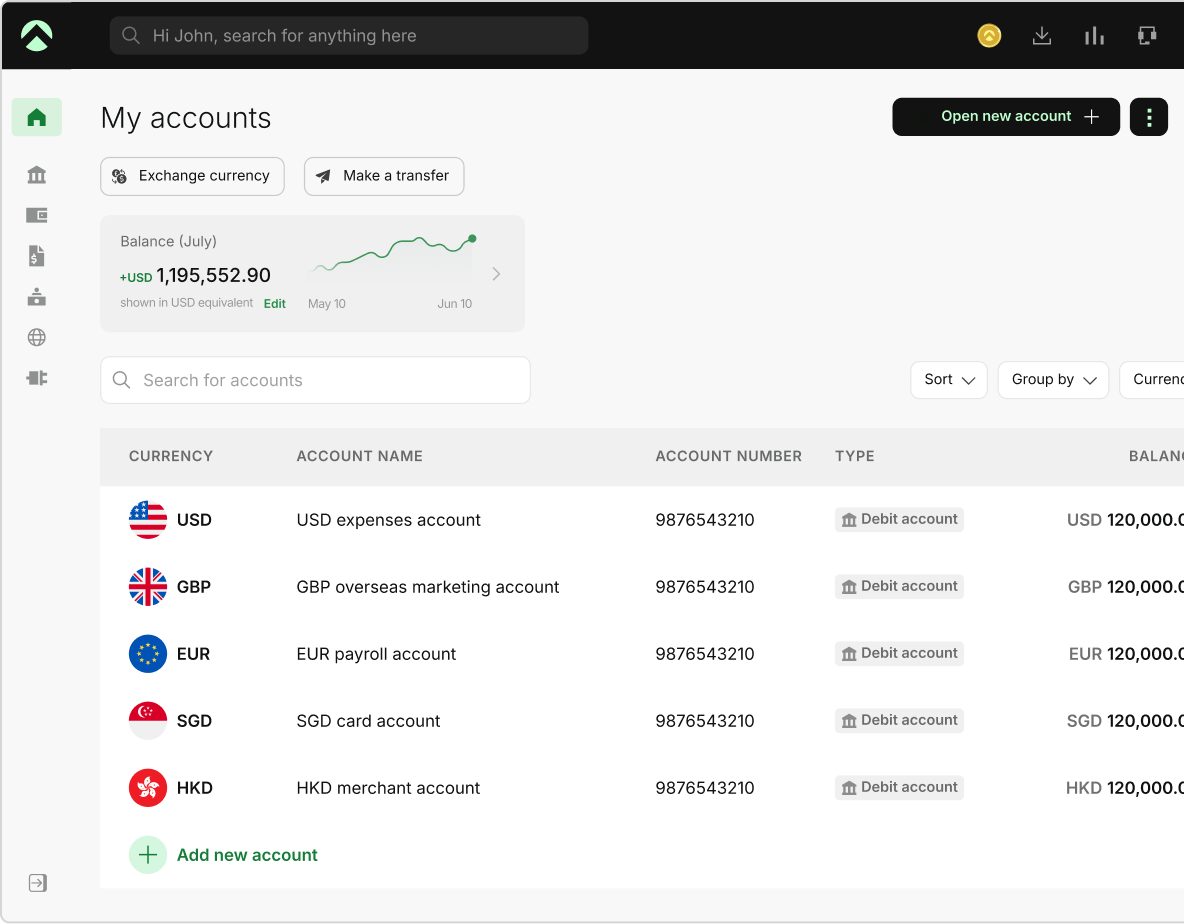
Company spending can run through cards, invoices, reimbursements, purchase orders, and software subscriptions. Bringing these transactions together gives finance a more complete view of total spend.
Untracked expenses and missed invoices make it harder to see what the business has already spent and what it still owes. Unused SaaS subscriptions can add another recurring cost. Spend management is the operational layer that stops that from happening.
What is spend management
Spend management is how businesses keep track of and control company spending across different areas. Every type of outflow is included, from vendor invoices and procurement to employee T&E expenses and SaaS subscriptions.
Spend management is more proactive than expense management, which typically handles reimbursements after funds have been spent. Before expenses start to mount, spend management assists businesses in creating budgets, implementing spending rules in real time, and keeping a closer eye on where their money is going.
The core components of a spend management system
A complete spend management system typically covers several interconnected workflows.
- Procurement and purchasing: Purchase orders, vendor onboarding, contract management
- Accounts payable and invoice processing: Automated capture, PO matching, and approval routing
- Expense management: Employee T&E submissions, receipt capture, and reimbursements
- Budget tracking: Real-time visibility against approved budgets by department or project
- Vendor and supplier management: Centralizing vendor data, contract terms, and payment history using supplier management tools
- Reporting and analytics: Spend by category, team, or vendor, with anomaly detection built in
Tools for only invoicing, expenses, and vendor payments don't constitute spend management. What makes spend management services valuable is the unified view it creates across all these moving parts.
What is spend under management
Spend under management is the share of total company spend that actually flows through approved channels, contracts, and policy, usually tracked as a percentage.
Spend under management % = managed spend ÷ addressable spend × 100
The exact definition of “managed spend” can vary by organization. Businesses may define it based on the types of spend covered by their policies, approved channels, contracts, or spend management system. A higher percentage generally indicates that more addressable business spend is subject to the organization's established controls.
Spend management vs. expense management: what's the difference
Despite their similarities, "spend management" and "expense management" refer to essentially distinct phases of your financial lifecycle.
After an employee spends money, expense management takes care of receipt collecting, expense report filing, manager approval, and payment.
Spend management is the strategic layer sitting above it. Before money moves, spend management sets the budgets, defines who can approve what, establishes vendor relationships, and builds the policy framework that governs all company spending.
| Spend management | Expense management | |
|---|---|---|
| Scope | Company-wide including vendor invoices, SaaS subscriptions, payroll, T&E, procurement | Employee out-of-pocket spend, receipts, travel reimbursements |
| Approach | Proactive: control before money moves | Reactive: accuracy after money moves |
| Primary user | CFOs, controllers, finance leadership | Finance teams, employees submitting reports |
| Key outcomes | Cost reduction, vendor optimization, real-time visibility | Faster reimbursements, accurate reporting, policy compliance |
| Relationship | The broader strategy includes expense management | A subset of spend management |
So where does this distinction matter in practice? If you're only running an expense management program: tracking reimbursements, collecting receipts, and managing T&E, you're solving for one part of the picture. Accounts payable, vendor contracts, SaaS renewals, procurement approvals: none of that falls inside a typical expense management system.
Spend management closes that gap. It gives you expense compliance plus strategic control over everything else.
Why spend management matters for your business
Operating without a spend management system means your finance team is working with incomplete information and making decisions based on last month's numbers while this month's commitments pile up unseen.
Here's what actually changes when you implement modern spend management:
1. Visibility into company spending
Most finance teams can tell you what was spent last quarter. Far fewer can tell you what's been approved but not yet paid, which vendors are on auto-renew this month, or which department is three weeks from blowing its budget ceiling.
Spend visibility platforms for CFOs solve that gap directly. Instead of waiting for month-end close, you see committed spend, approved-but-unpaid spend, and actual spend across every cost center.
Modern solutions like Aspire take this a step further. Aspire’s corporate cards2 come with built-in spend controls with real-time visibility.
2. Cost savings through strategic vendor oversight
Most companies are overpaying somewhere, from duplicate software subscriptions to vendors on auto-renew. A solid supplier management system centralizes contract terms, renewal dates, and vendor performance data in one place.
According toMcKinsey, product and service costs can be reduced by 10–25% with the help of spend analytics tools.
3. Policy enforcement and expense compliance
Most policy violations happen because approval thresholds aren't clear or the review only happens after the money's already moved.
Spend management platforms change the timing. Spending limits, approval thresholds, and allowed vendor categories get enforced automatically before payment.
For US businesses subject to IRS travel and expense rules, that automated expense compliance documentation also functions as a practical audit safeguard. Policy compliance stops being a manual review process and becomes a byproduct of normal operations.
4. Faster and more accurate financial planning
Current spend data gives finance a view of commitments as well as completed transactions. That information can be used when updating budgets and forecasts.
Common spend management challenges
Most companies hit the same wall on the way to getting spend under control.
- Limited visibility
Spend data lives across separate cards, invoices, and reimbursement systems, so nobody sees the full picture until month-end closes.
- Manual processing
Manual receipt matching and approval routing take more finance time as transaction volume grows.
- Inconsistent policy enforcement
Without automated limits, policy only gets checked after the money's already moved.
- Poor data quality
Duplicate payments, misclassified expenses, and incomplete records can make spend data less reliable and complicate reporting, reconciliation, and analysis.
Spend management software addresses each of these directly by centralizing data, automating matching and approvals, and enforcing policy at the point of purchase instead of after it.
How spend management solutions work in practice
Spend management is a process that spans several financial workflows. Understanding how they connect is what separates companies that implement it well from those that buy software and see minimal results.
Here's how finance teams centralize spend management at a US growth-stage company:
Step 1: define budgets and spending policies
Nothing in a spend management system works without this foundation. Budgets get set by department, team, or project. Spending policies define who can approve what and at what dollar threshold. Without this step, you're just adding a layer of software on top of the same unstructured process.
IRS rules around employee T&E, deductibility thresholds, and documentation requirements should inform how policies get written. Getting this right upfront saves a lot of cleanup later.
Step 2: route all purchases through approved channels
Every purchase, including vendor agreements, SaaS subscriptions, and staff costs, passes through the system once policies are in place. Purchase order procedures, vendor portals, and corporate cards with built-in restrictions combine expenditure data into a single platform similar to what Aspire provides.
Step 3: automate approvals and invoice processing
Approval workflows replace email chains. Invoices get captured automatically via OCR or direct integration, matched to purchase orders, and routed for approval based on predefined rules.
Procurement spend management software handles this layer specifically, making it possible for finance teams to process far higher invoice volume without adding headcount.
Step 4: track against budget in real time
Finance teams see exactly what's been committed, what's approved but not yet paid, and what's actually gone out the door, all in real time. When a department is approaching its ceiling, an alert fires before the breach. That's the difference between proactive financial control and reactive damage management.
Step 5: analyze, report, and optimize with AI
AI spend management tools now handle work that used to require a dedicated analyst.
On the categorization side, that means auto-tagging transactions, mapping spend to the right tax codes, and flagging policy violations before they reach an approver instead of a finance team doing it manually at month-end.
On the forecasting side, AI spend management platforms are starting to flag anomalies and fraud in real time, and predict where a department is headed against budget weeks before the ceiling hits.
These aren't future-state features. When you're evaluating spend management providers, ask specifically which of these use cases are live in the product today, not on the roadmap.
How to choose spend management software
There's no shortage of spend management providers, but the harder question is figuring out which spend management solutions actually fit your business at its current stage.
Before you start evaluating, get clear on three things:
- What's your current finance headcount? The right platform should reduce manual workload.
- Which accounting tools are you already using? Spend management platforms that integrate with accounting software (QuickBooks, Xero, etc) eliminate double-entry.
- Where's your biggest pain point right now: vendor visibility, employee expenses, approval delays, or budget overruns?
Once you've answered those, use this checklist when evaluating any spend management application:
| What to look for | Why it matters |
|---|---|
| Real-time spend visibility dashboard | Catch overspending before month-end |
| Policy enforcement and automated approvals | Reduces manual oversight and closes compliance gaps |
| ERP and accounting software integrations | Eliminates double-entry and reconciliation errors |
| Virtual and physical corporate cards | Controls spend at the source with built-in limits |
| Procurement and vendor management | Centralizes supplier data, contracts, and payment history |
| T&E expense tracking and reimbursement | Handles employee travel end-to-end without paper trails |
| AI-powered analytics and anomaly detection | Surfaces savings opportunities and flags fraud automatically |
| Mobile spend management | Lets distributed teams submit and approve on the go |
| Audit trail and compliance exports | Keeps you ready for tax season and external audits |
Stage matters: which spend management system fits your business
The features that matter for a 15-person startup are genuinely different from what a 400-person growth-stage company needs. Here's a practical breakdown:
| Early-stage (< 50 people) | Growth-stage (50-500) | Enterprise (500+) |
|---|---|---|
| Focus on:Corporate cards with built-in controls, automated receipt capture, and basic policy enforcement.You don't need procurement workflows yet. Visibility and compliance without adding headcount is your goal. | Focus on:Multi-department budget tracking, vendor management tools, procurement workflows, and ERP integrations.Spend management software that connects to QuickBooks or NetSuite becomes non-negotiable at this stage. | Focus on:Advanced approval hierarchies, global supplier management, multi-entity support, and deep ERP integrations.Enterprise spend management platforms handle complexity that in-house spend management simply can't scale to cover. |
How Aspire handles spend management
Aspire1 gives US businesses one place to control all company spending.
- Corporate cards2 with built-in limits, so a team lead can cap spend by category without waiting on finance
- Automated approval workflows that route purchases to the right approver automatically
- Real-time budget tracking, so a department sees its close to a ceiling before the invoice clears
- Accounting integrations that sync transactions and keep your books accurate without manual entry
The right spend management platform isn't the most sophisticated one. It's the one that gives your team clear control without adding operational complexity and that grows with your financial operations as the business scales.
Frequently Asked Questions
Expense management handles employee out-of-pocket spending, receipts, and reimbursements after they happen. Expense management services and tools focus on getting employees paid back accurately and on time. Spend management is the broader, proactive strategy: it includes that entire expense management program plus procurement, vendor payments, budgeting, and policy enforcement across the whole company.
Spend management at scale with extensive ERP linkages, multi-entity support, worldwide supplier management, and sophisticated approval hierarchies is known as "enterprise spend management." Platforms for enterprise spend management address the complexity that results from spending across several departments, geographical areas, or legal organizations.
Spend management and business spend management are sometimes used interchangeably; however, business spend management stresses the company-wide scope that includes all corporate expenditures, not simply employee expenses. It covers all financial outflows that need to be authorized and tracked, such as purchases, vendor payments, and operations costs.
Start with your stage and your pain point. Early-stage companies need corporate cards with controls and basic policy enforcement. Growth-stage companies need vendor management, multi-department budget tracking, and accounting integrations.
Spend management consulting firms help you design policies and build spend management processes from scratch with useful expertise, especially at the start. But consulting doesn't give you real-time visibility into what's being spent right now. For most US businesses, spend management consulting complements software implementation rather than replacing it.
Modern AI spend management software handles automated tax mapping, instant fraud flagging, transaction auto-categorization, predictive spend forecasting, and contract renewal alerts without manual analyst work. Gen AI spend management features like natural language reporting are increasingly standard. The best spend management companies ship these as core features.
A spend manager is the person, or the platform, responsible for tracking and controlling how a business spends across procurement, vendor payments, and employee expenses. In smaller companies this is usually a finance lead using spend management software directly; in larger organizations it's often a dedicated role reporting into finance or procurement.
Business spend generally falls into a few categories: procurement and vendor payments, employee travel and expenses (T&E), recurring SaaS and software subscriptions, and capital expenditure. Spend management brings these under one policy framework instead of tracking each separately.
There isn't a single best platform. The right one depends on your stage. Early-stage companies typically need corporate cards with built-in controls and basic policy enforcement; growth-stage companies need vendor management and ERP integrations; enterprise needs multi-entity support and advanced approval hierarchies. Match the platform to your stage and pain point rather than to a generic 'best of' list.
Most spend management software connects directly to accounting platforms like QuickBooks and Xero, so transactions sync automatically instead of needing manual export and re-entry. Before choosing a platform, confirm it supports a direct sync with your specific accounting tool rather than just a CSV export. That's the difference that actually eliminates double-entry and reconciliation errors.
Sources
- https://www.irs.gov/publications/p463 , 7th September, 2026
- https://www.mckinsey.com/capabilities/operations/our-insights/revolutionizing-indirect-procurement-for-the-2020s, 8th April, 2019
This blog is for general information only and does not constitute financial, legal, tax, or professional advice. Aspire’s services are subject to the terms outlined in our ’Terms of Service’ and ’Pricing’ pages. We make no guarantees as to the accuracy, completeness, or timeliness of the content, and past results do not indicate future performance. Always consult a qualified professional before acting on any information provided.
Content Team
Aspire editorial
Content team at Aspire is a society of seasoned writers & experts specialising in finance, technology and SaaS space. With 50+ years of collective experience, they help make business finance more profitable for readers. They write about finance tools, finance insights, industry trends, tactical guides to grow your business & also all things Aspire.
Aspire Launchpad
Supercharge your finance operations with Aspire
Find out how Aspire can help you speed up your end-to-end finance processes from payments to expense management.

Latest articles

QuickBooks vs Xero: Key differences, costs and which is better
QuickBooks vs Xero compared on features, pricing, users, reporting, and ease of use. See which accounting software is a better fit for your business.

How general liability vs professional liability insurance works in the US
Small business guide to general liability insurance. Learn about costs and coverage, if you need it, and how to choose the right policy.

Best multi-currency business accounts in the US for 2026
Compare the best multi-currency business accounts in the US for 2026. Explore fees, FX costs, currencies, holding, receiving options, and key features.