


Construction company accounting 101: What it is, WIP & revenue

Bintang Lestada

Summary
Construction accounting must track revenue, costs, billing, retainage, and profitability at the JOB LEVEL, not only the company level
Revenue recognition depends on contract type (cash vs. percentage-of-completion, etc.)
Job costing consistently assigns costs to projects that consume them
WIP schedules reveal underbilling, overbilling, and margin drift BEFORE close
Review frequency should match YOUR project volume and risk (not universal)
Automation makes sense when volume exceeds reliable manual control (not at a universal project-count threshold)
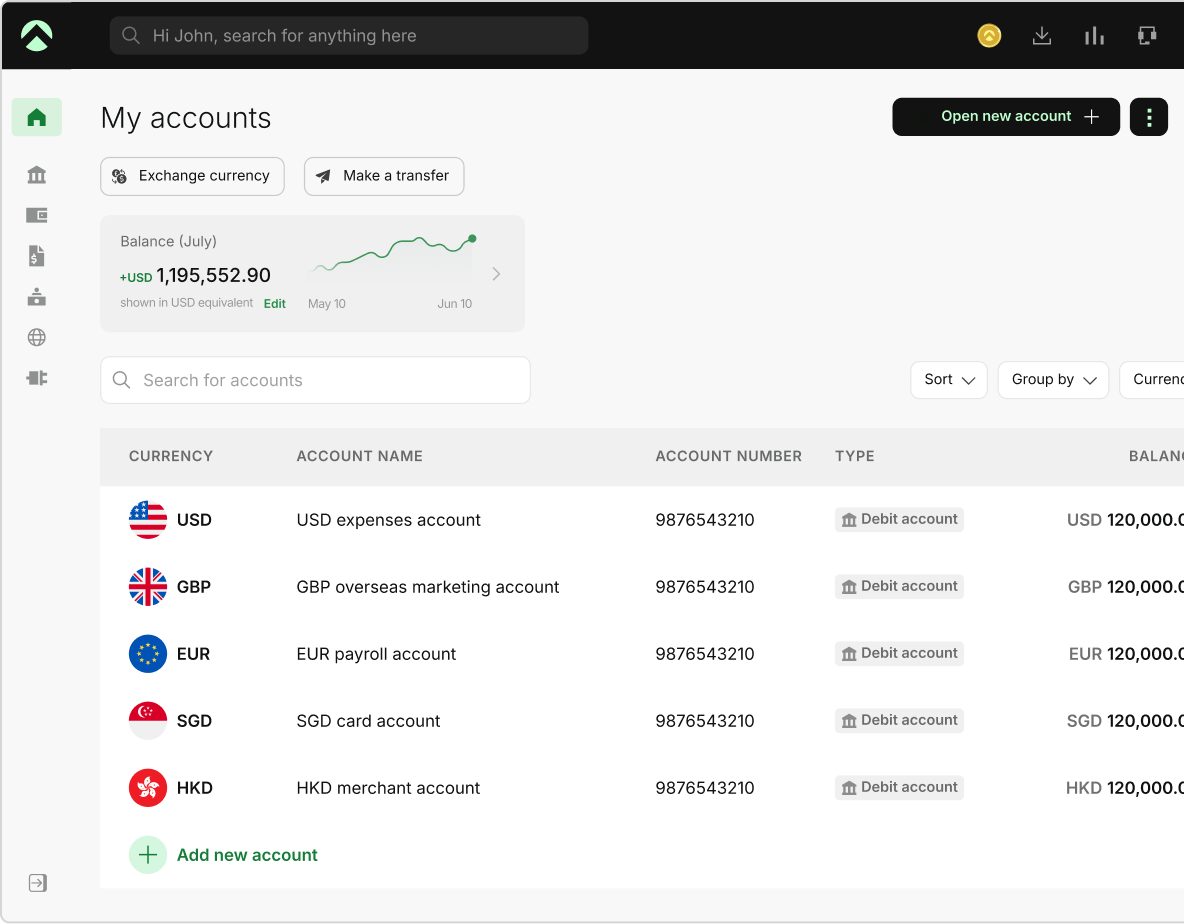
One Aspire account to manage your business finances in one place.
Get a business account¹, issue corporate cards², manage expenses, and automate financial workflows, all from one powerful platform built for modern businesses.
You're six months into a USD $200,000 construction project. Your crew is working steadily, materials are flowing in, and the work is progressing on schedule. Everything seems to be going well.
Then your accountant pulls the numbers.
You're going to lose USD $15,000 on this project.
The problem wasn't your crew, your estimates, or your execution. It was your construction company accounting. Specifically, it was the decisions you made (or didn't make) about tracking money, recognizing revenue, and managing payments. By the time you realized the problem, it was too late to course correct.
Such a scenario happens to construction companies regularly. Not because owners are careless, but because construction accounting is genuinely different from standard business accounting, and most founders discover this difference only after experiencing unexpected losses.
This construction company accounting 101 guide cuts through the complexity. It's not a textbook on job costing methods or revenue recognition standards. Instead, it's about the three decisions that actually determine whether you make money on every project and how to automate the operational chaos so you can scale without hiring a full accounting department.
Why accounting for construction is different from standard accounting
In most businesses, accounting is administrative. You invoice customers, record expenses, and file taxes. At the end of the month, you review the numbers and move on.
Construction companies follow the same general accounting principles as any other business. In construction, these principles must be applied at the project level through industry-specific methods and contract accounting controls.
Here's why: Your company works on specific, temporary projects. Each has its own budget, timeline, labor mix, material costs, and billing cycle. Revenue does not flow continuously; rather, it clusters around key milestones. Cash does not follow revenue; it arrives late and is held in retainage, resulting in cash flow gaps. Contracts frequently include billing methods, retainage terms, and progress payment schedules that do not resemble standard invoicing.
Standard business accounting treats the company as a single entity with continuous revenue. Construction adds three critical layers on top of general accounting principles:
Industry-specific revenue methods. Depending on the contract type and duration, you may use cash basis, accrual basis, percentage-of-completion, or exempt contract accounting. Each method recognizes revenue differently and has different tax implications. General accounting principles don't specify which one to use; construction contract law and tax code do.
Cost controls are set at the project level. General accounting divides costs into categories (labor, materials, and overhead). Construction tracks costs by both category and project, because a dollar spent on Job A should not be mixed with a dollar spent on Job B. This project-level discipline is what reveals job profitability.
Contractual accounting. Construction contracts include terms (such as retention, progress billing, change orders, and earned value milestones) that must be tracked separately from standard accounting.
Change orders are especially important because they alter the original contract value, update the cost estimate, impact expected margin, change what is billed, and shift revenue recognition.
A single change order can have far-reaching consequences for your work in progress and profitability. These contractual obligations must be incorporated into your financial reports so that lenders, sureties, and owners can see an accurate financial picture.
Without accounting designed for this reality, several things happen simultaneously:
You lose visibility into which projects actually make money. You might be losing USD $5,000 on job A while making USD $8,000 on job B, and you won't know it until months after job A finishes. By then, you've already estimated the next job at job A's prices, repeating the mistake.
You can't manage cash flow effectively. You might have high revenue but zero cash because you're waiting for retainage, paying subs upfront, or billing late. This creates the classic construction trap: appearing profitable on paper while nearly running out of cash in practice.
You can't make real-time decisions about which projects to pursue, which to fix, or which to stop. You're flying blind.
Construction accounting solves these issues by tracking finances at the project level, updating constantly, and giving you visibility into profitability before a job ends. But that's only valuable if you make the right decisions about how to set it up.
The three decisions that determine your profitability
Construction accounting is based on three key decisions. Get these right, and you'll know which jobs make money and which don't. If you get them wrong, you'll find out too late to fix it.
Decision 1: Which accounting and revenue-recognition method applies
The first decision is how you’ll account for revenue, or more specifically, when you record income on your books.
There are two primary methods: cash basis and accrual basis.
Cash basis accounting records revenue when a customer pays you. If you complete a USD $50,000 job in March but receive the payment in May, you record the revenue in May. This method is simple to understand, but it distorts your financial picture. A job that is losing money may look profitable if the payment is delayed, and a profitable job may look to be losing cash if you hold the payment.
Accrual basis records revenue when you earn it, regardless of payment timing or invoicing timing. If you complete USD $50,000 of work in March, you record USD $50,000 in earned revenue in March even if you invoice in April and receive payment in June. This distinction matters in construction: you might earn revenue (complete work), invoice (send a bill), and receive payment (get cash) at three different times. That's exactly why WIP schedules track earned revenue and billings separately, to show you underbillings (work completed but not yet invoiced) and overbillings (invoiced before work is completed).
Accrual accounting gives you an accurate picture of job profitability based on work performed, not on billing or payment timing. For a deeper understanding of how accrual accounting works, see our guide to accrual accounting explained.
But construction introduces a third layer: the percentage-of-completion method. The IRS may require or allow the percentage-of-completion method (PCM) for long-term construction contracts (those that last more than one tax year). PCM calculates revenue based on the percentage of work completed during each tax period, rather than the amount of cash received or the date of invoice. This method more accurately matches revenue to actual project progress, but it is more difficult to track.
Exemptions exist. Home construction contractors and certain smaller contractors may be exempt from PCM requirements and may instead operate on an accrual or cash basis. Contract duration, gross receipts thresholds, and whether the contract is for residential or commercial/industrial work are all important considerations.
The decision is not binary. Your decision is based on contract type (home vs. commercial), contract duration (one-year vs. multi-year), contractor status and business structure, gross receipts, and the advice of your tax advisor.
The consequences are important. Different revenue-recognition methods yield different profit pictures for the same job. If you're waiting for retainage, a contract that appears to be profitable on the cash basis may actually be losing money on the PCM basis. Your job costing and work in progress (WIP) reporting must follow the same method as your tax accounting, or your profitability picture will be misleading.
For construction, accrual accounting is important because it matches revenue to work completed, giving you an accurate profit picture on each job. However, the accounting method you're required to use depends on your specific circumstances.
Per IRS Publication 538, businesses may use cash, accrual, hybrid, or special methods when permitted. Certain long-term construction contracts must generally use percentage-of-completion, but exceptions exist for home construction and certain smaller contractors. Consult your accountant about which method applies to you.
The decision: Consult with a construction-experienced CPA to determine your tax accounting method, and maintain management reporting that clearly shows project costs, earned revenue, billings, and committed costs for each job.
Decision 2: How often you update your books
The second decision is update frequency, specifically, how often you'll record transactions and review your financial position.
Some builders update books monthly. Others do it quarterly or even annually. The frequency you select will impact how well you can respond in real time to changes in cost.
Consider the timing gap: If project-cost reporting is only reviewed at the end of each month, overruns can go undetected for weeks. If you update quarterly, you discover it 90 days later. A 90-day delay in construction means the cost overrun has already progressed through multiple project phases, and you may have already applied the same cost assumption to subsequent jobs.
The builders who protect their margins update weekly. Not because they enjoy accounting, they don't. But because construction moves fast. Materials get delivered. Crews work. Subs submit invoices. Equipment gets rented. Retainage comes in or gets withheld. In a single week, dozens of transactions can shift a project's profitability.
Weekly updates allow you to catch problems in real time. You may discover halfway through a job that labor is going over budget. Discuss staffing, procurement, change order recovery, productivity, scope, and forecast assumptions with the project team. You can actually respond. If you wait until the monthly review, you've already missed a week's worth of decisions.
The decision: Commit to weekly updates of your books. This means transactions are recorded as they happen, not batched up at the end of the month. It requires discipline, but it's non-negotiable for protecting profit.
Decision 3: How you structure job costing to track costs by project
The third decision is how you will set up your job costing system to track costs by project. This is fundamental because job costing is the foundation for all project-level profitability tracking.
In practice, this requires three things:
First, a consistent cost coding structure. Assign each active project a unique job number. Create cost categories (materials, labor, equipment, subcontractors, overhead) that mirror your chart of accounts. Every transaction flows through both: "This labor cost was $5,000 for job A" and "This is Labor (account 4100)."
Second, disciplined data entry. Every invoice, timesheet, and material purchase must be tagged to a job before it gets recorded. This isn't optional; it's the difference between knowing your profitability and guessing. Builders who skip job tagging discover they can't answer profitability questions until a job closes.
Third, change order management within job costing. When a change order modifies the contract value or scope, your job cost estimate must be updated immediately. The original bid was USD $100,000. A USD $20,000 change order makes it USD $120,000. Your cost estimate changes accordingly. Without this update in your job costing records, your profit tracking will be wrong.
The consequence of poor job costing structure is severe: You can't see which jobs make money until they're done. By then, you've already estimated future jobs at the wrong prices, repeating the mistakes. You can't make mid-project decisions to improve profitability. You can't manage cash flow effectively because you don't know which projects are consuming cash vs. generating it.
The decision: Commit to a consistent job costing structure from day one. This structure becomes the backbone for everything else; WIP reports, change order tracking, profitability analysis, and ultimately, accurate bidding on future projects.
The cash flow trap: what goes wrong when you don't make these decisions
Let's be specific about what happens when founders skip these decisions.
You're running a USD $500,000 commercial project. Your crew is on site. You've purchased USD $150,000 in materials (you've received invoices but most haven't been paid yet). You've incurred USD $80,000 in labor costs through the first month (you'll pay your crew next week and have outstanding invoices from subs).
Here's the critical point: This cash flow gap exists whether you use cash basis, accrual, or percentage-of-completion accounting. Under accrual or PCM accounting, you'll recognize all these costs and see them in your financial reports. That's good for profitability visibility. But you still haven't received cash from your customer yet, and your suppliers and crew need payment now. The accounting method doesn't change the cash timing problem.
The real issue is whether you're tracking incurred and committed costs (POs issued, work performed, materials received) against your job estimate weekly. Without this visibility:
At week three, a cost overrun emerges. Your concrete estimate was $20,000, but the actual invoiced/committed costs are $28,000. Without weekly job cost tracking, you discover this at month-end. By then, you've already bid two other projects using the original $20,000 assumption.
Your customer owes you USD $80,000 for work completed through month one. The contract specifies 50% retainage on progress billing. You invoice USD $80,000, but receive only USD $40,000. The remaining USD $40,000 is held by the customer until project completion.
Your cash position becomes strained. You've incurred USD $230,000 in costs (materials, labor, subs) but received only USD $40,000 in cash. Your suppliers want payment next week. Your crew expects their paycheck. Overhead continues. Your suppliers and crew need cash, but your customer is holding retainage.
This situation is known as the cash flow trap. Under accrual or PCM accounting, your financial reports accurately show you've earned USD $80,000 in revenue and incurred USD $230,000 in costs, a loss. But you still only have USD $40,000 in cash. The accurate accounting didn't solve the cash problem; it just made the problem visible.
The cash flow trap exists because construction's business model creates structural timing gaps: you incur costs before customers pay, and customers withhold retainage until project end. No accounting method eliminates these gaps. But the right decisions help you manage them:
- First, recognize revenue according to your specific circumstances (cash/accrual/PCM). Accrual and PCM give you real profitability visibility so you can see which jobs are actually losing money
- Second, update job costs weekly so you catch cost overruns while you can still respond (adjust staffing, renegotiate with subs, improve efficiency)
- Third, structure job costing to track costs by project so you know where cash is being consumed and can forecast future cash needs
These decisions are foundational to construction accounting. They don't prevent the cash flow trap, but they make it visible and manageable. Without them, you discover cash problems too late to respond.
| Decision | Option A | Option B (Recommended) |
|---|---|---|
| Revenue recognition | Cash basis (record when paid) | Accrual basis (record when earned) |
| Update frequency | Monthly or quarterly | Weekly |
| Subpayment management | Manual spreadsheets and email | Automated PO matching and payment tracking |
Where construction accounting setups often fall short
Accounting problems don't announce themselves. They show up as warning signs. Catching these early gives you time to course correct. Missing them means discovering them when it's too late to fix the project.
You can't easily tell which jobs are profitable. If you don't have a quick way to pull project profitability by job, your accounting isn't set up for construction. You should be able to answer "How much did Job A cost vs. what did I bill?" in five minutes. If it takes an hour of digging through spreadsheets, your job costing structure needs work.
Your weekly WIP reports show unexpected variance from your original estimate. Projects evolve. Change orders, productivity, material price changes, weather, schedule shifts, and scope changes alter your original forecast. The goal isn't to match your original estimate, it's to understand why actual differs and update your estimate-to-complete accordingly.
If your weekly WIP analysis doesn't include a current forecast (not just "actual vs. budget," but "given what we know now, what will this job actually cost?"), you're missing the most important number. You need visibility into the variance and a realistic updated forecast, not an explanation of why you missed the original one.
Sub-invoices aren't being matched to their POs. You're paying subs off of invoices, but you don't have a clear record of which PO the invoice relates to. This leaves gaps in your retainage tracking and makes it hard to prove you owe what you owe when disputes arise.
Your cash-in-hand doesn’t match your profit-on-paper. You made USD $50,000 in profit last month according to your books, but your bank account shows you're nearly out of cash. This is the classic cash flow trap. It means money is stuck in retainage, materials, or unbilled work. You need visibility into where the cash actually is.
If your bookkeeper or accountant spends most of the close period on manual tasks, gathering invoices, re-entering data, reconciling accounts, hunting for missing information, rather than on analysis and reporting, your process isn't efficient. Whether you're a tiny contractor with one project or a complex contractor with twenty concurrent jobs, you should be spending close time on analysis and decision support, not on mechanical data entry.
You discover accounting problems at project closeout, not during the project. If you're learning that a job loses money only after it's finished, you're not reviewing job finances weekly. By then, the damage is done, and you've already estimated similar future jobs at the wrong cost.
Retainage tracking is scattered across emails, spreadsheets, and text messages. You can't quickly answer "How much retainage do I have outstanding right now?" or "When is it due to be released?" Retainage should be one consolidated list, updated in real time, tied to your accounting system.
Your accountant has to call and ask for information. If your accountant is frequently requesting missing data, invoices, or support for your numbers, your accounting isn't organized for professional review. Your accounting system should have everything they need or be able to supply it if they ask.
What lenders and bonding companies actually require
Understanding what banks and surety companies expect from construction company accounting helps you understand why these decisions matter. It's what determines whether you can secure a line of credit or get bonded for a major project.
Bank lending requirements. When you apply for a construction line of credit or business loan, lenders will request at minimum your last two years of tax returns, your current year profit and loss statement (month-to-date or quarter-to-date), and a balance sheet showing assets and liabilities. Lenders want these on an accrual basis. They may also request job cost reports by project to verify that your largest contracts are actually profitable and not masking losses in smaller projects.
Important: You should have a good understanding of the tax implications of your accounting choices; our guide to finding a tax advisor covers what to look for.
Surety bonding requirements. If you bid on public projects or large commercial work, you'll need a performance bond. Surety companies underwriting your bond will request detailed job cost reports for all active projects, a work-in-progress schedule showing retainage and earned revenue by job, evidence of job costing discipline, and sometimes weekly or monthly financial statements. They're verifying that you have accurate visibility into project profitability and that you track finances methodically.
SBA lenders can request business and personal financial information, tax returns, ownership details, debt schedules, projections, and supporting information based on the program and underwriting needs. Requirements vary by SBA program (7(a), microloans, etc.) and lender.
Why does this matter? That’s why these requirements make accrual accounting, weekly updates, and job-level costing crucial. Lenders and surety underwriters need to verify that you know your actual profitability. Weak or incomplete financial reporting can make underwriting harder, delay decisions, or reduce the capacity a lender or surety is willing to support. Clear accounting gives you options and credibility when you need to scale.
This also means that the decisions you make about accounting setup now affect what's possible later. If you start with sloppy accounting and discover it when you're ready for a construction line of credit, you'll have to rebuild your finances before applying. Starting right saves months and opens doors.
Building your accounting foundation: the minimal setup to get started
You don't need complex software to start. You need clarity.
Start by opening a separate business bank account. This sounds basic, but it's critical. Mixing personal and business finances makes everything harder. One account for you, one account for the business. Wire transfers between them when you take a draw.
Second, create a simple job costing system. Assign each project a job number. When you pay for materials for job A, tag that transaction as job A. When the crew works on job A, allocate those labor costs to job A. When you pay a sub for work on job A, tag it to job A.
You can do these steps in a spreadsheet initially. Create columns for:
- Job Number
- Description
- Category (Materials / Labor / Equipment / Subcontractors)
- Date
- Amount
Every transaction gets recorded here.
Third, create a chart of accounts that mirrors your job costing system. This bridges your spreadsheet to your accounting. Most construction companies use cost codes like this:
- 4100: Labor
- 4200: Materials
- 4300: Equipment
- 4400: Subcontractors
- 4500: Overhead
Every transaction flows through both your job spreadsheet and your chart of accounts. This process provides project-level visibility (how much spent on job A) and company-level visibility (how much spent on labor across all jobs).
Fourth, decide on your accounting method right now. Use accrual accounting which means recording revenue when you earn it (when you complete the work, regardless of when you invoice or get paid) and recording expenses when you incur them (when you order materials or hire a sub), not when you pay. In construction, revenue earned and amount billed diverge due to retainage, progress billing terms, and change orders, which is precisely why WIP schedules track them separately.
That's it. You don't need sophisticated accounting software yet. You need these four things: a separate business account, a job costing spreadsheet, a chart of accounts, and accrual accounting. Everything else is refinement.
The weekly habit that protects you: tracking job costs and WIP reports
Once you've built this foundation, the next step is the weekly habit that separates profitable builders from builders who discover problems too late: the weekly WIP review.
WIP stands for work-in-progress. A WIP report compares three numbers for each active job:
- How much have you spent so far (total costs incurred)?
- How much have you earned so far (revenue recognized based on work completed)?
- How much have you billed so far (invoices sent to the customer)?
Important: Change orders affect all three of these numbers. When a change order is issued, the contract value changes, affecting your revenue target. Your cost estimate may vary. The expected profit margin varies. Your billing (what you can charge the customer) changes. Your WIP schedule must be updated to reflect the new contract value and cost estimate, or your profitability projections will be incorrect.
Builders who fail to track change orders in their WIP reports discover profit issues later. A USD $50,000 change order may appear to be a win (higher contract value), but if it incurs additional costs of USD $55,000, your margin will be reduced. You will not see this until the job is completed unless you update your WIP schedule when the change order is received.
These three numbers should align in a specific way. If you've completed 50% of a USD $100,000 job, you should have earned USD $50,000 in revenue. If your costs are USD $30,000 so far, you should be tracking toward a USD $20,000 profit.
The analysis requires three numbers: budgeted total cost, actual costs to date, and percent complete. If your budget is USD $100,000 and you're 40% complete, you should have spent approximately USD $40,000 (40% of budget). If you've actually spent USD $45,000, you're running over budget on that work. But if you've only earned USD $40,000 while spending USD $45,000, that doesn't automatically mean overrun, it could mean costs are front-loaded (materials purchased upfront, labor spread over time). The real signal: actual costs vs. budgeted costs for your progress level, not costs vs. earned revenue.
Every Friday, spend 30 minutes running a WIP report for each active job. This single habit, 30 minutes a week, is the difference between catching problems early and discovering disasters late.
The WIP report helps you:
- Identify potential profit or loss early
- See whether a job is trending toward a profit or a loss before it is complete
- Take corrective action while there is still time by improving efficiency, renegotiating subcontractor costs, adjusting scope, or pausing work if necessary
- Keep billing aligned with project progress
- Ensure billings accurately reflect the work completed
- Underbilling can create cash flow challenges, while overbilling can result in liabilities that must be resolved later
- Forecast the final cost of the job
- Estimate what the project is likely to cost based on current performance, material prices, productivity, weather impacts, change orders, and schedule adjustments
- Compare projected costs to the original budget to understand variances and their causes
- Understand why variances occur
- Determine whether differences from the budget are driven by estimating errors, scope changes, productivity issues, cost increases, or efficiency gains
- Use these insights to make informed decisions on current and future projects
- Improve estimating accuracy
- Compare actual costs incurred to the original estimate
- Identify patterns, such as labor or material costs consistently exceeding budget, and apply those learnings to future bids and estimates
This is non-negotiable. Don't skip weekly WIP reviews. They're the early warning system for everything that can go wrong in construction.
Automating the hardest part: when to scale your accounting automation
You can build a solid accounting foundation with spreadsheets and discipline. But there's one area where manual processes become inefficient: managing subcontractor payments, POs, invoicing, and retainage across multiple concurrent jobs.
When you're running 5–10 active projects with 50+ subcontractors, manual tracking consumes significant time. Invoices require verification. Retainage tracking requires separate records. Payment scheduling requires manual coordination.
This is where accounting automation becomes valuable. Instead of managing subpayments through spreadsheets and email, you move to a system that automates the workflow. For a comprehensive look at how accounting automation works and what it can handle, see the accounting automation explained.
Aspire’s procure-to-pay system specifically handles:
- Centralizes all POs, contracts, and invoices in one place
- Matches incoming sub invoices to POs automatically
- Automatically applies retainage according to contract terms
- Schedules payments based on your approval workflow and cash availability
- Tracks what's been paid and what retainage is still owed, flagging it for release at closeout
- Integrates with your business account for direct payment processing
The signals that automation would help: invoices awaiting approval are backing up, PO and invoice mismatches are happening frequently, your team is re-entering the same invoice data multiple times, vendor payments are slipping beyond terms, your finance team is spending increasing time chasing paperwork instead of analysis, or your accounting reconciliation is consistently lagging by days or weeks.
The path forward
Construction accounting isn't complicated once you understand the framework. It's three decisions (which accounting and revenue-recognition method applies, how often you update your books, and how you structure job costing to track costs by project) and one weekly habit (WIP review).
Start with the basics: open a business account, implement job costing, commit to weekly reviews, and build the habit of checking your numbers every Friday.
As you grow and your manual processes start to strain, automate subcontractor payment management. This is where procure-to-pay solutions become invaluable; they eliminate the administrative chaos while keeping your accounting accurate in real time.
The founders who scale successfully aren't the ones with the best estimating skills. They're the ones who know their numbers in real time and make decisions based on data, not guesses.
That's construction accounting. Not theory. Practice.
Frequently Asked Questions
It is dependent on your job volume and the size of your team. For smaller builders, QuickBooks Online or Xero with construction add-ons work well. For a detailed look at Xero's features, see our review of Xero's business accounting software.
As you scale, consider platforms specifically designed for construction accounting, such as Knowify or Procore. Think about your concurrent project volume, if you need a mobile app or office accounting team, and your budget.
Yes. Most accounting software platforms have construction accounting programs and training resources. Certifications and tutorials are available for QuickBooks and Xero and construction-specific platforms like Procore. You may also want to look at construction accounting programs or courses recommended by your accountant specific to your accounting method and business structure.
You can allocate overhead as a percentage of job costs (say 15% of total job cost) or as a flat monthly fee per job. Consistency is key—pick a method and use it for every job so you can accurately compare profitability between projects.
Retainage is a percentage of each invoice (typically 5-10%, depending on contract terms) that the customer holds until the project is complete. If you don't track this amount separately, your profit calculation will be overstated. At project closeout, you'll have retainage obligations to your subs that require immediate payment, while retainage from the customer may still be pending.
For your first 1–2 projects, yes. For more than that, spreadsheet-only accounting becomes inefficient. Spreadsheets are error-prone, hard to audit, and don’t scale. It takes time to maintain, and the problems of data integrity increase as things get more complex. Once you have several jobs running at the same time, accounting software is worth the investment.
Open a separate business bank account, assign each project a job number, create a chart of accounts aligned with your job costs, and commit to weekly WIP reviews. That's the foundation. Everything else is refinement.
Weekly. Construction has rapid cash flow, with money coming in and out constantly. Weekly reconciliation catches errors and fraud early. Monthly reconciliation is too late to identify issues.
You need a construction accountant or CPA, someone with construction experience, to set up your system right and to provide tax advice. You may not need a full-time bookkeeper in the beginning, but as you grow to the point where you’re handling more simultaneous projects, a bookkeeper becomes useful. They handle data entry, process invoices, and generate weekly WIP reports, freeing you up to focus on operations and project delivery.
Not tracking costs by individual job. Without job-level tracking, you can't see which projects make money and which lose money. You repeat profitable mistakes and repeat losing mistakes. This single mistake, failing to isolate project costs, is what causes most accounting failures in construction companies.
Construction accounting tracks the finances of each project, monitoring job costing, retainage, progress billing, and work-in-progress reporting. General business accounting is for the entire company as one entity that makes money on a regular basis. Construction contractor accounting needs methods that work for temporary projects with specific start and end dates and many jobs being done at the same time.
Change orders alter the original contract value and cost estimate, which affects your expected profit margin and work in progress calculations. When a change order is issued, you must update your work in progress (WIP) schedule with the new contract value and adjusted cost estimate.
Builders who fail to update their WIP schedules when change orders occur will experience profit issues later; a USD $50,000 change order may appear to be a win until you realize it required USD $55,000 in additional costs, reducing your actual margin. Track change orders in your job costing system right away, rather than at the end of the month.
Sources
- https://www.foundationsoft.com/learn/construction-accounting-101/ - June 29, 2026
- https://cmicglobal.com/resources/article/guide-to-construction-accounting-from-basics-to-advanced-concepts - June 29, 2026
- https://www.werxapp.com/academy/construction-accounting-basics/ - June 3, 2026
- https://constructionexec.com/article/the-complete-guide-to-construction-accounting/ - April 3, 2026
- https://www.xero.com/us/guides/construction-accounting/ - May 15, 2026
- https://ramp.com/blog/accounting-for-construction - May 6, 2026
- https://www.netsuite.com/portal/resource/articles/accounting/construction-accounting-methods.shtml - May 20, 2025
- https://www.aptora.com/blog/construction-accounting - May 9, 2025
- https://www.fylehq.com/blog/construction-accounting - October 29, 2025
- https://assurancedimensions.com/work-in-progress-construction-accounting-basics/ - October 30, 2025
This blog is for general information only and does not constitute financial, legal, tax, or professional advice. Aspire’s services are subject to the terms outlined in our ’Terms of Service’ and ’Pricing’ pages. We make no guarantees as to the accuracy, completeness, or timeliness of the content, and past results do not indicate future performance. Always consult a qualified professional before acting on any information provided.
Bintang Lestada
Writer
Bintang is a seasoned writer specialising in fintech, agtech, politics, and pop culture. With a writing history at VICE ASIA, Letterboxd, Whiteboard Journal and other reputable organisations, Bintang leverages their broad range of experiences to resources that educate audiences, build trust, and support business growth.
Aspire Launchpad
Supercharge your finance operations with Aspire
Find out how Aspire can help you speed up your end-to-end finance processes from payments to expense management.

Latest articles

QuickBooks vs Xero: Key differences, costs and which is better
QuickBooks vs Xero compared on features, pricing, users, reporting, and ease of use. See which accounting software is a better fit for your business.

How general liability vs professional liability insurance works in the US
Small business guide to general liability insurance. Learn about costs and coverage, if you need it, and how to choose the right policy.

Best multi-currency business accounts in the US for 2026
Compare the best multi-currency business accounts in the US for 2026. Explore fees, FX costs, currencies, holding, receiving options, and key features.