


Best real estate accounting software in the US for investors, developers and property managers

Bintang Lestada

Summary
Real estate accounting software isn't one-size-fits-all. The right option depends on whether you're an investor, property manager or developer and how complex your portfolio is
For smaller businesses that mainly need accounting, a general platform such as QuickBooks Online can provide broad financial tools without adding property-management features you may not need
The best accounting software for real estate investors can look different from what a large property management company needs, especially once multiple properties or entities are involved
Accounting software for property management can bring rent collection, leasing, maintenance and property accounting into the same system, which can be useful for businesses managing tenants and owners
Before choosing real estate accounting software, look at the number of properties and entities you manage, the workflows you need, your integrations and how much manual bookkeeping it can reduce
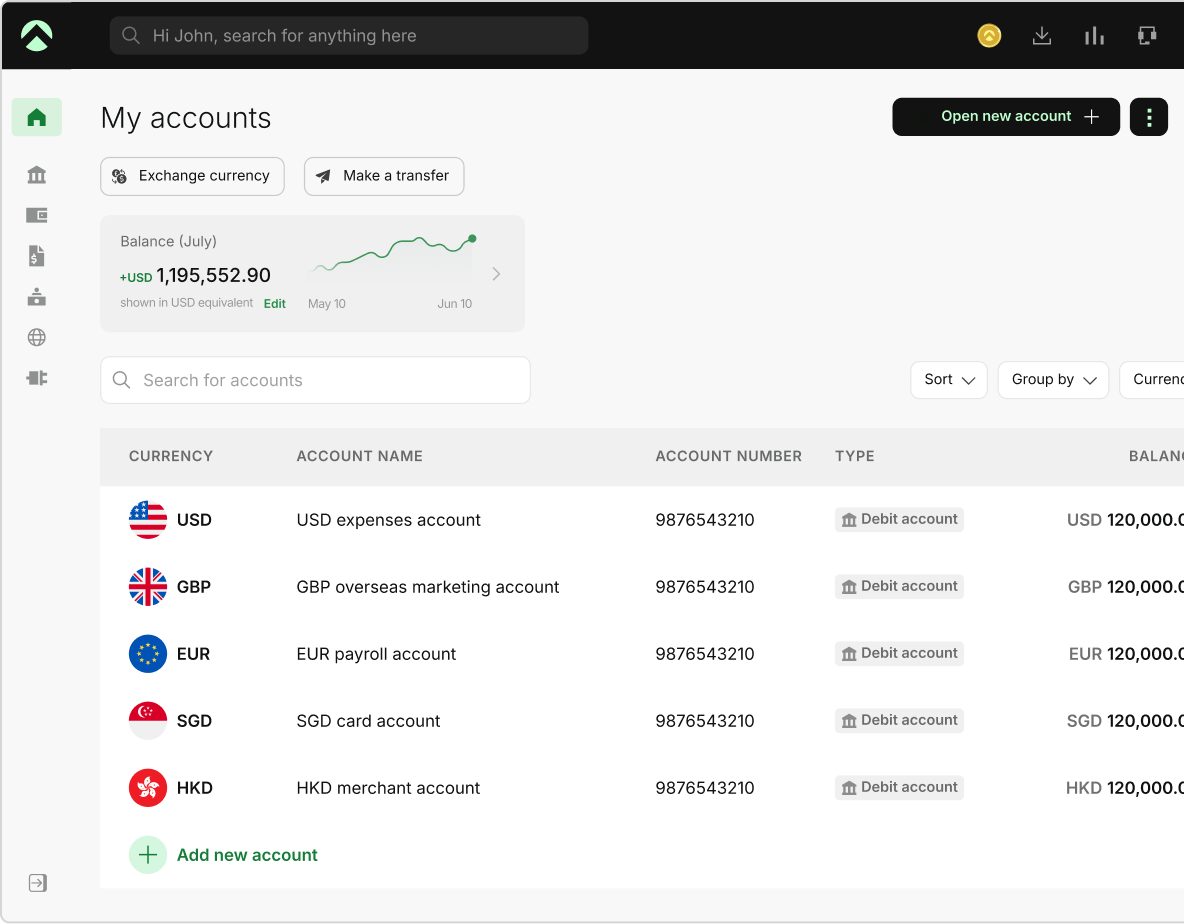
One Aspire account to manage your business finances in one place.
Get a business account¹, issue corporate cards², manage expenses, and automate financial workflows, all from one powerful platform built for modern businesses.
When you start looking at real estate accounting software, most platforms seem to offer everything you could need. The differences become much clearer when you compare how they actually handle the specific needs of your business.
As a founder, you need to look at things like property-level reporting, transaction automation and scalability alongside the type of real estate business you run. What works for an investor may not be the right fit for a property manager or developer.
What is real estate accounting software in the US
Real estate accounting software is built to keep the finances of a property business organized across its different moving parts. That can mean tracking income and expenses by property, keeping separate entities and their books organized, following costs through development or construction projects, and connecting leases with the payments and financial activity they generate. It can also help businesses manage financial information for owners and investors as their portfolios grow.
One key feature of real estate accounting software is property-level reporting, which lets you separate the income, expenses and operating results of individual properties. A class, location or property tag can help you organize these results by asset. But that is not the same as multi-entity accounting. If different properties sit under separate LLCs or other legal entities, you may need distinct books for each one, along with intercompany accounting and consolidated reporting across the wider business.
Before choosing your real estate accounting software, keep in mind that your needs will change as your business grows. More properties or entities can mean more transactions to organize, while bringing in investors or starting development projects can add different reporting and tracking needs. General accounting platforms offer flexibility across different financial tasks, while real-estate-focused software is designed around property-related workflows.
Real estate accounting software vs. property management software
| Real estate accounting software | Property management software | |
|---|---|---|
| Main focus | Records, organizes and reports your business's financial activity | Combines financial management with day-to-day property operations |
| Accounting | Tracks income, expenses, transactions and financial reports | Includes accounting alongside property-related financial workflows |
| Property management | May have limited property-specific tools | Can cover tasks such as rent collection, leasing and owner management |
| Best suited to | For founders looking for real estate accounting software to manage their books, financial reporting and real estate bookkeeping | For founders who require a complete property accounting software that manages rental properties, leasing, rent collection and owner relationships |
What to look for in real estate accounting software
- Property management: If you're managing tenants, leases or rental payments, check how well the software supports those workflows alongside your accounting. This can save you from having to manage property operations and financial records across completely separate systems.
- Categorizing finances: Being able to separate income and expenses by property, entity, project, security deposits or any other category can make a difference as your business grows. A founder with several properties may need more structure than someone managing the finances of a single property. This is also worth considering when comparing the best accounting software for real estate investors, especially if you handle tenant deposits or money on behalf of property owners.
- Project accounting: accounting software for property developers should support job costing by tracking a project's total cost, budget, committed costs and actual expenses. It should also help compare spending against the budget and keep development costs organized as the project progresses.
- Banking and transaction automation: Look at how much routine bookkeeping the platform can take off your hands. Automatic transaction categorization, reconciliation and receipt capture can reduce the amount of manual data entry involved in keeping your books up to date.
- Integrations: Your real estate accounting software should work with the other systems you already rely on. Check for integrations with payment, payroll and other business tools so you're not constantly moving information between platforms.
You may also need a separate way to manage company spending alongside your accounting setup.
Best real estate accounting software in the US
| Software | Best for | Ideal portfolio/business type | Real estate-specific | Property accounting | Multi-entity | Property management | Project/development accounting | Starting price |
|---|---|---|---|---|---|---|---|---|
| QuickBooks Online | Small real estate investors and businesses | Small portfolios with straightforward accounting needs | No | — | — | — | — | USD $38/month |
| Buildium | Property managers and landlords | Rental portfolios with multiple units and day-to-day property management needs | Yes | ✓ | — | ✓ | — | USD $62/month |
| AppFolio | Growing property management businesses | Growing rental portfolios that need accounting alongside property management | Yes | ✓ | — | ✓ | — | Quote-based |
| Yardi Voyager | Large property managers and complex portfolios | Large, multi-property operations with complex accounting and management needs | Yes | ✓ | ✓ | ✓ | ✓ | Quote-based |
| MRI Software | Commercial real estate and complex property operations | Larger commercial portfolios with complex leases and financial reporting | Yes | ✓ | ✓ | ✓ | ✓ | Quote-based |
| Sage Intacct Construction | Real estate developers and complex development projects | Development businesses managing detailed project costs, budgets and multiple entities | Yes | ✓ | ✓ | — | ✓ | Quote-based |
1. QuickBooks Online
Best for: Small real estate investors and businesses that want flexible accounting
QuickBooks Online is a general accounting platform, rather than one built specifically for real estate. It covers the day-to-day essentials such as income and expenses, invoicing, banking and financial reporting, so it can be a good fit if, as a founder, you're looking for real estate investor accounting software to keep your finances organized without needing property management built into the same system.
Business scale: The plans range from 1 billable user on the Free plan to 25 users on Advanced. Paid plans also include additional access for accountants, which gives you some flexibility if your books are being handled with outside accounting support.
Property-level tracking: QuickBooks Online Plus supports 40 combined classes and locations, while Advanced allows unlimited classes and locations. You can use these to separate financial activity across properties and get a clearer picture of how different parts of the portfolio are performing.
Accounting and reporting: Plus includes project tracking and job costing, while Advanced adds more advanced reporting, custom dashboards and forecasting. That makes QuickBooks a better fit when your priority is broad accounting functionality and you only need basic ways to organize finances across properties.
Pricing: If you’re looking at the paid plans, QuickBooks Online starts at USD $38/month for Simple Start, while Essentials costs USD $85/month, Plus is USD $140/month and Advanced is USD $340/month. There’s currently a 50% discount for the first three months, although promotional offers can change.
Real-world fit: Say you run 8 rental properties, have 3 people who need access to the books and want to keep each property's finances organized separately. QuickBooks Online Plus would give you 5 billable users, 40 combined classes and locations, 250 Chart of Accounts entries and 4 custom fields per transaction. You could use the class or location structure to separate the 8 properties while still having room for other business segments. If the business eventually grows to 25 users or needs unlimited classes and locations, Advanced provides those higher limits.
Note: Classes or locations can help segment reporting within one company file, but separate legal entities may require separate books and a different consolidation setup.
2. Buildium
Best for: Property managers and landlords managing multiple units
Buildium is accounting property management software with accounting built in, so you can manage the financial and day-to-day side of your rental properties in one place. Alongside property-level bookkeeping, rent collection, vendor payments and financial reporting, it also covers leasing, maintenance and resident communications. For a founder managing a growing rental portfolio, that means fewer separate systems to keep track of as the business grows.
Business scale: They can even support businesses with over 5000 rental units with their custom pricing. On top of that each plan can help scaling businesses by adding business bank accounts for USD $99 each. The Growth plan includes 10 free accounts, while Premium comes with 100, giving larger property management businesses more room to manage their banking within the platform.
Property-level tracking: Buildium is built around property accounting, so you can track budgets, rent collection and vendor payments with property-level bookkeeping. Its reporting includes balance sheets, income statements, cash flow statements, budget-versus-actuals, general ledgers and owner statements, while the owner portal lets property owners access their property statements and transaction history.
Accounting and reporting: Buildium acts as a real estate bookkeeping software and rent collection together rather than as 2 different platforms. Residents can pay by bank account or credit card and set up recurring payments through Resident Center, while Buildium records those transactions alongside the property's other financial activity.
Pricing: Buildium starts at USD $62/month for Essential, while Growth costs USD $192/month and Premium costs USD $400/month. Essential includes the core accounting, maintenance and leasing features, while Growth adds more reporting automation and Premium adds features such as Open API. Buildium also offers a 14-day free trial with no credit card required.
Real-world fit: A company managing 500 rental units could use Buildium to bring rent collection, property accounting and owner reporting together in one platform. Its accounting tools cover rent, fees, deposits and refunds, while Resident Center supports recurring resident payments and the owner portal gives property owners access to their financial information. For a more automated setup, Growth includes 10 free business bank accounts, while Premium increases that to 100 and adds Open API access.
3. AppFolio
Best for: Growing property management businesses and larger portfolios
AppFolio combines property management and accounting in one platform, giving you a way to handle property finances without separating them from the day-to-day work of managing your portfolio. Alongside financial reporting and bank reconciliation, it covers areas such as rent collection, leasing, maintenance and resident communication. For a founder growing a property management business, having those functions connected can make it easier to keep the financial side of each property aligned with what's happening operationally.
Business scale: AppFolio's plans are structured around growing property management businesses, with Core requiring a minimum of 50 units. Plus and Max add more advanced capabilities as your portfolio and operational needs become more complex, including expanded integrations and API access.
Property-level tracking: AppFolio provides property-focused financial reporting, including income statements, balance sheets, cash-flow statements and owner statements. Customizable reports with drill-down capabilities can also help you move from portfolio-level figures into the underlying property and transaction data.
Accounting and reporting: AppFolio puts a strong emphasis on reducing manual accounting work through tools such as Smart Bill Entry, Bill Approval Flows, automated bank reconciliation and automated late fees. The platform also supports online rent and other payment workflows, including eCheck, keeping collections connected to the accounting side of the system.
Pricing: AppFolio uses a quote-based pricing model rather than publishing monthly prices for its plans. Core has a 50-unit minimum, while Plus and Max have minimum spend and unit requirements that AppFolio asks businesses to confirm directly. Core includes property accounting and reports, while Plus adds advanced budgeting and accounting, advanced data analysis and premium integrations. Max adds features such as leasing CRM, Leasing Signals and read/write API access.
Real-world fit: A 75-unit portfolio falls within AppFolio Core's 50-unit minimum range. That gives a property management company at this scale access to its accounting, leasing and maintenance tools without moving into a higher tier. Plus becomes worth considering when the business needs features such as advanced budgeting, data analysis or premium integrations.
4. Yardi
Best for: Real estate businesses ranging from smaller rental portfolios to large, complex property operations
Yardi approaches property management with 2 different platforms: Yardi Breeze for smaller, more straightforward portfolios and Yardi Voyager for larger operations with more complex needs. Both bring property management and accounting together, but Voyager offers a much broader set of tools for businesses managing more properties, entities and financial workflows. Its centralized database keeps financial and property information together, with accounting designed to meet applicable GAAP and IFRS requirements.
Business scale: Yardi Breeze was designed for portfolios of 1,000 units or less, making it the more approachable option for smaller and mid-sized property businesses. Voyager is aimed at more complex portfolios and doesn't publish a fixed unit limit.
Property-level tracking: With Breeze or Voyager, you can keep financial information tied to individual properties while still seeing how the wider portfolio is performing. Voyager adds more depth for larger operations, with centralized property and financial data that can be used for portfolio-wide reporting and analysis. For a founder managing multiple properties, that makes it easier to move between an individual property's numbers and the bigger picture.
Accounting and reporting: Breeze includes property accounting, online payments, vendor payments, budgeting, customizable financial statements and owner reports. Voyager goes further for larger operations with accounts payable and receivable, general ledger accounting, budgets, batch processing and portfolio-wide financial reporting. For investment firms, Yardi Investment Accounting also supports ownership structures, consolidations, eliminations, capital calls, distributions and investor reporting.
Pricing: Yardi does not publish a standard monthly price for Voyager. Pricing depends on the products and services selected, with implementation also forming part of the setup for real estate accounting software at this scale. Yardi offers full-service implementation that can include data conversion and training, with active properties, units, owners, bank accounts, budgets and other records converted from an existing system.
Real-world fit: A property management business overseeing 5,000+ units across multiple entities is the kind of operation where Voyager's broader setup starts to make sense. Yardi says Voyager is designed for complex real estate operators and can manage different property types in one database, while its accounting system supports consolidations and intercompany postings. For an operation at this scale, having property management, accounting, reporting and other workflows connected can be more useful than relying on separate systems for each function.
5. MRI Software
Best for: Commercial real estate businesses managing complex portfolios
MRI Software is built specifically for real estate, with its commercial platform bringing property management, accounting, leasing and operational data together. Its financial tools cover general ledger accounting, accounts payable and receivable, budgeting, forecasting and reporting, while the wider platform supports rent, recoveries and lease-related workflows. For a founder managing commercial properties, this gives you a more property-focused setup than a general accounting platform.
Business scale: MRI is designed for large and complex real estate operations, and its wider platform currently serves 45,000+ clients across 170+ countries, managing 23 million units and 5.5 million leases. For lease-heavy businesses specifically, ProLease has been used to manage 8.8 million leases, while its Central platform can scale from a smaller number of leases to 10,000+ properties.
Property-level tracking: MRI keeps property and financial data connected, giving businesses visibility from individual properties through to the wider portfolio. Its commercial platform brings rent, outgoings and reporting together, while its configurable reporting tools support drill-downs into more detailed data. That can be particularly useful when you're managing multiple properties and need to understand what's happening at both the asset and portfolio level.
Accounting and reporting: MRI brings general ledger, accounts payable and receivable, budgeting and financial reporting together with tools for consolidation and portfolio analysis. Its ProLease platform also supports ASC 842, IFRS 16, GASB 87 and FRS 102, and can automate journal entries and disclosures.
Pricing: MRI does not publish a standard monthly price for its commercial real estate platform. Costs depend on the products and modules a business needs, with implementation support available as part of the setup. This makes MRI better suited to businesses looking for a tailored platform than a straightforward self-serve accounting subscription.
Real-world fit: Managing 50 commercial properties means keeping track of a lot more than rent coming in and expenses going out. With multiple leases, tenants and properties to account for, MRI can bring the lease and tenant information together with the accounting and reporting, giving the property manager a single view of the portfolio's financial activity.
6. Sage Intacct Construction
Best for: Real estate developers and businesses managing complex development projects
Sage Intacct Construction is cloud accounting software built for construction businesses and real estate developers. It brings financial management together with construction and property-management workflows, so founders can keep track of project finances alongside the operational side of development.
Business scale: Sage Intacct can consolidate hundreds of entities across multiple currencies, making it useful for developers operating through different legal entities or across multiple markets. Aspire's1 business account can complement this setup by supporting payments in 98+ currencies*, giving you more flexibility when managing cross-border project payments and expenses.
Property-level tracking: Sage's Real Estate Developer package brings its financial, construction and property-management tools together, covering everything from development costs and project funding to leases, rent rolls and property portfolios. This lets developers keep financial information connected across both active projects and properties they already own or manage.
Accounting and reporting: Sage Intacct Construction helps you keep a close eye on project finances, from job costing and budget tracking to change orders and WIP reporting. The Real Estate Developer package also gives you 150+ ready-made reports, making it easier to see what's happening across your projects, compare performance over time and share the information with your team.
Pricing: Sage does not publish a standard monthly price for Sage Intacct Construction or its Real Estate Developer package. Its official US site directs businesses to request pricing, so the cost depends on the products and capabilities included in the setup.
Real-world fit: A developer who wants a clear view of their projects’ financial and operational performance could use Sage’s 150+ ready-made reports to find the information they need quickly, compare performance and share insights with stakeholders.
How to choose the right real estate accounting software in the US
Start with your business type and the complexity of your portfolio. An investor, property manager and developer will have different needs, while multiple properties or entities can add another layer of accounting work.
Then decide whether you need the broader accounting tools of a general platform or the property-focused workflows of real estate accounting software. If property management is part of the job, look for accounting software that can handle those workflows too. Real estate bookkeeping software should also fit into your wider setup, so check its integrations, scalability and how much manual bookkeeping it can reduce.
For a founder, the right choice is the one that fits how your business operates now without becoming a problem as it grows.
Frequently Asked Questions
Yes. If you mainly need to manage income, expenses and financial reporting, general accounting software can cover those needs. A property-focused platform makes more sense when you also need tools built around managing properties and tenants.
Not necessarily. A general accounting platform may be enough for a small portfolio, especially if you mainly need to track income, expenses and financial reports. Your needs can change as you add properties or separate entities.
Yes. Property management platforms can combine accounting with workflows such as rent collection, leasing, maintenance and owner reporting. General accounting software focuses more on the financial side of the business.
Yes, but the way it handles them varies. Some platforms let you organize financial activity by property, while real-estate-focused systems can connect property accounting with broader portfolio and management workflows.
Start with how many properties and entities you manage and whether you're an investor, property manager or developer. Then look at the accounting features, property management tools, integrations and how much manual bookkeeping the software can take off your plate.
Property accounting focuses on real estate finances, such as tracking income and expenses by property and managing owner or tenant funds. Bookkeeping software is broader and handles a business's general financial records. The right fit depends on whether you need property-specific workflows or mainly want to organize your books.
Sources
- https://quickbooks.intuit.com/pricing/ (September 7, 2026)
- https://www.buildium.com/pricing/ (September 7, 2026)
- https://www.buildium.com/features/property-management-accounting/ (September 7, 2026)
- https://www.appfolio.com/pricing (September 7, 2026)
- https://www.yardi.com/product/voyager-commercial/ (September 7, 2026)
- https://www.mrisoftware.com/products/prolease/ (September 7, 2026)
This blog is for general information only and does not constitute financial, legal, tax, or professional advice. Aspire’s services are subject to the terms outlined in our ’Terms of Service’ and ’Pricing’ pages. We make no guarantees as to the accuracy, completeness, or timeliness of the content, and past results do not indicate future performance. Always consult a qualified professional before acting on any information provided.
Bintang Lestada
Writer
Bintang is a seasoned writer specialising in fintech, agtech, politics, and pop culture. With a writing history at VICE ASIA, Letterboxd, Whiteboard Journal and other reputable organisations, Bintang leverages their broad range of experiences to resources that educate audiences, build trust, and support business growth.
Aspire Launchpad
Supercharge your finance operations with Aspire
Find out how Aspire can help you speed up your end-to-end finance processes from payments to expense management.

Latest articles

QuickBooks vs Xero: Key differences, costs and which is better
QuickBooks vs Xero compared on features, pricing, users, reporting, and ease of use. See which accounting software is a better fit for your business.

How general liability vs professional liability insurance works in the US
Small business guide to general liability insurance. Learn about costs and coverage, if you need it, and how to choose the right policy.

Best multi-currency business accounts in the US for 2026
Compare the best multi-currency business accounts in the US for 2026. Explore fees, FX costs, currencies, holding, receiving options, and key features.