


Term loan vs line of credit: How founders choose the right financing structure

Content Team

Summary
A term loan provides a lump sum upfront and is usually suited to defined, longer-term investments with a structured repayment schedule
A business line of credit provides flexible access to funds up to an approved limit and is suited to short-term working-capital and cash-flow needs
The key difference between a loan and line of credit is not simply the interest rate; it is how and when your business needs to access and repay capital
A term loan may fit a known investment such as equipment or expansion, while a line of credit may fit timing gaps caused by receivables, payroll, inventory, or seasonal expenses
Some firms use both: a term loan for planned investment and a line of credit for short-term liquidity needs
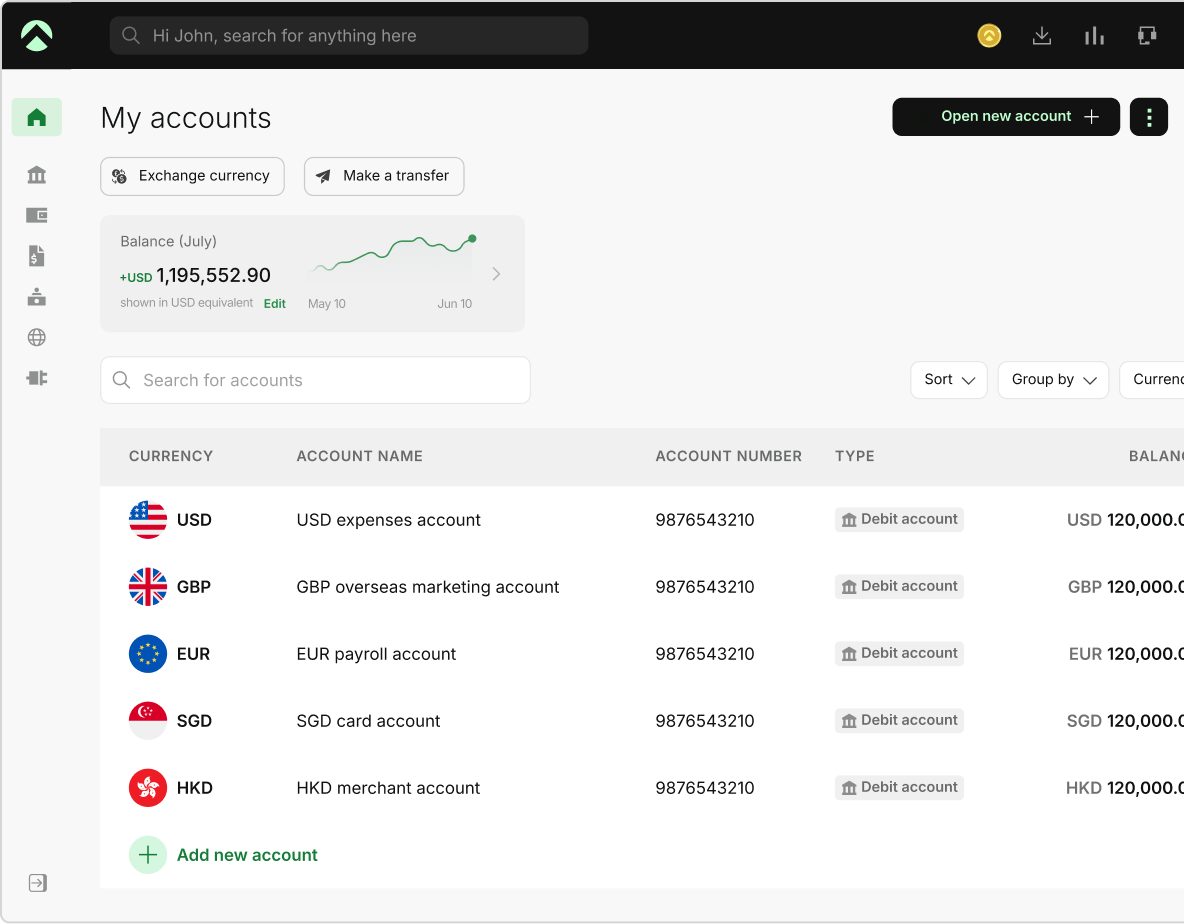
One Aspire account to manage your business finances in one place.
Get a business account¹, issue corporate cards², manage expenses, and automate financial workflows, all from one powerful platform built for modern businesses.
You usually don’t compare financing options during calm periods. You do it when timing breaks. Revenue grows faster than collections. Hiring moves ahead of cash. A supplier tightens payment terms. An expansion opportunity appears with a short decision window.
The simplest difference is that a term loan provides your business a defined amount of capital upfront and a scheduled repayment plan. In contrast, a business line of credit gives you access to a credit limit that you can generally draw from as needed. The right structure depends on what you’re financing, how predictable your cash flow is, and how quickly you expect to repay the borrowed funds.
Most founders initially frame the term loan vs line of credit choice as which loan is cheaper. A more useful starting point is to ask whether the financing structure matches the timing of your business’s cash inflows and outflows.
What is a term loan
A term loan provides capital upfront, and you repay it via scheduled installments over a defined period. The repayment period, interest rate, fees, and collateral requirements vary by lender, loan type, and borrower.
The logic is simple. Match the financing timeline to the life of what you’re building. You make one capital decision and repay it steadily as the investment begins generating cash.
This is structured growth capital. It commits to capacity and repayment discipline, a key distinction often discussed in line of credit vs loan evaluations.
Founder situations
You take a term loan when execution begins.
- You commit to the factory line that doubles production output.
- You sign the lease on a 6,000 sq ft warehouse months before Q4 inventory arrives.
- You invest in infrastructure that won’t pay back next quarter but will define the next phase of growth.
These are classic term loan vs line of credit moments where long-term certainty matters more than short-term flexibility.
Operational advantages
Predictable payments create control. You know exactly what leaves the account every month, which helps planning stay stable as the business grows.
Because capital arrives upfront, projects move forward immediately instead of waiting for cash accumulation.
The real constraint
The same structure that provides certainty reduces timing control later. Once the loan is disbursed, you cannot simply redraw repaid principal without applying for additional funding, and scheduled repayments continue even during slower revenue periods.
Taking a term loan signals commitment to a decision whose returns justify long-term obligation, unlike a revolving facility in a line of credit vs a loan comparison.
What is a line of credit
A business line of credit is a revolving financing service that gives a firm access to funds up to a certain set credit limit. With a line of credit, you don’t receive the full amount upfront. Instead, you can draw cash as needed, repay the amount borrowed as per the facility’s terms, and access the available credit again during the draw period.
Interest applies to what you use, not the unused credit limit. Although fees and pricing structures may vary by lender.
Lines of credit solve a different issue than a term loan. It helps manage short-term working capital needs and timing gaps between business expenses and incoming cash.
Founder situations
- Payroll hits on the 15th, while enterprise clients pay Net-60.
- A supplier requests 50% upfront before shipping inventory tied to signed orders.
- Tax payments arrive before receivables are clear.
- Seasonal inventory must be purchased before the related sales are collected.
These everyday operational realities drive many term loan vs line of credit decisions.
Operational advantages
Control over timing is the defining advantage.
You draw funds when gaps appear, repay when cash returns, and reuse the available credit repeatedly during the facility’s active period, depending on the lender’s terms.
Many companies maintain unused credit purely to preserve optional timing control.
The real constraint
It gets risky when revolving credit replaces structured financing.
Short-term borrowing gradually turns into long-term exposure when used for multi-year investments. Lines of credit work best with discipline:
- Draw against expected inflows
- Repay after collection
- Consider whether the repayment timeline matches the life of the assets or expenses
Without discipline, access becomes expensive, a common mistake seen in the term loan vs line of credit misalignment.
Term loan vs line of credit: how founders actually evaluate the difference
Founders rarely decide using comparison tables. They decide under operating pressure.
| Factor | Term loan | Line of credit |
|---|---|---|
| What triggers the decision | A planned investment with a known price, such as equipment, expansion, or a facility buildout | A short-term cash-flow requirement, such as payroll, inventory purchases, or delayed customer payments |
| Operational objective | Build long-term capacity | Protect cash timing |
| How money arrives | Full capital deployed upfront | Funds drawn only when timing gaps appear |
| Repayment logic | Fixed payments aligned with asset payback | Repaid as receivables clear |
| Founder mindset | Commitment to execution | Control over liquidity timing |
| Best suited to | Defined, longer-term investments | Short-term working capital and cash-flow gaps |
| Interest | Generally accrues on the outstanding loan balance | Generally based on the amount drawn, subject to facility terms |
| Flexibility | Lower once the loan is funded | Higher because funds can be drawn when needed |
| Common business uses | Equipment, expansion, major projects | Payroll, inventory, receivables gaps, seasonal needs |
| Main cash-flow consideration | Can create a fixed repayment obligation | Requires discipline to avoid carrying a revolving balance |
| Key question | Can the business comfortably service the scheduled payments? | Can the business repay draws as expected cash arrives? |
| Fees | May include origination, application, closing, or other lender-specific fees | May include draw, annual, maintenance, or other facility-specific fees |
| Collateral | May be secured or unsecured, depending on the | May be secured or unsecured, depending on the lender and facility terms |
| Rate structure | May have a fixed or variable interest rate, depending on the loan terms | May have a variable or fixed rate, depending on the lender and facility terms |
Across every term loan vs line of credit discussion, lenders describe the distinction simply: term loans fund defined investments, while lines of credit stabilize daily operations.
Neither structure is inherently better. The right choice depends on the financing’s purpose, the business cash cycle, the expected repayment timeline, and the terms offered by the lender.
Term loan vs line of credit: Why financing decisions fail
That’s where most founders run into trouble.
The time-horizon mistake
The most common mistake isn’t borrowing too much. It’s borrowing against the wrong timeline.
A revolving credit line funds equipment or a platform rebuild because approval is faster. The asset produces value slowly, while repayment pressure begins immediately.
Strong setups do not chase the lowest rate. They match repayment schedules to when the investment actually generates cash, sometimes 18 months out rather than 90 days.
When timelines don’t align, pressure builds quietly. Cash buffers shrink, and refinancing arrives sooner than expected.
The financing structure works exactly as designed. It simply doesn’t match business reality- the hidden risk behind many loan versus line of credit decisions.
The predictability problem
Another mistake appears earlier.
Founders commit to fixed repayments before revenue stabilizes. Pricing is still evolving. Customer acquisition is still being tested. Revenue grows, but liquidity tightens because obligations remain constant.
The business can still grow, but the financing structure begins working against the company’s cash cycle.
Term loan vs line of credit: Where founders misjudge financing structure
The biggest financing mistakes happen when the structure doesn’t match the firm’s cash cycle. A line of credit can become expensive long-term financing when revolving debt is used for investments that take years to generate returns. Similarly, fixed-term payments can create pressure when a company takes on debt before revenue or cash flow has stabilized.
The issue is not choosing the wrong product in isolation. It’s opting for a repayment structure that doesn’t match how and when the business expects to generate cash.
Term loan vs line of credit: Choosing between a term loan and a line of credit
Lenders assess risk based on capital use. Founders should approach the decision the same way.
The question isn’t which one is better. It’s which structure matches how money actually moves through your business.
Choose a term loan when
A term loan works when the scope, cost, and repayment timeline are clear.
Use it when:
- The total investment cost is known upfront
- The asset or project is expected to generate value over several years
- You require the full amount of capital at once
- Predictable payments make budgeting easier
- The business account has sufficient recurring cash flow to support the repayment obligation
Founders use term loans when execution has already been decided. Capital accelerates the plan. You’re committing to capacity.
Choose a line of credit when
A line of credit supports operating rhythm.
Use it when:
- Expenses arrive before revenue
- Customers operate on Net-30 or Net-60 terms
- Payroll or vendor payments must continue regardless of collections
- Inventory needs fluctuate by season
- The exact amount or timing of short-term funding requirements is difficult to predict
- The business expects to repay borrowed funds as expected cash inflows arrive
You’re using flexible financing to handle timing gaps or support working capital, including growth-related needs.
How rates and total costs differ
The interest rate is only a part of the overall financing cost. Founders also need to compare how interest grows over time, how long they expect to use the funds, and what fees the lender charges.
With a term loan, lenders charge interest on the outstanding loan balance according to the repayment schedule. As the amount and repayment timeline are defined upfront, founders can estimate the total repayment cost. This is subject to the loan’s rate and terms.
With a line of credit, lenders charge interest on the amount drawn, not the full credit limit. This makes a credit line useful when funding needs are uncertain or intermittent, although fees and other facility terms can affect the total cost.
When comparing a term loan vs line of credit, consider the interest rate, expected borrowing period, fees, repayment schedule, and how much of the available credit you expect to use. A lower rate doesn’t mean a lower total financing cost. This is in case the facility has additional fees or a longer borrowing period.
Secured vs. unsecured financing and guarantees
Term loans and line of credit, both can be secured or unsecured, depending on the lender and service terms. Secured funding requires business assets, such as equipment or inventory, as collateral. Some lenders also require a personal guarantee, making the business owner responsible for repayment if the business defaults.
Unsecured financing doesn’t require specific collateral. This doesn’t mean qualification is automatic or that there are no consequences for default. Before choosing either structure, compare the collateral requirements, personal guarantees, and assets or obligations that could be at risk.
Term loan vs line of credit: A practical decision framework for founders
Scaling introduces two simultaneous needs: expansion requires commitment while operations remain unpredictable.
Term loans commit to capacity and repayment discipline. Lines of credit protect control over cash timing.
Before choosing financing, ask:
- Do you understand your full cash cycle from invoice to collection?
- Can the business absorb a 30–60 day payment delay without stress?
- Are financing decisions part of a yearly plan or reactions to urgency?
- Do you need the full amount of capital immediately, or only access to capital when a gap appears?
- Is the money funding a long-lived asset or a short-term operating need?
- Can expected cash inflows realistically cover repayment?
- Have you compared the full cost and terms of multiple financing offers?
These answers matter more than rates or application speed, regardless of whether you’re comparing a term loan vs credit line.
Final thoughts
Most founders do not regret accessing capital. They regret losing clarity over how money moves as growth accelerates.
When the term loan vs line of credit structure matches your cash cycle, financing fades into the background. You focus on customers and capacity instead. However, choosing the right financing structure is just a part of managing business cash flow. Once you have the capital, you also need visibility into spending, payments, and daily financial operations.
Aspire¹ brings these workflows together with tools for business accounts, expense management, and business payments. So, your financial team can easily manage the cash flow along with your broader financial operations.
The key is to match the funding structure to the job the money requires to do. Use structured financing for defined, longer-term commitments and flexible revolving credit for short-term liquidity needs. Then, build your financial workflows around that decision so you can track spending, manage payments, and maintain transparency over your cash flows.
Frequently Asked Questions
In term loan vs line of credit, neither option is universally better. A term loan generally fits a defined investment with a structured repayment schedule, while a line of credit generally fits short-term or recurring liquidity needs. So, is a line of credit better than a loan? The right choice depends on the business's cash cycle, financing purpose and lender terms.
A term loan provides a defined amount of capital that is generally repaid according to a set schedule. A line of credit provides access to a borrowing limit that the business can typically draw from as needed and potentially reuse after repayment, subject to the facility's terms. This is the key difference between loan and line of credit: a loan provides a lump sum upfront, while a line of credit offers more flexible access to funds as needed.
No. A term loan provides a fixed amount of capital repaid on an agreed schedule, while a line of credit provides access to funds up to a credit limit that can generally be drawn and repaid over time.
In the business line of credit versus loan, compare the total cost, interest-rate structure, repayment schedule, fees, collateral or guarantees, permitted use of funds, maturity or renewal terms, and how the financing fits the business's cash cycle. Focusing only on the headline interest rate can miss important differences in the overall cost and flexibility of the facility.
Yes, a business may use both when it has different financing needs. For example, a term loan may fund equipment or expansion while a line of credit helps manage short-term working-capital gaps, subject to lender eligibility and the business's ability to manage both obligations.
Sources
- https://www.fedsmallbusiness.org/2026-main-street-metrics March 23, 2026
This blog is for general information only and does not constitute financial, legal, tax, or professional advice. Aspire’s services are subject to the terms outlined in our ’Terms of Service’ and ’Pricing’ pages. We make no guarantees as to the accuracy, completeness, or timeliness of the content, and past results do not indicate future performance. Always consult a qualified professional before acting on any information provided.
Content Team
Aspire editorial
Content team at Aspire is a society of seasoned writers & experts specialising in finance, technology and SaaS space. With 50+ years of collective experience, they help make business finance more profitable for readers. They write about finance tools, finance insights, industry trends, tactical guides to grow your business & also all things Aspire.
Aspire Launchpad
Supercharge your finance operations with Aspire
Find out how Aspire can help you speed up your end-to-end finance processes from payments to expense management.

Latest articles

Finance Tools •
7 best accounting software for consultants and consulting firms in 2026
Compare the best accounting software for consultants that handle retainer billing, expense tracking, and 1099s. Compare QuickBooks, Xero, FreshBooks, Zoho, and more.
Business Advice •
Nonprofit accounting: How it works, rules and best practices
Learn how nonprofit accounting works, including fund accounting, donor restrictions, bookkeeping, Form 990, grants, taxes, and accounting software.
Business Account •
Best business bank account for Shopify: 8 options compared for 2026
Shopify pays out to any ACH-eligible US checking account. Compare eight options on payout speed, wire and FX costs, cashback caps, FDIC coverage, and eligibility.