



How Brick Powers The Next Generation of Fintech Companies with Aspire’s Corporate Cards

- Saved per year
- $60,000
- Saved per year
- 400hrs
Before Aspire
Faced delays as employees needed to raise Purchase Orders to make payment, requiring multiple back and forth with Founders/Finance teams
Dependant on a few card holders to make purchase decisions, resulting in less secure cards and OTP sharing
Impossible to delegate or track spending across different teams. Manually track budgets vs actual spends
Large workload for finance team to process each receipt manually. Took hours to manually process and reconcile invoices
After Aspire
Issued unlimited Aspire cards instantly to as many employees as they require, liberating them to spend the right way, on the right supplies
Employees empowered to make instant purchasing decisions with their own cards
Set spend limits, budgets and merchant locks on the fly, with ease. Ability to track usage in real-time via Aspire dashboard
Invoices could be processed in real-time, and reconciled versus transactions made through business account. Closing of books is now faster than before
| Company | Founded | Company size | Founder |
|---|---|---|---|
| Brick | 2020 | 51-200 | Gavin Tan, Deepak Malhotra |
| Industry | Case study focus | Country | Website |
|---|---|---|---|
| Startups | Expense Management | Indonesia | https://www.onebrick.io/ |
The Company: A Fast Growing Finance API Platform in Southeast Asia
Founded in 2020, Brick quickly built a name for itself building financial APIs for fintech products and services in Southeast Asia. Based out of Indonesia, they empower the next generation of fintech companies with Open Finance and Payments technology infrastructure that is easy to integrate, cost-effective, and inclusive.
The Challenges: Growth Hindered by Inefficiencies
In order to maintain their status as a fast-growing tech startup in the region, Brick needed to ensure that their internal finance processes were agile enough to support their growth momentum. This meant empowering their employees to make smart decisions and building lean processes that would help their team focus on priorities that make maximum impact on the business. While this was already possible in most aspects of the business, they had so far fallen short when it came to managing expenses.
#1 Sluggish Centralized Processing of all kinds of payments
As Brick relied on only a few shared corporate cards reserved for specific purposes, most employees were forced to raise purchase orders (POs) whenever they needed to purchase any goods or services for the company.
Not only did the Purchase Order process require complex documentation and multiple quotes justifying the expenses, but also needed to be centrally approved by management. Employees lacked the empowerment to make purchase decisions in a timely manner, severely delaying the implementation of vital solutions.
#2 Difficulty Scaling with their Current Corporate Cards
With the ultimate goal of scaling their operations, Brick was hampered by their reliance on their existing corporate card solution. Due to the time-consuming application process and high fees their bank required, Brick was not able to issue new corporate cards swiftly enough to new employees. This limited supply posed some critical issues:
- Dependency on the few cardholders to make any purchase decision always resulted in delays
- Card details were often shared in an insecure manner, posing a high risk of abuse.
- Every card issued to Brick came with hidden charges and additional fees, which severely hampered their liquidity deterred Brick from issuing more Corporate cards
- Card Users had very limited control, being unable to set spend or credit limits to each card.
- Brick received poor customer service from their existing corporate card provider, who were often unresponsive to Brick’s requests and queries.
As these were locally issued Corporate Cards in Indonesia, they could only be used for purchases made in Indonesian Rupiahs (IDR). As a result, they could not be used for vital SaaS subscriptions requiring payments in other currencies (like USD). As a startup prioritising growth and optimal customer experience, this opportunity loss meant Brick could not achieve a growth rate close to its full potential.
#3 Lack of Real-time Visibility
The limited number of corporate cards available often meant employees had no choice but to use their personal funds or rely on PO based spending as mentioned above. Resorting to either of these alternatives caused a severe lack of real-time visibility to spends being made vis a vis the budgets. This often led to month-end surprises when POs and employee claims were finally processed and budgets were often found to have been exceeded.
This made it extremely difficult to intervene in a timely manner and ensure financial projections were adhered to, and almost impossible to delegate spending across different teams.
#4 Manual Reconciliation of Receipts
The key downside of manual processes is that everything has to be done manually, no matter how large the workload. When it came to reconciling every month-end spend for each card and PO, the finance team were always faced with the daunting task of accounting for every expense. This included:
- Matching each expense with the respective teams that made the purchase decision
- Confirming if each spend was authorised
- Following up on documentation to ensure accuracy and necessary audit trail for compliance
- Matching physical receipts with the relevant expenses
These steps meant as much as 30 minutes was wasted on identifying and processing per claim or invoice received.
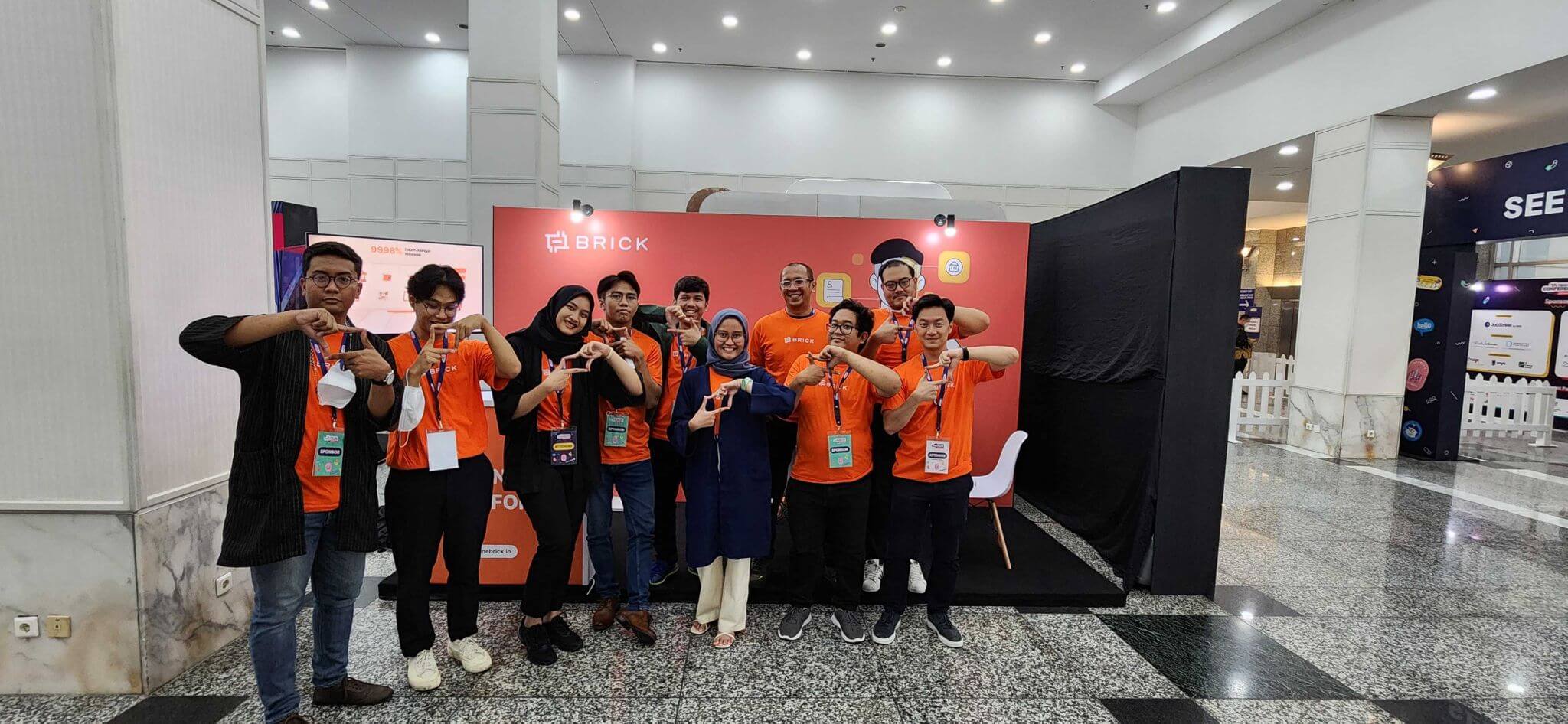
The Brick team at the Tech in Asia Indonesia conference
The Solution: Empowered with Corporate Cards
As the pressure built up for Brick to expand their operations, their team decided to leverage a more optimised solution, opting for Aspire’s finance OS to streamline their spend management and linked operations - quick and efficient corporate card issuance, real-time visibility of their spend at any point in time and automated reconciliation processes.
#1 Virtual Cards for All functions
With Aspire’s help, Brick can now issue unlimited numbers of Aspire’s multi-functional Virtual Cards instantly to as many employees as they require without any additional fees or overheads. With clearly defined and secure processes for spend authorisation, these virtual cards allow Brick to delegate purchasing power directly to card holders for quick execution without fear of spending over budget.
Most importantly, Aspire’s virtual cards operate on multiple currencies, thus allowing Brick to pay their SaaS vendors and digital marketing platforms directly in USD, and also save more with cashback as well as low FX fees on these vital tools they needed to scale efficiently. It was a win-win for the team.
“With Aspire we have been able to issue 20+ virtual cards for different teams instantly at 0 extra cost. We are able to set limits, assign budgets and design automated approval flows with a single click giving us complete control while at the same time empowering our teams to make quick decisions. The entire expense management process is automated and seamless. It’s a delight not having me or my team get involved in day-to-day manual reconciliation processes or buying decisions.”
Gavin Tan
CEO of Brick
Start your journey with Aspire
Open your free account