


Accounting software for hotels: Complete buyers’ guide 2026

Bintang Lestada

Summary
Hotel accounting software tracks insights into your financial activity, recorded across rooms, parking, spa, food and beverages, events, and other centers, into a centralized finance workflow. At the same time, it also tracks the operating costs such as labor or housekeeping. So, having a strong setup reduces the amount of manual work between your systems and the final books
Hotel accounting software is different than a PMS, as they solve different jobs. Beyond determining if both the tools can connect, you must take into account whether revenue, deposits, refunds, and department data move cleanly, ensuring the finance team isn’t rebuilding the connections through spreadsheets.
Hotel finance is spread across PMS and POS activity, payment settlements, vendor bills, payroll, and bank transactions. All of it must reach the books cleanly. An optimal hotel accounting software reduces the manual work between those systems and the final ledger.
One Aspire account to manage your business finances in one place.
Get a business account¹, issue corporate cards², manage expenses, and automate financial workflows, all from one powerful platform built for modern businesses.
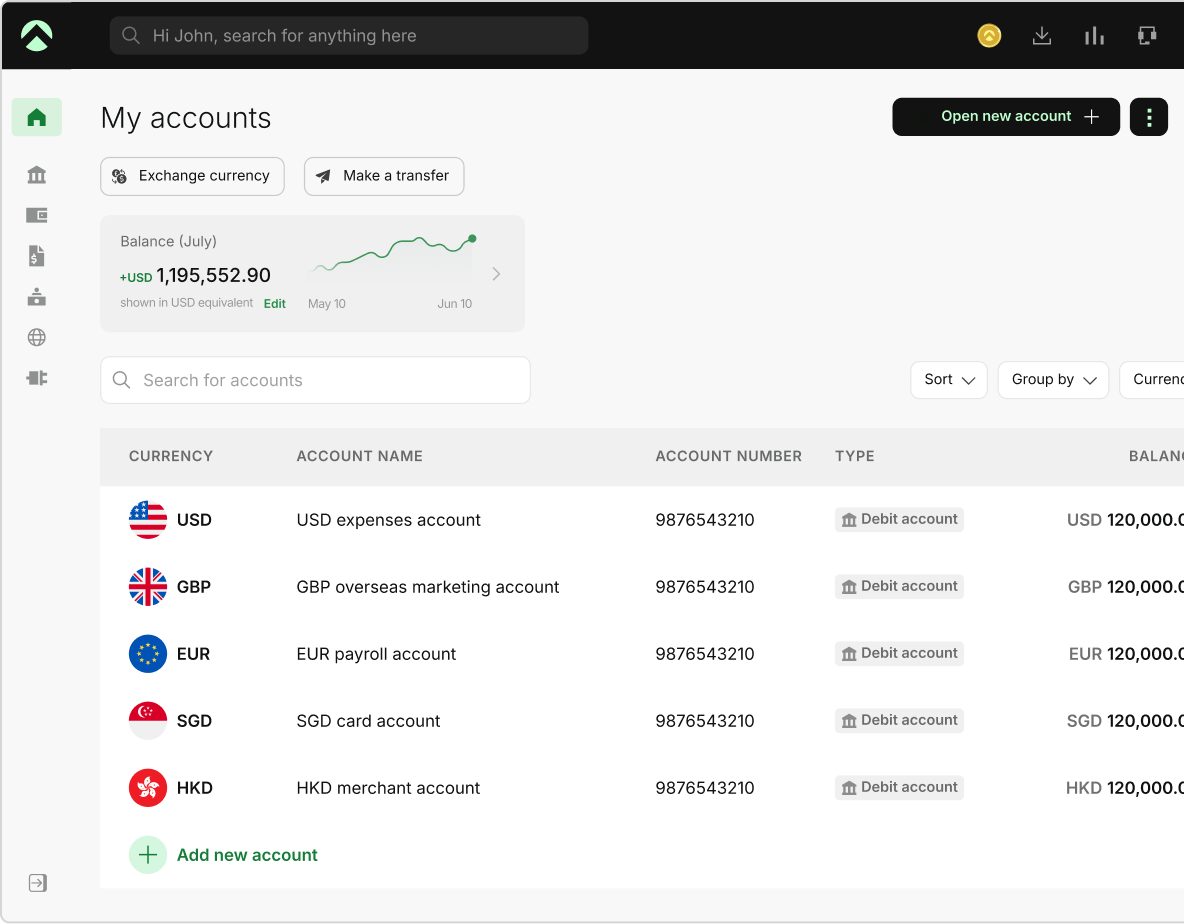
A hotel rarely has a single stream of financial data. The rooms sit in the PMS, retail and food and beverage activity may come from the POS, card settlements hit the bank separately, vendor bills, payroll, and other operating expenses are also taken into account.
The hard part is to get all of that into a single set of books that the finance team can actually trust. The gap shows up on a daily basis. Even though the night audit closes, the ledger doesn’t match the PMS, POS sales don’t tie to the settlements, and departmental reports take days to assemble.
Hotel accounting software becomes paramount for a business, as it minimizes the reconciliation burden between operations and the ledger. It gives owners and finance teams a clear view by property or department, with less manual re-entry.
This buyer’s guide covers the key features to look for, the factors to compare, and the top options worth shortlisting.
Key features to look for in accounting software for hotels
Most of the hotel accounting vendors list out the same eight features. However, what differs is how each one actually works for your setup. For every feature below, here is what it does and what to verify before you buy:
1. Automated invoice capture and GL coding
Invoice capture makes use of OCR and AI for reading vendor bills and suggesting the GL codes. This ensures your team doesn’t have to manually key every line item.
What to verify:
- If it codes only at the invoice level, or also at the line-item level
- If it maps to your USALI departmental structure and learns from the corrections
- If it is accurate on your invoices, such as multi-page vendor bills and emailed or scanned PDFs. You can ask to test with a simple batch
2. Real-time budget tracking
Budget tracking is a useful feature if your finance team can compare the actual revenue and spend against the pre-defined plans made for the property and by the department. The goal behind this feature is to spot F&B, operating, and labor cost variance earlier in the associated transactions to be able to act on it.
What to verify:
- Whether the data syncs from POS and PMS, and whether it happens in real-time, hourly, or nightly
- If you can load the budget and forecasts made for the property and by department
- If the variances are flagged for review, or if you are required to run the report yourself
3. Department-level reporting
USALI-aligned reporting, at the department level, helps you isolate your expenses, revenue, and profitability for different areas such as spa, parking, rooms, and F&B.
What to verify:
- Can departments be configured to match your property, or are they simply fixed templates?
- Can you explore from a report line, down to the underlying transactions?
- Can a report be produced by property, by department, or for the portfolio without rebuilding it from scratch each time?
4. Multi-entity consolidation
If you own a group of hotels, multi-entity consolidation can help you bring together all your properties or legal entities into a centralized financial hub.
What to verify:
- If it handles intercompany transactions and eliminations
- If all of your properties can have different charts of accounts, currencies, or fiscal calendars
- Is the multi-entity consolidation automatic, or does it require manual exports and adjustments?
5. AP automation
Capturing invoices, matching them with POs, receiving the records, and approval routing are the major features of AP automation in hotel accounting software.
What to verify:
- If the system supports two-way and three-way matching
- If you can change the approval rules by property, department, and amount
- If it connects to your purchasing or inventory system, and how payments and vendor records are handled
6. USALI-compliant reporting
USALI is the standard framework that owners, lenders, and management companies expect for hotel financial reporting.
What to verify:
- Determine which USALI edition the software supports
- Review whether the USALI structure is built into the chart of accounts and reports, or is it a mapping layer you maintain yourself
- If it can produce owner and lender reporting formats without rework
7. PMS and POS integration
Achieving this integration helps in moving the room revenue from your PMS and F&B or POS retail sales into the ledger, without the need for any manual re-entry.
What to verify:
- Is there a maintained integration for your specific PMS and POS, or is it a custom build?
- Is the data posted as daily summaries or transaction-level detail?
- How does the system handle mismatches, such as POS sales that don’t tie to settlements or PMS postings that differ from the ledger after night audit?
8. Cloud accessibility
Cloud access lets your team leverage flexibility to work and access data from any location. They won’t have to restrict themselves to a server at one property.
What to verify:
- If it’s possible to set role-based permissions by user, department, and property
- If an audit trail is being tracked to highlight who changed or approved what
- What are the vendor’s uptime commitments, backup practices, or data-export options?
How does hotel accounting software fit with your operating systems?
Hotel accounting software sits between your existing systems running the property and the books that finance teams need to close. Data reaches the ledger through two different streams, including:
Revenue and settlement
The room reservations or the money made from them comes from the PMS, whereas the information related to parking, F&B, spa, and other retail data comes from your POS or other systems. Once the daily checks are done, the total for each department is put into the account in the ledger.
They still have to reconcile with card and payment settlements, which reach the bank on their own respective timelines. Until that tie-out is done, the finance team can’t fully rely on the revenue specified in the books.
Expenses
Costs arrive through different paths such as vendor bills, payroll, purchasing card spend, and other operating expenses. Each one needs to be coded to the right property and department, approved, and posted to accounting.
(AP+payroll+procurement+cards+bank) → coding and approval → general ledger
Where the two streams meet
Both of these streams produce their own set of exceptions. POS sales don’t tie to the settlements, PMS posting differs from the ledger, and invoices are coded to the wrong department. These are some issues the finance team works on, consolidating the data across properties and closing the period.
A strong accounting setup doesn’t actually make reconciliation disappear. Instead, it makes the mismatches visible at the earliest, ensuring month-end becomes a review of exceptions, and not a rebuild of the entire month.
5 top hotel accounting software options for you to count on
There’s no single platform that works well for all hotels. The table below compares five options on the points that matter most for hotel finance teams, followed by a profile of each.
We chose these five options to cover different hotel setups, focusing on capabilities such as PMS and POS integration, USALI support, AP automation, and multi-property reporting. All information provided below is based on the vendor’s published insights.
| Sage Intacct | M3 | Inn-Flow | Nimble Property | Docyt | |
|---|---|---|---|---|---|
| Best fit | Hotel groups with multiple entities, international properties, or complex ownership. | Management companies and ownership groups, from small portfolios (CoreSelect, 2–30 properties) to enterprise portfolios (Accounting Core). | Multi-property operators who want accounting and labor in one place. | Independent hotels and small ownership groups | Small to mid-size portfolios that want reconciliation and back-office automation built around hotel data. |
| General vs. hospitality-specific | General cloud financials, configured specifically for hotels. | Hospitality-specific | Hospitality-specific | Hospitality-specific | Hospitality-specific |
| Multi-property | Strong consolidation, intercompany eliminations, and multi-currency support | Portfolio-level reporting | Multi-property dashboard | Multi-property consolidation | Consolidation is available, but each property needs its own subscription. |
| USALI support | Configurable by the implementation partner | Native | Native, with daily activity reporting | Confirm with the vendor. | USALI reporting; confirm 12th edition with the vendor. |
| PMS/POS approach | Partner-built PMS connections for tools such as Opera, StayNTouch, Mews, and others. | Supports PMS integrations such as Opera, Cloudbeds, Mews, and others. | PMS integrations such as Cloudbeds, Amadeus, HotKey, and others. | Direct PMS connection for daily sales, statistics, and receivables. | 30+ PMS and POS integrations, such as SkyTouch, HotelKey, and others. |
| AP/Automation | Confirm with the vendor. | AP, BI, and labor in one platform. You can also avail outsourced CPA service. | Accounting, payroll, procurement, labor, and BI in one platform. | Daily automation from PMS data. | Automates categorization of repeating transactions. |
| Main trade-off | Needs a certified implementation partner to set up and integrate the software. | N/A | N/A | Built for smaller portfolios. | Priced per property, so costs grow with each property. |
1. Sage Intacct
Sage Intacct is a stronger fit once hotel accounting becomes a multi-entity finance problem rather than simple bookkeeping. Its advantage is the finance layer that empowers consolidation, intercompany eliminations, AP, reporting, multi-currency support, and controls.
The hotel operating data comes in through the wider integration ecosystem, including partner-built PMS connections with tools like Opera, Mews, StayNTouch, and others. It suits hotel groups managing multiple entities, international properties, or complex ownership structures.
USALI-aligned reporting is configurable, so how closely the reports follow USALI depends on how the chart of accounts and reporting are set up. The setup depth stands as the trade-off of Sage Intacct. For a complex portfolio, integration design, data migration, account mapping, and reporting configuration matter as much as the software itself.
Ask vendors and implementers who will own each of those pieces, and how long a rollout typically takes for a portfolio.
2. M3
M3 is one of the hotel-specific platforms on this list. It is designed with hospitality accounting in mind, built on a hospitality-specific general ledger, which makes it very useful for management companies that need consistent property reporting, USALI-aligned financials, and a wide range of hotel system integrations. The company has been in the hospitality industry for more than 25 years and has more than 9,000 entities on its platform.
USALI support is built in rather than added through settings, so ask how up to date it is with the 12th edition. It allows for reporting at the portfolio level. Connects with PMS platforms like Opera, Mews, and Cloudbeds. Accounting, accounts payable, business intelligence, and labor management are all in one place, and M3 also provides a CPA service for operators who would rather have someone else handle their books.
M3 is best for management companies and ownership groups, from small portfolios (CoreSelect, 2–30 properties) to enterprise portfolios (Accounting Core).
3. Inn-Flow
Inn-Flow is worth comparing when the finance team also wants labor and operating workflows close to accounting. Inn-Flow’s strength is the hotel‑specific back office that covers accounting, payroll, labor, budgeting, procurement, and portfolio reporting rather than accounting alone. Inn-Flow lets bookkeeping and business intelligence share the platform. The company reports about 1,000 hotels on Inn-Flow. Inn-Flow includes built‑in USALI support and daily activity reporting; ask how current Inn-Flow is with the 12th edition.
Inn-Flow integrates with PMS tools such as Cloudbeds, Amadeus, and HotelKey. It is best for multi-property operators who want accounting and labor management working from a single dashboard.
4. Nimble Property
Nimble Property is better suited for hotels and smaller groups that need hotel-specific accounting but don’t want to jump into a big enterprise finance system. The workflow is built around sales, receivables, property-level accounting, and seeing all properties at once. The company has more than 2,000 customers in the US.
It links with the hotel PMS to bring in sales, property data, and receivables, which cuts down on manual work. Role-based access and the ability to combine properties are also included. Ask which PMS systems it works with and which of those connections happen automatically versus through file imports.
It works best for hotels and small ownership groups that need accounting connected to the PMS without a long setup or expensive enterprise pricing.
5. Docyt
Docyt is positioned as a hospitality-focused accounting and back-office platform, not an automation layer on top of QuickBooks. Docyt’s current hotel product concentrates on USALI reporting, nightly PMS data, revenue and deposit reconciliation, bill pay, property reporting, and hospitality business intelligence.
Docyt offers entity and multi-owner support, and it has a broad list of PMS and POS integrations that includes Opera Cloud, Mews, Cloudbeds, StayNTouch, and HotelKey. These integrations help keep Docyt connected to hospitality systems.
Docyt is best for owners and for smaller to mid-size portfolios that want reconciliation and back-office automation built around hotel data. Docyt gives owners a way to streamline accounting and back-office tasks.
Things to consider while choosing the best accounting software for hotels
The right accounting software for your hotel business depends on your property portfolio, team, and what your owners, lenders, and brands expect to see. Start with the architecture decision below, then use the criteria that follow to narrow your shortlist.
Decide which accounting setup you need
Start by deciding what kind of accounting setup you actually need. A simple independent property may be able to keep a general accounting platform and add the right hotel integrations. A growing hotel group may benefit from accounting built around hotel reporting and daily property workflows. Larger ownership or management structures may need a full multi-entity finance system with hospitality integrations around it.
That architecture decision usually narrows the shortlist faster than comparing feature checklists alone.
Criteria to narrow your choices
1. Review your property count
Running one boutique hotel is a different finance problem from running 50 properties. Look beyond the number of properties. Ask whether they sit under one entity or several, whether ownership is split, and whether you need consolidated reporting. Match the platform's capabilities to that structure, not just to the headcount of hotels.
2. Check your PMS and POS integrations
Confirm the vendor has a maintained integration for your specific PMS and POS, not a custom build. Ask what data it brings in (daily summaries or transaction detail), how often it syncs, and who fixes it when the PMS vendor changes something.
3. Test reconciliation, not just integrations
Ask the vendor to show you what happens when the numbers do not match. A clean PMS integration demo is easy. The real test is whether finance can see why PMS revenue, POS totals, processor settlements, and bank deposits differ without exporting everything into Excel. If the demo only shows a sync that works perfectly, ask for a mismatch before you move on.
4. Define your reporting needs
Owner reporting, lender requirements, and brand or management-agreement reporting can each ask for something different. List which of these you have to produce, then ask each vendor to show those exact outputs, including USALI-aligned departmental reporting where your agreements call for it.
5. Match the platform to your team
Look at who will actually run the system. Some platforms assume dedicated AP staff and a controller to manage coding, approvals, and mapping. Others are built for leaner teams and lean harder on automation. Ask what your team is expected to do each day and each month-end, and what the vendor handles for you.
6. Plan for growth
Switching accounting systems mid-growth is expensive and disruptive. Ask how the platform handles adding properties, new entities, and different property types, and what changes in cost and setup as you grow. This ties back to the architecture decision. A platform that fits one property today may not fit a group later.
Beyond accounting software for hotels: Manage your spending with Aspire
Picking the right hotel accounting software may solve only a part of the problem. The other part is what happens before a transaction reaches your general ledger.
Chasing the receipts from different department heads, manually keying in the vendor bills, paying international vendors in different currencies*, and reconciling corporate card2 statements are a few of the tasks where spend management becomes equally important.
Hotel accounting software owns the books, while Aspire1 can support some of the finance work that happens before those transactions reach the ledger. For hotel groups with department heads or GMs spending across properties, Aspire can help manage corporate cards2, expenses, approvals, bills, vendor payments, and international payments, then sync the supported data into QuickBooks, Xero, or NetSuite.
That makes Aspire a complementary operating layer rather than a replacement for the system responsible for hotel accounting, property reporting, or USALI financials. Aspire is not a hotel accounting software. You can take a look at whether:
- GMs or department heads make purchases across several properties
- Properties pay vendors in more than one currency
- A lean finance team handles receipts, bills, and card reconciliation without dedicated AP staff
Before you decide, check if Aspire’s sync supports your accounting system, and how the bills and expenses are mapped to your chart of accounts and across departments. If your hotel accounting platform already handles AP and card coding, confirm what overlap you’d be paying for.
Frequently Asked Questions
A PMS runs guest and front-desk activity such as reservations, room charges, check-ins, and check-outs. Hotel accounting software sits on the finance side, combining PMS data with other financial activity so the team can reconcile, close, and report by property or department.
Not always. A simple independent property may be able to use a general accounting platform with the right integrations. Hospitality-specific software becomes more useful when USALI reporting, multiple outlets, PMS/POS data, ownership reporting, or multi-property consolidation start creating manual workarounds.
Implementation varies widely. A simple single-property rollout is very different from migrating dozens of entities with historical data and multiple PMS/POS connections. Ask each vendor for a rollout plan covering data migration, account mapping, integrations, training, testing, and the point at which the old system can safely be retired.
They solve different problems. Software gives the team the system and workflows to run the books; an outsourced accountant or hospitality CPA provides people and expertise. A lean hotel may outsource much of the accounting while using the software day to day, while a larger group may keep accounting in-house and use external specialists only for tax, audit, or technical work.
Reservations, charges, deposits, payments, and refunds all start in the PMS, so it is where most of a hotel's revenue data originates. A reliable integration moves that data into the accounting software and maps it to the right accounts and departments, which reduces manual re-entry.
The integration matters most when the numbers don't match. Room postings, deposits, and refunds have to tie back to card settlements and bank deposits, and mismatches will happen. A good integration lets finance see what differs and why, without rebuilding the day in a spreadsheet. That makes reconciliation faster and month-end closer to a review of exceptions than a rebuild.
Sources
- https://usali.hftp.org/ - November 23, 2026
- https://www.sage.com/en-us/sage-business-cloud/intacct/ - November 23, 2026
- https://www.m3as.com/ - November 23, 2026
- https://www.inn-flow.com/ - November 23, 2026
- https://www.inn-flow.com/press-release-inn-flow-captures-top-honors-in-2026-hoteltechawards/ - November 23, 2026
- https://nimbleproperty.net/ - November 23, 2026
- https://www.docyt.com/hospitality-lp/ - November 23, 2026
This blog is for general information only and does not constitute financial, legal, tax, or professional advice. Aspire’s services are subject to the terms outlined in our ’Terms of Service’ and ’Pricing’ pages. We make no guarantees as to the accuracy, completeness, or timeliness of the content, and past results do not indicate future performance. Always consult a qualified professional before acting on any information provided.
Bintang Lestada
Writer
Bintang is a seasoned writer specialising in fintech, agtech, politics, and pop culture. With a writing history at VICE ASIA, Letterboxd, Whiteboard Journal and other reputable organisations, Bintang leverages their broad range of experiences to resources that educate audiences, build trust, and support business growth.
Aspire Launchpad
Supercharge your finance operations with Aspire
Find out how Aspire can help you speed up your end-to-end finance processes from payments to expense management.

Latest articles
Finance Tools •
Best dental accounting software for US practices
Compare the best dental accounting software for US practices by features, pricing, accounting capabilities, and practice size.
Starting a Business •
How to get an LLC in Virginia: Costs, requirements, and key considerations
Learn how to get an LLC in Virginia: $100 formation fee, $50 annual registration fee, registered agent rules, filing steps, and post-formation requirements.

Business Account •
Best business CD rates: When founders should use CDs
Compare business CD rates, early withdrawal trade-offs, FDIC coverage, and when founders should choose liquidity over locked cash.