


Best business CD rates: When founders should use CDs

Bintang Lestada

Summary
Certificates of Deposit (CDs): fixed-term savings accounts with guaranteed interest rates are safe and simple. CDs can be low-risk when issued by FDIC-insured banks and held within FDIC limits, and they offer predictable returns with FDIC insurance. But here's the catch: CDs tie up your cash for the full term, and that locked-in capital is a real cost for founders in growth mode who need liquidity
The best rates right now are up to 4.80% APY, depending on the length of the term and what bank you go with. But an extra 0.5% yield is worthless if you need that cash for growth.
When a CD makes sense: You are profitable, revenue is predictable, and you have an operating reserve that will not change for 6-12 months. Most pre-Series A founders don’t fit this profile.
When a CD is a trap, you're pre-profitable, managing growth capital, or have international clients paying in multiple currencies. Locked capital = lost opportunities.
The True Price of CDs: It’s Not the Early Withdrawal Penalty. It's an opportunity cost. If a founder needs flexibility to hire, scale, or pivot, they can’t afford to tie up USD $50K for marginal yield.
The alternative? Growth-minded founders and those with international revenue choose operating accounts that prioritize liquidity and multi-currency capability (like Aspire Multi-currency) over tying up cash in a CD. You get instant access to your money and the ability to operate across multiple currencies — exactly what you need to scale internationally.
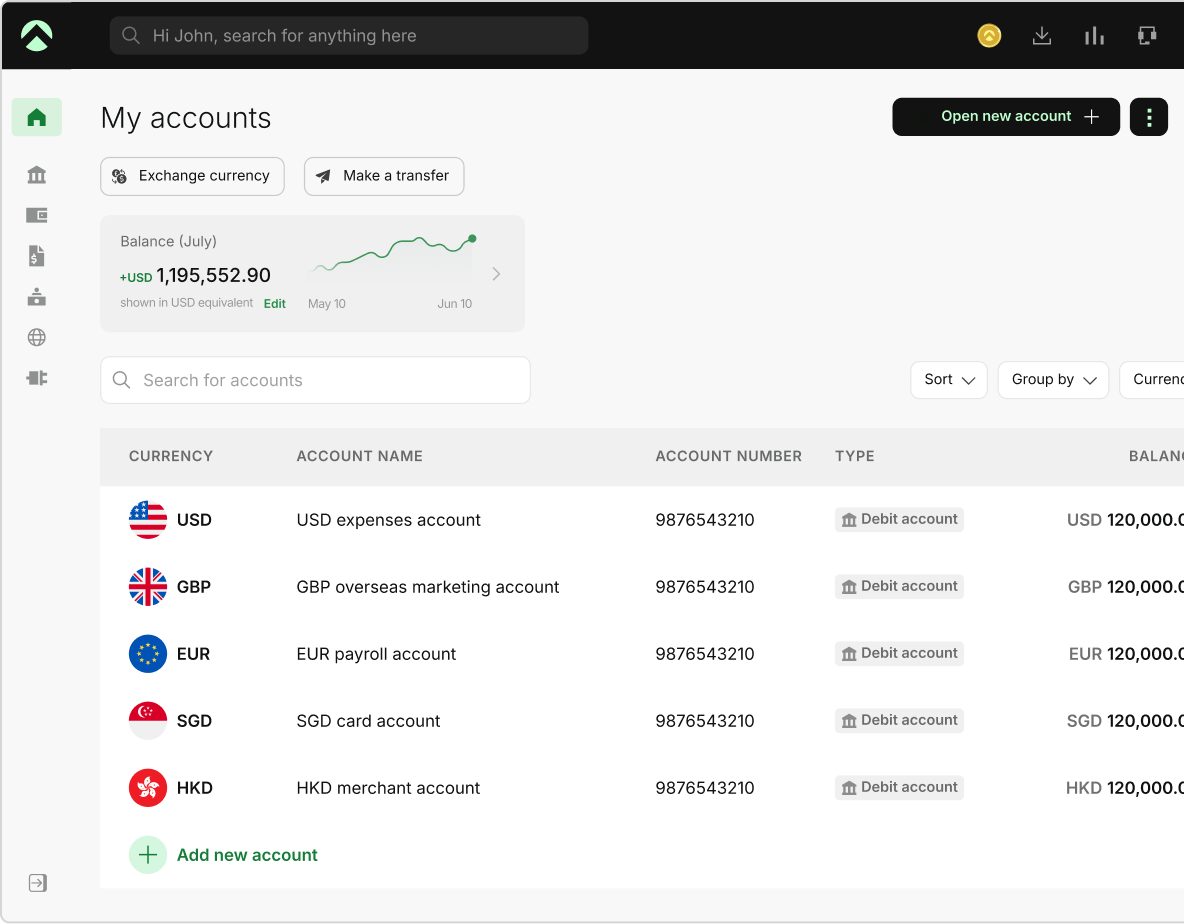
One Aspire account to manage your business finances in one place.
Get a business account¹, issue corporate cards², manage expenses, and automate financial workflows, all from one powerful platform built for modern businesses.
You're building a business. Your revenue is starting to stabilize. For the first time, you've got cash sitting in your account that isn't immediately earmarked for payroll or inventory. A business CD suddenly looks appealing — a safe place to park that money and earn a guaranteed return.
You start shopping for the best CD rates. You think, "That's guaranteed. That's safe. That's better than my savings account.” But before you lock up your cash, here's what you need to know: a CD might be the right move. Or it might be the worst financial decision for your stage. It depends entirely on your founder journey, not your interest rate.
What is a business CD
A certificate of deposit (CD) is straightforward: you give a bank money for a fixed period (3, 6, 12, or 24 months). The bank pays you a guaranteed interest rate. At maturity, you get your principal plus interest back. If you withdraw early, you pay a penalty.
That's the basic structure. For detailed mechanics and FDIC insurance coverage, see the FDIC's official CD guide. The appeal is clear: no equity-market exposure and a locked-in rate.
But CDs come with real tradeoffs founders should understand:
- Liquidity risk: Your money is locked up. Early withdrawal triggers penalties that eat into returns.
- Reinvestment risk: When your CD matures, rates may have fallen. You're forced to reinvest at a lower rate.
- Inflation risk: A 4.5% CD sounds good—until inflation hits 5%. Your real purchasing power shrinks.
- FDIC limits: The FDIC only insures up to $250k per depositor, per bank. If you're parking multiple millions in CDs, you're exposed.
For a founder with truly stable, predictable cash flow and no growth plans, a CD might make sense. You sacrifice access for a guaranteed return.
But most early-stage founders aren't in that position. You need capital accessible for opportunities, customer acquisition, or scaling. A CD keeps you from accessing cash when you need it most. If you're in growth mode, you need to understand better ways to allocate your cash reserves.
When should a founder consider opening a business CD: The decision framework
CDs work for specific founder situations. Here's when they're genuinely the right move.
Should profitable founders with stable revenue use a CD?
You've been profitable for 12+ months. Your revenue is predictable — recurring SaaS contracts, steady service income, or reliable wholesale orders. You've built a liquid operating reserve (3–6 months of expenses) to cover unexpected costs or opportunities. Beyond that reserve, you have surplus cash you won't need for day-to-day operations.
A CD might make sense in a specific scenario: if you have a known, seasonal cash flow pattern — say, you collect 60% of annual revenue in Q4 — and you want to lock up that surplus specifically for that predictable cycle. A 6-month CD maturing in June, for example, could work if your cash dip consistently hits in June and recovers by the end of the year.
But here's the reality: locking your operating reserve in a CD defeats the purpose. Operating reserves exist precisely because you don't know when an opportunity or crisis will hit. The moment you tie up that cash for 6 months is the moment your best customer needs a custom feature built (and you require working capital), a vendor demands early payment, or a competitor moves and you need to respond quickly.
Best fit: A profitable, stable business (service company, SaaS with high retention, predictable wholesale operation) where you have:
- A liquid operating/emergency reserve (3–6 months of expenses) kept accessible
- Surplus cash beyond that reserve that you're confident you won't need before the CD matures
- OR a known seasonal pattern (e.g., you collect 70% of revenue in Q4, then cash dips until Q3) where you can match a CD maturity date to that predictable cycle
The key: only lock up cash you're genuinely certain will sit idle. If there's any chance you'll need it — for a hire, a customer opportunity, or covering a slower quarter — keep it liquid instead.
Temporary cash surplus you won't need
You just closed a client deal, got a tax refund, or sold inventory at higher margins than expected. You've got USD $30K sitting around that's genuinely surplus — not growth capital, not emergency reserves, just extra cash.
A 6-month CD makes sense. You'll earn 4.30% while you decide what to do with it.
Best fit: A founder with one-off cash windfalls who's already got adequate reserves and growth capital.
Mature business with seasonal patterns
Your business is seasonal (holiday retail, tax season services, summer tourism). You build cash reserves in the busy season and deploy them in the slow season. But there's a 4-month window every year where cash sits dormant.
A short-term CD makes sense. You're not touching it. You're earning a safe return during that predictable window.
Best fit: A founder running a seasonal business who can predict exactly when cash will be needed.
When CDs may not fit a growth-stage founder
Most early-stage founders don't fit the scenarios above. They fit these.
Why should pre-profitable founders avoid locking cash in CDs?
Your runway is 8 – 12 months. You're hiring. You're testing new markets. You don't know if next month you'll need to pivot, hire a designer, or invest in ads to stay competitive.
Locking USD $50K in a 12-month CD is a mistake. That's not a wise use of your money. That's removing optionality from your business when optionality is your biggest asset.
The hidden cost: Opportunity. You could earn 4.5% (USD $2,250 on USD $50K). Or you could use that USD $50K to hire a contractor, launch a new feature, or acquire customers.
Which generates more than USD $2,250 in value? That depends entirely on your business, your confidence in the deployment, and your stage. For a founder with a clear use case and a track record of profitable growth spending, deploying the USD $50K likely returns more than USD $2,250. For a founder in a stable, predictable phase with no validated use case for that cash, the guaranteed USD $2,250 might actually be the better choice.
You're managing growth capital
You've closed a seed round or hit strong revenue. You're thinking about hiring, expanding to a new market, or investing in infrastructure. That cash sitting in your business account isn't surplus — it's your runway for the next 6–12 months of growth.
Locking it up in a CD defeats the entire purpose.
You have international clients or plan to expand
Your customers are in Canada, the UK, or Singapore. They pay you in CAD, GBP, or SGD. Or you're planning to expand internationally soon, and you'll need to manage multiple currencies.
A US-based CD only holds USD. If you need to pay a vendor in EUR or send a wire transfer to a Singapore supplier, that CD doesn't help. You'll need to convert currencies, pay wire transfer fees, and wait several business days for settlement.
A multi-currency operating account like Aspire handles this differently. You can hold and pay in 98+ currencies, send same-day ACH and wire transfers with zero fees on standard transfers, and access your money in real time. Some SWIFT transfers may incur fees (USD $8 for incoming USD transfers and USD $15 for certain outgoing SWIFT/FX transfers), but for most cross-border business payments, you avoid the delays and fees that come with traditional bank transfers from a CD.
You might need to pivot
You're still figuring out product-market fit. You might need to change your pricing, target market, or feature set. Locking cash up for 12 months while you're still in discovery mode is a risk to your ability to adapt.
Best business CD rates: Current rates by bank (2026)
If you've decided a CD is right for your founder stage, here are the best CD rates available from major banks. These rates change weekly based on Federal Reserve policy, so verify with each bank before opening. The best CD rates right now range from 4.60% to 4.80% for 12-month terms, depending on the bank.
| Bank | 3-Month CD | 6-Month CD | 12-Month CD | 24-Month CD | Minimum Deposit |
|---|---|---|---|---|---|
| Live Oak Bank | ~4.00% | 4.30% | 4.60% | 4.00% | USD $2,500 |
| Flagstar Bank | Not public | 3.70% | 4.30% | 3.70% | USD $500 |
| EverBank | 3.40%–3.90% | 3.70% | 3.60% | 4.10% (est.) | USD $1,500 |
| Citi Business CD | Varies by region | ~4.00% | ~2.00% | 3.00% | USD $500 |
| Bank of America | Varies | Varies | 0.03% | Varies | USD $1,000 |
| US Bank | 0.05%–0.50% | 0.05%–0.50% | 0.50%–1.00% | 0.50%–1.00% | USD $2,500 |
| Citizens Bank | Varies by entity | 3.70%–4.00% | 0.03% | Varies | USD $25,000 |
Important: Flagstar Bank's 12-month CD rate is listed as 4.30% APY, accurate as of 11/21/2026, and Live Oak Bank's 12-month Business CD is verified at 4.60% APY as of November 22, 2026. However, CD rates are not static. Rates shown below reflect the most recent verified dates available but vary by bank and update frequency. Always confirm rates directly with each bank's official website before opening an account, as rates may have changed since verification.
Note: These CD rates are current as of their verification dates but are subject to change without notice. Rates vary by:
- Term length
- Deposit amount (some banks offer higher rates for larger deposits or existing customers)
- Geographic location (Citi and some regional banks vary rates by state)
- Time of checking (rates update frequently based on Fed policy)
Before opening any CD, verify current rates directly with each bank's official website or contact their customer service. This table is for comparison purposes only and should not be treated as real-time rate data.
Business CDs: A decision guide by founder stage
Your answer depends on where you are in your founder journey, not on interest rates. Use this table to find your founder stage and the answer:
| Founder stage | Revenue status | CD decision | Reasoning | What to do instead | Key consideration |
|---|---|---|---|---|---|
| Seed stage | Pre-PMF, no revenue or minimal | No | Your biggest asset is flexibility. You might pivot, hire fast, or invest in acquisition. Locked capital removes optionality. | Keep cash in liquid savings accounts with no lock-up. Yield matters less than access. | A difference in yield is irrelevant vs. the cost of losing optionality. |
| Early revenue | Post-PMF, growing but pre-profitable | Maybe | You're spending cash to grow. Only lock surplus that sits beyond your operating runway. | If you have a 12+ month operating runway + bonus reserve on top, consider a 6-month CD for the bonus only. | Don't lock up your operating runway or growth capital. |
| Profitability stage | 12+ months of profitable, predictable revenue | Yes | Revenue is stable and predictable. You have a liquid operating reserve and surplus cash. | Lock surplus cash (beyond your 3–6 month operating reserve) in a 12-month CD for guaranteed returns. | Keep your operating reserve liquid. Only lock surplus cash you're confident you won't need. |
| Series A / Growth stage | Scaling, international, multiple revenue streams | No | You're hiring, expanding, entering new markets, and managing multiple currencies. You need rapid access to capital and multi-currency capability. | Keep cash liquid in accounts that support rapid transfers and multi-currency operations. | CDs add friction—especially if you're managing GBP, EUR, and SGD alongside USD. Access and flexibility matter more than yield. |
| Mature stage | Stable, no growth plans, predictable cash flow | Yes | Revenue is stable. You're optimizing cash management, not building. You can plan predictable cash needs are far in advance. | Use a CD ladder strategy (multiple CDs maturing at staggered intervals) to optimize returns. Requires careful planning of maturity dates to match cash needs. | Maturity planning is critical—misaligned maturity dates can lock you out of cash when you need it. |
Decision Logic
- If you need to move money within 12 months: Do not use a CD.
- If you won't touch it for 12+ months and it's surplus beyond your operating reserve, consider a CD.
- If you're managing multiple currencies or need flexibility for growth: Avoid CDs—prioritize liquidity and multi-currency capability.
Why founders avoid CDs (and it's not the misconception you think)
Most people assume founders avoid CDs because they fear the penalty for early withdrawal. My money is locked away forever, they think.
That's not the real concern.
The real concern is opportunity cost. A founder doesn't fear losing access to USD $50K. A founder fears spending the next 12 months watching opportunities pass by because their capital is locked up.
What if someone offers to buy your service for a new industry? You'd need to hire someone. But your growth capital is in a CD.
A competitor moves into your market, and you need to double down on customer acquisition? You'd need to spend more on ads. But your cash is locked up.
A vendor offers 30% off if you buy 6 months of inventory upfront. You could do it. But your reserve is in a CD.
These aren't hypothetical. These are the daily realities of running a startup.
A founder with USD $100K in a 12-month CD earning 4.5% (USD $4,500/year) might miss a USD $50K opportunity that generates USD $100K in value. The opportunity cost isn't USD $500 in foregone interest. It's USD $50K in lost revenue.
That's why most founders skip CDs. Not because they fear penalties. They know their business might need that cash tomorrow.
Why growth-stage founders choose flexibility over yields
A founder at Series A or managing international expansion may care about yield—but not at the expense of payroll, hiring, expansion, or international payment flexibility. They prioritize:
- Instant access to cash — If a hiring opportunity appears, they move in days, not weeks.
- Currency flexibility — If they're managing USD and EUR, they need a tool that handles both instantly
- No friction — Transferring money between banks takes 1–2 business days. Moving money across currencies in a CD takes even longer
- Optionality — They might need to pivot, scale, or invest. Locked capital removes that option
Founders at this stage choose tools that give them all of these options. A CD gives them none of it. Instead, they opt for solutions that provide instant access, multi-currency support, and founder-friendly cash management.
For Founders with growth plans: Aspire business account as the alternative
If you've read this far and realized a CD isn't right for your founder stage, you're asking, "What should I do with this cash?"
If you're managing growth capital or international revenue, the Aspire Business Account1 lets you pay in 98+ currencies, move money via free real-time transfers or same-day ACH/wire with zero fees, and gives you what CDs can't:
Access when you need it — No lock-up. Real-time transfers and same-day ACH/wire are zero-fee, so you can move money for payroll, vendor payments, or unexpected growth opportunities without waiting for a CD to mature.
Note: Some international SWIFT transfers may incur fees; verify for your specific corridors.
Multi-currency capability — Pay in 98+ currencies without the delays of traditional wire transfers. Hold and transact across multiple currencies*, making it easier to manage international teams and suppliers.
Flexibility for growth — Hire, scale, or pivot without being locked into a CD maturity date. Founder-friendly: no minimum balance, no monthly fees.
Added benefit — Earn 1.5% cashback^ on card2 spend (subject to terms) as you operate.
Important: Aspire is a financial technology company, not a bank. This means different regulatory structures apply — verify account protections and terms before funding.
Compare: CDs vs. Aspire business account vs. high-yield savings
| Feature | Business CD | High-yield savings | Aspire business account |
|---|---|---|---|
| Best APY/Rate | 4.60%–4.80% (locked) | 4.25%–4.50% | Not a deposit account; no guaranteed yield |
| Access to cash | 6–12 month lock-up | Instant | Instant |
| Wire transfer fees | Subject to bank fees (typically USD $15-50) | Subject to bank fees | Real-time transfers and same-day ACH/wire: zero fees. SWIFT and certain international transfers may incur fees. |
| Multi-currency support | USD only | USD only | Pay in 98+ currencies |
| Foreign exchange costs | N/A | N/A | Variable by currency pair; verify current rates before transferring |
| Ideal for | Profitable, stable revenue with 12+ months of surplus cash | Profitable founders with accessible emergency reserves | International revenue, multi-currency operations, growth-stage flexibility |
| Early withdrawal | 3–6 month penalty | No penalty | No penalties |
| Best for Series A founders? | Only if cash won't be needed for 12+ months | Better than CD if flexibility is priority | Depends on whether international operations and multi-currency needs justify fintech structure over traditional banking |
Important: An extra 0.5% yield (CD vs. savings) means USD $500/year on USD $100K. But missing one growth opportunity costs USD $50K+. For most founders before the maturity stage, instant access and operational flexibility are more valuable than slightly higher guaranteed rates.
For international founders: The choice between high-yield savings and an Aspire Business Account depends on your operational needs (multi-currency, speed of transfers) and your comfort with fintech infrastructure versus traditional banking.
The honest bottom line
A CD isn't a bad choice. It's a stage choice.
If you're profitable, have predictable revenue, and have an operating reserve that won't change for 12 months, the best CD rates (currently 4.80% at EagleBank) make sense. Lock it up and you'll sleep better knowing you've got a guaranteed return and zero risk.
But if you're pre-profitable, managing growth capital, or expanding internationally, a CD is the wrong tool. A CD removes optionality, and at this stage, that optionality is your most valuable asset.
Many early-stage founders fall into the second camp. You're still figuring out what works. You might need to move fast. You might need to pivot.
Keep your cash liquid. Earn 4.25%+ in a high-yield savings account. And if you're managing international revenue, keep it in a multi-currency account where you can move money across currencies instantly.
You'll earn less interest than the best CD rates if you lock your money in a CD. But you'll gain something worth far more: the flexibility to build.
This content is for informational purposes only and does not constitute financial advice. Consult a financial advisor before making decisions about where to park your business cash.
Frequently Asked Questions
Minimal. Business CDs typically have higher minimum deposits (USD $1,000-$10,000 as opposed to $500-$1,000 for personal) and slightly higher rates. The mechanics, however, are the same: you lock up your money for a set period, earn a guaranteed rate, and get penalized for early withdrawal.
You can, but it comes with a cost. Most CDs charge an early withdrawal penalty, typically equal to 3–6 months of interest. So if you've earned USD $562 in a 12-month CD and you withdraw after 6 months, you'll lose roughly USD $140–$280 in interest (3–6 months' worth). You get your principal back, but breaking the CD early means forfeiting part of your earnings.
Yes. Business CDs are FDIC insured for up to USD $250,000 per depositor, per bank. If the bank fails, your money is protected. This benefit is the main reason founders choose CDs: they're the safest place to park cash — but safety alone doesn't make them the best choice for your founder stage.
For founders in growth mode: high-yield savings. You get 4.25%+ APY with zero lock-up. For founders with stable, predictable revenue: a CD. You get a slightly higher guaranteed rate, and you know exactly what you'll earn.
Not likely. If your revenue is in USD, then a USD CD makes sense. But if you have clients in GBP, EUR, or CAD, then a CD only locks one currency. You would need many CDs in many currencies to cover all your needs. Multi-currency accounts are easier and more flexible.
If you might need the cash within 12 months (hiring, expansion, emergency), choose 6 months. You'll earn slightly less, but you keep optionality. If you won't touch the money for 12+ months, lock it in for 12 months and earn a higher rate.
You withdraw early and pay a penalty. The penalty is usually 3–6 months of interest, so you might get your principal back with reduced earnings. But you get your money. There's no locked forever scenario.
A CD won't help. If the money is locked in a CD and you need to send a wire transfer to a vendor or partner, you'll need to withdraw early, pay the penalty, AND wait for the wire transfer to process (typically 1–2 business days). If you know you might need to move money between banks or send wire transfers frequently, keep that cash liquid or in a multi-currency account where transfers are instant and fee-free.
No. If there's even a 30% chance you'll need that cash for hiring, marketing, or expansion within 12 months, keep it liquid. The penalty and lost interest make CDs expensive when you need early access.
CD interest is not considered as capital gains, but it comes under regular income. If you earn $2,250 in CD interest on a $50K CD at 4.5%, your taxable income for the year increases by $2,250. CDs don’t have any special tax benefits.
Sources
- https://www.bankrate.com/banking/cds/best-jumbo-cd-rates/ - August 17, 2026
- https://www.bankrate.com/banking/cds/what-type-of-cd-is-best/ - August 26, 2025
- https://www.bankrate.com/banking/cds/cd-rates/ - August 18, 2026
- https://www.investopedia.com/best-cd-rates-4770214 - August 17, 2026
- https://www.cnbc.com/select/best-certificates-of-deposits/ - August 14, 2026
- https://fitsmallbusiness.com/best-business-cd-rates/ - May 6, 2026
- https://www.citi.com/banking/small-business-guide/banking/benefits-of-business-cd-accounts - June 15, 2026
- https://www.nerdwallet.com/banking/best/cd-rates - August 20, 2026
- https://us.etrade.com/bank/certificate-of-deposit - August 19, 2026
- https://www.usbank.com/bank-accounts/savings-accounts/certificate-of-deposit.html - August 19, 2026
- https://www.liveoak.bank/business-cd-accounts/ - August 19, 2026
- https://www.flagstar.com/small-business/bank/business-savings/business-certificates-of-deposit.html - 21 August 2026
- https://www.flagstar.com/personal/bank/savings/certificate-of-deposit-accounts.html - 21 August 2026
- https://www.flagstar.com/personal/learn/calculators/savings/savings-at-maturity-calculator.html - August 19, 2026
- https://www.citizensbankwi.bank/personal/deposit-rates - August 11, 2026
- https://www.bankdealguy.com/live-oak-bank-business-cd-rates/ - August 14, 2026
- https://www.hustlermoneyblog.com/live-oak-bank-cd-rates/ - August 19, 2026
- https://www.nerdwallet.com/business/banking/reviews/live-oak-business-bank-accounts - August 9, 2026
- https://www.forbes.com/advisor/banking/cds/everbank-cd-rates/ - March 24, 2026
- https://fortune.com/article/major-bank-cd-rates-08-18-2026/ - August 18, 2026
- https://wealthvieu.com/banking/us-bank/cd-rates/ - May 22, 2026
- https://clearvaluelending.com/reviews/us-bank-biz-cd - August 19, 2026
- https://myannuitystore.com/citibank-cd-rates-checking-money-market-review/ - July 6, 2026
- https://fortune.com/article/citibank-cd-rates/ - February 3, 2026
- https://bestguide.com/review/everbank/ - May 18, 2026
This blog is for general information only and does not constitute financial, legal, tax, or professional advice. Aspire’s services are subject to the terms outlined in our ’Terms of Service’ and ’Pricing’ pages. We make no guarantees as to the accuracy, completeness, or timeliness of the content, and past results do not indicate future performance. Always consult a qualified professional before acting on any information provided.
Bintang Lestada
Writer
Bintang is a seasoned writer specialising in fintech, agtech, politics, and pop culture. With a writing history at VICE ASIA, Letterboxd, Whiteboard Journal and other reputable organisations, Bintang leverages their broad range of experiences to resources that educate audiences, build trust, and support business growth.
Aspire Launchpad
Supercharge your finance operations with Aspire
Find out how Aspire can help you speed up your end-to-end finance processes from payments to expense management.

Latest articles

Finance Tools •
Accounting software for hotels: Complete buyers’ guide 2026
A 2026 buyer’s guide to hotel accounting software, covering key features, USALI reporting, PMS integrations, selection criteria, and top platforms.

Finance Tools •
Best dental accounting software for US practices
Compare the best dental accounting software for US practices by features, pricing, accounting capabilities, and practice size.
Starting a Business •
How to get an LLC in Virginia: Costs, requirements, and key considerations
Learn how to get an LLC in Virginia: $100 formation fee, $50 annual registration fee, registered agent rules, filing steps, and post-formation requirements.