


Best dental accounting software for US practices

Bintang Lestada

Summary
Dental practices can use general accounting software, dental practice management systems, or a combination of both depending on their financial and operational needs.
QuickBooks Online, Xero, and Zoho Books handle general accounting, while Sage Intacct supports more complex financial management for dental groups and DSOs.
Open Dental combines dental practice management with built-in accounting features.
Dentrix, Eaglesoft, CareStack, Denticon, and Curve Dental focus on dental practice management, including billing, payments, collections, and reporting.
The right setup depends on factors such as practice size, number of locations, accounting requirements, integrations, pricing, and HIPAA responsibilities.
Aspire1 can complement accounting and dental practice management software by supporting invoicing, receivables, payment collection, and reconciliation.
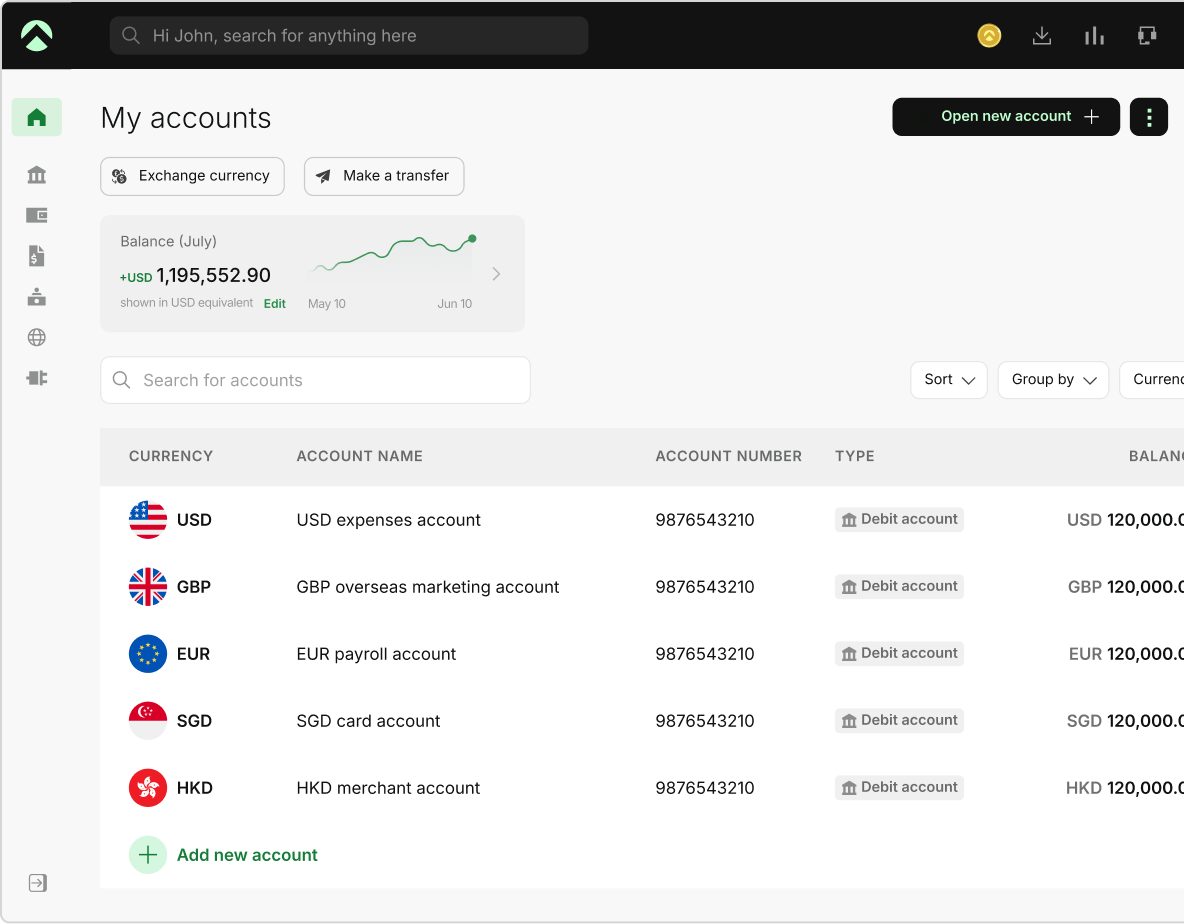
One Aspire account to manage your business finances in one place.
Get a business account¹, issue corporate cards², manage expenses, and automate financial workflows, all from one powerful platform built for modern businesses.
Dental accounting software is not always the same as dental practice management software.
A dental practice management system, or PMS, manages patient records, scheduling, treatment, claims, billing, and collections. Accounting software handles the books, including expenses, bank transactions, reconciliation, and financial statements.
Some dental PMS platforms have accounting features, while others connect to separate accounting software.
A small practice may use a PMS with QuickBooks Online, Xero, or Zoho Books. Larger dental groups and DSOs may need financial software with consolidation, multi-location reporting, and stronger financial controls.
What dental accounting software needs to cover
The accounting side of a dental practice includes revenue, expenses, bank activity, accounts receivable, payments, and financial reporting. It also needs to account for dental-specific transactions such as insurance payments, patient balances, adjustments, and collections.
Common features include:
- Bank reconciliation: Matching bank transactions with accounting records.
- Insurance and payer reconciliation: Matching insurance payments and adjustments with claims and accounting records.
- Patient responsibility tracking: Keeping track of balances patients owe after insurance payments and adjustments.
- Provider-level reporting: Breaking down revenue and collections by dentist or provider.
- Procedure-level reporting: Reviewing revenue and production by procedure or treatment type.
- PMS integration: Connecting accounting software with the dental practice management system and transferring relevant financial data.
- Accounts receivable: Tracking outstanding patient and insurance balances.
- Financial reporting: Producing profit and loss statements, balance sheets, and other reports.
- Multi-location reporting: Separating financial results by office or entity.
Dental bookkeeping
A single-location practice may only need basic bookkeeping and reporting. Records can include patient payments, insurance deposits, refunds, adjustments, expenses, payroll, and bank transactions.
Good dental office bookkeeping also means keeping these records consistent with the practice management system. Regular reconciliation can help catch differences between PMS records, bank deposits, payment processors, and accounting records.
As a practice grows, bookkeeping for dental practices can become more involved. Multi-location organizations may need consolidated reporting, intercompany accounting, approval controls, audit trails, and reporting by provider or location.
How dental financial data moves
Much of a dental practice's revenue-cycle activity starts in the PMS. The practice records treatment and charges, submits insurance claims, receives payments, and tracks collections. This process is part of the broader revenue cycle.
Depending on the software, data may transfer automatically, through an export, or through a third-party integration. For example, Open Dental documents a one-way QuickBooks Online connection, while Sage describes APIs for connecting with dental software.
Patient payments, insurance payments, refunds, adjustments, and deposits can be handled differently depending on the PMS, accounting platform, payment processor, and integration.
Quick comparison of dental accounting software
Pricing checked November 2026. Software prices may change over time. Xero raised US prices effective October 1, 2026.
| Software | Type | Pricing | Accounting role | Best for |
|---|---|---|---|---|
| QuickBooks Online | General accounting | Simple Start: $38/month; Essentials: $85/month; Plus: $140/month; Advanced: $340/month | General ledger and bookkeeping | Solo and small practices |
| Sage Intacct | Financial management | Quote-based | Accounting and financial reporting | Multi-location practices and DSOs |
| Open Dental | Dental PMS plus accounting | $199/month/location (first 12 months), then $149 | PMS with built-in accounting | Solo and small practices |
| Xero | General accounting | Early: $27/month; Growing: $59/month; Established: $97/month | General ledger and bookkeeping | Solo and small practices |
| Zoho Books | General accounting | Free: $0/month; Standard: $20/month; Professional: $50/month; Premium: $70/month; Elite: $150/month; Ultimate: $275/month | General accounting | Solo and small practices |
| Dentrix | Dental PMS | Quote-based | Dental billing and financial workflows | Growing practices |
| Eaglesoft | Dental PMS | Quote-based | Dental billing and reporting | Growing practices |
| CareStack | Cloud dental PMS | Essentials: $829/month; Intelligence: $1,299/month; custom pricing also available | Dental billing, payments, and reporting | Growing and multi-location practices |
| Denticon | Cloud dental PMS | Quote-based | Dental billing and reporting | Multi-location practices and DSOs |
| Curve Dental | Cloud dental PMS | Quote-based | Dental billing and payment workflows | Growing and multi-location practices |
10 dental accounting software options
How we evaluated these options
These options were compared based on their accounting features, dental practice management (PMS) integration, reporting capabilities, and support for payment and insurance workflows. The comparison also considers practice size, multi-location support, and pricing transparency to show where each option may fit different dental practices.
1. QuickBooks Online
Type: General accounting
Pricing: Simple Start: $38/month; Essentials: $85/month; Plus: $140/month; Advanced: $340/month
QuickBooks Online is general accounting software with plans including Simple Start, Essentials, Plus, and Advanced. It supports bookkeeping, invoicing, expenses, bank transactions, reconciliation, and financial reporting.
Dentists often use QuickBooks Online alongside their PMS, using the PMS for patient and treatment records and QuickBooks for accounting.
Limitation: It does not provide dental functions such as patient charts, treatment planning, or dental claims management.
2. Sage Intacct
Type: Financial management and accounting
Pricing: Quote-based
Sage Intacct is built for organizations with more complex accounting and reporting needs. Its dental solution supports multi-location reporting, consolidation, audit trails, and reporting across offices and payers.
Sage also states that its open APIs can connect with dental software such as Dentrix, Eaglesoft, and Open Dental.
Limitation: It is built for multi-location organizations, so it may be more than a single small practice needs.
3. Open Dental
Type: Dental PMS with built-in accounting
Pricing: $199/month/location for the first 12 months, then $149/month/location
Open Dental is primarily a dental practice management system, but it also includes a built-in accounting tool. Its accounting module includes a chart of accounts, automated accounting entries, accounting transactions, and accounting reports.
It also supports a one-way integration with QuickBooks Online for sending deposit information and creating accounting transactions.
Limitation: Practices with more complex financial management or multi-entity needs may still require dedicated accounting software.
4. Xero
Type: General accounting
Pricing: Early: $27/month; Growing: $59/month; Established: $97/month
Xero is cloud accounting software with invoicing, bills, bank reconciliation, reporting, and cash flow tools.
Its plans currently start at $27/month for Early, followed by $59 for Growing and $97 for Established.
Limitation: Xero handles general accounting, not dental practice management, so patient and treatment workflows remain in a separate PMS.
5. Zoho Books
Type: General accounting
Pricing: Free: $0/month; Standard: $20/month; Professional: $50/month; Premium: $70/month; Elite: $150/month; Ultimate: $275/month
Zoho Books provides invoicing, expense tracking, banking, reconciliation, journals, and financial reporting. Its US pricing page lists a free plan and paid plans starting at $20 per organization per month.
Limitation: Patient records, treatment planning, and dental insurance workflows are outside the accounting product.
6. Dentrix
Type: Dental PMS
Pricing: Quote-based
Dentrix is a dental practice management system for patient records, scheduling, treatment, insurance, billing, collections, and other practice workflows.
Limitation: Dentrix focuses on dental practice management rather than full general accounting.
7. Eaglesoft
Type: Dental PMS
Pricing: Quote-based
Eaglesoft combines clinical and practice management features with billing, claims, patient records, treatment planning, and appointment management.
Limitation: Its financial features focus on dental operations rather than general accounting.
8. CareStack
Type: Cloud dental PMS
Pricing: Essentials: $829/month; Intelligence: $1,299/month; custom pricing also available
CareStack is a cloud dental platform for scheduling, clinical workflows, insurance, billing, payments, patient engagement, and reporting. It also offers revenue cycle management, analytics, and tools for multi-location practices.
Limitation: CareStack is a dental PMS rather than a general ledger product.
9. Denticon
Type: Cloud dental PMS
Pricing: Quote-based
Denticon is a cloud dental practice management system for patient management, scheduling, treatment, billing, insurance, collections, and reporting.
Limitation: Its financial tools focus on dental practice management and reporting rather than replacing dedicated accounting software.
10. Curve Dental
Type: Cloud dental PMS
Pricing: Quote-based
Curve Dental is a cloud dental practice management platform for patient and practice workflows.
Limitation: Its financial tools focus on dental operations, billing, and payments rather than full general accounting.
Which setup fits your practice
The accounting setup that works for a dental practice depends largely on its size and how much financial activity it needs to manage.
Single-location practice
A small office with straightforward finances will usually need basic bookkeeping, bank reconciliation, accounts receivable, and financial reporting in addition to its dental PMS.
For this type of practice, a dental PMS paired with QuickBooks Online, Xero, or Zoho Books can cover both sides of the workflow. Open Dental is another option if the practice wants accounting features built into its PMS.
Growing practice
Once a practice has several providers and more transactions to manage, payment posting, insurance collections, accounts receivable, provider-level reporting, and reconciliation become more important.
At this stage, it helps to have a dental PMS and accounting system that can share relevant financial data. QuickBooks Online, Xero, or Zoho Books can handle the accounting, while systems such as Dentrix, Eaglesoft, CareStack, Denticon, and Curve Dental can manage the dental workflows.
The connection between the PMS, payment processor, bank, and accounting system can reduce manual work. However, an integration does not necessarily transfer every transaction automatically. What gets transferred depends on the systems being connected.
Multi-location practice or DSO
For a multi-location practice or DSO, basic bookkeeping may no longer be enough. Consolidated financial statements, location reporting, intercompany accounting, approval controls, audit trails, and reporting across providers or payers can become important.
These organizations may benefit from dedicated financial management software alongside their dental PMS. Sage Intacct supports these types of accounting and reporting requirements for dental organizations, while dental PMS platforms such as CareStack and Denticon can handle patient, billing, insurance, and operational workflows across locations.
Where Aspire fits
Aspire is not a dental PMS or a full accounting system. Its Accounts Receivable product supports branded invoices, payment links, multiple payment options, invoice status tracking, and payment reconciliation.
For a dental practice, Aspire can sit alongside accounting and practice management software as a receivables and payment layer.
HIPAA considerations
HIPAA requirements depend on how a vendor handles protected health information.
HHS says business associates can include organizations that provide services such as billing, accounting, or practice management when those services involve the use or disclosure of PHI.
Using accounting or payment software does not automatically make a vendor a business associate. The relationship depends on whether the vendor creates, receives, maintains, or transmits PHI on the practice's behalf.
If the vendor is acting as a business associate, the practice will need a written agreement covering how PHI is handled and protected.
What to consider before buying
The right setup depends on how the practice divides accounting and practice management functions.
A small office may need a general ledger, bank reconciliation, accounts payable, accounts receivable, and financial statements. A larger group may also need consolidated reporting, multiple entities, detailed reporting dimensions, and stronger financial controls.
The system connection matters too. Patient payments, insurance payments, refunds, adjustments, and deposits can follow different workflows depending on the PMS, accounting platform, payment processor, and integration.
Pricing can vary by users, locations, providers, features, implementation, payment processing, and contract terms. Data migration, support, export options, security requirements, and HIPAA responsibilities can also affect the total cost.
Conclusion
The right dental accounting setup depends on how much accounting your PMS handles and how complex your practice's financial reporting needs are. A small practice may pair a PMS with general accounting software, while larger groups may need multi-location reporting, consolidation, and stronger financial controls.
Frequently Asked Questions
Dental accounting software can mean general accounting software used by a dental practice or a dental system with accounting features. General accounting products maintain the books, while dental PMS products focus mainly on patient and practice operations.
Yes. QuickBooks Online handles general accounting, invoicing, expenses, bank transactions, reconciliation, and financial reporting. A dental practice can use it alongside a PMS for clinical and patient workflows.
Yes. Open Dental includes a built-in accounting tool with a chart of accounts and accounting transactions. Its documentation also covers accounting reports and connections with QuickBooks products.
Not necessarily. Some PMS platforms include accounting features, while others connect to separate accounting software. The right combination depends on the practice's accounting needs.
The right option depends on the practice's size, accounting needs, and existing PMS. Small practices may use general accounting software such as QuickBooks Online, Xero, or Zoho Books, while larger organizations may need more advanced financial management and reporting.
Dental office bookkeeping can include recording patient payments, insurance deposits, refunds, adjustments, expenses, payroll, and bank transactions. Regular reconciliation helps keep PMS, bank, payment, and accounting records consistent.
Pricing varies by product and plan. General accounting software may start at a lower monthly price, while dental PMS platforms and financial management systems can cost more or use quote-based pricing. Check current pricing before choosing a product.
Sources
- https://quickbooks.intuit.com/pricing/ - November 23, 2026
- https://www.xero.com/us/pricing-plans/ - November 23, 2026
- https://www.xero.com/us/pricing-plans/update/ - November 23, 2026
- https://www.zoho.com/us/books/pricing/ - September 28, 2026
- https://www.opendental.com/manual/accounting.html - September 28, 2026
- https://www.opendental.com/site/fees.html - November 23, 2026
- https://www.sage.com/en-us/industry/healthcare/dental/ - September 28, 2026
- https://carestack.com/pricing - September 28, 2026
- https://www.hhs.gov/hipaa/for-professionals/privacy/guidance/business-associates/index.html - September 28, 2026
- https://www.dentrix.com/dental-solutions/ - September 28, 2026
- https://www.pattersondental.com/cp/software/dental-practice-management-software/eaglesoft - September 28, 2026
- https://www.planetdds.com/blog/denticon-pricing-for-solo-and-private-practices-of-the-why-denticon-series/ - September 28, 2026
- https://www.curvedental.com/pricing - September 28, 2026
This blog is for general information only and does not constitute financial, legal, tax, or professional advice. Aspire’s services are subject to the terms outlined in our ’Terms of Service’ and ’Pricing’ pages. We make no guarantees as to the accuracy, completeness, or timeliness of the content, and past results do not indicate future performance. Always consult a qualified professional before acting on any information provided.
Bintang Lestada
Writer
Bintang is a seasoned writer specialising in fintech, agtech, politics, and pop culture. With a writing history at VICE ASIA, Letterboxd, Whiteboard Journal and other reputable organisations, Bintang leverages their broad range of experiences to resources that educate audiences, build trust, and support business growth.
Aspire Launchpad
Supercharge your finance operations with Aspire
Find out how Aspire can help you speed up your end-to-end finance processes from payments to expense management.

Latest articles

Finance Tools •
Accounting software for hotels: Complete buyers’ guide 2026
A 2026 buyer’s guide to hotel accounting software, covering key features, USALI reporting, PMS integrations, selection criteria, and top platforms.
Starting a Business •
How to get an LLC in Virginia: Costs, requirements, and key considerations
Learn how to get an LLC in Virginia: $100 formation fee, $50 annual registration fee, registered agent rules, filing steps, and post-formation requirements.

Business Account •
Best business CD rates: When founders should use CDs
Compare business CD rates, early withdrawal trade-offs, FDIC coverage, and when founders should choose liquidity over locked cash.