


ACH vs Wire transfer: what’s the difference

Content Team

Summary
ACH and wire transfers both move money between banks, yet each was built for a different job, and knowing which is which saves you money and headaches
When you are paying salaries, software subscriptions, or the same vendors month after month, ACH is almost always the rail to reach for
Wire transfers are commonly used when same-day final settlement, a high payment value, or an international banking route matters more than transaction cost
Plenty of the confusion is really about naming, because direct deposit is almost always just ACH, while EFT and "bank transfer" are broader terms that can include wires and other rails too
The old speed gap is closing as well, with same-day ACH now covering many time-sensitive payments that once had to go by wire
What ties it together is workflow, not the rail: plan ahead and default to ACH, save wires for genuine urgency, and add verification as the amount grows
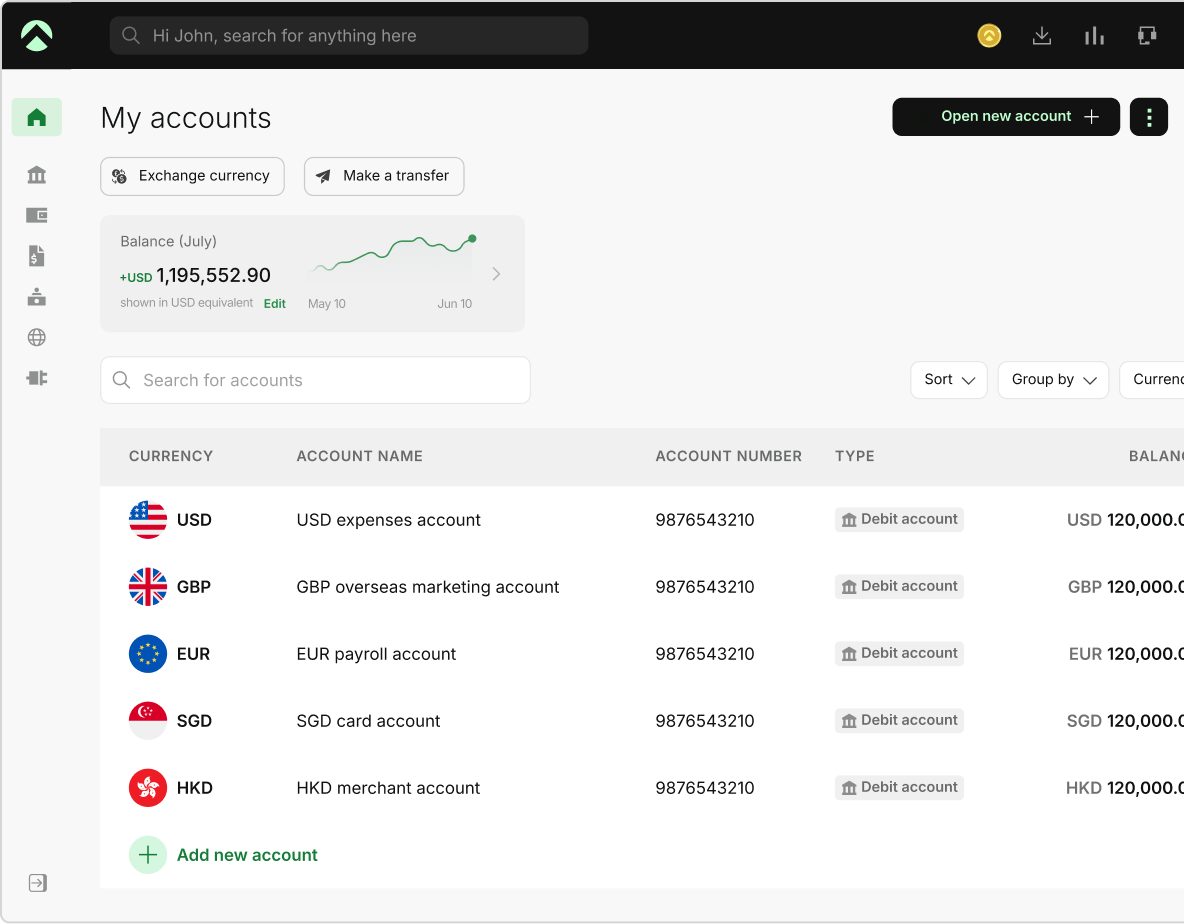
One Aspire account to manage your business finances in one place.
Get a business account¹, issue corporate cards², manage expenses, and automate financial workflows, all from one powerful platform built for modern businesses.
A lot of founders use ACH and wire transfers every day without realizing they serve completely different purposes. Both methods move money between banks, but they solve different operational problems. ACH supports predictable, low-cost payment flows, while wire transfers prioritize speed and final settlement for urgent or high-value transactions.
In 2025, the ACH Network processed 35.2 billion payments worth more than USD $93 trillion, according to Nacha, with an average transaction near USD $2,640.
Wire transfers handle far fewer payments at much higher values. The average Fedwire payment in 2024 was USD $5.4 million, with a median near USD $18,000, according to the Federal Reserve.
The real question isn’t which payment method is better, it’s when each one should be used. This blog breaks down the ACH vs wire transfer decision, explaining how speed, cost, risk, and workflow design shape modern business payments.
What is an ACH transfer?
Founders have been using ACH long before they understand what ACH stands for. ACH is the short form for Automated Clearing House, the network that moves money between US bank accounts in scheduled batches. Hence, ACH is what most people mean when they say "bank transfer". Behind the scenes, ACH connects US banks into a shared system designed for predictable, repeatable payments rather than instant movement of money.
How ACH transfers work
ACH payments are processed in scheduled batches rather than individually. Banks group transactions during clearing windows, exchange payment instructions, and settle balances afterward. This batch structure prioritizes efficiency and scale over immediate speed, which is why ACH works best for predictable operational payments rather than urgent transfers.
Standard ACH vs same-day ACH
Standard ACH supports predictable finance operations. Teams schedule payroll, vendor runs, or customer collections ahead of time and allow settlement to follow normal clearing cycles.
Finance teams reach for same-day ACH when timing becomes important but the situation still doesn’t justify the cost and finality of a wire. Funds can clear within hours if submitted before the processing window closes.
What is a wire transfer?
Wire transfers are used when payment certainty matters more than processing efficiency. Instead of scheduling payments for later settlement, wire transfers move funds directly between financial institutions.
How wire transfers work
Behind a wire sit different networks doing different jobs. Fedwire settles domestic US dollar transfers in real time, one payment at a time. CHIPS handles high-value US dollar payments, both domestic and cross-border, settling them on a netted basis. SWIFT is not a settlement system at all; it is the secure messaging network banks use to exchange international payment instructions, with the actual movement of funds happening through correspondent banks or systems like CHIPS. Once the receiving bank accepts the instruction, funds settle between institutions and become available to the recipient.
Operationally, a wire is closer to confirming delivery than scheduling payment. Your finance team can use it when timing matters more than efficiency.
Why wire transfers are treated as final
Reversals are difficult after processing. Recovery typically depends on cooperation between banks rather than network rules. Because of this finality, banks apply stronger verification before releasing funds.
You see this in practice through:
- additional authorization steps
- cutoff deadlines
- manual reviews for high-value payments
ACH vs Wire transfer: key difference
When founders compare ACH and wire transfers, the discussion usually starts with speed or fees. In practice, the differences between ACH and Wire payments shape how money moves through your operations, how risk is managed, and how confidently vendors rely on your payments.
| Feature | ACH Transfer | Wire Transfer |
|---|---|---|
| Processing speed | 1–3 business days; same-day available | Hours domestic: 1–2 days international |
| Cost | ~USD $0.20 – USD $1.50 or 0.5–1.5% | ~USD $25 – USD $50 domestic; higher international |
| Annual volume | 35.2B payments / USD $93T value | Lower volume, high-value transfers |
| Settlement | Batch settlement | Immediate settlement |
| Reversibility | Yes, disputes allowed | Generally irreversible |
| Transfer limits | Typically up to USD $1M/day | Effectively unlimited |
| Geographic reach | Primarily US | Global via SWIFT |
| Security model | Post-payment dispute window | Pre-execution verification |
| Fraudulent profile | Nacha sets a 0.5% cap on unauthorized-debit returns | low fraud rate, but generally final once sent |
| Direction | Push and pull | Sender-initiated only |
| Best use case | Payroll, vendors, recurring payments | Closings, urgent, international |
Processing speed
Processing speed differs because ACH and wire transfers serve different operational purposes.
On the network, ACH is faster than its reputation. Nacha reports that roughly 80% of ACH Network volume settles within one banking day or less, and Same Day ACH settles the same banking day for eligible entries. The familiar "1 to 3 business days" is usually your bank holding funds before making them available, not the payment sitting on the rail, as we cover in our guide to how long ACH transfers take. Same-day ACH accelerates settlement to hours when submitted before bank-specific cutoffs aligned with Fed windows.
Wire transfers bypass batching entirely. Each payment settles individually once approved by the receiving bank, usually within 1 to 6 hours domestically. This makes wires essential when payment timing directly affects shipments, closings, or contractual obligations.
Cost
ACH stays cheap because payments move in automated batches rather than one at a time, but the way you are charged matters more than any single number. Depending on your bank or provider, an ACH transfer fee can show up as a per-transaction charge, a monthly account or platform fee, an extra fee for same-day processing, or a return fee when a payment fails. For everyday consumers, standard transfers are often free.
Wires cost more because each one settles individually, and the charges stack differently. A wire can carry an outgoing fee, an incoming fee, correspondent or intermediary charges as the payment passes between banks, and an FX markup on international transfers. That is why a wire can look free on the surface while the recipient quietly absorbs a fee on their end.
The takeaway for finance teams: fees vary widely by bank and provider, so compare the total charge on your actual account rather than relying on an industry-wide benchmark. What you want to know is the all-in cost of a real payment you send often, not a headline rate.
Settlement method
ACH payments clear through the ACH Network connecting US financial institutions. Payment instructions move first, and funds settle afterward, usually the next business day. This 2-stage structure allows dispute and correction mechanisms, including return windows of up to 60 days for duplicates, processing errors, or unauthorized debits, one of the defining advantages in an ACH vs wire transfer decision.
Domestic USD wires may settle through Fedwire or CHIPS. International wires often use SWIFT messaging alongside correspondent banks and settlement systems. Once the receiving bank approves the instruction, settlement and availability occur almost simultaneously.
Transfer limit
ACH transfers typically operate within limits established by financial institutions or internal payment controls. These thresholds align well with routine operational payments such as payroll, subscriptions, and vendor invoices when choosing ACH or Wire transfer methods. Most ACH providers apply daily limits near USD $1 million, designed for routine operational payments.
Wire limits are set primarily by the financial institution, account type, and internal controls. Larger or unusual transactions may also undergo additional fraud or compliance review. This capacity makes wires suitable for high-exposure payments such as real estate closings, acquisition settlements, or large supplier milestones where certainty of funds matters more than transaction cost.
The choice between ACH or wire transfer usually reflects exposure size rather than convenience.
Geographic reach
ACH primarily supports domestic US payments. The International ACH Transfers (IAT) are there for cross-border transactions, but they are slower and less widely supported. Hence, most global payments still rely on wires or dedicated international rails.
Wire transfers function across borders through global banking networks, and for founders who manage international suppliers or are planning to expand overseas, an international wire transfer is a more practical option when payments must cross regulatory and banking boundaries.
Security
Both payment methods are secure, but they manage risk at different stages of the payment lifecycle.
ACH operates under Nacha oversight, providing dispute and return protections of up to 60 days. This structure accepts that high-volume operations occasionally produce errors and allows correction after payment execution.
Wire transfers prioritize verification before funds move. Banks apply KYC and AML controls because recovery after Fedwire settlement requires assistance between banks.
ACH manages operational risk after payment. Wires manage risk before payment.
Payment direction
ACH transfers support both push and pull payment flows. Funds can be sent to recipients or collected with authorization, enabling recurring billing, subscription payments, payroll deposits, and automated collections. This bidirectional capability makes ACH well-suited for ongoing financial relationships.
Wire transfers generally operate as sender-initiated transactions requiring explicit authorization each time. Because wires do not naturally automate or recur, they are most effective for one-time payments where confirmation, control, and timing matter more than operational efficiency. Is ACH the same as EFT, direct deposit, or a bank transfer
Founders usually compare ACH and wire transfers, then get confused around EFT, direct deposit, and bank transfer.
- EFT: Electronic funds transfer is the umbrella term for any money that moves electronically between banks. ACH and wire transfers are both types of EFT, so EFT vs wire transfer usually means comparing ACH against wire.
- Direct deposit: Not a separate rail. It is an ACH credit that pushes funds into an account for payroll, tax refunds, and vendor payments. Nacha recorded 8.74 billion direct deposits in 2025, so direct deposit vs wire transfer is really ACH vs wire seen from the receiving side.
- Bank transfer: In everyday US usage this almost always means ACH. A wire is a specific, expedited type of bank transfer that settles individually.
- Peer-to-peer apps: Venmo, PayPal, Cash App, and Zelle sit on top of these rails. Most settle through ACH behind the scenes, or through the RTP network for near-instant transfers.
When to choose ACH or a Wire transfer
Mature companies don’t pick one payment method. They design systems where each method serves a specific purpose within an ACH or wire transfer strategy. It comes down to timing, certainty, and how disciplined your internal processes are.
Choose ACH when
Mature finance teams reduce urgency by planning payments instead of reacting to them.
Batch processing allows finance teams to approve multiple invoices together, submit a single payment run, and maintain clear visibility over outgoing cash. Costs remain low, and payment timing becomes consistent.
Typical scenarios include:
- payroll and contractor payments
- subscription services
- recurring vendor invoices
- retainers or scheduled operating expenses
When payments are planned, speed becomes less important than consistency and cost control.
Choose a Wire transfer when
Wires are less about payments and more about accountability — someone inside the company owns the decision.
Use a wire when the settlement itself carries business consequences. The system assumes you need guaranteed funds rather than scheduling flexibility.
Common use cases include:
- real estate closings
- international supplier payments
- urgent contract settlements
- high-value one-time transfers
In practice, companies accept wire fees when the delay would cost more than the transfer itself.
A simple rule finance teams follow
Payment risk rarely comes from the payment rail itself. It comes from workflow pressure, such as late approvals, rushed vendor onboarding, or incomplete verification before funds are released.
Rule 1: Default to ACH for planned payments
Rule 2: Use wires only when timing creates business risk
Rule 3: Increase verification as payment value increases
Rule 4: Treat urgency as a workflow warning
ACH returns remain a small fraction of overall transaction volume, while wire fraud occurs less frequently but becomes significantly harder to reverse once funds move between banks.
Run ACH and wire transfers from one business account
Most of the friction founders feel is not choosing ACH or wire. It is running both across separate logins, chasing cutoff times, and reconciling payments after the fact. The Aspire business account brings both rails into one place, so you can schedule ACH runs for payroll and recurring vendors, send wires when a payment carries real business consequences, and keep full visibility over outgoing cash.
For suppliers and teams outside the US, Aspire’s global payments* move funds across borders through international rails, so you are not forced into a costly international wire transfer for every cross-border invoice. Pair that with expense management and your ACH and wire activity reconciles against budgets automatically.
Frequently Asked Questions
ACH transfers move in batches and typically settle in 1–3 business days, while wire transfers move individually and settle the same day. Wires also cost significantly more per transaction, compared to little or no fee for standard ACH. See the full comparison here .
No. They run on different rails. ACH moves money in scheduled batches and allows returns within set windows. A wire settles one payment at a time and is final once sent.
A domestic wire is usually faster, settling within hours. Standard ACH takes 1 to 3 business days; same-day ACH can clear within hours before the cutoff.
They manage risk at different points. ACH allows disputes and returns; wires rely on stronger upfront verification because payments are generally final.
Neither. Zelle runs on its own bank-owned network and settles through ACH or, increasingly, RTP, which is why it feels instant even though it is not a traditional ACH transfer or a wire.
Not usually. In the US, most bank transfers refer to ACH. A wire is a specific, expedited method that settles individually.
Sources
- https://www.nacha.org/news/same-day-ach-and-business-business-payments-propel-ach-network-volume-growth-2025 - Jan 28 2026
- https://www.nacha.org/content/ach-network-volume-and-value-statistics - Sept 4 2026
- https://www.nacha.org/content/ach-payments-fact-sheet - Sept 4 2026
- https://www.nacha.org/rules/ach-network-risk-and-enforcement-topics - Sept 4 2026
- https://www.nacha.org/content/ach-network-volume-and-value-statistics - Sept 4 2026
- https://www.federalreserve.gov/newsevents/pressreleases/files/other20251009a1.pdf - Oct 9 2025
This blog is for general information only and does not constitute financial, legal, tax, or professional advice. Aspire’s services are subject to the terms outlined in our ’Terms of Service’ and ’Pricing’ pages. We make no guarantees as to the accuracy, completeness, or timeliness of the content, and past results do not indicate future performance. Always consult a qualified professional before acting on any information provided.
Content Team
Aspire editorial
Content team at Aspire is a society of seasoned writers & experts specialising in finance, technology and SaaS space. With 50+ years of collective experience, they help make business finance more profitable for readers. They write about finance tools, finance insights, industry trends, tactical guides to grow your business & also all things Aspire.
Aspire Launchpad
Supercharge your finance operations with Aspire
Find out how Aspire can help you speed up your end-to-end finance processes from payments to expense management.

Latest articles

Finance Tools •
7 best accounting software for consultants and consulting firms in 2026
Compare the best accounting software for consultants that handle retainer billing, expense tracking, and 1099s. Compare QuickBooks, Xero, FreshBooks, Zoho, and more.

Business Advice •
Nonprofit accounting: How it works, rules and best practices
Learn how nonprofit accounting works, including fund accounting, donor restrictions, bookkeeping, Form 990, grants, taxes, and accounting software.

Business Account •
Best business bank account for Shopify: 8 options compared for 2026
Shopify pays out to any ACH-eligible US checking account. Compare eight options on payout speed, wire and FX costs, cashback caps, FDIC coverage, and eligibility.