


Best business bank accounts for landlords

Bintang Lestada

Summary
A dedicated rental-property account can make income and expenses easier to track and can help maintain financial separation when the property is held through a separate business entity. It does not by itself create liability protection.
Prioritize property-level account separation, rent/payment workflows, accounting integration, transaction costs, cash-deposit access where needed, reserve management and entity eligibility.
The right account depends on your entity structure, reserve levels, portfolio size, rent collection process, and whether the cash deposits or international payments matter.
Aspire's basic business account1 has no monthly fee. Eligible deposits can receive expanded FDIC coverage through Column N.A. and its sweep network, while Aspire Treasury3 is a separate investment product for eligible businesses that want to put surplus cash to work.
One Aspire account to manage your business finances in one place.
Get a business account¹, issue corporate cards², manage expenses, and automate financial workflows, all from one powerful platform built for modern businesses.
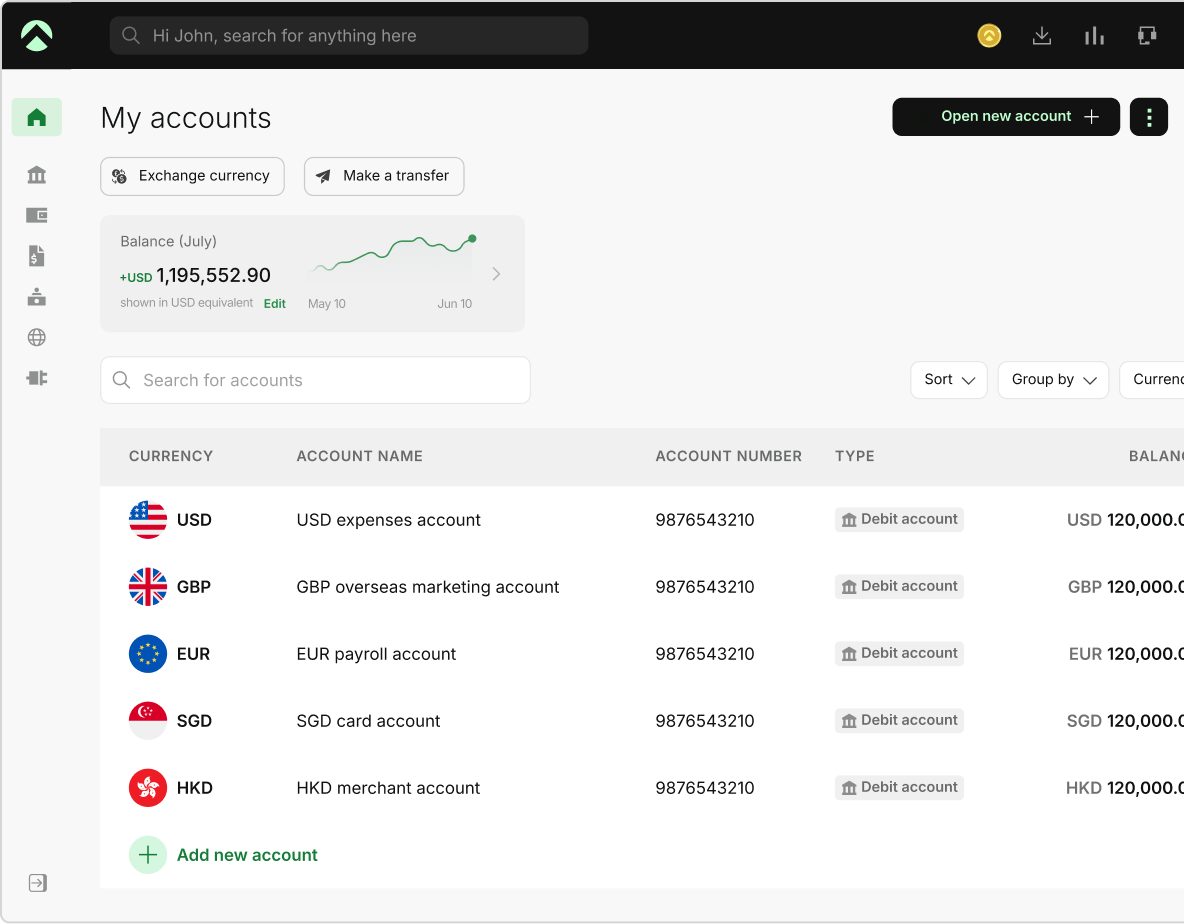
Rental income, tenant payments, and maintenance costs pile up fast, and mixing them with your personal account makes it worse. You must juggle incoming rent, ongoing expenses, vendor payments, maintenance overheads and other property costs. Landlords with multiple properties, LLCs, contractors or cross-border vendors and payment needs face an additional layer of complexity.
One of the biggest challenges for landlords and rental property owners is finding a banking solution that can simplify financial management and associated operations. The right banking setup can improve recordkeeping and make it easier to follow financial separation required by your entity structure or applicable state rules. This also helps minimize the hidden costs.
If you are a rental property owner willing to bring clarity to your business finances, this guide breaks down the best bank account for landlords to count on. We reviewed and assessed these options based on fee transparency, features, and cost-efficiency, all of which are required to efficiently manage your property portfolio.
The best landlord account isn’t simply the one with the highest APY. It should match how you separate your operating cash, tenant-held funds and reserves, while fitting your property count, rent-collection workflow and entity structure.
Why do rental property owners or landlords need a dedicated business bank account?
A separate business bank account is often useful because it keeps rental income and property expenses out of your day-to-day personal transactions. Whether you need a formal business account depends on your ownership structure, provider requirements and applicable state rules.
Keeping the finances separate is still a smart step for most rental property owners. It supports cleaner recordkeeping and also streamlines your operations. Here are some of the other reasons why you must open a dedicated business account:
- Simplified tax preparation: Having a dedicated bank account provides you with a clean and clear record of all your rental income and ongoing expenses, making it easier to document your income and potentially deductible expenses from the tax records.
- Seamless profit tracking: A dedicated bank account for landlords can make property-level cash flow easier to monitor. This clarity prepares you to make smarter investment decisions.
- Professional financial management: Route your rent, mortgage payments, utilities, repairs and vendor payments through a dedicated account so the property’s financial activity is easier to trace.
- Maintain entity separation where applicable: If a rental property is held through a corporation or LLC, keeping entity finances separate from personal finances can help preserve clean business records and support the separation expected. The bank account itself doesn’t create liability protection, and landlords operating personally or as sole proprietors do not have the similar liability shield.
Before you choose an account, you must know that security deposits can have separate state-law rules.
Security deposits shouldn’t automatically be pooled with the operating rent or cash reserve. Some US states require deposits to be held separately from other funds. It can be either in trust or in an interest-bearing account. The security deposit rules differ by state. So, what’s compliant for your operating rent account may not be compliant for the deposits that you’re holding.
If you own or manage property in more than one US state, check the rules for each one before deciding where to keep the security deposits. This is a separate decision from picking your landlord banking, and it’s worth settling before money starts moving through
What to look for in a landlord business bank account
When looking for the best bank account for a rental property, here’s what to look for:
- Low or no monthly fee: Look for a bank account with either no monthly fee or one that allows you to waive the fees by meeting specific monthly requirements. Also compare ACH, wire, cash-deposit, check and additional-account fees, since these add up faster than the monthly fee itself.
- Property-and-entity-level account separation: If you own multiple properties or LLCs, check whether each account or subaccount gets its own account number and whether the platform supports separate entities. A label or budgeting bucket inside one account is not always equivalent to a legally separate deposit account, and the difference matters if you need to show clean separation by property or entity.
- Accounting or bookkeeping workflow: Your bank account should fit into how you actually manage your books, whether that' s through a QuickBooks or Xero integration, or a landlord-native platform with built-in property-level categorization for tax prep.
- Payments and transaction economics: With multiple properties, you’ll likely have a high volume of transactions every month. Compare the ACH transfers, wires, rent deposits, checks and the number of included transactions and cash deposit limits. This way, you won’t find yourself paying the per-transaction fees as your portfolio grows.
- Digital access and permissions: Look for a seamless mobile access, but also check if you can grant limited access to your accountant or property manager without handing over complete control of the account.
- Support model: Compare chat and phone support availability. Check whether faster or higher-priority support is available on paid plans.
- Rent collection compatibility: Check if the provider offers native rent collection, or does it integrate cleanly with your existing system for collecting rent. This can be a meaningful differentiator among all the landlord-focused platforms.
- Cash deposits and branch access: If you accept the cash payments or need in-person banking services, check for branch availability and cash deposit limits, since many online-first business accounts lag here.
- Entity eligibility: Confirm if the account provider actually supports your setup, irrespective of whether you operate personally, as a sole proprietor, a partnership, a corporation or a single-member LLC. Eligibility requirements vary by provider and aren’t uniform across account types.
How we evaluated these landlord bank accounts
We assessed each bank account provider against criteria that matters specifically for the rental property owners, and not general small-business banking needs. Our evaluation is based on:
- Landlord and rental-property relevance
- Monthly and account fees
- Property-and entity-level account separation
- Rent-collection capability or compatibility with existing rent collection tools
- Accounting and bookkeeping integration
- ACH, wire, check and cash deposit support
- Interest or yield on idle balances
- FDIC coverage structure
- Entity eligibility
- Branch access and cash-handling needs
- Team and accountant access controls
The terms and product details were checked as of September 2026, and are subject to change. You can confirm the current terms directly with each provider before opening an account.
Comparison at a glance
| Provider | Type | Monthly fee | Property-level accounts | Rent collection | Accounting integration | Cash deposits/branches | Interest/yield | FDIC structure | Best for |
|---|---|---|---|---|---|---|---|---|---|
| Aspire1 | Digital business account | None | No dedicated subaccount feature. Virtual cards2 can be restricted per vendor or property. | Not native. Supports rent receipt via free ACH/wire/check. | Xero, QuickBooks, plus built-in budgeting, invoicing, bill pay. | Not stated as a core feature. | Checking Account: No stated APY. Aspire Treasury3 : A separate investment product and is not FDIC insured. It offers up to 3.70% yield for eligible businesses only. | Deposits are FDIC insured up to USD $100M through Column N.A.’s sweep network. | Landlords holding large cash reserves and want free transfers and high FDIC coverage on checking. |
| Baselane | Fintech landlord platform- supports banking via Thread Bank | None | Unlimited property-specific checking and saving accounts under one login. | Native rent collection built into the platform. | Auto-tags the transactions to Schedule E Comes with built-in property and portfolio income statements. | Not stated as a core feature. | Rates vary by source. Confirm current APY with the provider directly. | FDIC insured up to USD $3M via Thread Bank’s sweep network. | Landlords who want banking, rent collection and bookkeeping, all unified in one login. |
| Stessa | Accounting-first platform with an optional cash management add-on | Free tier available. Some sources cite paid plans starting at USD $15/month for added features. Confirm current pricing directly with the provider. | Property-level tracking is built into the accounting layer. | Native rent collection, but works best when paired with its own Cash Management account. Tenants have to pay extra ACH fees if you link any other bank. | Supports strong integrations. This is primarily a bookkeeping or reporting tool with banking layered on top of it. | Not stated as a core feature. | Not stated clearly in the available sources. | Not fully specified in available sources. | Landlords seeking investment-grade reporting and are willing to bank through Stessa’s own Cash Management account. |
| Relay | Fintech business banking via Thread bank. | None on base tier. Grow and Scale are paid tiers that come with added cost for extra accounts or features. | Supports up to 20 checking accounts for Starter/Grow plan, and up to 50 for Scale plan, all under one login. Plus, you can also open up to 2 savings accounts. | Not native. It connects with payment tools like Square, PayPal or Stripe for collecting rent payments. | Landlords running a “Profit First” or envelope-style budgeting approach across many accounts and team members. | ||||
| Bluevine | Digital business checking | None on standard. Fee applies on Plus/Premier (Waivable) | Supports up to 20 subaccounts. | Not stated as native. Unlimited transactions support high payment volume. | Not stated in the source material. | Cash deposits at Green Dot ATMs for a nominal fee. There’re no physical branches. | Standard: 1.3% APY Plus: 2.4% APY Premier: 3.5% APY. tiered by paid plan. | FDIc insured up to USD $3M through a sweep network. | Landlords who want per-property subaccounts and tiered APY. |
| Chase | Traditional bank | Fee is applicable. (It is waivable under certain conditions) | Not stated | QuickAccept and Invoicing tools are available for accepting tenant rent payments. | Not stated in source material. | Cash deposits up to USD $5,000/month are free. USD $3 is charged per USD $1,000 deposits above the limit. It has nationwide branches. | Not stated | Standard FDIC coverage | Landlords who take cash rent or want in-person branch access. |
6 best accounts for landlords and rental property owners
Here is a list of the best business bank accounts for landlords, narrowed down from the many options in the market:
1. Aspire1 US
Aspire’s US business account is built for incorporated entities. Eligibility depends on the structure of your business. You must confirm the current entity requirements directly with Aspire before applying for an account. Landlords operating under informal partnerships or sole proprietors should check this first.
Aspire1 isn’t a landlord-specific business banking platform, and doesn’t offer native property-level or rent-collection workflows that you’ll find with Stessa or Baselane. It is a stronger fit for eligible landlord businesses that need cross-border vendor payments or broader finance operations alongside traditional banking.
Features:
- No monthly fees: Aspire has no monthly maintenance fee, no minimum balance, and no cost to open a business account.
- Instant virtual cards: Issue virtual cards2 to set a spending limit per vendor or property, or restrict a card to a specific merchant. This provides you with optimal spend controls.
- Cashback^: You can earn up to 1.5% cashback^ on all eligible card spends, including software subscriptions and supplies.
- Free transfers: All real-time transfers, with an Aspire business account, are free. Following that, ACH, wire, and cheque payments are also free and settle within the same day. It is a useful feature for collecting rent or paying contractors without per-transaction fees.
- Accounting integration support: Your business account syncs with Xero and QuickBooks, along with built-in budget, invoicing, and bill payment tools to reconcile your rental income against the property expenses.
- High FDIC coverage: All the deposits made to your Aspire business account are FDIC insured, up to USD $100M through Column N.A.’s sweep network. This matters if you’re holding several months of security deposits or rental income in one account.
2. Baselane
It is best for landlord-specific banking, property-level accounts and integrated bookkeeping.
Baselane offers its banking services through Thread Bank. It offers unlimited property-specific checking and savings accounts across entities and properties, under a single login. You also get native rent collection and integrated bookkeeping that automatically tags the transactions to Schedule E with property and portfolio income statements.
There are no monthly maintenance or minimum balance fees on your core account structure. Also, it integrates with QuickBooks to automatically update your transaction data. FDIC insurance is available for up to USD $3M through the Thread Bank’s sweep network.
The trade-off with Baselane’s account is that it is more of a landlord-native workflow than a generic business bank, but is less useful if you accept international payments or are seeking a larger physical branch network.
3. Stessa
It is best for landlords who want native rent collection and property accounting or reporting in the same ecosystem.
Stessa is primarily an accounting and reporting tool with banking layered on top of it, through an optional Cash Management account. This feature supports rent collection through card or ACH. You also get property-level transaction tracking and tax-ready reporting features to aid your business.
The platform works for landlords and is cheapest for the tenants, only if it is linked to Stessa’s own Cash Management account. Upon linking banks outside of Stessa, tenants have to pay additional ACH fees. The current pricing or FDIC details vary by source. So, you must confirm it directly with the provider before applying for an account.
The trade-off with Stessa is that it is more of a reporting- or accounting-centric platform than a general bank. It is a good fit if you seek investment-grade reporting rather than broader banking features.
4. Relay
It is best for landlords managing multiple properties or entities and want several distinct operating and reserve accounts under one login.
Relay also provides its banking services through Thread Bank, and supports up to 20 checking accounts. You get more checking accounts on higher tiers, plus you can also open up to 2 savings accounts, all under a single login. You get accounting workflows like invoicing and bill payments, followed by role-based access for accountants and ACH, wire or check payments.
FDIC insurance is available for up to USD $3M through the Thread Bank. You don’t have to pay any monthly fee for the base tier, whereas the paid tiers add up cost as you add more accounts or features.
A business account with Relay is useful only when your accounting or entity structure calls for property-level account separation. However, it is not a rule that every property automatically needs its own separate account.
5. Bluevine
Bluevine is best for landlords who primarily want a digital business checking account with interest on the eligible balances and don’t need a native rent collection or property management workflow. Bluevine isn’t a landlord-specific platform.
The current plan structure offers:
- Standard: No monthly fee, 1.3% APY on balances up to USD $250K, supports up to 5 sub-accounts.
- Plus: USD $30/month, waivable by maintaining a USD $20,000 average daily balance across accounts and USD $ 2,000 in eligible card spend. You get 2.4% APY on balances up to USD $250K, and can open up to 10 sub-accounts.
- Premier: USD $95/month, waivable under similar conditions. You get 3.0% APY on all balances, and can open up to 20 sub-accounts.
Bluevine offers unlimited standard transactions, though not every transaction type is fee-free. Check the current fee schedule for wire transfers or expedited payments. Cash deposits are available through supported partner locations, with fees that depend on the deposit channel. Confirm the current terms before relying on this for regular cash collection.
FDIC insurance is available up to USD $3M through Coastal Community Bank and program banks. It is an ideal choice for landlords who want to earn high interest on their balances and may have higher monthly transactions.
6. Chase
Chase is best for landlords who handle cash, need physical branch access or prefer a traditional banking relationship.
The Chase Business Complete Banking account charges USD $15/month, which is waivable by maintaining a USD $2,000 minimum daily balance or meeting other qualifying card-spend or payment-processing activity. You get up to 100 free transactions and USD $5,000 in free in-branch cash deposits per statement cycle. There is a fee of USD $3 per deposit of USD $1,000 beyond the threshold.
The sign-up bonuses and promotional terms of Chase change frequently and often carry conditions. It is better to verify the current offer directly with Chase before you apply for an account. Chase offers access to more than 5000 physical branches and 15,000+ ATMs, making it a strong choice for in-person or cash-heavy banking needs.
Which account is right for you?
The right choice depends on how you operate, not on which provider has the flashiest headline feature:
- Choose Aspire1 if you’re an eligible US LLC or corporation and if cross-border vendor payments, multi-currency* operations, or spend controls matter for your business.
- Choose Baselane if you want landlord-specific banking with property-level organization and integrated bookkeeping in one place.
- Choose Stessa if rent collection and property-level reporting are central to how you manage your property portfolio.
- Choose Relay if you need several distinct accounts across properties, cash reserves, or entities, all under a single login.
- Choose Bluevine if you want an interest-bearing digital business checking account with straightforward US banking, without any landlord-specific features.
- Choose Chase if branch access and in-person cash deposits matter for your rent collections and business operations.
One important caveat: security deposits are a special case. Many US states require the security deposits to be held in a separate and sometimes interest-bearing account with specific rules on disclosure and commingling. Evaluate where you hold your security deposits under the law of the US state where the property is located, rather than simply treating them as ordinary cash reserves.
Whichever account you choose, the bigger win is simply getting your rental business off your personal account and into a dedicated one. This keeps your income, expenses, and taxes clean, right from the start.
If your rental business is an Aspire-eligible entity and you deal with cross-border payments or require spend controls and broader finance operations, explore Aspire’s US business account.
Frequently Asked Questions
Not every landlord is legally required to use a business bank account. A dedicated account is usually helpful for separating rental income and expenses, and it is especially important to maintain clean financial separation when the property is owned by a separate business entity. Account requirements also depend on the provider and entity type.
An EIN can identify the business, but it generally does not replace identity verification for the account owner, signer or beneficial owners. Requirements vary by entity and provider and may include government-issued ID, SSN/ITIN or other tax information, EIN and formation documents.
You can usually move money from a business account to a personal account, but the transaction should be recorded according to the business structure, for example as an owner draw, distribution, payroll or another appropriate category. Ask your accountant how it should be treated for your entity.
Traditional banks often offer branches, cash handling and broader lending relationships. Fintech platforms may offer more digital account organization, software integrations and workflow tools, but banking services are commonly provided through partner banks. Compare the actual account provider, FDIC structure, cash-deposit options, support and landlord-specific functionality rather than choosing by label alone.
There is no universal number. A landlord with one personally owned property may need a simpler setup than an investor with several LLCs or properties. Many landlords separate accounts by legal entity, property or purpose so income and expenses are easier to trace. Security deposits should be handled according to state law rather than simply placed in a generic subaccount. If your accounting system can keep property activity clear within fewer accounts, you may not need one checking account for every property.
Not necessarily. Separate property accounts can make cash flow and bookkeeping easier, especially across multiple LLCs or larger portfolios, but the right structure depends on your ownership entities, accounting workflow and portfolio size. Keep the legally restricted funds, such as the security deposits separate where the state law demands for it.
Don’t assume you can. The security deposit rules vary by US state, and some of the states require the tenant deposits to be held in a separate account, either in trust or in an interest-bearing account that has specific disclosures. Check the rules based on where your property is located before deciding on where to hold the security deposit.
For most landlords, the best account is the one that keeps rental activity separate, and supports the payment methods you actually use. Following that, the account must also encourage straightforward property-level bookkeeping. Depending on the number of properties you own, and the workflow, a traditional business checking account, a multi-account FinTech platform or a landlord-specific banking platform can be best for rental income.
Sources
- Best Business Bank Accounts for US Landlords- https://wise.com/us/blog/best-business-bank-account-for-landlords#best-business-bank-accounts-for-landlords-our-top-picks Mar 2026
- 7 Best Bank Accounts for Rental Property Owners and Landlords- https://www.turbotenant.com/accounting/best-bank-accounts-for-real-estate/ Dec 2025
- Landlord bank account: how to set up the right structure- https://relayfi.com/blog/landlord-bank-account/#frequently-asked-questions Jul 2026
This blog is for general information only and does not constitute financial, legal, tax, or professional advice. Aspire’s services are subject to the terms outlined in our ’Terms of Service’ and ’Pricing’ pages. We make no guarantees as to the accuracy, completeness, or timeliness of the content, and past results do not indicate future performance. Always consult a qualified professional before acting on any information provided.
Bintang Lestada
Writer
Bintang is a seasoned writer specialising in fintech, agtech, politics, and pop culture. With a writing history at VICE ASIA, Letterboxd, Whiteboard Journal and other reputable organisations, Bintang leverages their broad range of experiences to resources that educate audiences, build trust, and support business growth.
Aspire Launchpad
Supercharge your finance operations with Aspire
Find out how Aspire can help you speed up your end-to-end finance processes from payments to expense management.

Latest articles

Business Account •
Best business bank account for Shopify: 8 options compared for 2026
Shopify pays out to any ACH-eligible US checking account. Compare eight options on payout speed, wire and FX costs, cashback caps, FDIC coverage, and eligibility.

Expense Management •
Best accounts payable software for small businesses guide
Compare accounts payable tools for small businesses. Choose based on your friction, approval chaos, cash flow blindness, and vendor issues.

Business Account •
How many business bank accounts do you need?
Learn how many business bank accounts your business may need, when multiple accounts help, and how to structure operating cash, taxes, payroll, and reserves..