


Payment methods explained: types, pros & when to use each

Content Team

Summary
Payment methods are not just a checkout feature. They define how money moves through your business, affecting conversion, cash flow, costs, and operational effort.
Relevant payment options can reduce friction when they match customer expectations, while options customers don't use can add unnecessary complexity.
Each payment method involves trade-offs between convenience, speed, settlement timing, cost, and dispute or return risk. Cards and wallets can speed up checkout, while bank-based payments may cost less in some cases. BNPL can reduce the upfront burden for customers but typically costs merchants more.
As you add payment rails and currencies, you also add settlement timelines and transaction records to reconcile. That can make cash-flow visibility harder to maintain.
Choose payment methods based on how your customers actually pay, and make sure your financial setup can keep up with what happens after the transaction.
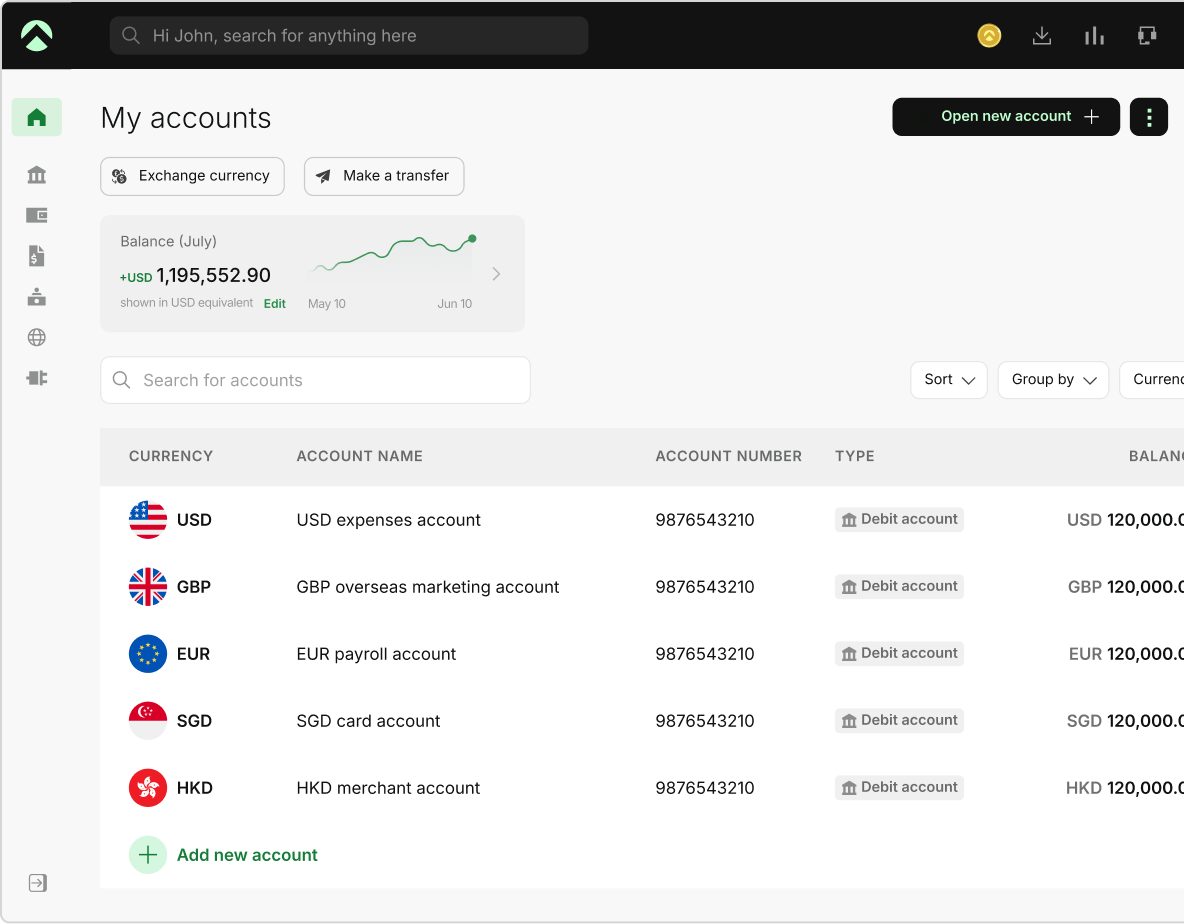
One Aspire account to manage your business finances in one place.
Get a business account¹, issue corporate cards², manage expenses, and automate financial workflows, all from one powerful platform built for modern businesses.
Most founders think about payment methods as a checkout decision, but the choice affects much more than how a customer pays.
It can influence when you receive funds, what each transaction costs, and how much work your team handles after the payment goes through.
Evaluate a payment method twice: first for how easily the customer can complete the transaction, and then for what happens after authorization, including settlement, fees, disputes, FX and reconciliation.
What are payment methods
A payment method is the way a customer pays your business, such as cards, bank transfers, digital wallets, cash, or BNPL. These methods enable transactions across online, in-person, and mobile channels, affecting how money moves, settles, and is tracked in your revenue system.
The method of payment you offer can shape the customer experience as well as how your business receives and manages funds. Different types of payment suit different situations, so the right payment type depends on factors such as transaction value, customer preferences, and where the transaction takes place.
Benefits of offering multiple payment methods
Offering multiple payment options makes it easier to accommodate different customer preferences, locations, and purchasing behaviors. The aim is to offer the options that make sense for your customers and operating model.
- Meet customer preferences with familiar ways to pay: Customers are more likely to complete a payment when the method feels familiar
- Reduce checkout friction: Giving customers a payment method they know can make the path from checkout to completion more straightforward
- Support customers across different markets: Payment preferences vary by market, so a broader mix can help you serve customers in different locations
- Match payment types to different transaction values: Percentage-based card fees may become more material on a large B2B invoice, while cards may still make sense when convenience, rewards or card-specific controls matter
- Support recurring or repeat payments: Recurring payment methods can make regular collections more predictable and reduce manual work
- Give customers alternatives when one method fails: If a payment doesn't go through, another option can help the customer complete the transaction
You don't need every available payment method. Focus on the mix that fits your customers, transaction types, markets, and financial operations.
Different types of payment methods
Payment methods give customers different ways to move money to your business, but they don't all work the same way. Each option comes with different costs, settlement speeds, risks, and operational requirements.
Here are the main types of payment methods to consider.
1. Credit and debit cards
Cards let customers pay using credit or funds available in their bank account. They're widely used for online and in-person purchases and are a common online payment method.
Federal Reserve data shows that credit and debit cards accounted for about two-thirds of consumer payments in 2025, with consumers making an average of 16 credit card and 15 debit card payments per month.
| Pros | Cons |
|---|---|
|
|
2. Digital wallets
Digital wallets such as Apple Pay, Google Pay, and PayPal let customers pay using stored payment details without entering their information each time.
| Pros | Cons |
|---|---|
|
|
3. Bank transfers
Bank transfers move funds directly from one bank account to another. In the US, ACH is commonly used for domestic transfers, while wire transfers are often used for larger or international transactions.
| Pros | Cons |
|---|---|
|
|
4. Real-time payments
Real-time payments move funds between bank accounts through payment rails designed to process transactions almost immediately. In the US, examples include RTP and FedNow.
| Pros | Cons |
|---|---|
|
|
5. Buy now, pay later (BNPL)
BNPL lets customers split a purchase into installments through a third-party provider. It's most commonly used for consumer purchases where spreading the cost may make a higher-value transaction more manageable.
| Pros | Cons |
|---|---|
|
|
6. Cash
Cash involves paying with physical currency, typically for an in-person transaction. It's straightforward and settles immediately, but requires more manual handling.
| Pros | Cons |
|---|---|
|
|
7. Checks
Checks are paper-based payment instructions that direct a bank to transfer funds from the payer's account. They're still used in some traditional B2B payment workflows.
| Pros | Cons |
|---|---|
|
|
8. Cryptocurrency
Cryptocurrency is a digital form of value transferred through blockchain networks. It can provide another way to make cross-border payments, but brings additional volatility, regulatory, and operational considerations.
| Pros | Cons |
|---|---|
|
|
Alternative payment methods
Payment links and QR codes are usually ways to initiate an underlying payment method rather than separate payment rails. “Alternative payment methods” is an umbrella term that may include wallets, bank-based payments, BNPL and local schemes depending on the market.
Which payment method is best suited for different use cases
The best payment method for a transaction depends on what you're selling, how much the customer is paying, how often you collect, and where the money is moving.
Here are a few examples.
Everyday ecommerce purchases
For a typical online retail purchase, customers generally want a payment method that's familiar and quick to use.
The US ecommerce mix reflects that combination of options. According to Worldpay’s 2026 Global Payments Report , in 2025, digital wallets accounted for 40% of US ecommerce transaction value, followed by credit cards at 32%, debit cards at 16%, and BNPL at 6%.
The most suitable options are:
- Credit and debit cards: A strong default for ecommerce because customers are familiar with the process and can pay directly at checkout
- Digital wallets: Useful when reducing checkout steps matters, particularly for customers shopping on mobile devices
- BNPL: Worth considering for higher-ticket purchases where giving customers the option to split the cost fits the product and customer journey
For most everyday purchases, cards can provide the broadest baseline coverage, while digital wallets can reduce checkout steps. BNPL is more situational because it makes more sense when the purchase value is high enough for installment payments to be relevant.
High-value B2B transactions
A large invoice or supplier payment calls for a different approach from a typical ecommerce purchase. For higher-value B2B transactions, consider:
- Bank transfers: A practical choice when the payment value makes card fees less attractive or when a direct bank-to-bank payment is preferable
- Wire transfers: Wires can be appropriate when speed, payment certainty or cross-border bank-transfer requirements justify the cost
- Cards: Can still make sense for specific business purchases where convenience, card controls, or other card-based workflows outweigh the cost
For these transactions, compare the total cost rather than choosing based on convenience alone.
Payment limits, transfer fees, settlement timing, and dispute considerations can have a much larger impact when individual transactions are worth substantially more.
Recurring payments and subscriptions
Subscription businesses need payment methods that support regular collection without creating manual work every billing cycle. The most relevant options are:
- Recurring card payments / autopay: Suitable when customers authorize automatic charges on a recurring schedule
Autopay is a recurring billing arrangement rather than a separate underlying payment rail. It may use a stored card, authorized ACH debit or another reusable payment method.
| Pros | Cons |
|---|---|
|
|
- Debit-based payments: Can be useful for recurring collections where debit payments are supported and appropriate for the customer base
- Digital wallets: An option where the wallet and payment setup support recurring transactions
The choice here is less about offering every possible way to pay and more about keeping collections predictable. Make sure your payment setup can handle failed payments, retries, expired payment details, and customer updates without turning every failed charge into a manual invoice.
International and cross-border payments
Cross-border transactions add another layer to the payment decision. The best payment options can vary by the customer's market, the currency involved, and the local payment infrastructure. Common options include:
- Bank transfers: Useful for larger international payments and business-to-business transactions where direct account-to-account transfers are practical
- Cards: Often suitable for international ecommerce purchases where customers expect to pay at checkout
- Digital wallets: Useful when a wallet is widely adopted in the customer's market and supports the relevant transaction
- Local payment methods: Worth considering when a particular market has established payment preferences or local rails that customers expect
- Cryptocurrency: Crypto/stablecoin payments may be relevant where the business and counterparties already use them and can manage compliance, accounting and conversion requirements
Geography matters more here than it does for a domestic transaction. Customer preferences, available payment rails, supported currencies, and FX costs can all affect which payment method makes sense.
In this case, you also need to consider what happens after the payment arrives, including where funds are held, how different currencies are managed, and how transactions are reconciled.
Things to consider while shortlisting payment methods
When shortlisting payment options, evaluate each method against what your customers expect and what your business needs, including cash flow, cost, risk, and operational requirements.
Speed
Separate payment confirmation from settlement and funds availability. A card or wallet can confirm a payment quickly while the funds settle later. RTP and FedNow can provide real-time bank-to-bank settlement.
This difference matters when you depend on cash flow for operations. Delays can affect payroll, vendor payments, and inventory cycles. Although quicker settlement increases liquidity, there may be cost or availability trade-offs.
Cost
Every payment method has a cost structure, but the visible charge is not the full cost.
For instance:
- Cards take a percentage.
- Transfers may have fixed fees.
- Cross-border adds FX spreads.
Compare the total payment cost, not just the advertised transaction fee.
Then come hidden costs, such as failed payments, disputes, and reconciliation work. Cheap upfront can get expensive in practice.
Reversibility
Consider how easily a payment can be disputed, returned, refunded, or recalled after it has been completed. Cards can be disputed, while many bank transfers are harder to reverse once processed.
The key question is what happens when something goes wrong, and who carries the loss. A payment method may give customers more ways to resolve a payment issue while creating different levels of risk for the business.
Geography
Payment behavior is local.
Customers don't pay the same way in every market. Cards and digital wallets may be common in one country, while bank transfers or local payment systems are more widely used elsewhere.
For founders serving multiple markets, the payment mix needs to account for those differences, both in customer preference and in the payment infrastructure available locally.
Use case
The nature of the transaction should determine the method of payment.
- Recurring subscriptions: Reusable cards or authorized bank debits
- High-value B2B: Bank transfer or wire where cost, timing, and risk fit
- Online retail: Cards, wallets, and relevant BNPL or local methods
- Urgent domestic bank payment: RTP/FedNow or wire where supported
Recurring suitability
For recurring payments, consider whether the method can be reused securely and with the customer's authorization. This matters for subscriptions and other repeat collections, where failed payments, expired payment details, or changes to payment authorization can create additional work.
Operational fit
Consider how much work each payment method creates after the transaction. Exception handling, reconciliation, settlement tracking, and currency management can all add operational work, particularly when you use multiple payment methods or operate across markets.
The best payment method can change depending on the transaction. Use the guidance above to narrow down the different payment options that fit a particular situation, rather than treating one method as the default for every payment.
Payment methods compared at a glance
The table below gives a quick way to compare how different payment methods typically perform across speed, cost, and dispute risk. These are broad benchmarks rather than fixed rules. Actual timing and fees can vary by provider, transaction, and market.
| Payment method | Confirmation | Settlement / availability | Pricing model | Return/dispute characteristic | Best suited to |
|---|---|---|---|---|---|
| Cards | Fast authorization | Funds settle later | Percentage/fixed; provider-dependent | Chargebacks possible | Ecommerce, everyday purchases |
| Digital wallets | Fast checkout and confirmation | Usually depends on the underlying payment method and provider | Provider-dependent | Dispute terms depend on the underlying method/provider | Fast, mobile-friendly checkout |
| Bank transfer (ACH) | Depends on payment type and provider | Varies by Standard or Same Day ACH | Provider-dependent; may vary for sending vs. collecting | Returns possible | B2B and domestic bank payments |
| Wire transfer | Typically confirmed once processed by the bank | Often same-day domestically when cutoff conditions are met | Usually fixed-fee style | Difficult to reverse after completion; fraud risk remains | High-value or international payments |
| Real-time payments (RTP/FedNow) | Immediate | Real-time settlement | Provider-specific | Final settlement characteristics | Urgent domestic bank payments |
| BNPL | Fast after approval | Provider-dependent | Provider-dependent merchant pricing | Provider-dependent | Higher-value consumer purchases |
| Cash | Immediate exchange | Immediate | No network processing fee; handling costs apply | No network dispute process; loss or theft risk | In-person transactions |
| Checks | Slower confirmation | Slower processing | Bank/operational costs | Bounce and fraud risk | Traditional B2B payments |
| Crypto | Network-dependent | Network-dependent | Network, conversion, and custody costs | Limited reversibility; regulatory and operational risk | Cross-border transactions where crypto is accepted |
The comparison shows that payment methods differ in more than speed and cost. Look at when a payment is confirmed, when funds become available, what it costs to process and manage, and what happens if the transaction needs to be returned or disputed.
Where Aspire fits into your payment setup
Offering different payment options can make it easier for customers to pay, but it can also create more work once the funds reach your business. Different payment rails, currencies, settlement timelines, and transaction records can make reconciliation and cash-flow visibility harder to manage.
This is where the financial infrastructure behind your payment methods matters. Aspire1 supports the financial operations around and after payment collection, bringing accounts, payments, FX, expense management, and accounting workflows into one platform.
Manage funds across currencies
With an Aspire business account1, you can manage funds across multiple currencies and get visibility into your transactions. The account also supports local transfers, including ACH, wire, check, and real-time transfers in the US.
For founders operating across markets, this can make it easier to manage funds behind different payment options without maintaining separate financial setups for every market.
Handle cross-border payments and FX
Aspire’s global payments platform supports sending money to 98+ currencies across 130+ countries, with FX rates from 0.22% above mid-market rates and same-day local transfers to 40+ currencies. Aspire shows the applicable fee and conversion before each transfer, giving you visibility into the FX cost before you send.
Connect payment activity with expenses
Once funds are in the business, Aspire’s corporate cards2 and expense management workflows help control outgoing spend alongside your account and payment activity.
Automate reconciliation
Aspire integrates with accounting platforms including Xero and QuickBooks, helping sync supported transaction data into accounting workflows and reduce manual reconciliation work. That means payment activity can flow into the accounting workflows that follow it, reducing the need to manage transaction records across disconnected systems.
This gives you a single finance platform for managing the accounts, payments, expenses, FX, and reconciliation work that sit behind the different ways customers and counterparties pay you.
Choose payment methods with the next transaction in mind
The best payment mix is the smallest set of methods that fits your customers and your economics. Review customer location, transaction type, confirmation and settlement needs, and what happens operationally after payment, then revisit the mix as your business changes.
Frequently Asked Questions
Credit and debit cards are the most widely used payment instruments among US consumers by number of payments. The Federal Reserve's 2026 Diary found the two together accounted for roughly two-thirds of consumer payments, although the most common method depends on transaction type and customer segment.
There is no universally cheapest method. Some bank-transfer options and cash can have lower direct processing fees than card acceptance, but total cost can include handling, failed payments, returns/disputes, FX and reconciliation.
Common methods of online payment include credit and debit cards, digital wallets, bank transfers, BNPL, and cryptocurrency. The available options depend on the payment infrastructure, market, and type of transaction. Local payment methods may also be important when selling internationally.
A payment method is how a customer chooses to pay, such as a card, digital wallet or bank debit. A payment gateway is technology that securely transmits online payment information into the payment-processing flow. One gateway can support multiple payment methods.
Alternative payment methods is an umbrella term for payment options used alongside traditional card payments. Depending on the market, it can include digital wallets, bank-based payments, BNPL and local payment schemes.
A payment method is the means a payer uses to complete a transaction, such as a card, wallet, bank payment, cash or BNPL. It is different from the payment network or processing technology that carries the transaction.
Sources
1. https://www.frbservices.org/binaries/content/assets/crsocms/news/research/2026-diary-consumer-payments-choice.pdf (09/15/2026)
2. https://wp-contentful-test-static-content.worldpay.com/gpr/GPR2026-Digital-Medium-1.pdf (09/15/2026)
This blog is for general information only and does not constitute financial, legal, tax, or professional advice. Aspire’s services are subject to the terms outlined in our ’Terms of Service’ and ’Pricing’ pages. We make no guarantees as to the accuracy, completeness, or timeliness of the content, and past results do not indicate future performance. Always consult a qualified professional before acting on any information provided.
Content Team
Aspire editorial
Content team at Aspire is a society of seasoned writers & experts specialising in finance, technology and SaaS space. With 50+ years of collective experience, they help make business finance more profitable for readers. They write about finance tools, finance insights, industry trends, tactical guides to grow your business & also all things Aspire.
Aspire Launchpad
Supercharge your finance operations with Aspire
Find out how Aspire can help you speed up your end-to-end finance processes from payments to expense management.

Latest articles
Finance Tools •
Accounting software for hotels: Complete buyers’ guide 2026
A 2026 buyer’s guide to hotel accounting software, covering key features, USALI reporting, PMS integrations, selection criteria, and top platforms.
Finance Tools •
Best dental accounting software for US practices
Compare the best dental accounting software for US practices by features, pricing, accounting capabilities, and practice size.
Starting a Business •
How to get an LLC in Virginia: Costs, requirements, and key considerations
Learn how to get an LLC in Virginia: $100 formation fee, $50 annual registration fee, registered agent rules, filing steps, and post-formation requirements.