


Secured business loans: Rates, requirements and how they work

Bintang Lestada

Summary
Secured business loans require founders to pledge some collateral that the lender can claim if they default. The assets can be either real estate, inventory, accounts receivable, equipment, or cash.
Collateral increases your borrowing power, resulting in larger loan amounts, longer repayment terms, and lower interest rates when compared to unsecured financing.
LTV determines the amount of loan you can borrow against a particular asset.
Founders who don’t want to risk their assets can consider alternatives such as SBA loans of under USD $50,000 or a collateral-free line of credit.
One Aspire account to manage your business finances in one place.
Get a business account¹, issue corporate cards², manage expenses, and automate financial workflows, all from one powerful platform built for modern businesses.
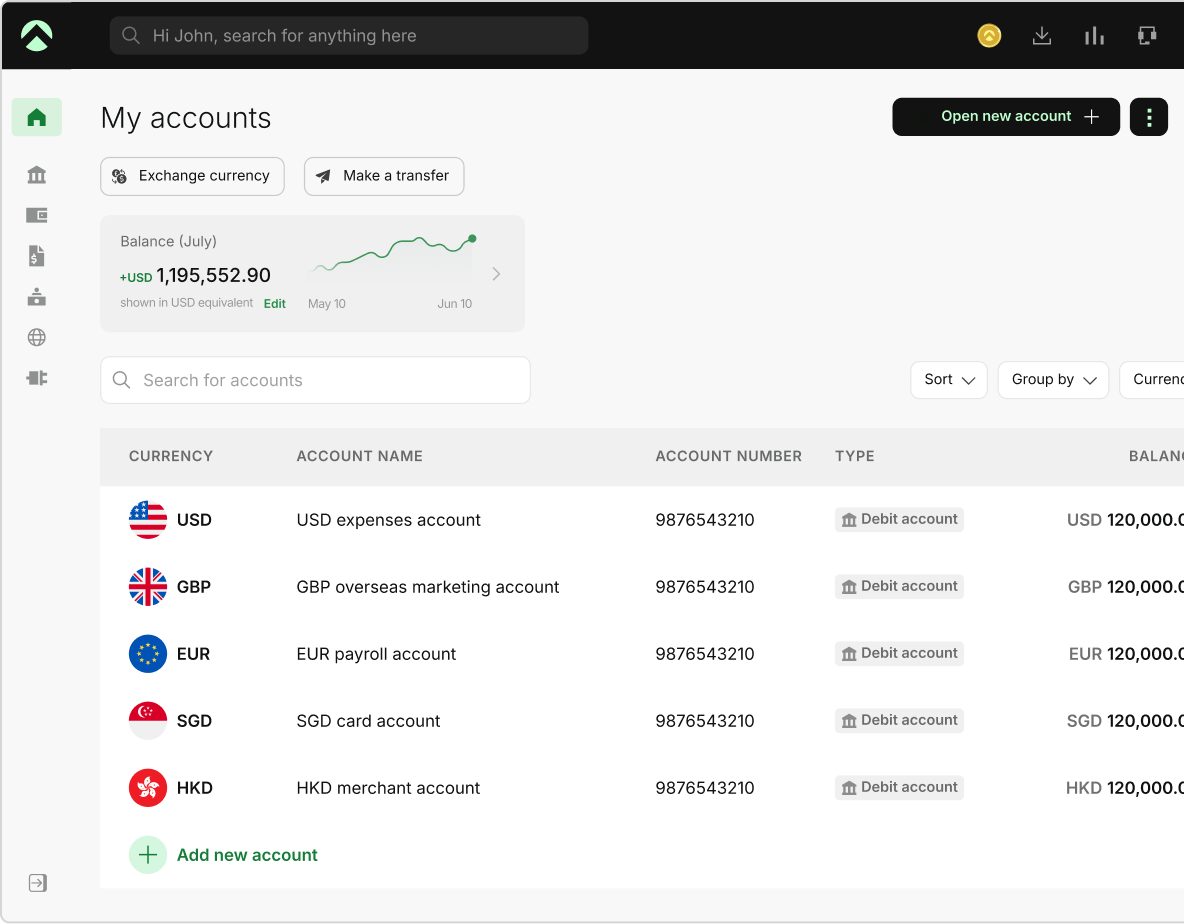
A secured business loan lets you use your personal or business assets as collateral, which reduces the lender’s risk. The asset can be your inventory, real estate, or business equipment. In exchange, you will qualify for better interest rates, higher loan limits, and flexible repayment terms.
The trade-off cuts both ways; if you can’t repay the business loan, the lender can seize the asset pledged as collateral. It’s the most crucial decision for founders to make. However, for many small businesses, the alternative isn’t simple either.
Unsecured financing is a complex path to seek. Young businesses, low revenue numbers, or poor personal credit can lead to application rejections. That’s when secured business loans can be an effective way to attain a line of credit to support your operations.
What are secured business loans
Secured business loans are ones that require collateral against the money a financial institution lends to your company. As a borrower, you pledge an asset as collateral to the lending institution, meaning if you fail to repay, the lender can take lawful possession of it.
Offering collateral creates a trade-off, and it is not a clear-cut advantage. It increases your borrowing power and qualifies you for a higher loan amount, but you risk losing the asset if your business fails to repay the loan.
What are the common types of collateral that financial institutions accept
Your business loan amount, repayment terms, and interest rate depend directly on several underwriting factors, collateral assets being one of them alongside your creditworthiness, cash flow, debt-service capacity, time-in-business, loan type, and more. Here are some of the assets that most financial institutions in the U.S. accept as collateral:
Real estate properties
If you own a commercial property, residential unit, or a piece of land, it can help you secure larger loan amounts and probably the longest repayment terms.
Machinery or equipment
If you are into industrial operations and have heavy machinery, office equipment, specialized tools, or heavy vehicles, you can use them as collateral for securing a business loan.
Existing inventory
If you are running a manufacturing, wholesale, or retail business, financial institutions allow you to use your finished goods or raw materials as collateral. Your lender will assess the type of inventory to decide on the total eligible loan amount.
Investments and cash savings
Marketable securities, stocks, bonds, or cash savings can serve as collateral for your secured business loans. However, the acceptance varies by lender, and the applicable financing product may also differ. For instance, some lenders offer a securities-backed line of credit, rather than a business loan.
Accounts receivable
If you are a service-based company and are providing invoices to clients, lenders can use your unpaid invoices as pledged collateral.
Filing a blanket lien
If your loan application isn’t strong enough, some lenders may require a ‘blanket lien’ on most or all of your business assets. With this, they have the right to seize any of the assets in case you default on the loan.
What LTV ratio do lenders accept against the collateral
Lenders use LTV, or loan-to-value ratio to decide the maximum loan amount that’s relative to the value of your assets. Crestmont Capital, a commercial finance company in California, states it accepts:
- Commercial real estate properties at 65%-80% LTV of the appraised value.
- Residential real estate properties at 70%-85% LTV
- New equipment at 70%-85% LTV of the purchase price.
- Accounts receivable at 70%-80% LTV of the eligible invoice amount.
- Inventory at 10%-60% LTV
- Used equipment at 50-80% LTV
- Cash/deposits at 90%-100% LTV
- Unimproved land at up to 50% LTV
Different types of secured business loans and their projected rates for 2026
| Type | What is it | 2026 projected rates | Term |
|---|---|---|---|
| SBA 7(a) loans | SBA 7(a) program is the flagship lending program by the U.S. Small Business Administration. These are not direct government loans, but are provided by participating lenders under the SBA guarantee. | Rates are negotiated between lender and borrower, subject to SBA maximums. The variable-rate maximums will depend on the loan size:<USD $50,000: base rate + 6.5% USD $50,001-USD $250,000: base rate + 6.0% USD $250,001-USD $350,000: base rate + 4.5% Above USD $350,000: base rate + 3.0% | Up to 10 years for working capital; Up to 25 years for real estate. |
| SBA 504 loans | This secured loan is designed for financing the major fixed assets such as heavy machinery or commercial real estate properties. In this, 40% of the amount comes from the non-profit CDC with SBA guarantee, 50% from a private lender, and 10% as down payment from the borrower. | 5.50%-7.00% APR, fixed. | 10, 20 or 25 years. |
| Traditional secured term loans | Such loans are offered by direct lenders or banks, secured by specific collateral. | 5.00%-12.00% APR | 3-10 years |
| Secured business line-of-credit | A line-of-credit for your business provides you a revolving capital pool, ranging up to an approved credit limit. Once the withdrawn amount is paid back, the limit resets for use. | 6.00%-18.00% APR, variable | Reviewed and renewed annually |
| Equipment loans | Asset-based financing options where the business loan is used for purchasing specific equipment, and the same acts as the collateral. | 4.00%-20.00% APR | 3-7 years, matched with the useful lifespan of the equipment |
| Commercial mortgages | CRE (Commercial real estate) loans are used for developing, refinancing, or purchasing properties for business use. The property itself acts as the collateral in this case. | 5.50-%-9.00% APR; These ranges can vary dramatically based on lender, borrower, collateral terms, market rates, credit profile, and fees. | 10-25 years |
What are the prerequisites for getting secured business loans
Most lenders require you to meet certain prerequisites, regardless of the type of loan they seek, before processing your application. They include:
- Personal credit score
- Time in business or age of the business
- Annual revenue of the business
- Business plan
- Financial statements
- Collateral details
Document requirements vary from one lender to another. So, check the list of requirements carefully before starting your loan application.
Lender requirements based on the type of secured business loans
Just like the documentation, the collateral and loan requirements also vary significantly across different lender categories.
| Loan type | Criteria/Lender requirements |
|---|---|
| SBA loans |
|
| Equipment loans | Approval is often based on the value of equipment, provided there is a good business cash flow. |
| Business line-of-credit | Requires a clean title and significant equity in the business. |
| Traditional bank loans | Require a strong credit profile and at least 2 years in business, though this varies by lender. The collateral assets must be of high value for securing a loan of a high amount. |
| Vehicle title loans | Size of the loan is tied to vehicle equity. Such a loan is often required by trucking businesses. |
| Equipment sale-leaseback | Requires you to own high-value business equipment. |
| Invoice financing | Must have a strong A/R base with credit-worthy clients. |
How do secured business loans benefit founders
Secured loans being safer for the lenders makes them more likely to approve the applications when unsecured business financing is not the option. Here are some of the more concrete benefits of secured commercial loans:
Lower borrowing costs
Collateral entices lenders to provide you with better and higher loan amounts, as their risk of losing the money reduces immensely. Moreover, the interest rates on secured business loans are often lower than the unsecured options.
Quick approval
If you have founded a new company and are too low on the initial revenue numbers, collateral will improve the chances of loan approval. That’s because lenders weigh the worth of your pledged asset over your personal credit history.
Longer repayment tenures
Collateral as a security allows lenders to be comfortable stretching their repayment tenures by years, as they would earn good interest over it. Spreading the payments into thinner installments will keep your cash flow smooth and put less strain on your operating budgets.
Access to more capital
The size of a secured, long-term or short-term business loan is in accordance with the collateral value. So, you can request larger amounts against your high-value assets. This is a practical move for bigger business expansions.
What are the limitations and risks of secured business loans
Secured loans provide you with quick access to growth capital for the business, but there are serious trade-offs you must keep in mind:
Risk of losing the collateral assets:
If you miss your loan repayments or default on it, you could lose the vehicles, equipment, or property you pledged as collateral. These assets can be crucial to running your business, making it a big trade-off to consider.
Administrative overhead:
With a secured business loan, the insurance requirements and appraisals mean ongoing monitoring and extensive paperwork.
Personal liability:
Some financial institutions in the U.S. also require a personal guarantee for granting a secured loan. It means your personal wealth is on the line if the business assets don’t cover your debt.
Reduced flexibility on asset usage:
The assets you pledge as collateral for the business loan stay tied to the lender until the entire amount is repaid. It limits your ability to use those assets elsewhere or sell them.
A faster path to capital: Aspire’s1 corporate card2
Not every founder needs a USD $500,000 secured business loan cycle. If what you actually need is ongoing spending power without the months-long underwriting process, Aspire’s corporate card2 can be a more accessible path to working capital.
Aspire1 offers a secured, collateral-backed underwriting model, making it a good fit for global startups or newer entities who are yet to build an established US credit history. Instead of weighing your personal credit score or years in business, approval for Aspire’s corporate card is tied to the collateral you are backing it with.
Beyond access, the card also comes with:
- 1.5% uncapped cashback∧ on eligible spends, having no category restrictions or caps to track.
- Instant virtual cards, allowing you to start spending right after you are approved.
- Real-time transaction controls.
- Customizable limits
Just like most secured business financing, Aspire’s card bills the full balance due each cycle, making it function more like a charge card than a revolving line, which keeps your spending on track.
Explore Aspire’s collateral-backed corporate card to see if it can be an ideal alternative to your need for a secured business loan.
Sources
- Secured Business Loans: Pros, Cons, and Risks | CO- by US Chamber of Commerce (https://www.uschamber.com/co/run/business-financing/what-is-a-secured-business-loans)- Aug 2026
- Corporate Loans: Understanding Collateral and Security - Banesco USA (https://banescousa.com/blog/corporate-loans-collateral-security/)- Aug 2026
- Business Loan Collateral Statistics: What Types of Collateral Get Approved (https://www.crestmontcapital.com/blog/business-loan-collateral-statistics)- Mar 2026
- Secured Business Loan Rates: Collateralized Loan Rates (https://www.crestmontcapital.com/blog/secured-business-loan-rates)- Jun 2026
This blog is for general information only and does not constitute financial, legal, tax, or professional advice. Aspire’s services are subject to the terms outlined in our ’Terms of Service’ and ’Pricing’ pages. We make no guarantees as to the accuracy, completeness, or timeliness of the content, and past results do not indicate future performance. Always consult a qualified professional before acting on any information provided.
Bintang Lestada
Writer
Bintang is a seasoned writer specialising in fintech, agtech, politics, and pop culture. With a writing history at VICE ASIA, Letterboxd, Whiteboard Journal and other reputable organisations, Bintang leverages their broad range of experiences to resources that educate audiences, build trust, and support business growth.
Aspire Launchpad
Supercharge your finance operations with Aspire
Find out how Aspire can help you speed up your end-to-end finance processes from payments to expense management.

Latest articles

QuickBooks vs Xero: Key differences, costs and which is better
QuickBooks vs Xero compared on features, pricing, users, reporting, and ease of use. See which accounting software is a better fit for your business.
How general liability vs professional liability insurance works in the US
Small business guide to general liability insurance. Learn about costs and coverage, if you need it, and how to choose the right policy.
Best multi-currency business accounts in the US for 2026
Compare the best multi-currency business accounts in the US for 2026. Explore fees, FX costs, currencies, holding, receiving options, and key features.