


Swift code vs routing number: Exploring the key differences, uses, and why they matter

Content Team

Summary
SWIFT code vs routing number differences determine how money actually moves. Routing numbers power US domestic rails like ACH and Fedwire. SWIFT codes identify banks globally for international wires. Use the wrong one, and you’re dealing with delays, returns, or rejections
A routing number is a 9-digit US bank identifier used for payroll, vendor payments, and domestic transfers. It’s structured, checksum-validated, and optimized for predictable settlement inside US clearing networks
A SWIFT code (bank identification code) is an international bank identifier used for cross-border payments. It carries the secure financial messaging that instructs the payment; correspondent banks and payment systems handle the actual settlement, which may involve intermediaries, compliance checks, and FX conversion
Routing-number payments are typically hours to 1–2 business days with structured failure codes. SWIFT wires range from same day to several days depending on intermediaries and screening
ACH/domestic flows are low-cost. A typical SWIFT number wire transfer can include bank fees, intermediary deductions, and FX spreads, easily adding USD $50 – USD $200+ per transaction
Failure handling & reconciliation behave differently. Domestic rails return standardized codes you can automate against. SWIFT failures often trigger investigation messages and manual follow-ups
Founders scaling globally should design region-aware payment flows, validate identifiers early, batch small international payments, track FX leakage, and avoid defaulting to wires when cheaper local rails exist
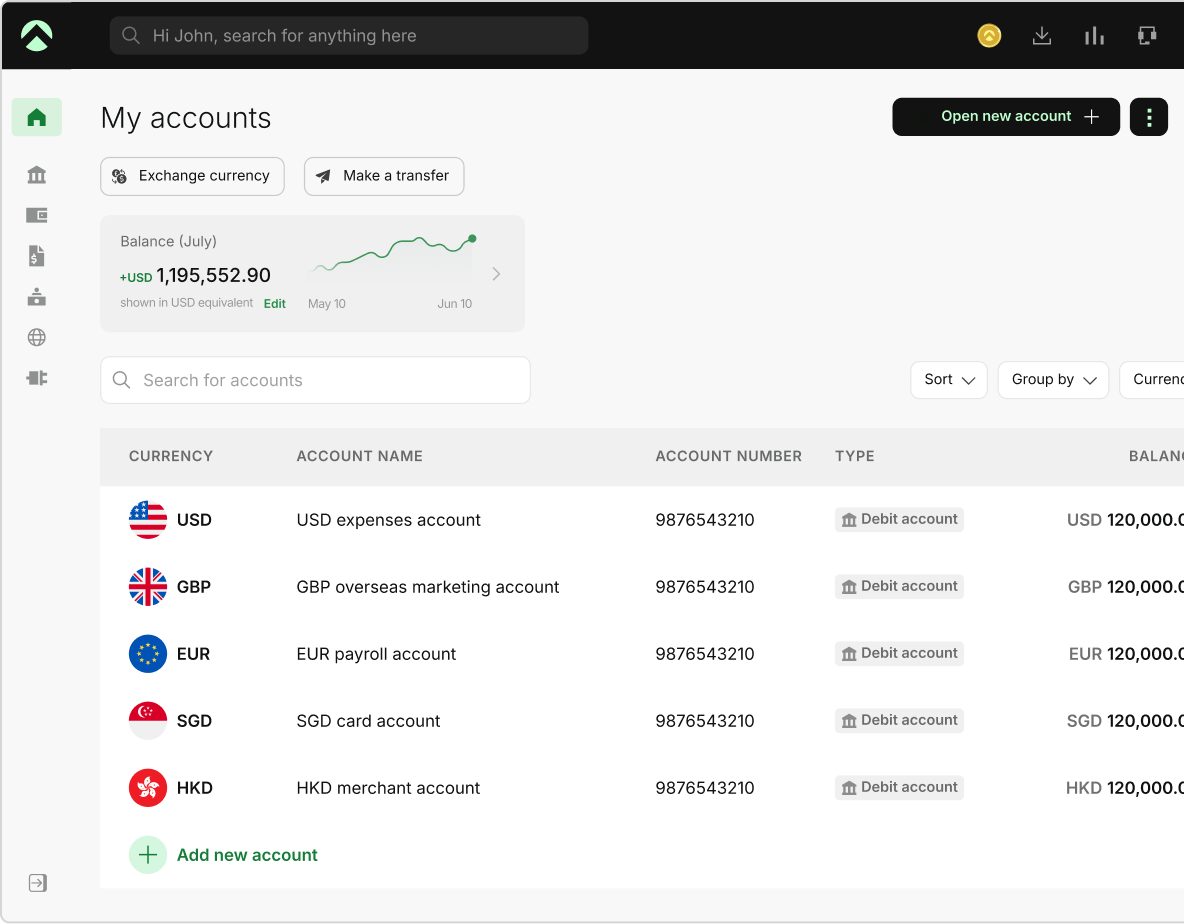
One Aspire account to manage your business finances in one place.
Get a business account¹, issue corporate cards², manage expenses, and automate financial workflows, all from one powerful platform built for modern businesses.
If you’re paying US vendors, collecting international revenue, wiring funds overseas, or building payment flows into your product, you’ve encountered routing numbers and SWIFT codes. Both are bank identifiers used to help route payments, but they identify financial institutions within different payment systems and serve different purposes.
They might sound interchangeable, but confusing the SWIFT code vs routing number and making a basic payment-detail mistake, such as using a SWIFT/BIC code where a U.S. routing number is required, can impact settlement speed, failure rates, additional costs, or manual investigations.
Understanding the difference between a SWIFT code and routing number is crucial if you are sending or receiving payments.
SWIFT code vs routing number: at a glance
| Parameter | Routing number | SWIFT code |
|---|---|---|
| Primary scope | US domestic banking | International banking |
| Network dependency | ACH, Fedwire, RTP (US rails) | SWIFT global messaging network |
| Identifier format | 9-digit numeric (ABA standard) | 8 or 11-character alphanumeric (ISO 9362) |
| What it identifies | US financial institution | Bank + country + location (+ branch) |
| Speed characteristics | ACH: hours–2 daysFedwire: same day | Same day (best case)Common: 1–3 business days |
| Cost profile | Wire transfers typically cost more per transaction ($15-$50), while ACH payments are generally lower-cost for domestic transfers.(often cents to <$1) | Higher ($15–$50 + intermediary fees + FX spread) |
| Failure handling | Structured ACH return codes | Message-based investigations (manual-heavy) |
| Validation complexity | Simple (length + checksum) | Moderate (format + country + branch logic) |
| Typical founder use cases | Payroll, US vendors, refunds, treasury | Cross-border wires, global vendors, international revenue |
| FX exposure | None (domestic currency) | Yes (conversion spreads + timing impact) |
| Liquidity impact | Predictable settlement timing | Variable due to intermediaries & compliance |
| Reconciliation ease | Easier (standardized files/codes) | Harder (unstructured messages, delays) |
| Error surface | Errors caught early via validation | Errors may surface after bank/intermediary review |
| Scaling considerations | Ideal for high-volume domestic flows | Necessary for global reach; optimize frequency |
What is a routing number and what does it represent?
A routing number is a US-specific bank identifier defined by the American Bankers Association (ABA). It’s a 9-digit numeric code that tells domestic payment networks exactly which financial institution should receive funds.
Those digits aren’t arbitrary:
- The first set maps to a Federal Reserve processing district
- The next set identifies the bank itself
- The final digit is a checksum used for mathematical validation
In practice, routing numbers operate within US clearing systems. ACH transfers use them for batch-based settlement (payroll, vendor payments), while Fedwire uses them for real-time gross settlement (high-value wires). To break it down, they have the same identifier but different rails and processing logic.
Ideal use case: Any transaction where both sending and receiving accounts are US-based.
What is a bank SWIFT number and what does it represent
A SWIFT code, formally a Business Identifier Code (BIC) , is an international identifier used to identify financial institutions and support the addressing and routing of financial messages and transactions. Unlike U.S. routing numbers, SWIFT codes are structured for international use and are alphanumeric.
Standard structure (as per ISO 9362):
- Bank code
- Country code
- Location code
- Optional branch code
This code ensures that financial messages reach the correct institution across borders, often through intermediary banks . Terms like "bank SWIFT number" or "SWIFT number wire transfer" all point to this same identifier.
Ideal use case: Cross-border payments or international wire transfers.
SWIFT code vs routing number: Practical founder-level differences
Once you understand what these codes are, the next step is understanding how they actually work in real payment flows. The difference between a SWIFT code and a routing number plays out in workflows, economics, dependencies, and failure modes, and it's what decides whether a payment settles in hours or gets stuck in an intermediary's queue for days.
Speed: Domestic vs global routing dynamics
Routing number
Routing numbers are used within U.S. payment systems such as ACH and Fedwire. If both ends of a payment are in the US, ACH and Fedwire know exactly where to send the funds.
- ACH standard: 1-2 business days
- Same-day ACH: A few hours (if cut-off times are met)
- Fedwire: Same-day, real-time settlement
ACH failures usually bounce back quickly with structured return codes; Fedwire rejections happen in real time at the receiving end, before settlement completes.
SWIFT code
A SWIFT/BIC is an identifier used to identify financial institutions in international financial messaging. It does not itself determine how quickly funds settle. A cross-border payment can involve correspondent or intermediary institutions and other payment systems, so the overall processing time depends on the payment route, operating hours, compliance checks, currency, and the institutions involved.
- Best-case SWIFT wire: Same day
- Common: 1–3 business days
- With intermediaries/AML reviews: Might take longer
The key takeaway on routing number vs SWIFT code: within the US, routing-number flows are fast and predictable; SWIFT rails are variable and depend on the entire network path.
Cost incurrences
Routing number
If you're comparing the difference between SWIFT code and routing number from a cost perspective, domestic payment methods such as ACH are generally less expensive than many international wire options. The actual fee depends on the payment method, financial institution, and account arrangement. That predictability extends to liquidity too: routing-rail payments settle in USD, don't involve FX conversion, and keep accounting straightforward.
SWIFT code
A SWIFT/BIC may be part of an international wire payment, where the total cost can involve more than the sending bank's fee. Depending on the payment route, costs may include:
- Fees charged by the originating bank
- Fees charged by intermediary or correspondent institutions
- Receiving-bank fees
- Foreign-exchange conversion costs or spreads
For example, a USD $10,000 SWIFT number wire transfer could incur:
- USD $30 outgoing wire fee
- USD $20 intermediary deduction
- 1–2% FX spread
- An additional receiving fee (charged by the beneficiary bank in some countries)
SWIFT itself does not set these bank fees. The cost depends on the institutions and payment services involved. It's worth clearing up a common misconception here: SWIFT doesn't automatically mean FX conversion, but many international wires do involve it, along with extra ledger hops and settlement in a foreign currency. If you're building subscription revenue abroad, that FX timing can materially affect your realized revenue and your finance team's ability to close the books on time.
For a business making frequent international payments, this distinction matters. Using local payment rails or other payment methods where available can sometimes reduce costs and processing steps compared with sending every payment through a correspondent banking route.
What happens when payment details are wrong?
Routing number
Routing number failures on ACH are structured, coded, and programmatically manageable. The network returns standardized ACH return codes (R01 to R85), which your reconciliation system can automate against.
SWIFT code
International payment exceptions can involve multiple institutions, so resolving a failed or delayed payment may require communication between the sending bank, an intermediary institution, and the beneficiary bank.
Unlike ACH's standardized return-code framework, an international payment investigation does not always reduce to a single return code. Banks and financial institutions can use structured financial messages and investigation processes to trace, amend, cancel, or resolve payment issues.
This can mean:
- Longer resolution times
- More coordination between financial institutions
- Additional investigation or support work
- Greater difficulty determining where a payment was delayed
When do you need a routing number vs SWIFT code
If you are also wondering, "How do I know which one to use?" It depends on the payment method and destination:
- Use a routing number for U.S. domestic payments such as ACH and Fedwire.
- Use a SWIFT/BIC when the payment instructions require an international financial institution identifier, typically for cross-border payments.
- For international payments to a U.S. account, follow the recipient bank's instructions because the required details can vary by payment route.
The key point: a routing number and SWIFT/BIC are different identifiers, so you should not substitute one for the other.
How to find your SWIFT code or routing number
Your routing number is generally the first nine-digit number in the MICR line at the bottom of a standard U.S. paper check, before your account number. The routing code identifies the bank; the account number identifies your specific account. You can also find the routing number in your online banking or app. Some banks use different routing numbers for ACH and wires or vary them by state, so confirm which routing number applies to your payment method.
You can usually find a SWIFT/BIC in your online banking, on a past international transfer confirmation, or on your bank's website. A BIC can be 8 characters, with an optional three-character branch identifier that can identify a specific location, department, service, or other organizational unit. Check the receiving bank's payment instructions to determine which BIC to use.
You can't convert a SWIFT code to a routing number; they are separate identifiers used in different payment systems. A U.S. routing number is not a global standard; other countries use their own domestic payment identifiers.
Common mistakes to avoid & best practices
Once you've internalized the SWIFT code vs routing number differences, the real value comes from how you apply that knowledge. Missteps in product flows, treasury ops, or vendor onboarding show up as failed payouts, manual work, and unnecessary fees.
Treating routing numbers & SWIFT codes as interchangeable: Teams ask for all bank details in the same fields, regardless of geography, usually because engineering or product assumed "one bank identifier fits all."
Skipping validation for international codes: Uncollected SWIFT code validation lets invalid codes slip into your system, causing wire transfer attempts to fail and intermediary banks to reject them downstream, double work for your ops team.
Using SWIFT Wires for small, frequent payments: Wiring everything internationally works, but at USD $15 to USD $50+ per transfer plus intermediary deductions and FX spread, payments that could have moved via local clearing or a cheaper payout partner end up costing hundreds to thousands per month.
Not reconciling SWIFT failures automatically: ACH returns and Fedwire statuses come with structured codes your system can consume programmatically. A faulty SWIFT code or intermediary rejection produces free-form investigation messages that aren't machine-readable, and usually need manual follow-up.
Best practices checklist to address the SWIFT code vs routing number dilemma
Use this as your quick reference before shipping payment flows:
- Enforce format validation early
- Use region logic to prompt the right identifier
- Store identifiers with clear typed fields
- Track net settlement amounts and fees by corridor
- Batch small international payments
- Don’t let SWIFT wire become the default for everything
- Build reconciliation tooling beyond simple success/failure
- Label fields contextually in your UI
SWIFT code vs routing number: How it applies to your business
The difference between a SWIFT code and a routing number matters because payment methods affect how businesses move money, manage FX, and reconcile transactions. Routing numbers support U.S. payment methods such as ACH and wire transfers, while SWIFT is used for international payment messaging.
For businesses operating across borders, the goal is not to default to SWIFT for every payment. Local payment methods can be faster and more cost-effective where available, while SWIFT supports international transfers across many currencies and countries.
Aspire global payments (https://aspireapp.com/en-us/global-payments)* helps US businesses manage international payments with multi-currency accounts, transfers in 98+ currencies across 130+ countries, and FX rates starting from 0.22% above mid-market rates. Aspire1 also offers same-day local transfers to 40+ currencies, helping businesses use local payment options where available.
Frequently Asked Questions
No. They operate in completely different systems. A routing number is used within US domestic clearing networks like ACH and Fedwire. A bank identification code/swift is used for identifying banks in international transfers. Confusing them typically results in failed payments or wire rejections.
In the US, a routing code usually means the 9-digit ABA routing number assigned to a financial institution. It tells domestic payment rails where to send funds. You’ll use it for payroll, vendor payments, and bank-to-bank transfers within the US.
Any time money crosses borders. If you’re sending or receiving an international wire, you’ll need the recipient bank’s SWIFT number. Routing numbers won’t work outside US banking networks.
Because SWIFT wires rely on correspondent and intermediary banks. Each institution can introduce processing delays, cut-off constraints, or compliance checks. Unlike domestic routing-number payments, settlement timing isn’t always linear or predictable.
Treat them as infrastructure decisions, not form fields. Routing numbers optimize domestic efficiency and cost. SWIFT codes enable global reach but introduce variability in speed and fees. Smart payment design uses both intentionally based on geography and use case.
The difference directly affects your economics. Routing-number payments (ACH/Fedwire) are typically low-cost with structured error handling. SWIFT-based payments often carry wire fees, intermediary deductions, and FX spreads. In Swift Code vs Routing Number decisions, choosing the wrong rail increases both transaction costs and failure risk.
No. A SWIFT code is not the same as a routing number. A SWIFT/BIC identifies a financial institution for international payments, while a U.S. routing number identifies a bank within domestic payment systems.
The difference between SWIFT code and routing number comes down to payment context. A SWIFT/BIC supports international financial messaging, while a U.S. routing number is used for domestic payment systems such as ACH and Fedwire.
If you are searching, how do I know which one to use? Use a routing number for U.S. domestic ACH or Fedwire payments. Use a SWIFT/BIC when international payment instructions require one for a cross-border transaction.
For Bank of America SWIFT code California searches, the required code depends on the incoming wire's currency. Bank of America lists BOFAUS3N for U.S.-dollar wires and BOFAUS6S for foreign-currency wires.
No. You cannot convert a SWIFT code to a routing number because they are separate identifiers used in different payment systems. If you need a routing number, obtain it from the receiving bank.
No. A U.S. routing number is not a routing number global standard. It identifies financial institutions within U.S. payment systems, while other countries use their own domestic payment identifiers and clearing systems.
Sources
- https://www.chase.com/personal/banking/education/basics/SWIFT-code-vs-routing-number
- https://www.reddit.com/r/Banking/comments/ourlbr/confused_on_what_SWIFT_code_and_routing_number_to/
- https://www.veem.com/library/SWIFT-code-vs-routing-number-unraveling-the-differences/
- https://www.fool.com/investing/stock-market/market-sectors/financials/SWIFT-code-vs-routing-number/
- https://www.sofi.com/learn/content/SWIFT-code-vs-routing-number/ : June 15, 2026
- https://getborderless.com/what-is-the-difference-SWIFT-codes-vs-routing-numbers/ : August 10, 2023
- https://cheqly.com/SWIFT-code-vs-routing-number/ : April 14, 2025
- https://www.revolut.com/en-US/blog/post/iban-vs-SWIFT-us/ : May 1, 2026
This blog is for general information only and does not constitute financial, legal, tax, or professional advice. Aspire’s services are subject to the terms outlined in our ’Terms of Service’ and ’Pricing’ pages. We make no guarantees as to the accuracy, completeness, or timeliness of the content, and past results do not indicate future performance. Always consult a qualified professional before acting on any information provided.
Content Team
Aspire editorial
Content team at Aspire is a society of seasoned writers & experts specialising in finance, technology and SaaS space. With 50+ years of collective experience, they help make business finance more profitable for readers. They write about finance tools, finance insights, industry trends, tactical guides to grow your business & also all things Aspire.
Aspire Launchpad
Supercharge your finance operations with Aspire
Find out how Aspire can help you speed up your end-to-end finance processes from payments to expense management.

Latest articles

Finance Tools •
Accounting software for hotels: Complete buyers’ guide 2026
A 2026 buyer’s guide to hotel accounting software, covering key features, USALI reporting, PMS integrations, selection criteria, and top platforms.

Finance Tools •
Best dental accounting software for US practices
Compare the best dental accounting software for US practices by features, pricing, accounting capabilities, and practice size.
Starting a Business •
How to get an LLC in Virginia: Costs, requirements, and key considerations
Learn how to get an LLC in Virginia: $100 formation fee, $50 annual registration fee, registered agent rules, filing steps, and post-formation requirements.