


Financial management for nonprofits: Budgeting, cash flow, and controls

Bintang Lestada

Summary
Nonprofit financial management combines budgeting, cash planning, donor and grant restrictions, functional expense reporting, financial controls, and board oversight alongside normal accounting and cash management
A sound annual budget does not prevent cash shortages when grants, reimbursements, and donations arrive after payroll or other obligations are due
Build financial systems in layers: start with the simplest process that can reliably support your current transaction volume, grants, reporting, and controls, then add accounting software, workflow automation, or finance support as complexity grows
Track resources with donor restrictions separately from resources available for general use, and follow the terms of each applicable gift or grant
Strong financial controls reduce the risk of error, misuse, weak documentation, and avoidable reporting problems while giving leaders more reliable financial information
Boards need timely financial information to fulfill their oversight responsibilities. Many nonprofits use monthly reporting, but the appropriate cadence depends on the organization's size, complexity, and risk
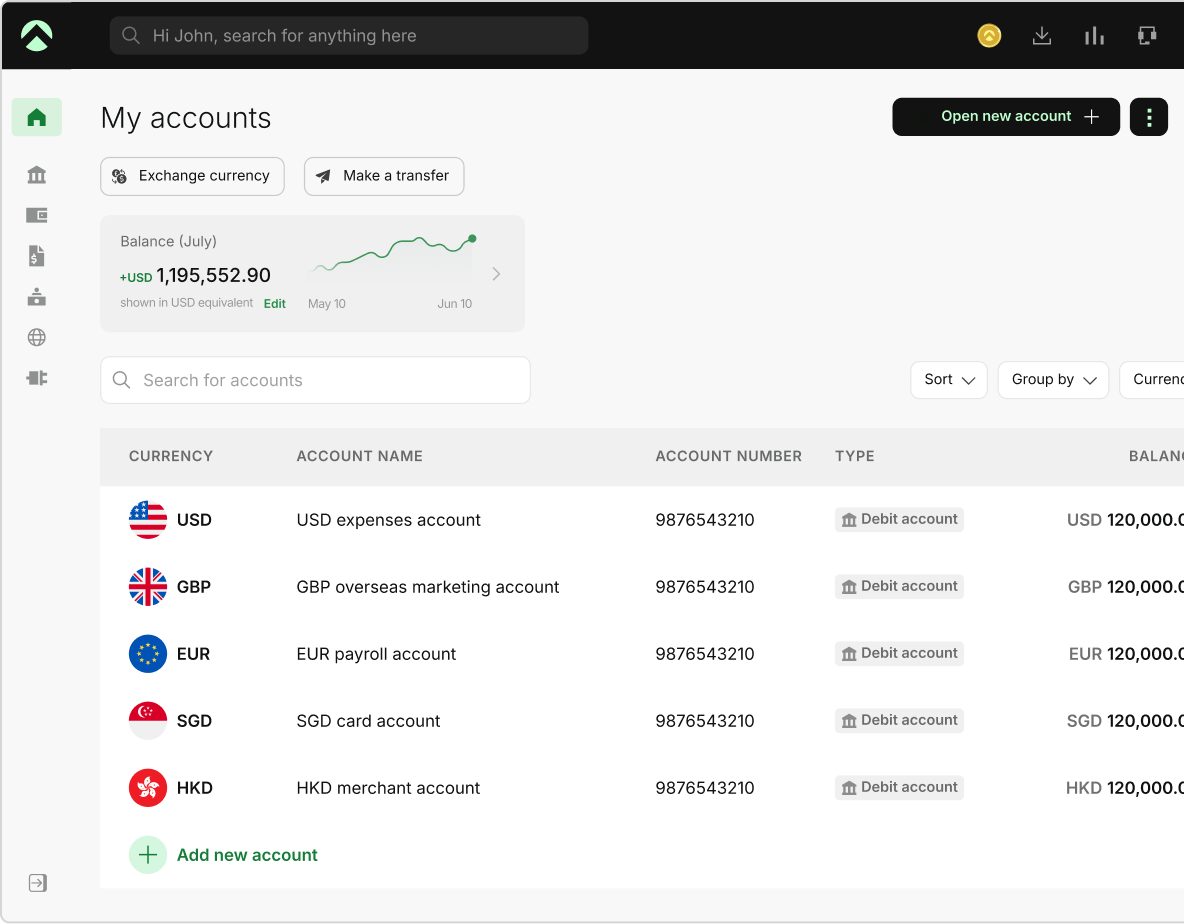
One Aspire account to manage your business finances in one place.
Get a business account¹, issue corporate cards², manage expenses, and automate financial workflows, all from one powerful platform built for modern businesses.
Financial management for nonprofits is fundamentally different from managing for-profit finances. You didn't start a nonprofit to spend half your time reconciling bank accounts. However, somewhere between grant applications, donor reports, and monthly payroll, financial management for nonprofits becomes the foundation of everything you're doing.
Strong finances buy you freedom, a fact that most nonprofit founders discover too late. They enable you to make confident decisions, trust your numbers, and focus on your mission rather than paperwork. Additionally, they safeguard you by ensuring that audits run smoothly, funders maintain faith in your work, and your board is able to carry out its duties.
This guide explains how nonprofit leaders can build practical systems for budgeting, cash flow, donor restrictions, financial controls, grant tracking, and board reporting without overcomplicating day-to-day finance operations.
What is nonprofit financial management
Nonprofit financial management is the process of planning, controlling, tracking, and reporting an organization's financial resources so it can fund its mission sustainably and fulfill its donor, grant, regulatory, and governance responsibilities. It includes budgeting, cash-flow planning, financial reporting, internal controls, and oversight of resources subject to donor restrictions.
Why financial management for nonprofits is structurally different
Nonprofits often manage additional layers of donor restrictions, functional expense reporting, grant requirements, and board accountability alongside ordinary budgeting, accounting, and cash management.
Nonprofits operate in five overlapping dimensions at once. Miss one, and you risk audit findings or compliance issues.
Fund accounting
Every dollar carries restrictions. A USD $50,000 grant for youth programming is not the same as a USD $50,000 donation to general operations. You must track them separately. Under US GAAP, nonprofits report net assets with donor restrictions separately from net assets without donor restrictions. Operational records should also show that donor- and grant-restricted resources were used consistently with the applicable gift or grant terms.
Program reporting
You don't just categorize expenses by account. You categorize them by function: program services, management and general, and fundraising. Form 990 Part IX requires applicable organizations to report expenses by function, but the IRS does not prescribe one universal "ideal" percentage for each category. Rather than optimizing for a single overhead ratio, boards should evaluate whether spending supports the organization's mission, strategy, and financial sustainability. One transaction might hit multiple categories, and you need to allocate it correctly at entry.
Grant compliance
Each grant has its own budget, timeline, spending rules, and reporting format. For federal awards, 2 CFR Part 200 includes documented procurement requirements (2 CFR 200.318) and requires salary and wage charges to be supported by records that accurately reflect the work performed (2 CFR 200.430). The exact documentation and other requirements depend on the award and applicable cost rules. Missing one deadline or misclassifying one expense triggers compliance issues.
Board accountability
Your board holds fiduciary responsibility. They need financial clarity every month, not just at year-end. Non-finance board members need reports they can actually understand, with a clear narrative explaining what happened and why.
Cash flow timing
A for-profit might have uneven cash flow; a nonprofit's cash flow is structurally unpredictable. Grants end on their schedule, not yours. Individual donations cluster in November and December. Reimbursement-based grants require you to front the money. But your payroll is due on the 1st and 15th, every single month, regardless of when money arrives.
Most nonprofit challenges don't come from bad budgeting. They come from cash flow timing that a budget alone can't solve.
The cash flow timing trap: where nonprofits get stuck
Illustrative example: Picture this scenario with illustrative numbers. You have a USD $400,000 annual budget. Your funding mix looks healthy on paper: USD $150,000 in grants, USD $180,000 in individual donations, and USD $70,000 in corporate sponsorships. Divided evenly across 12 months, you're fine.
But here's what actually happens.
Your largest grant runs January through September. It ends September 30. The replacement grant doesn't start until December 1. That's a 60-day gap where you have no grant revenue.
Individual giving can be concentrated around year-end. Your average monthly donation revenue is much lower from January through October. December donations help fill the gap, but they may not arrive until mid- or late December.
Your corporate sponsor pays quarterly in arrears. The Q3 payment was due October 31. It arrived on November 15.
Payroll is due October 1, October 15, November 1, and November 15. Staff salaries don't pause for grant cycles.
In mid-October, your cash position is tight. You have enough to cover immediate payroll, but not much beyond that. In mid-November, it's tighter still. By November 25, you're genuinely concerned about whether year-end donations will arrive in time for the end-of-month payroll.
This isn't a budgeting problem. You budgeted correctly. This is a structural timing mismatch between when money arrives and when you need it. And it happens to nearly every nonprofit with mixed funding sources.
Building your core financial system: four layers
Most nonprofits believe they must develop comprehensive financial management and planning systems all at once. They do not. Nonprofit financial management best practices recommend beginning simple and adding complexity as you grow. This layered approach with budget examples for nonprofits at each stage is suitable for organizations of all sizes.
Layer 1: Budget and fund structure
Before you open any accounting software, you need to know your revenue sources, your expense categories, and your fund structure.
Revenue should be separated: grants (by funder), individual donations (by restriction), corporate sponsorships, program fees, in-kind donations, and anything else relevant to your mission. Don't lump "donations" into one bucket. You need to see which funding sources are stable and which are volatile.
Expenses should be tracked by natural category and, where required, allocated across program services, management/general, and fundraising using a reasonable and consistent allocation method. Rent, utilities, technology, and accounting costs do not automatically fall 100% into management/general—many costs support multiple functions and may need reasonable allocation. Form 990 explicitly provides for functional expense allocation. Within each category, break down by salaries, contracted services, supplies, travel, and technology. The more specific you get, the easier it is to spot cost trends.
Funds should reflect your actual restrictions. At the financial-statement level, nonprofits generally distinguish net assets with donor restrictions from net assets without donor restrictions. Internally, organizations may also track individual grants, programs, endowments, board-designated reserves, or other categories separately, where that improves control and reporting.
A modest, low-complexity nonprofit may be able to start with a structured spreadsheet, provided it can maintain reliable records and controls. As transaction volume, grants, staff, or reporting requirements grow, accounting software becomes essential to manage the complexity reliably.
Layer 2: Monthly cash flow forecasting
Every month, write down what money is coming in and when, what money is going out and when, and what your cash position will be on the critical dates (payroll days, tax deposit days, etc.). Here's how to build your monthly cash budget.
This doesn't need to be fancy. A simple table showing expected revenue by source, expected expenses by category, and a running cash balance is all you need.
Update this every month. If a grant is delayed, update it. When you receive an unexpected donation, be sure to update it. When a major donor pledges money, ensure that it is included in the cash forecast for the correct month. Your forecast should reflect what you actually believe will happen, not what you hope will happen.
Share the cash forecast with the appropriate finance or board stakeholders on a cadence that supports timely decisions, particularly when liquidity is tight.
Layer 3: Restricted and unrestricted fund tracking
Design your records so transactions can be attributed to the relevant grant, program, and donor-restriction status early in the workflow. Where a cost supports multiple functions or awards, apply the organization's documented allocation method rather than forcing the entire transaction into one fund or program. If you're using a spreadsheet, require a fund designation column. If you're using accounting software, configure fund-level cost centers. Make it impossible to record a transaction without assigning it to the appropriate fund or grant.
Layer 4: Monthly close and board reporting
Every month, close your books and produce two simple reports: a budget versus actual comparison and a cash flow summary.
Budget vs. actual shows: what you budgeted to spend in each category, what you actually spent, and the variance. Set materiality thresholds appropriate to the organization and explain the variances that require management or board attention.
The cash flow summary shows where you are today, where you expect to be next month, and any anticipated cash gaps. If October is going to be tight, say so. If you're expecting a large grant check in November, say so.
Automating the monthly close: As your nonprofit grows and your team handles more expenses (corporate cards, grant reimbursements, staff travel claims), the manual work of reconciliation becomes the bottleneck. Every receipt needs to be matched to a transaction. Every expense needs to be coded to a fund and grant. Every reimbursement request needs approval before payment. This manual work can eat 20+ hours of your finance person's month.
Expense-management automation can reduce manual receipt collection, approval routing, reimbursement administration, and transaction coding. It can also improve the completeness of supporting records that flow into the accounting system. However, it does not replace nonprofit accounting judgment, grant-compliance review, reconciliation, or the accounting system of record. For a deeper dive on how expense management automation works, read our guide to automated bookkeeping. For specific guidance on receipt collection, approval workflows, and reimbursement processes, explore our expense management guide.
Restricted versus unrestricted funds: what you need to know
This deserves its own section because it's where most compliance issues start.
When a donor or grantor imposes a valid restriction, the organization should track and use those resources consistently with the applicable gift or award terms. US GAAP requires nonprofits to report net assets with donor restrictions separately from net assets without donor restrictions.
Restricted fund basics
A funder gives you USD $75,000 for an after-school program. That money is restricted to the after-school program. It can't be used for administration, rent, or other programs. If the after-school program ends early with unspent funds, follow the award agreement; depending on its terms, the organization may need to return the balance, request permission for another use, or follow another closeout process.
A donor designates a USD $10,000 gift for building repairs. That money is restricted to building repairs. The same logic applies.
Unrestricted funds are not limited by a donor-imposed purpose, but they still must be used consistently with the organization's mission, governing documents, applicable law, contracts, and board policies. These are your flexible dollars; you can shift spending between programs, pay overhead, and invest in staff development, but always within your mission and governance framework.
Board-designated reserves are different from donor-restricted resources. A board may earmark funds internally for emergencies or future needs, but that designation generally does not create a donor restriction; it remains part of net assets without donor restrictions. The distinction matters for both reporting and operational flexibility: unrestricted funds earmarked by the board can still be re-designated if circumstances change or new needs arise.
Why this distinction matters for your board
Your unrestricted fund balance is your financial flexibility. A nonprofit with USD $300,000 in restricted grants but only USD $20,000 available for general operations may still face an operating-liquidity problem despite a healthy-looking total cash balance. Your unrestricted funds are your real financial cushion.
Track both separately in your financial reports. Show the board the breakdown. Most financial distress in nonprofits comes from having lots of restricted money and very little unrestricted money.
Managing grant budgets and compliance
Every grant is a small accounting project. Each grant has a budget, timeline, spending rules, and reporting requirements. Miss one piece, and you've got a compliance issue. This principle applies whether you're running a healthcare nonprofit, public health organization, or any other mission-driven entity.
Each nonprofit program budget requires its own tracking. Start by creating a grant file (even just a folder in Google Drive) for each active grant. In that file, keep:
- The grant agreement: What did you promise to do? What budget did you propose?
- The approved budget: Line items for personnel, travel, supplies, contracted services, indirect costs, anything relevant
- Monthly spending tracker: Each month, record actual spending by budget line item. Calculate variance. This figure shows your budget versus actual spending for that one grant.
- Documentation: Receipts, invoices, timesheets, whatever proves you spent the money on approved activities
- Reporting deadlines: When does the funder want reports? What data do they want?
For federal awards, review the applicable 2 CFR Part 200 requirements. These include documented procurement procedures and rules that require records to support personnel costs charged to awards and accurately reflect the work performed. Other cost and reporting requirements depend on the award and activity.
For nonprofit founders, this requirement means you need to track not just that you spent the money. Track what you spent it on and why it's allowed under the grant agreement. That documentation is your defense if a funder audits you or if an external auditor asks questions. For tips on organizing grant documentation, explore our guide to expense management for nonprofits and mission-driven organizations.
Building financial controls that actually work
Financial controls sound like bureaucracy. They're actually founder protection.
Strong internal controls reduce the risk of misuse, error, weak documentation, and inaccurate financial reporting. They're not about distrust. They're about structure.
Segregation of duties
Where possible, separate authorization, payment execution, transaction recording, and reconciliation. This means no single person should be able to approve spending, process the payment, record it, and reconcile it all on their own.
For small nonprofits where staffing does not allow full segregation, add compensating controls: independent review of reconciliations, dual approval for higher-risk transactions, or periodic transaction review by the board or finance committee. Remember that the board's normal role is oversight, not routine bookkeeping. As you grow, staff up and formalize these checks.
Approval workflows
Define written approval thresholds appropriate to the size, risk, and type of transaction. Write your approval policy down, make it accessible, and enforce it consistently. As you grow, automated approval workflows (like those in Aspire's Expense Management platform) route expenses to the right approver based on fund, amount, and grant and log the approval automatically. This removes the waiting period where expenses sit in someone's inbox pending sign-off.
Documentation
Keep receipts, invoices, emails, timesheets, and anything that proves you spent money appropriately. You don't need to be obsessive, but when an auditor asks, "Why did you spend USD $3,200 on travel?" you should have documentation showing what the travel was for, who went, and that it was grant-approved. Capturing supporting documentation near the point of purchase reduces the risk of missing records later and makes reconciliation and audit preparation easier. Platforms like Aspire's Expense Management automate this process by capturing receipts and attaching them as expenses are recorded.
Bank reconciliation
Every month, reconcile your bank account to your accounting records. If your spreadsheet says you have USD $50,000 but the bank says USD $48,500, find the difference before you move on. This catches errors early and prevents surprise discoveries during audit.
Board oversight
The board should review financial reports monthly and ask questions. This should not be done in a policing way but rather in a "Does this look right to you?" way. Regular board or finance-committee review provides an additional oversight layer and helps surface unusual activity or unexplained variances.
All of this protects you. Weak documentation or unsupported grant charges can create audit or grant-compliance issues depending on materiality, award terms, and the applicable requirement. Proactive management reduces the likelihood and severity of findings.
Forecasting and managing cash flow
Budgeting is math. Cash flow management is founder decision-making.
Your budget tells you how much money you expect to raise and spend. Your cash flow forecast tells you when you'll have money and when you'll need it.
Here's the monthly rhythm that works:
Every month
- Record what money actually came in and when
- Record what money actually went out and when
- Calculate your cash position at month-end
- Look ahead 90 days: what's coming in, what's going out, and where will you be tight?
Every quarter
- Review your cash forecast vs. actual. Did grants come in when you expected? Are the donations coming in as expected? Are your expenses tracking against the budget?
- Update your 12-month projection with current figures
- Determine cash shortfalls and plan: Will you dip into savings, cut costs, ramp up fundraising, or some combination?
Metrics to monitor
- Cash runway: If all revenue stopped today, how many months could you run on current cash? Use runway as an internal liquidity indicator, but set thresholds based on your revenue volatility, fixed commitments, grant timing, and access to other liquidity.
- Days cash on hand: A variation of runway, calculated as (cash balance / average daily operating expenses). This helps you spot the tight months in advance.
- Operating reserve: Money you've set aside intentionally for emergencies or timing gaps. Adopt a board-approved reserve policy that defines how much the organization aims to hold, when reserves may be used, who can authorize their use, and how the reserve should be replenished.
Track not only total cash, but also the portion actually available for general expenditure after considering donor restrictions and other commitments. A strong headline cash balance can hide weak operating liquidity.
If you're managing seasonal revenue patterns like schools with uneven tuition collections or organizations with variable attendance, a cash management plan helps you conserve and appropriately disburse funds throughout the year. The plan is simply: "In months when cash is tight, we'll reduce discretionary spending. In months when cash is strong, we'll contribute to reserves."
Your board should see this forecast every month. Not because they're micromanaging, but because cash gaps require decisions: do we adjust spending, accelerate fundraising, or use reserves? These are board-level decisions, not just staff decisions.
Board reporting and financial readiness
Your board can only exercise fiduciary duty if they have clear, current financial information.
Monthly financial packages should tell a true story of what has occurred each month and should include tracking of accounts receivable and payable, as well as a regular review of the cash position against monthly forecasts.
What your board actually needs
Statement of financial position: What assets, liabilities, and net assets do you have as of today? This shows your organization's financial snapshot. For many operating nonprofits, monthly review provides useful visibility; smaller or lower-complexity organizations may use another regular cadence as long as information remains timely enough for oversight.
Statement of activities: How much revenue came in this month, how much did you spend, and what's your net change? This reflects your monthly operational activity and shows whether you're running a surplus or a deficit. Show it monthly.
Budget variance report: What did you budget vs. what actually happened? Define materiality thresholds appropriate to the organization's budget and explain the variances that are large enough or strategically important enough to require action.
Cash flow summary: Where are you today, where do you expect to be next month, and are there anticipated gaps? This is the forward-looking piece.
Narrative: Write a 2-3 sentence summary explaining what's happening. "October was tight due to delayed grant receipts, but November donations came through stronger than expected. We're on track to end the year with healthy reserves."
These reports are the foundation of board oversight.
Tools: when to upgrade from spreadsheets
You can run a nonprofit on a spreadsheet if you stay organized. Many founders do. But there's a natural progression where financial management software becomes worth the investment and time.
| Stage | Scale | Tools | When to upgrade |
|---|---|---|---|
| 1 | Early stage | Google Sheets + clear policies | A structured spreadsheet may be sufficient for a very small organization with low transaction volume and simple reporting needs, provided records and controls remain reliable. This stage is about discipline and consistency. |
| 2 | Growing | Accounting software (QuickBooks Online) + expense management | When transaction volume, funding source complexity, donor restrictions, or grant reporting requirements make spreadsheet tracking unreliable or time-consuming. If reconciliation and monthly close cycles are consuming significant staff time, accounting software paired with expense management can reduce manual work and improve accuracy. |
| 3 | Mid-size | Bookkeeper support + accounting software + expense management | When approval layers are complex, multiple concurrent funding sources require frequent reallocation, or audit requirements demand audit-ready documentation on a regular basis. If your finance team is managing transaction reconciliation as a major task, a part-time bookkeeper or finance operator can reduce audit risk and accelerate close cycles. |
| 4 | Larger/complex | Fractional CFO + full tech stack | When you need strategic financial planning, forecasting, or risk management beyond day-to-day bookkeeping. If forecasting complexity or board-level decision support exceeds your internal finance capacity, a fractional CFO helps you balance mission and financial growth. |
Important: Don't skip steps. Most nonprofits that adopt software too early waste money on features they don't need. Most that stay in spreadsheets too long waste time on manual reconciliation.
At Stage 2, also consider an expense management system that sits on top of your accounting software. Aspire's expense management and spend controls can support the operational control layer of a nonprofit's finance stack by helping eligible organizations create budgets and sub-budgets, control cards and transfer spend, collect receipts, manage approval workflows, and sync operating transactions into accounting software.
For US customers, Aspire's1 Xero integration can sync outbound expenses and attachments, including Xero tracking categories, while Aspire's QuickBooks Online bank feed can sync transaction data into QuickBooks. The accounting system should remain the source of truth for donor restrictions, grant accounting, allocation, and financial statements.
The end result is financial clarity, allowing you to make confident decisions about your mission rather than spending cycles tracking down paperwork.
Closing: financial health is mission protection
Financial management for nonprofits isn't exciting. It's not what drew you to this mission-driven work. But it's the foundation that allows your mission to survive and scale.
When your board has monthly clarity on cash position and budget variance, they can make informed decisions rather than reactive ones. When your books are closed and reconciled monthly, you spot problems early. When your controls are clear and your documentation is thorough, audits move smoothly and funders trust you.
This isn't bureaucracy. It's protection.
Strong nonprofit financial management does not mean building the most complex system. It means knowing what resources are available, what obligations are coming due, what money is restricted, and where leadership needs to act before a cash or reporting problem becomes urgent.
Build the process around your current complexity, review it regularly, and add tools or finance support when the manual work begins to reduce visibility rather than improve it.
Getting help with nonprofit financial management
If you need help with budgeting and financial management for nonprofits, consider:
- Nonprofit accounting software and financial services to automate expense tracking and reporting
- Nonprofit accountants and bookkeepers to handle monthly closings and year-end audits
- Financial consultants who specialize in nonprofit financial planning and capacity building
The right combination of tools, education, and support will help your nonprofit focus on mission delivery rather than financial firefighting.
Frequently Asked Questions
Not necessarily. The appropriate level of financial support is determined by transaction volume, grant complexity, reporting requirements, internal expertise, and whether the organization is audited or has other specialized accounting requirements. A bookkeeper may be sufficient for routine processing, but more complex organizations may require controller- or CFO-level support.
A monthly close is a common best practice because it provides management and the board with timely information, but there is no universal rule requiring all nonprofits to close by the tenth. Create a close calendar that generates reliable reports quickly enough to support decisions and meet grant, lender, audit, or board deadlines.
Often, yes. Donor-restricted and unrestricted resources can be tracked within the accounting records rather than separate bank accounts. However, a specific grant agreement, donor condition, law, or internal-control policy may require or justify separate custody, so check the terms that apply to the funds. For guidance, explore our banking options for nonprofits.
There is no single correct reserve target for every nonprofit. The appropriate level depends on revenue volatility, fixed commitments, grant timing, access to other liquidity, and the organization's board-approved reserve policy. Many nonprofits use several months of operating costs as a planning benchmark, but they should tailor the target to their organization. Build your reserve gradually over time rather than trying to hit a target immediately.
A stronger test is whether roles are clear, high-risk transactions receive appropriate review, bank and accounting records are reconciled, material transactions have supporting documentation, and an independent reviewer can understand what happened and why. These are the hallmarks of effective internal controls.
Document the error and consult your accountant or auditor before changing previously issued financial information. The appropriate treatment depends on the type and materiality of the error and the accounting or reporting requirements that apply. Addressing errors proactively demonstrates strong financial management.
It can be appropriate if the donor or grant terms allow personnel costs and the compensation is properly allocable to the supported activity. For federal awards, salary and wage charges must be supported by records that accurately reflect the work performed and satisfy the applicable cost rules. Read the grant agreement and ask the funder if you're uncertain whether personnel costs are allowable or how to document them.
Costs vary with organization size, transaction volume, grants, accounting complexity, geographic market, and whether an audit or other engagement is required. Build anticipated bookkeeping, accounting, tax, and assurance costs into the annual budget rather than relying on a universal benchmark.
A treasurer can be an important part of oversight, but concentrating authorization, recordkeeping, payment execution, and review in one person creates control risk. As the organization grows, add staff, outside finance support, or independent review so financial knowledge and control do not sit with one individual.
Low reserves reduce the organization's ability to absorb delayed funding, unexpected expenses, or sudden revenue loss. The level of risk depends on the nonprofit's cash cycle, fixed obligations, and access to other liquidity. Over time, inadequate reserves constrain your flexibility and your ability to respond to opportunities or challenges.
Sources
- https://www.councilofnonprofits.org/running-nonprofit/administration-and-financial-management/budgeting-nonprofits - September 11, 2026
- https://www.fluxx.io/blog/financial-management-for-nonprofit-organizations - January 7, 2026
- https://ramp.com/blog/nonprofit-financial-management - April 15, 2026
- https://www.jitasagroup.com/jitasa_nonprofit_blog/nonprofit-financial-management/ - April 2, 2026
- https://www.yptc.com/nonprofit-financial-management/ - August 26, 2025
- https://www.cdhcpa.com/blog/budgeting-and-financial-management-for-nonprofit-organizations/ - March 10, 2026
- https://www.pce.uw.edu/specializations/budgeting-finance-for-nonprofits - September 11, 2026
- https://givebutter.com/blog/nonprofit-finance - December 19, 2025
- https://thecharitycfo.com/effective-nonprofit-financial-management/ - September 11, 2026
- https://www.midwestbankcentre.com/blog/cash-flow-as-a-nonprofit/ - May 27, 2025
- https://www.sage.com/en-us/blog/nonprofit-financial-management-best-practices-and-tips/ - March 17, 2025
This blog is for general information only and does not constitute financial, legal, tax, or professional advice. Aspire’s services are subject to the terms outlined in our ’Terms of Service’ and ’Pricing’ pages. We make no guarantees as to the accuracy, completeness, or timeliness of the content, and past results do not indicate future performance. Always consult a qualified professional before acting on any information provided.
Bintang Lestada
Writer
Bintang is a seasoned writer specialising in fintech, agtech, politics, and pop culture. With a writing history at VICE ASIA, Letterboxd, Whiteboard Journal and other reputable organisations, Bintang leverages their broad range of experiences to resources that educate audiences, build trust, and support business growth.
Aspire Launchpad
Supercharge your finance operations with Aspire
Find out how Aspire can help you speed up your end-to-end finance processes from payments to expense management.

Latest articles

CFO Hub •
Finance tech stack for startups: Banking, accounting, and spend tools
Build a startup finance tech stack across 6 layers, from banking and spend to accounting, payroll, forecasting, and cross-border payments.

Business Advice •
Best ERP solutions for manufacturing: features and systems to compare
Compare the best ERP solutions for manufacturing, based on their features, pricing, pros, and cons to ultimately find the right system for your business.

Business Account •
6 best law firm accounting software options for 2026
Discover the 6 best law firm accounting software options for 2026. See how Clio, CosmoLex, LeanLaw + QuickBooks, and others handle trust accounting, billing, and reporting, plus where Aspire fits for operating finances.