


What is a Promissory Note?
The Definition of a Promissory Note
A Promissory Note (本票) is a legally binding written document issued by the drawer (issuer), which is an unconditional promise to pay a specific sum of money to the payee or bearer, either on demand or on a specified date. Simply put, it is a formal promise stating, "I guarantee I will pay the money."
By law, a valid promissory note must contain the following core elements:
- Issuer (Drawer): The individual or entity who signs the note and undertakes the responsibility for payment.
- Payee: The individual or entity entitled to receive the face amount of the note.
- Unconditional Promise to Pay: The instrument must clearly state the intention of "unconditional payment."
- Specified Amount: The amount to be paid must be clearly stated in both words and figures.
- Date of Issue: The date the drawer signs the note.
Because it contains these elements, a promissory note is legally considered an enforceable payment instrument; if the drawer defaults on payment, the holder can pursue legal action to recover the funds.
How a Promissory Note Works
The credit foundation of a standard promissory note relies entirely on the issuer's credibility. If it is issued by an individual or a general business, the credit risk is relatively high, and the payee needs to assess the issuer's solvency.
Regarding payment timing, promissory notes are mainly divided into two categories:
- Sight Draft: Also known as "payable on demand," the holder can request payment from the drawer at any time.
- Time Draft: The note specifies a particular payment date, on which the drawer must make the payment.
Cashier's Cheque vs. Promissory Note: What's the Difference?
While generally referred to as promissory notes, instruments issued by different institutions vary significantly in creditworthiness and usage. The most common distinction is between the Cashier's Cheque and the General/Commercial Promissory Note.
Cashier's Cheque / Order
- Issuer: The bank issues the instrument as the drawer.
- Payment Process: The applicant must first pay the bank the equivalent face amount of the draft (either by account debit or cash). The bank issues the draft only after confirming receipt of the funds.
- Key Feature: Since the funds are pre-reserved (or earmarked) by the bank, a Cashier's Cheque acts as the bank's credit guarantee. The payee does not need to worry about the drawer having insufficient funds, eliminating the risk of a "bounced check." Consequently, Cashier's Cheque has the highest credibility and strong liquidity, making it widely used in crucial transactions like property purchases, large deposits, and vehicle trade.
General Promissory Note / Commercial Promissory Note
- Issuer: Issued by an individual or a general commercial entity.
- Key Feature: The credit relies entirely on the drawer's own financial status and reputation. The payee assumes the risk of the drawer defaulting on payment. While legal recourse exists, the process can be more complex. These notes are often used for inter-company short-term financing or commercial transactions.
Other Classifications
- Registered vs. Bearer Notes: A registered note specifies the payee's name or company name, and only that designated payee can cash it. A bearer note can be cashed by anyone holding it, posing a higher risk if lost.
- Cash vs. Account-Transfer Notes: A cash note holder can exchange it directly for cash at the bank. An account-transfer note must be deposited into the payee's bank account.
How to Apply for a Cashier's Cheque?
The process for applying for a Cashier's Cheque is straightforward and easy to complete even for first-time applicants.
Steps to Apply for a Cashier's Cheque
- Compare and Inquire: First, compare the fee schedules of different banks. Some banks may require the applicant to be an existing customer.
- Fill out the Form: Obtain and complete the draft application form at a bank branch. You need to accurately provide the payee's legal name (individual or company), the amount to be paid (ideally written in both words and figures to prevent errors), and the purpose of payment.
- Submit Payment: Inform the bank teller of your payment method. You can choose to debit the funds directly from your bank account or pay the face amount and service fee in cash.
- Verify and Collect: After processing, the bank clerk will hand you the printed Cashier's Cheque. Be sure to verify all information, including the payee's name and amount, are completely correct before securely storing the instrument.
Hong Kong Major Bank Draft Service Fees
The following are reference fees for Banker's Draft applications at several major Hong Kong banks. Actual charges may change at any time, so it is recommended to confirm the details with the bank before applying:
[Table:1]
Security Analysis: A More Reliable Choice Than Checks
Security is key when choosing a payment instrument. Cashier's Cheques hold a definite advantage over personal or corporate checks in this regard.
Cashier's Cheque vs. Check
- Cashing Risk: A Cashier's Cheque is guaranteed by the bank; funds are reserved at issuance, eliminating the risk of a "bounced check" due to insufficient funds. A standard check's payment depends entirely on whether the drawer's account has sufficient funds at the time of settlement, making it less certain.
- Security: Because the funds for a Cashier's Cheque are guaranteed, it is almost equivalent to cash for the payee, making it the most secure method for receiving large payments.
- Handling Loss: If a registered Cashier's Cheque is lost, the applicant can report the loss to the original issuing bank with the purchase receipt and apply for reissuance or refund after completing certain procedures (such as signing an indemnity). The funds are relatively secure.
Safety Precautions When Using a Draft
- Secure Storage: Treat the draft with the same importance as cash. Bearer notes, especially, are difficult to trace if lost.
- Verify Information: When issuing a draft, double-check that the payee's name, amount, and other information are accurate to avoid subsequent complications.
- Deposit Promptly: Upon receipt, deposit the draft into your bank account or cash it as soon as possible to avoid expiration or loss.
Choosing Between Note, Bill of Exchange, and Check
In addition to Promissory Notes and Checks, a Bill of Exchange is also a common payment instrument. The main differences between the three lie in the relationship between the drawer and the payer:
[Table:2]
Simply put, a Promissory Note is "I promise to pay you," a Check is "Please ask my bank to pay you," and a Bill of Exchange is "Please ask a third party to pay you." For large local transactions, the Banker's Draft is undoubtedly the safest choice.
Cashier's Cheque Validity and Common Uses
How Long is a Cashier's Cheque Valid?
- Cashier's Cheque: Generally, the presentation period for a Hong Kong Cashier's Cheque is 6 months from the date of issue. The holder should cash it within this period.
- Privately Issued Notes: The validity period depends on the specified payment date or relevant legal provisions. To avoid disputes, it's advised to agree on the payment date with the payee before issuance and process it promptly upon receipt.
Common Uses of Cashier's Cheque
Due to their high security and legal enforceability, Cashier's Cheque are widely used in the following scenarios:
- Large Asset Transactions: Such as paying the down payment or final installment for property purchases, or paying the full amount for a vehicle.
- Paying Deposits: Such as paying rental deposits or construction project deposits.
- Commercial Transactions: Used between businesses to pay large sums for goods, ensuring secure fund arrival.
- Payment Services: With digitalization, some public utility organizations have begun supporting electronic drafts for greater convenience.
Say Goodbye to Bank Queues: Aspire Next-Generation Business Payment Solution
While applying for a traditional Banker's Draft is secure, it still requires physically visiting a branch, a time cost that busy businesses cannot ignore. With the advancement of fintech, next-generation commercial payment solutions offer a more efficient and flexible alternative.

Aspire all-in-one,
digital business account is the ultimate solution for companies pursuing high efficiency and internationalization.
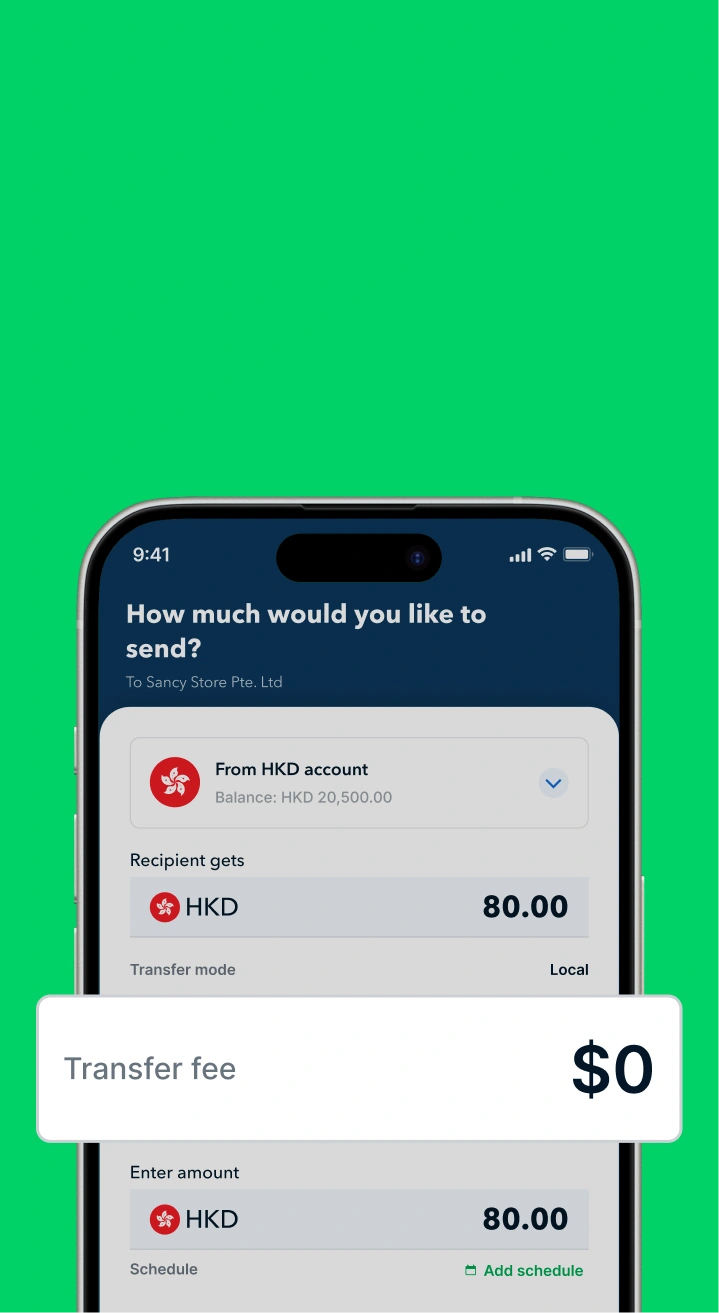
- Aspire provides a global remittance solution, allowing businesses to make cross-border transfers at lower exchange rates, saving on cross-border payment costs from the source.
- Lowest Fees: Use our low-cost SWIFT payment service starting from just USD $8, potentially lowering international transfer fees by up to three times, resulting in significant savings.
- Currency Flexibility: Support for over 30 major currencies to meet all global remittance needs.
- Faster Processing: Aspire offers same-day transfer services, ensuring faster payment processing and covering over 130 countries.
- Multi-currency Accounts: Companies can receive and pay foreign currencies instantly without repeated conversions, saving substantial fees.
Furthermore, you can use the corporate card for designated spending (like marketing and SaaS subscriptions) to earn up to 1% cashback. Combined with the expense management tools, you can instantly track reimbursements and receipts, saying goodbye to disorganized paperwork and manual reconciliation.
Open a free account now to experience a more flexible and intelligent financial solution than traditional banks, and accelerate your business growth!



.webp)