
Getting up at 5am to speak with customers across the globe was a hidden super power i've developed as a global founder. Never knew I was a morning person until I moved to the US!




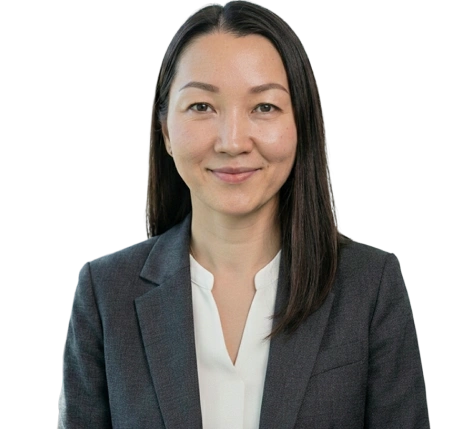











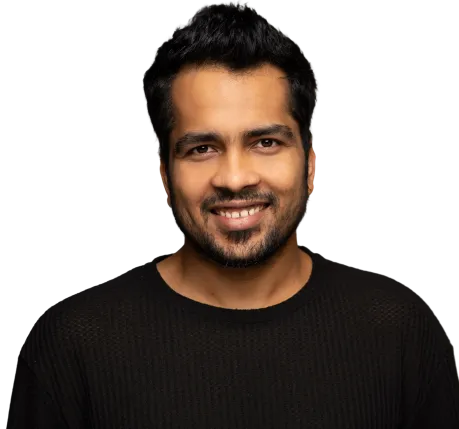
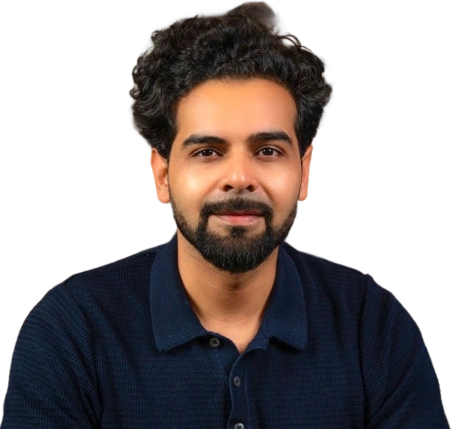


Getting up at 5am to speak with customers across the globe was a hidden super power i've developed as a global founder. Never knew I was a morning person until I moved to the US!
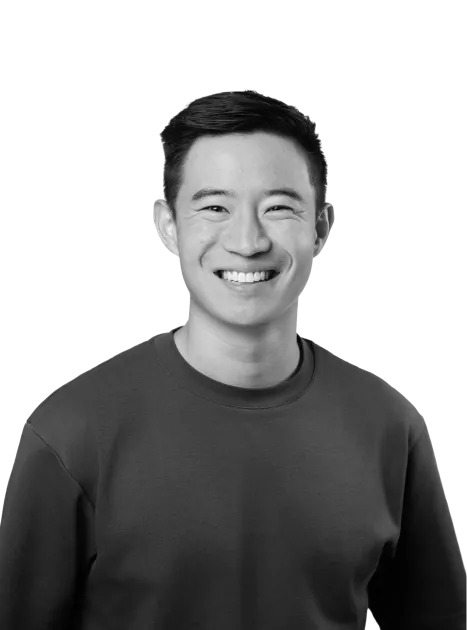
Building globally from day one means designing both the product and the company for cross-border complexity before it becomes a bottleneck.
From the start at Corvera, we’ve worked with CPG brands across the UK and US, which forced us to handle multi-market realities early - different ERPs, retailer requirements, supply chain structures and operating rhythms. Instead of building for a single geography and retrofitting later, we’ve architected our digital workers to operate across fragmented systems and international workflows by default.


Building across cultures trained me to read people fast. When you’re motivating teams from different backgrounds, it's never a one size fits all.

It's the ambition to scale globally, and it gives you access to a much larger pool of talent.


Resilience. Moving across countries and changing careers rewired me for reinvention. I don’t panic, I adapt, and I keep going. That’s my edge.

The turning point was experiencing firsthand how high-stakes and emotionally heavy immigration can be, and then seeing how broken the process is for both employers and immigrants. It flipped a switch for me: this isn’t just paperwork, it’s people’s lives and companies’ futures. That clarity made Alma inevitable.


Thinking globally means thinking bigger. It's that simple. You have to be able to zoom into a local niche, but also think and plan across continents. If you can do this well, you scale much faster.

Having a strong network in both Europe and the US has been a superpower for understanding different cultural norms and preferences. We're building a communication platform, and my experience across both means we focus not just on iMessage, but WhatsApp too, opening us up to a significantly bigger market. If I was just based here, I'd have probably discounted WhatsApp.


Understanding nuanced perspectives, and not assuming privilege :)

Building a diverse team, understanding needs of companies globally. It set us on an ambitious path from day1
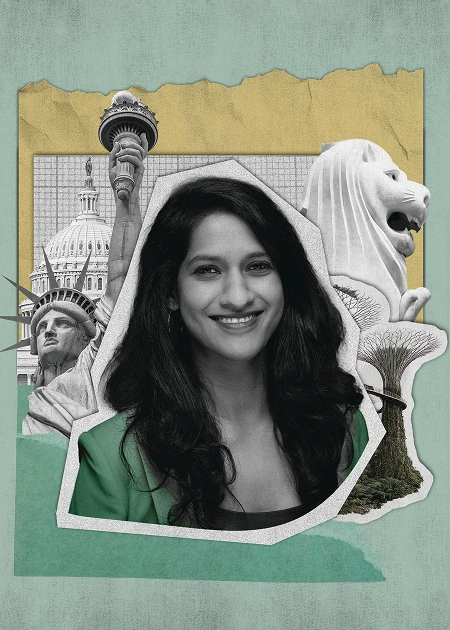

My hidden superpower is speed under uncertainty.
Building across borders forces you to operate without default advantages - no inherited network, no institutional tailwinds, no playbook written for you. You learn to create momentum from first principles.
That muscle translates directly to building in America. You move faster, hire sharper, and design systems that turn effort into output. You’re not trying to look big; you’re trying to increase real productive capacity.
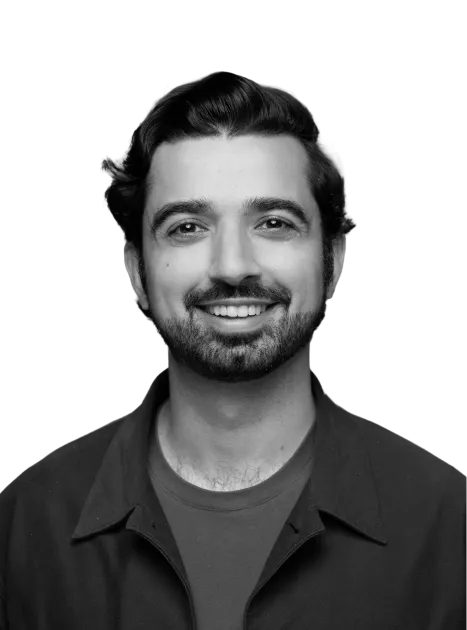
Global clients require global infrastructure.
We didn’t build a local product and try to stretch it outward. We built for multi-country labor complexity from day one.
That changes the posture in enterprise conversations. We’re aligned with how global operators actually run - across markets, compliance regimes, and workforce models - instead of asking them to contort their footprint around our limitations.


Building globally from day one means we never saw this as a one-country problem, and we’ve done the work on the ground to prove that. During YC, we traveled across our key geographies and met directly with lenders in each country to understand how the document bottleneck actually shows up in practice.
In practice, that means looking for both the local nuance and the common thread. Across the Philippines, Indonesia, Mexico, and the US, we compare workflows side by side and apply lessons from each market to the others. More mature markets with stronger credit infrastructure show us where the opportunity can go, while the persistence of the same document problems even there helps reveal what is truly universal.
The advantage is speed of insight. We can distinguish much faster between what is market-specific and what reflects a broader structural problem, which lets us build with more conviction toward a much larger opportunity from the start.

A defining turning point for us was securing our first major customer in the Philippines. It was the moment the mission became real at scale.
For the first time, we could clearly see that what we were building was not just helping a team work faster. It had the potential to help far more borrowers get seen, understood, and served. That made the purpose much bigger: building infrastructure that can expand access to credit for people too often overlooked by fragmented systems.


Building globally from day one starts with the team. Most of us are bi- or trilingual and from different parts of the world. That gives us natural intuitions about how different cultures engage with software, and how to coordinate work remotely across geographies. Given we connect brands and factories on opposite ends of the world, we're essentially dogfooding our own challenge every day.
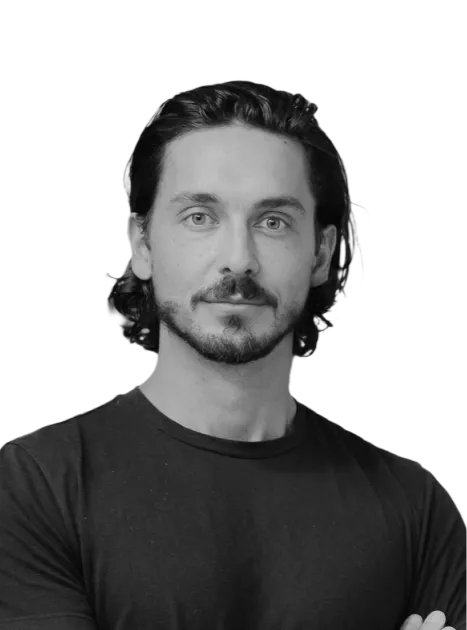
As a global founder, you develop strong intuitions for how to build products that work across geographies. That's especially critical for us — we're building tooling that connects brands in LA with factories in Shenzhen, Ankara, and Guadalajara.


Building globally sharpens a specific kind of clarity. You learn to anchor on what is invariant, especially in production, where physics wins, and reality is the same everywhere. Then you adapt to local nuance, because trust, communication, and buying motions do vary by region. Holding both, in that order, is a real superpower.
In practice, it shows up as a bias for the hard path and for systems thinking. The easy path is crowded. The hard path is where the value is, and in software, that hard path is almost always production. And when you operate across cultures and time zones, you are forced to make the system legible, not just the code, but the people, the process, the incentives. That’s what lets you move fast without breaking.

In practice, building globally from day one means you cannot rely on shortcuts. When you’re operating in a single office and a single market, a lot of “tribal knowledge” lives in hallways and in people’s heads. Once you go global, across customers, hiring, and partners, hallway context stops scaling, so you’re forced to make the company’s operating system explicit and legible, the way good code is.
That discipline creates a few advantages. First, it makes you more resilient. We are building for production, which is noisy and unpredictable. If your internal process can’t handle real-world variation, your product won’t either. Second, it keeps you honest. The underlying production problems are universal, but enterprises have very different constraints and trust thresholds. Being global early prevents you from overfitting to a Silicon Valley default. Third, it improves execution quality. When you build with clarity, tight feedback loops, and high conviction, you move faster, waste less time, and that advantage compounds.


Building globally from day one means I don’t limit talent, thinking, or opportunity to a single geography. I focus on attracting the strongest people wherever they are, then giving them the autonomy, resources, and ownership they need to perform at a high level.
It also means I deliberately bet on unconventional individuals with exceptional slope people who may not fit traditional molds but learn fast, think independently, and compound quickly. The advantage is simple: I build a team that is both world-class and resilient, with diverse operating instincts and the hunger to win on a global stage from the start.

A defining turning point in my journey was leaving a mid-sized city in India to attend UC Berkeley, and later becoming a Y Combinator founder. For the first time, I was surrounded by people operating at an entirely different scale of ambition and velocity. It recalibrated my standards.
Being in those environments did more than expand my network. It expanded what I believed was possible. I gained access to world-class peers, mentors, and operators, and I learned how top talent thinks, builds, and moves. That exposure permanently changed my trajectory. It gave me the confidence to build globally, recruit exceptional people, and compete at the highest level.


Having a multicultural upbringing really highlights the differences—and therefore all the similarities—in people, to a much wider degree than if I only grew up around one particular culture. And this helps with understanding the shared factors that drive our behaviors!


It's hard to say. On the one hand, you want to be specific and cater to a particular audience, but as a global founder I am thinking from day one about how my product might be used across the world, in the communities that I grew up in. In our user interviews, we're talking to people from all corners of the world to really understand those lived experiences and find common ground.


Building in the US has made me pattern-match fast. I look at a product, a team, a sales process, and I see where it's jammed. I've been doing that since I was a kid tearing apart video games to understand why they worked. School was the same thing. No teachers, no curriculum. You show up, here's a problem, go. That was four years of my life. Building across borders adds something specific though. When nothing on your resume translates and nobody owes you anything, you stop overthinking and just do stuff. I've kept that. If something's stuck, I'd rather try three bad ideas in an afternoon than spend a week picking the right one.
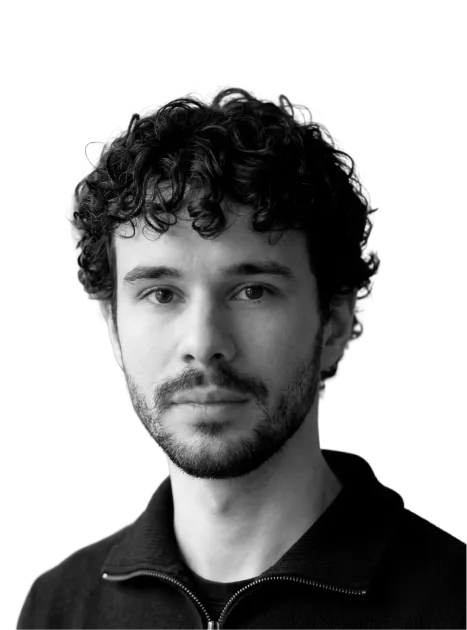
At 15 I was selling tools I'd built to optimize video games. My customers were teenagers in Europe, United States, Brazil, Asia. I didn't decide to go global, that's just where the buyers were.
Now with Nomi we build an AI sales copilot between San Francisco and Europe, hundreds teams on it already, and the users come from everywhere. The actual advantage is simple. How people buy in New York, London, and Tokyo is not the same. I've sat on all sides of that, so when our AI makes a bad assumption about a deal, I usually catch it before a US-only team would.


For the first two years of Freckle's journey I wasn't based in the US, and when you don't have much timezone overlap with the US (and that's your primary market), you're forced to get better at product/UX early. You can't bandaid over product deficiencies as much with sales meetings & customer handholding, so you iterate faster and hold yourself to a higher bar.

Building globally from day one means considering how your product applies to users/customers outside of where you're geographically located, and discerning where regional nuance may be biasing your strategy. The advantage is that you end up building for a much larger end-state of your market, even if you localize your GTM strategy to begin with.


The most definining moment for me was when I moved from Brussels to San Francisco with no network, no clients, and no safety net — building my immigration case while building the company at the same time. The turning point was realizing that every disadvantage of being an outsider forced me to build systems instead of relying on connections. The outsized impact: what used to take a team of ten, $500K, and nine months now takes me alone, $1K, and one month. I help more clients at scale, gather more data at scale, and move faster than agencies ten times my size. That's what happens when you have no choice but to build smarter.

Pattern recognition across markets has become my superpower as a global founder. When you've built in Europe and the US, you see how the same problem gets solved differently — pricing, sales cycles, user behavior. Americans optimize for speed, Europeans for trust. That duality makes you spot opportunities that single-market founders miss. I built Modjo to operate across 71+ clients in different verticals because I learned early that growth mechanics are universal — the packaging changes, the physics don't.


As a global founder, I learned how to earn trust from scratch, over and over again. When you grow up in India and show up in the US with no network, no shared background, and no one vouching for you, you figure out pretty quickly that the only way in is to lead with substance. You can't coast on warm intros or shared pedigrees. You just have to be undeniably good at what you bring to the table.
That's shaped everything about how I build Accend. We sell into commercial lending: a world built on decades-old relationships and deep institutional trust. I couldn't shortcut any of that. So instead, I learned to show up with a sharper product, a clearer insight, and do the work nobody asked me to do. That muscle of earning credibility from zero, again and again is something most people never develop because they never have to.

Getting into YC changed everything for me but not in the way you'd think. We actually got in with a completely different idea. And then halfway through the batch, we pivoted. I'd spent years working in credit and risk at Brex, and I kept seeing the same problem everywhere: financial institutions doing credit analysis and spreading financials in the most painfully manual way possible. I'd been thinking about it for a long time but never made the jump. YC gave us the environment to be honest with ourselves, kill what wasn't working, and bet on the thing I actually couldn't stop thinking about. That became Accend.
The pivot was the real turning point, not the acceptance letter. Having people around you who keep asking "but is this actually working?" - that kind of pressure is a gift, even when it doesn't feel like one.
As a global founder with no network in tech, YC was the first time the playing field felt genuinely flat. Nobody cared where I came from. They just cared if what I was building was real. That mattered more than I can put into words.


I've developed a boundless ambition in the US. There is a unique energy here that encourages founders to think bigger, move faster, and pursue bold outcomes without apology. Compared to Europe, where the mindset can sometimes be more cautious or incremental, the US has pushed me to expand my vision, be more confident in taking risks, and build with a much greater sense of possibility.

When you come from a country of 67 million people like France, you naturally understand from day one that your market cannot stop at your borders. Building globally is not a future expansion strategy, it is part of the original mindset. It means creating a product, a team, and a vision that can resonate beyond one country from the start.
That gives you a real advantage: you build with a broader perspective, you stay close to different markets and user behaviors early, and you avoid thinking too locally. It pushes you to design for scale earlier, make sharper decisions, and build a company that is more adaptable and resilient.

One hidden superpower is learning to move fast despite constraints. As a global founder, you’re constantly navigating different regulations, time zones, and market expectations. Instead of slowing you down, it trains you to simplify problems and execute with focus. You learn to ship solutions that work across environments rather than optimizing for just one.

Building globally from day one meant solving real hiring and compliance problems across different countries instead of optimizing for a single market. At Firstwork, we’re automating onboarding and compliance for frontline workers across the US, UK, and Europe. The advantage is that the product is designed from the start to handle regulatory complexity and scale across borders.


Building companies across Southeast Asia and now the US trained me to quickly spot which problems are universal versus local noise. Writing ~40 angel checks also sharpened that instinct. It helps me move faster by focusing only on the few things that truly matter.
Building globally from day one means designing the company so it works across markets from the start—product, pricing, and go-to-market. From my previous company in SE Asia to now building Acceler8 from Singapore and the US, we’ve built for enterprise customers across 10+ countries, not just one domestic market. The advantage is faster learning and larger opportunities early—we design for global scale instead of rebuilding the company later to expand internationally.

Through exposure to different cultures and customs, I've sharpened my ability to identify both the idiosyncrasies across borders, and also the commonalities. I cherish my improved intuition at recognising problems that are inately global. As a global founder, I feel confident to empathise with the subtleties in needs, motivations, and preferences across the global community.

Building globally from day one helps me to think and dream bigger. It helps to frame the scope of the problems I am solving to be more ambitious. Positioning myself globally opens me to welcome the thoughts and ideas from the wider world, which informs strategy, hiring, development and challenges my assumptions.


Building across borders forced me to develop pattern recognition at speed. You learn to read people, markets, and risk fast - across cultures, time zones, and expectations - and make decisions with incomplete information.

Building globally from day one, for me, means never thinking in one market and being challenged from day zero. That turned out to be the biggest advantage.
We design products, teams, and operations to work across borders by default - transparent communication, strong documentation, compliance-aware decisions, adaptable pricing, and UX that doesn’t need translation culturally or operationally. It’s less romantic than it sounds and more about daily discipline.


My time at UC Berkeley was brief- about six weeks before I dropped out- but it exposed a key difference between my European upbringing and the more aggressive, winner-takes-all mindset in the U.S. My co-founder, William, and I went to the office hours of our CS professor, even though we had never attended one of his classes, and pitched him our idea on the spot because he had both money and a speech company that could become a customer. In Europe, that kind of move would have been far less natural; a more hierarchical mindset, especially around someone as established as John DeNero, would have made it feel out of bounds!

People often don't reach out to foreign/non-US customers as eagerly, therefore there is no reason to limit yourself and your company to a US market (besides very rare cases), the only limit is mentality!


My superpower is "Resilience". Building across borders means you don't have the luxury of a 'safety net'. Every obstacle—from visa hurdles to cultural differences—forced me to work harder, be more creative, and more disciplined than my peers. I’ve learned that when the environment gets tougher, I get more effective.

For us, building global from day one is woven into how we operate. We serve customers across every major continent, we have offices in multiple countries, and our team members bring different perspective to the table. This has enabled us to build a global product from day one and move incredibly fast all the while being a fun place to work.

Building globally on day one means getting access to ideas and capital in US; to talent in Europe; to customers everywhere (from LATAM to APAC).

I think the moment that started it all was when I chose to leave comfort in Guatemala and start literaly from zero in the Netherlands. This unlocked the notion that I could position myself for the best opportunities if I leveraged location arbitrage. Thats how I got into Wharton, Google and now YC.


The hidden superpower I've developed is learning to operate in ambiguity. When you build outside your home market, almost everything is unfamiliar — the culture, the hiring dynamics, how people buy, even how people communicate. You develop an instinct for sensing what matters and adapting quickly. Over time, that ability to navigate uncertainty becomes a real advantage.”

Coming from Singapore, you have to think globally from day one. The local market is small, so you design your product and your company with the world in mind. The advantage is that you never build with a narrow lens — you’re always thinking about how something will work across markets and communities.

My hidden superpower is the advantage of the 'blank slate.' Most founders in the US lean on legacy networks—college buddies, previous colleagues, local family support. When I dove into building my first startup at 12 with a $90 laptop, I had none of that. It forces a very specific type of relentless resourcefulness. You learn to build deep, authentic relationships very quickly because you have to. Building Luel meant getting comfortable with being the outsider, which ultimately became my biggest asset: I don't rely on the 'standard playbook' because I never had access to it in the first place.


Asymmetric Resourcefulness is my hidden superpower. Knowing how to build capital-efficient infrastructure because you have seen what building without capital or resources like the one US offers, looks like. Every partnership we structure, every product we ship, gets stress tested against that instinct. Can this working without a $50M war chest? If yes, its durable. Thats what building across borders sharpens. Its an economic intuition that can't be learned at an Ivy league.

