

Global money movement for global businesses
Multi-currency collections, same-day APAC payouts, and stablecoin rails on one platform.
Funds safeguarded at DBS and other Tier-1 banks
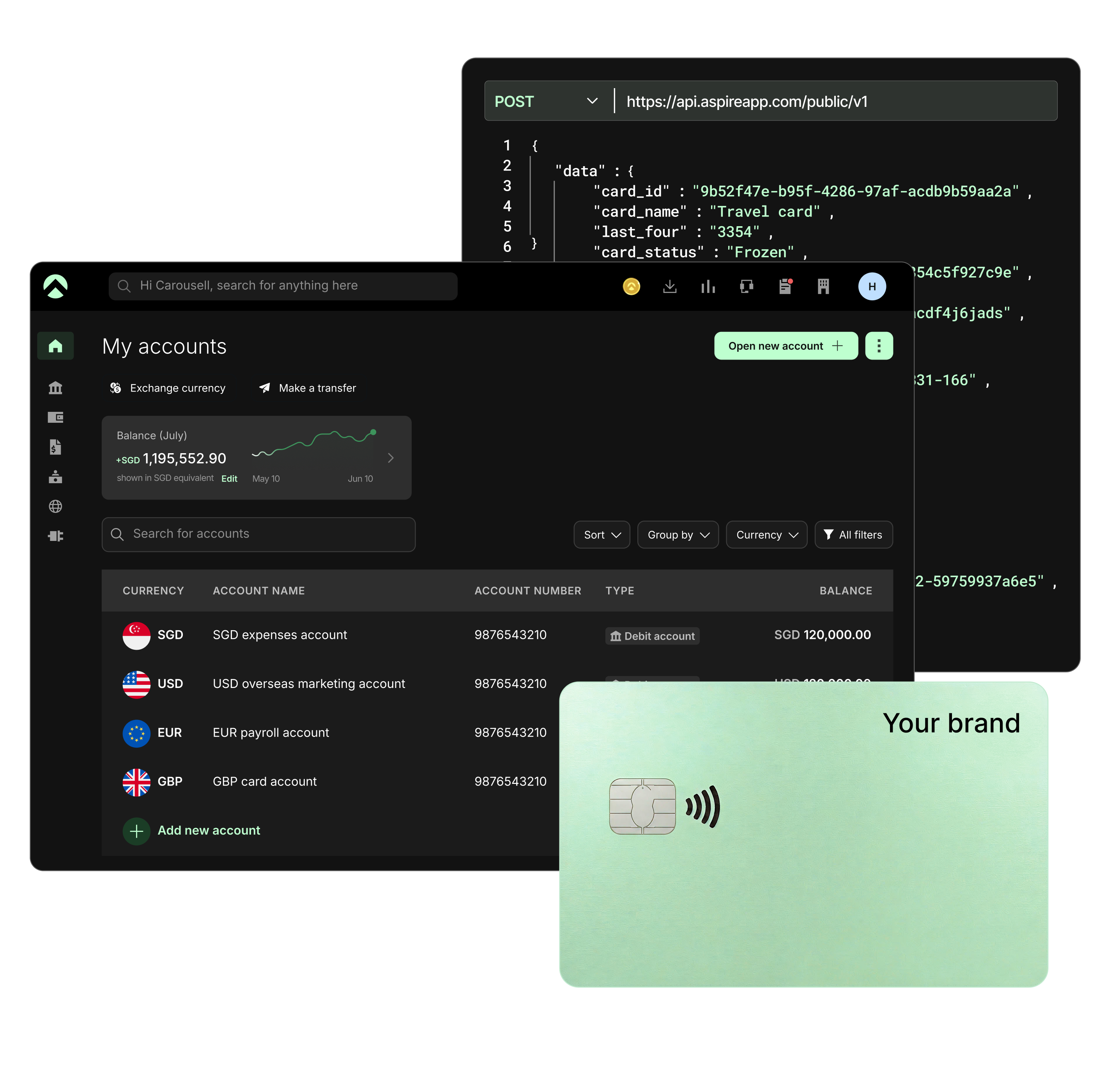
Trusted by 50,000+ modern businesses





Powering your international payment capabilities
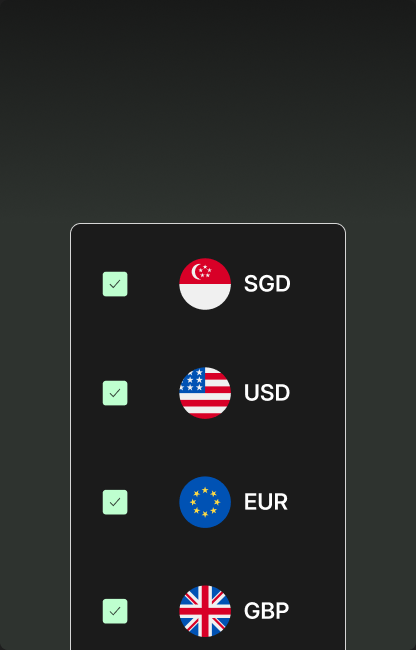
Full global coverage
Receive funds like a local in 6 tier-1 markets and hold balances in 13 currencies.
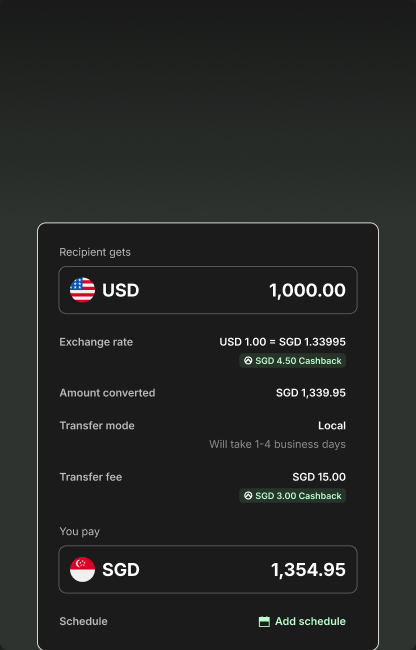
Lowest FX costs in Asia
As close to interbank rails as possible across APAC and global corridors.

Programmable payouts
Same-day local payouts across 38 rails, SWIFT coverage to 100+ countries, and stablecoin settlement — through a single API.
Collect globally, settle locally
Move money to 100+ countries
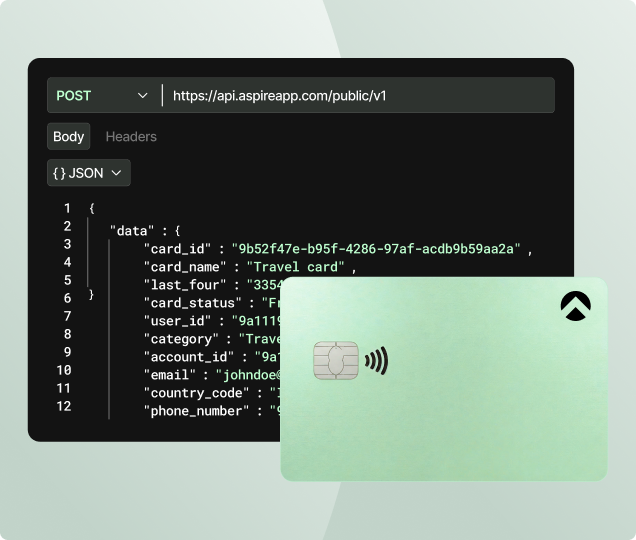
Turn payments into a revenue line
- Power your customers’ financial flows under your brand
- Embed accounts, payouts, FX, and cards into your platform
- Launch in weeks — no banking licenses, no compliance build
The deepest APAC payments network
Direct local rails in every major APAC market — no USD intermediary, no three-day settlement.


Bridge stablecoins and fiat through one API
Move from USDC and USDT to fiat and card payments — all through the same API. (Coming soon)
The
edge
Fast setup
Onboard and deploy in weeks. Single API to access all products.
Lowest FX costs in Asia
As close to interbank rails as possible across APAC and global corridors.
Modular pricing
Select and implement modules, pay only as you scale.
Globally compliant
Licensed in 8 markets with 11 payment, investment, and digital payment licenses.
Agentic-ready
Built to MCP standards for the next generation of agentic finance.
FAQs about AspireX
SWIFT is an abbreviation for the Society for Worldwide Interbank Financial Telecommunication and stands for a worldwide network of banks that work collaboratively to provide their customers with international bank transfers.
All SWIFT transfers are carried out via the payer's bank, which gets debited and routed through multiple intermediary banks before the recipient's bank is credited. This whole process can take up to 1-5 business days.
A local transfer uses a network of financial institutions to send money directly to a recipient’s local bank account. These transfers are settled in the local currency by the recipient’s bank. All you need are the recipient’s local bank account details.
Local transfers are generally cheaper and faster than SWIFT transfers. They typically settle instantly or within 1 business day, depending on the country’s payment infrastructure. By contrast, international wire transfers (via SWIFT) are used for cross-border payments but can take 1–5 business days and incur higher fees due to intermediary banks and currency conversion.
The key difference between international wire transfers and local bank transfers is that local transfers are typically faster and more cost-effective, while international wire transfers tend to involve higher fees due to intermediary banks and currency conversions.