


What is global payment processing for businesses?
A global payment processing system lets your business accept, send, and manage payments across countries and currencies from one connected platform.
Instead of stitching together local banks, FX providers, and separate gateways, you use a single infrastructure built for cross-border operations. It handles currency conversion, routes payments through international networks, ensures compliance, and gives you visibility over every transaction.
In practical terms, it means you can:
- Accept payments from customers in multiple currencies
- Pay suppliers and contractors in their local currency
- Convert funds using competitive FX rates based on mid-market benchmarks (typically with a processor markup)
- Reconcile transactions automatically across markets
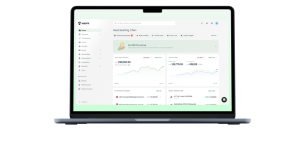
For instance, imagine a US-based ecommerce company selling to customers in Europe while working with suppliers in Vietnam. Using a global payment platform like Aspire, the business can accept and manage payments across supported currencies, pay suppliers internationally, and maintain visibility over transactions from a single platform or payment providers.
For US founders selling internationally or working with overseas vendors, this reduces the friction of cross-border transfers. You don’t need multiple bank accounts or spend hours tracking wire payments. Instead, payments move through a single system with real-time visibility and transparent costs, allowing you to focus on growing your business rather than managing payment logistics.
How does global payment processing for businesses work?
A global payment processing system connects your business to international payment networks, banking rails, and FX infrastructure all through one platform. Here’s how it works in practice:
[Table:1]
Top types of global payment processing system businesses use
Below is a more detailed comparison of the most common global payment methods US businesses rely on when operating internationally:
[Table:2]
What are the benefits of global payment processing for businesses?
Global payment processing for businesses gives founders the infrastructure to scale internationally with clarity, control, and fewer operational roadblocks. The benefits are as follows:
1. Faster access to global revenue
Optimized international payment rails reduce reliance on slow correspondent banking networks, improving settlement times. Faster access to funds strengthens working capital, shortens cash cycles, and allows businesses to reinvest quickly in operations, marketing, hiring, or product development.
2. Lower cross-border transaction costs
Global payment systems streamline routing and consolidate payment infrastructure, reducing intermediary fees and improving pricing transparency. Lower transaction leakage helps businesses protect margins, particularly when managing frequent or high-volume international payments.
3. Transparent and controlled FX exposure
Currency fluctuations can affect international revenue. Global payment processing for businesses provide real-time FX rates and clear conversion costs before execution, helping businesses forecast revenue accurately, plan cross-market pricing, and manage foreign exchange exposure more effectively.
4. Centralized multi-currency cash management
Managing multiple bank accounts across countries increases complexity. Multi-currency platforms allow businesses to hold, send, and receive funds in different currencies within one system, improving liquidity management and providing clearer visibility over global balances.
5. Automated reconciliation and cleaner financial reporting
Cross-border transactions often complicate accounting due to FX differences and settlement delays. Global payment processing for businesses capture structured transaction data and integrate with ERP or accounting software, reducing manual reconciliation and improving financial reporting accuracy.
6. Built-in compliance and reduced regulatory risk
International payments must meet regulatory standards. Global payment infrastructure includes KYC, KYB verification, AML monitoring, and sanctions screening, helping businesses reduce compliance risk and securely manage cross-border transactions.
What are the key challenges in global payment processing for businesses?
As US businesses expand internationally, cross-border payments introduce complexity that doesn’t exist in domestic transactions. Without the right infrastructure, these challenges can quietly erode margins, slow growth, and increase operational risk. The top challenges of global payment solutions are as follows:
1. Time-consuming payment processes
Manual global payment workflows often require entering transaction data across multiple banking portals and systems. Finance teams must also perform manual reconciliation later. This increases operational workload, slows payment cycles, and diverts time from higher-value financial planning and analysis activities.
2. High transaction fees
Cross-border payments often involve multiple intermediaries such as correspondent banks, card networks, and processors. Each may add fees, while FX spreads and cross-border card charges further increase costs. Without centralized oversight, these layered expenses can significantly reduce profit margins.
3. Payment delays and late payouts
Inefficient workflows, slow payment rails, or processing bottlenecks can delay cross-border transactions. Late payouts may strain relationships with suppliers, contractors, and partners. They can also lead to penalties or missed early payment discounts, affecting operational efficiency and business credibility.
4. Regulatory and compliance
Cross-border transactions trigger regulatory requirements in both the US and the destination country. Businesses must meet KYC and KYB standards, AML monitoring, sanctions screening, and changing reporting rules. Compliance expectations vary by jurisdiction, and managing them manually increases operational risk and administrative burden.
5. Fraud and chargebacks
International transactions carry elevated fraud risk due to cross-border identity verification challenges and jurisdictional differences. Card-not-present transactions, especially in ecommerce, are more susceptible to fraud and chargebacks. Disputes across countries can be more difficult to resolve, increasing loss exposure and operational strain.
6. Errors from manual data entry
Manual payment processing increases the risk of incorrect account numbers, routing details, or payment amounts. These errors can cause failed transfers, overpayments, or funds sent to the wrong recipient. Correcting mistakes often requires additional time, creating delays and operational inefficiencies.
7. Tax compliance and reporting requirements
The IRS requires businesses to collect Form W-9 from US payees and Forms W-8 (such as W-8BEN or W-8BEN-E) from foreign payees when they meet reporting thresholds. Companies may also need to calculate, apply, and report backup withholding on certain payments where required.
In addition, businesses must file and distribute tax forms such as 1099-MISC, 1099-NEC, and 1042-S to both recipients and tax authorities by the specified deadlines. Errors such as incorrect taxpayer identification numbers (TINs) or late filings can lead to IRS penalties and compliance issues.
What are the compliance and security measures for global payment processing for businesses?
When businesses operate internationally, strong compliance and security controls are essential. Global payment systems include regulatory checks and technical safeguards to protect transactions, customer data, and access to financial networks. Here are the compliance and security measures that global payment processing for businesses must meet:
1. Anti-money laundering (AML) monitoring
Global payment systems monitor transactions for suspicious activity using automated AML programs under the Bank Secrecy Act. Automated tools analyse transaction volume, frequency, geography, and behaviour patterns to detect anomalies. Flagged transactions are reviewed to help prevent financial crime and maintain compliance with US regulatory requirements.
2. Sanctions screening and restricted party checks
Cross-border transactions are screened against US sanctions lists such as the U.S. Treasury’s Office of Foreign Assets Control (OFAC), Specially Designated Nationals (SDN), and global restricted-party databases. This ensures payments do not involve sanctioned individuals, organizations, or jurisdictions. Automated sanctions screening helps businesses avoid prohibited transactions and reduces the risk of regulatory penalties.
3. PCI DSS compliance
Businesses accepting card payments must comply with the Payment Card Industry Data Security Standard (PCI DSS). Global payment processors maintain PCI-certified infrastructure to protect cardholder data, ensuring secure storage, transmission, and processing of payment information while reducing liability and security risks.
4. Data encryption and tokenization
Sensitive payment information is encrypted both in transit and at rest. Tokenization replaces raw card or account numbers with secure tokens during processing. This significantly reduces the risk of data breaches and protects customer financial information throughout the transaction lifecycle.
5. Fraud detection and real-time risk scoring
Global payment platforms use behavioral analytics and machine learning to assess transaction risk before authorization. Signals such as device fingerprinting, geolocation inconsistencies, and transaction velocity help identify suspicious activity and reduce fraud risks in international payments.
Global payment processing vs traditional banks: Which one is better?
For US businesses expanding internationally, the choice between a system for global payment processing for businesses and a traditional bank affects speed, cost, visibility, and scalability. Here are the differences so that you can make the right decision:
[Table:3]
What to look for when choosing a global payment processing for businesses?
For US businesses expanding internationally, not all payment platforms are created equal. The right partner should reduce friction, support scale, and simplify the process of transferring funds abroad. Here are the key factors to evaluate when choosing a global payment solution:
1. Transparent pricing and FX structure
Look beyond headline fees. Ask how FX rates are determined, whether markups are disclosed upfront, and if intermediary bank charges apply. Transparent pricing helps you forecast costs accurately and avoid margin erosion at scale.
2. Multi-currency support
A strong system for global payment processing for businesses should allow you to send, receive, and hold multiple currencies. The ability to manage balances without converting every transaction immediately gives you more control over cash flow and currency exposure.
3. Payment rail coverage
Evaluate which countries, currencies, and local payment methods the platform supports. Does it connect to local clearing systems? Does it support cards, ACH equivalents, wallets, and real-time payment networks? Broader coverage reduces the need for multiple providers.
4. Settlement speed and reliability
Understand typical settlement times for your most important corridors. Faster settlement improves working capital and operational agility. Consistency matters just as much as speed.
5. Compliance and security standards
Confirm that the provider maintains strong KYC, KYB, AML monitoring, and sanctions screening processes. Look for PCI DSS compliance, data encryption, and multi-factor authentication. Compliance infrastructure should scale with your business.
6. API capabilities and integration
If you operate in ecommerce, SaaS, or marketplaces, integration matters. Review API documentation, webhook support, and compatibility with your accounting or ERP systems. Seamless integration reduces manual work and supports automation.
7. Reporting and visibility
You should have real-time access to transaction data, FX rates, settlement status, and multi-currency balances. Strong reporting tools simplify reconciliation and improve financial oversight.
8. Scalability and global footprint
Choose a global payment solution designed for international growth. Consider whether it supports new markets without requiring separate banking relationships or complex setup processes. Your payment infrastructure should grow with you.
Conclusion
Global payment processing for businesses brings speed, transparency, compliance, and multi-currency control into one system. Businesses gain clearer cost visibility, faster settlements, and structured reporting to support better financial decisions.
When choosing a provider, look for transparent FX pricing, strong compliance controls, broad payment coverage, real-time reporting, and integrations with accounting or ERP systems.
If you’re evaluating options, an Aspire business account supports founders operating globally. You can open an account online in minutes with no minimum balance or monthly fees, access multi-currency accounts with competitive FX rates, real-time transfers, expense management tools, and integrations with QuickBooks and Xero.