


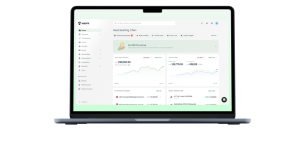
Understanding the accounts payable outsourcing
Accounts payable outsourcing means handing over the mechanics of paying your vendors to a specialized external team. Instead of your internal finance team spending hours logging invoices, chasing approvals, reconciling discrepancies, and scheduling payments, a third party runs that engine for you.
They manage the process end-to-end, including invoice intake, validation, approvals, vendor coordination, and payment execution, using structured workflows and automation tools. You still define the rules. You decide who approves what, when payments go out, and how cash is prioritized. But the day-to-day execution happens outside your company.
For founders, this is about removing operational drag. As invoice volume grows, complexity grows with it. More vendors, cross-border payments, subscription tools, contractors, and tax documentation. Outsourcing accounts payable becomes a way to scale financial operations without constantly adding headcount just to keep up.
How does AP outsourcing actually work?
- The provider collects invoices from vendors via email, portal, or paper.
- Each invoice is checked for accuracy, coded to the right expense category, and matched to purchase orders if needed.
- Invoices are sent to the designated internal approvers according to your rules.
- The provider schedules and processes payments via bank transfers, checks, or virtual cards.
- You receive regular reports, dashboards, and alerts, keeping you in control without handling day-to-day processing.
AP outsourcing vs AP automation vs hybrid model
Having covered what AP outsourcing is about, it’s important to see how it compares with other approaches.
Outsourcing lets you hand off routine tasks like invoice processing and vendor communications to experts, giving immediate relief and scalable support without adding headcount, though you give up some control. Automation keeps AP in-house and reduces errors with software, but it takes upfront effort and investment.
The hybrid model combines the best of both, letting you outsource high-volume work while automating other tasks, giving flexibility and faster results without overloading your team.
[Table:1]
Decision-making for founders:
Start by looking at your team and workflow when choosing the right AP approach:
- If your team wants to completely offload invoice processing and vendor coordination, outsourcing accounts payable can remove operational workload without expanding headcount.
- If invoice approvals are slow, manual data entry is high, or real-time reporting is needed, automation can help your in-house team work faster and stay in control.
- For businesses with fluctuating workloads, high complexity, or a desire to balance internal expertise with external support, a hybrid model provides flexibility and efficiency.
When to outsource your accounts payable
You should consider outsourcing accounts payable when handling invoices and payments start taking more time and attention than they should. It usually shows up when volume increases, errors creep in, or the team spends more time fixing AP issues than preventing them.
You can seriously consider outsourcing accounts payable if:
- Invoice volume is rising, and processing is becoming inconsistent
- Payment mistakes or delays are impacting vendor trust
- Approvals are slow because no one clearly owns the workflow
- Your finance team spends more time processing bills than analysing cash
- You’re expanding across entities, currencies, or compliance requirements
- Hiring another AP headcount feels reactive rather than strategic
- You need better reporting and audit discipline without launching a major systems overhaul
Reasons to outsource your accounts payable
Outsourcing accounts payable is a choice about how much structure you want around your cash operations as the company grows. What works in the early stage doesn’t always hold up under scale.
Manual work starts creating real mistakes
When AP is handled manually, small slips add up. Duplicate payments, missed due dates, or incorrect coding are not skill issues; they’re volume issues. Outsourcing adds repeatable checks so these problems don’t keep resurfacing.
AP costs become messy and hard to predict
Running AP in-house means people costs, tools, and management time that quietly creep up. Outsourcing simplifies this into a clearer cost structure that scales more cleanly as invoice volume changes.
Invoices move too slowly through the system
If invoices sit waiting for approvals or payments go out later than planned, it becomes harder to plan cash. Outsourced AP teams are built to move invoices through the process without constant chasing.
Your finance team is stuck doing low-leverage work
Time spent matching invoices or following up with vendors is time not spent on forecasting, spending decisions, or planning. Outsourcing clears space for work that actually requires context and judgment.
Compliance only gets attention when something breaks
Approval trails, documentation, and controls often become reactive in fast-moving teams. Outsourced AP brings structure by default, which reduces risk without adding more internal processes.
You want the process to work without redesigning everything
Many startups outsource AP because they need it to work now, not after a tooling project or workflow rebuild. You’re buying an operating system, not just extra hands.
Disadvantages of accounts payable outsourcing
While Outsourcing AP solves some problems, it can also create new ones if you’re not careful. Outsourcing AP gives you more breathing room, but you still need to stay clear on processes and priorities so things don’t slip through the cracks.
You might feel less in control
When someone else is handling your invoices and approvals, you won’t have the same day-to-day oversight. Quick adjustments or last-minute payments might take longer.
Vendor relationships can get a bit distant
Your personal touch may be reduced if your outsourced team is the main contact for vendors. That can be tricky for building trust with suppliers who value a direct relationship with you.
Data security becomes someone else’s responsibility
Sharing financial data always carries risk. Even with strong protocols, you’re relying on another organization to protect sensitive information. Vetting providers carefully is non-negotiable.
Flexibility can be limited
Outsourced teams usually work on structured workflows. The process might be slower or require extra coordination if your business needs to handle exceptions or custom approvals.
Costs can creep up
Additional services like rush payments, special reports, or integration support can add up, even though predictable fees are a benefit. You might see your budget stretch without clear agreements.
Transition takes planning
Shifting AP processes outside isn’t instant. Training, system access, and process alignment take time, and internal teams may need adjustment periods to work smoothly with the outsourced partner.
Cost of accounts payable outsourcing
When you think about outsourcing accounts payable, the first question is usually cost. You’re paying either per invoice or a flat monthly fee, and it can change depending on volume, complexity, or extra services like rush payments or multi-currency handling.
Some providers give discounts as your invoice count grows, which can make a big difference. The key is to understand all the components upfront, so you know what you’re actually spending and can plan your budget without surprises.
[Table:2]
Ways to choose an accounts payable outsourcing provider
When you’re picking an accounts payable outsourcing partner, price and speed aren’t the only things that matter. You need someone who understands how startups work, can handle spikes in invoice volume, and won’t slow you down with unnecessary back-and-forths.
The right accounts payable service provider should reduce manual work while keeping your approval and compliance standards intact. Service providers like Aspire1 or similar platforms can help by giving you clear visibility into payments and approvals while keeping things streamlined.
Step 1: Verify real experience
Ask for examples of clients similar to your size or industry. Make sure they have handled challenges like multi-currency payments, high-volume invoice months, or tight approval cycles.
Step 2: Check software integration
Confirm that they can connect smoothly with your accounting system or ERP. Various tools make integration easier, so you don’t end up duplicating work or chasing approvals manually.
Step 3: Understand service levels
Ask how fast they process invoices, handle discrepancies, and respond to vendor queries. Clear timelines and accountability make your life easier.
Step 4: Evaluate flexibility
Startups often have uneven growth or sudden surges in spending. Make sure your provider can scale operations without needing constant renegotiation or extra setup.
Step 5: Compare costs transparently
Look beyond base fees and check for charges like rush payments, multi-currency handling*, or custom reports. Predictable pricing lets you plan cash flow without surprises.
Conclusion
Outsourcing accounts payable isn’t about avoiding work; it’s about making your finance function smarter and freeing up your team to focus on growth. By picking the right partner and approach, you can reduce errors, speed up payments, and gain clarity on cash flow without adding headcount.
Whether you choose outsourcing, automation, or a hybrid model, the key is to match it to your startup’s pace and needs. Start small, track results, and scale the solution as your business grows.