


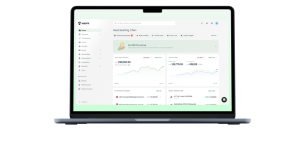
What is a digital wallet for business?
Simply put, a digital wallet for business (or e-wallet) is a software-based system that helps you securely store your payment information, ID credentials, and even other digital assets. As a founder, this works as a business wallet account that lives on your device or in the cloud. You are allowed to send, receive, and manage capital transactions without the physical constraints of a corporate card or the need to visit your bank.
This digital wallet becomes the control center of your cash flow in the business. Whether you need to pay your developer in Estonia or grab a coffee before a pitch in NYC, your digital wallet seamlessly handles the heavy lifting around encryption requirements and transaction routing in the background. It uses tokenization, a process in which sensitive card details are replaced with a unique token to process payments without exposing your actual account data to merchants. This makes it a safe yet fast way to pay without hassle.
Don't confuse this with a standard mobile banking app. While an app is just a window into your bank account, a top digital wallet is a programmable tool that can hold multiple currencies, issue virtual cards instantly, and integrate directly with your accounting stack.
Why digital wallets for businesses are becoming important in 2026
In 2026, a digital wallet for business is no longer considered an alternative payment method but rather the default setting. With global digital wallet users hitting 5.4 billion this year, the technology has reached over half the global population. The importance of digital wallets for businesses in 2026 boils down to three strategic shifts:
1. The shift to instant liquidity: Legacy banks work on traditional processes that rely on batch-processing cycles that create artificial delays in your cash flow. On the other hand, business wallet accounts operate on real-time rails that bypass batch processing, allowing you to pay and receive payments in seconds. You get to settle obligations and redeploy capital in seconds rather than days.
2. Unified financial orchestration: You shouldn’t need to multitask through a scattered mess of apps and spreadsheets. Modern ewallets for business serve as a single hub for your entire financial stack. You can use value-added features like Buy Now, Pay Later (BNPL), virtual corporate cards, and digital identity verification built directly into your workflow. In the United States, 39% of online transactions and 16% of POS transactions are now made using digital wallets. Failing to offer these methods creates unnecessary friction at the point of sale, directly impacting your conversion rates as users shift away from physical cards.
3. Security is the competitive edge: With rising eCommerce fraud costing merchants billions in 2026, security becomes a major competitive advantage for your business. As digital wallets utilize biometric authentication and tokenization, they make these transactions and overall integration extremely secure as compared to standard bank transfers. Adopting the safest digital wallet infrastructure signifies that your business is built on a robust foundation.
How digital wallet for business actually work (Step-by-Step)
As a founder, what really might excite you in a digital wallet is not the interface but the infrastructure. Here is exactly how a transaction moves from your screen to your vendor’s ledger:
Step 1: Secure funding and onboarding
The first part of the process is onboarding. You link your business wallet account with your existing financial stack and capital resources like a VC credit line, a traditional bank via ACH, or revenue platforms like Stripe. These connections are highly reliable and secured through APIs, ensuring your funds are ready for instant deployment.
Step 2: Initiate a transaction
Once you initiate a transaction, it creates a structured payment request that includes critical metadata like invoice numbers and tax identifiers, ensuring your accounting stack stays clean.
Step 3: Tokenization and encryption to keep the transaction secured
To make it the safest digital wallet experience for you, the system uses tokenization. In this case, instead of sharing the actual account number or card details, the wallet generates a unique one-time digital code/ token. This token represents a value that fraudsters cannot use anywhere. So, if tomorrow the merchant’s or vendor’s database is breached, your account and financial data remain invisible to them.
Step 4: Biometric authentication
Gone are the days when the authentication meant a 16-digit password noted down on a sticky note. In 2026, authentication means biometric, i.e., FaceID, fingerprint, or voice recognition. This provides frictionless, instant yet safe access that is harder to spoof than traditional PINs.
Step 5: Routing through real-time rails
Speed being an important factor in this process, top digital wallet routes the payment using modern networks like FedNow, RTP (real-time payments), or even blockchain-based stablecoin rails. This helps in fast-tracking the payments by skipping the 3-5 days waiting period and moving your money at the speed of the internet.
Step 6: Automated reconciliation
The final step is the most important for your back office. The moment the transaction is complete, the data is pushed directly into your ERP or accounting software (like Xero or QuickBooks). This eliminates "month-end stress" because your books are reconciled in real-time, as the spend happens.
What is best about a digital wallet for business is the programmability. In 2026, you can personalize this process by setting business rules. For example, you can set automatic release for a milestone payment to a contractor once they upload their final deliverables to your portal.
Types of digital wallet for business and their used cases
Not all wallets perform the same functions. You build your stack and use it based on your requirements. We’ve broken down the five primary categories based on where and how you'll actually use them to drive growth.
[Table:1]
How to get a digital wallet for business
Most modern fintech platforms keep the process frictionless. You can instantly sign-up and get to your first global transaction within hours. Getting started with a business wallet account in 2026 is a far cry from the weeks-long bureaucratic nightmare of traditional banking.
1. The preparation and checklist
The first thing to check on your prep-list is to gather your digital documentation before you hit sign-up. Verification being automated in 2026 may push you to have high-quality scans ready as it is non-negotiable. This may include:
- Business credentials: Your EIN (Employer Identification Number) and Articles of Incorporation.
- Proof of identity: A valid government-issued ID for all significant shareholders (usually for those who own more than 25% of the shares).
- Proof of operating address: A utility bill and lease agreement with your office address dated within the last three months of application.
2. Choose your priorities and stack
You can decide if you need a B2B digital wallet for global payroll and vendor payment (like Aspire) or a mobile-first wallet for local team expenses (like Apple Pay). Not all digital wallets for business serve the same purpose, but most founders choose a platform that helps integrate both global treasury management and issuing virtual credit cards to their team for daily spending.
3. The onboarding sprint
Once you have decided on a platform, the digital onboarding flow usually goes like:
- Account is created: Basic details are included at this stage, like name, business email, and country of origin.
- KYB (Know Your Business) verification: You will need to upload your official corporate documents, and AI-powered tools like Onfido or Jumio can verify and approve them in real-time.
- Defining roles: Providing a full download of the process and providing access to your co-founders, finance leads, or department heads.
4. Link required accounts and send fund as required
You can easily connect your revenue streams, like a Stripe account, a traditional bank, or a VC credit line. You can securely link your funds through trustworthy API sources like Plaid. This allows you to instantly liquidate and start moving your capital into the wallet and start deploying it as necessary.
5. Sync with your financial stack
You are just adding to your list of silos if your “best digital wallet app” doesn’t sync with your existing accounting software. The final step of the process is to integrate with your ERP (Xero, QuickBooks, or NetSuite). This ensures that every transaction is categorized and reconciled automatically, saving your team hours of manual data entry every month.
Top 5 digital wallets for business in 2026
Choosing a business wallet account in 2026 isn't just about picking a name you recognize; it’s about matching your financial "plumbing" to your growth velocity.
Comparison matrix for a quick glance
[Table:2]
1. Aspire: All-in-one operating hub
Aspire has redefined the B2B digital wallet by creating a complete finance OS for founders expanding beyond US borders. The platform helps companies reduce the “growth tax” paid on banking delays and combines high-yield treasury, multi-currency accounts*, and spend management all in one place.
- Best for: This is the best platform for scaling startups and mid-stage companies operating with teams around the globe.
- Key features:
- Multi-currency accounts*: You can open accounts in USD, EUR, GBP, SGD, and various other currencies at zero cost.
- Unlimited cashback^: With every card payment, you are eligible to earn 1.5% unlimited cashback, without a confusing points system or fine print conditions.
- High-yield savings: You can earn up to 3.73% APY3 on idle USD with a next-business-day liquidity option always available.
- FDIC insurance1: Peace of mind with up to $100M in FDIC insurance through licensed partners.
- Fees: USD $0 initial setup fee, USD $0 monthly fee, USD $0 minimum balance requirements
2. Stripe Treasury: The leader of infrastructure
If you are someone who wishes to let platforms embed their financial services directly into their existing product workflow.
- Best for: This is the best platform if you are a SaaS company that wishes for secure and robust API integrations and control.
- Key features: You can easily automate sales tax with Stripe tax. Initiate payouts to linked cards and a massive third-party ecosystem.
- Fees: The platform follows what you call a pay-as-you-go model. The standard is 2.9% + USD $0.30 per domestic transaction; 1% markup on FX conversions.
3. Airwallex: For cross-border transactions
Using it;s own proprietary banking network, Airwallex bypasses the slow SWIFT system and focuses heavily on reducing the time and cost of international transfers.
- Best for: If you have multiple teams operating internationally or high-volume international vendor payouts.
- Key features: Like-for-like settlement in 20+ currencies and FX markups as low as 0.5% above interbank rates.
- Fees: USD $0 fee with competitive interbank FX rates.
4. Revolut Business: The Global Super-App
Revolut is committed to offering a fast-tracked mobile-first experience to businesses that require fiat transfers to crypto-to-fiat conversions.
- Best for: If you want an agile customer-first UX offering, fast pivots and bifurcations
- Key features: Instant P2P transfers within the Revolut network and metal corporate cards for team leaders.
- Fees: Different tiered plans ranging from USD $0 to USD $100+/month based on the transaction volume
5. Mercury: Standardized platform for startup banking
Mercury is a well-known name among US-based and VC-backed startups. It focuses on deep integration with the venture capital ecosystem.
- Best for: US-based startups that look for higher FDIC insurance and other startup perks.
- Key features: Get up to USD $5M+ FDIC insurance and a clean, minimalist UI.
- Fees: USD $0 for standard accounts, while most domestic and international wire transfers are actually free.
Are digital wallets for business safe?
In comparison with the traditional banking methods and age-old paperwork, yes, a digital wallet for business is safer.
1. Tokenization: When you use one of the top digital wallets for business, your actual account or card details are never transmitted or shared with another merchant or vendor. Instead, the system generates a unique code or a one-time digital placeholder used as a token. In case your vendor’s data is compromised, you won’t lose any data or money.
2. Biometric access: Traditional cards can be swiped, and PINs can be shoulder-surfed. A digital wallet requires biometric authentication like FaceID, fingerprint, or iris scans to authorize any spend. Even if you lose a physical device, it wouldn’t compromise your digital wallet.
3. Real-time freeze capabilities: If your team loses a card, you don’t have to call a bank and get added to a waitlist until your query is addressed. With a B2B digital wallet like Aspire, you can easily freeze or kill a specific card or a sub-wallet at an instant from your dashboard.
4. AI-driven anomaly detection: By 2026, the safest digital wallet platforms will utilize AI to monitor spend patterns in real-time. If your startup typically spends USD $2,000/month on AWS and suddenly there’s a USD $50,000 request from a luxury retailer in a new geography, the system flags and blocks it within milliseconds, long before a human can notice and intervene.
Ending note
Still on the fence about deciding whether you need a digital wallet for business or not? Here is a checklist that might help you make this decision:
- Does your finance team spend more than four hours a month on reconciliation? Switch to a digital wallet if the answer to this is yes.
- Do you operate globally with vendors or team members located outside the USA? If yes, you need a multi-currency B2B wallet.
- Is your company stuck with a single physical card for all SaaS subscriptions? If yes, the risk is higher, and you should move to virtual tokenized cards today. The future of finance isn’t just digital or computerized reports and numbers. It’s more about integrations, instant, and visibility.