
What are ecommerce payments
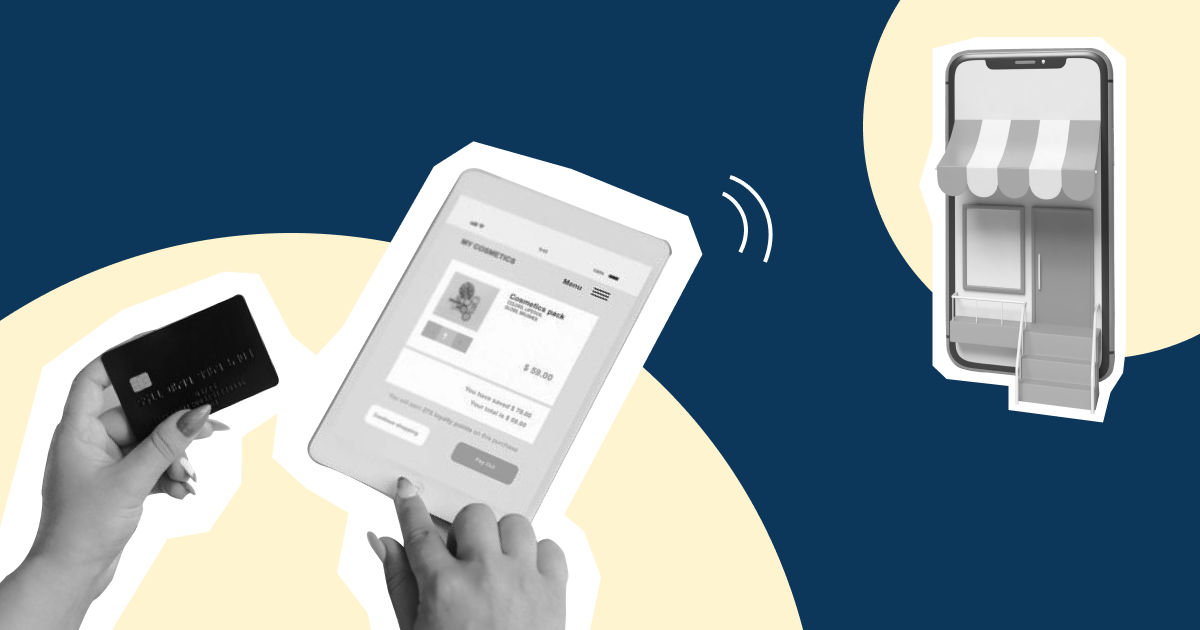
Ecommerce payments are the methods businesses use to accept payments online, including credit cards, digital wallets, bank transfers, and buy now, pay later (BNPL). These directly impact conversion rates, transaction costs, and customer experience.
Why ecommerce payments matter to businesses
Ecommerce payments directly affect conversion rates, revenue, and profit margins. A poor checkout experience increases cart abandonment, while high processing fees reduce profitability as your business scales.
On average, 70% of online shopping carts get abandoned before checkout completes. A significant chunk of that is directly caused by a poor payment experience. This includes missing payment methods, slow-loading checkout, or a process that asks for too much.
Payments touch three things that matter most to an ecommerce business:
- Conversion rates: the right methods reduce friction and build trust at the moment of purchase
- Revenue: a smoother checkout means more completed transactions
- Margins: what looks like 2.9% at $10k/month looks very different at $500k/month
Difference between a payment gateway and a payment processor?
Before comparing specific providers, it helps to separate 2 core components in online payments.
A payment gateway is the technology that collects and secures a customer's payment details at checkout. It encrypts card data, tokenizes it, and passes it along safely for processing. A payment processor is the service that moves money between banks. Once the gateway hands off the payment details, the processor handles authorization, clearing, and settlement.
[Table:1]
How ecommerce payment processing works
When a customer pays, three things happen in seconds. The payment gateway captures and encrypts the details at checkout. The ecommerce payment processor sends that data to the card network and issuing bank for authorization. If approved, the transaction is confirmed and the order goes through.
Behind the scenes, the money doesn’t arrive instantly. It gets settled and paid out to your account in batches, typically within a few days.
What matters is that every step here affects approval rates, fraud risk, and how quickly you actually receive your cash.
The most common ecommerce payment methods and when to use each
The most common ecommerce payment methods include credit and debit cards, digital wallets (like Apple Pay and PayPal), buy now pay later (BNPL), bank transfers, and local payment methods for international markets.
Credit and debit cards
Still the default for most ecommerce stores, and for good reason. Cards are familiar, trusted, and accepted everywhere. Visa and Mastercard dominate globally, with Amex having strong penetration in higher-income segments.
The fees are the tradeoff. Expect around 2.9% plus a fixed per-transaction fee for most card processors. That's the baseline. Premium cards, and international transactions entry all push that number higher.
Relying on cards alone means you're leaving conversion on the table, especially on mobile.
Digital wallets (Apple Pay, Google Pay, PayPal)
Digital wallets now account for more than half of ecommerce transactions in many markets, and the reason is simple: they're faster. One tap, biometric confirmation, done.
On mobile, which now drives most ecommerce traffic, digital wallets dramatically outperform card forms in conversion. If you're not offering Apple Pay and Google Pay, you're creating friction at the moment buyers are most likely to abandon.
PayPal sits in its own category. It's less elegant than the native wallet experience, but it carries enormous trust with older demographics and buyers who don't want to share card details with a store they don't know yet.
Buy now, pay later (BNPL)
BNPL platforms Klarna, Afterpay, Affirm have become very common in many product categories. The core mechanic is simple: let customers split a purchase into installments. They're more likely to buy — and more likely to spend more per order.
The data backs this up. BNPL consistently increases average order value, particularly for purchases where the full price creates hesitation.
The cost is higher than standard card processing. Merchants typically pay 2–6% per transaction depending on the provider. Whether that's worth it depends on your AOV and category. For fashion, home goods, electronics, and fitness equipment, it usually is.
Bank transfers and direct debit
Bank transfers have the lowest processing costs (around 0.5% to 1.0%) which makes them attractive for B2B ecommerce where margins are thin.
The tradeoff is friction and speed. Bank transfers are slower, less familiar to impulse buyers, and don't work well for low-consideration purchases. They shine in specific contexts: subscriptions, B2B invoicing, and high-value orders where the buyer is motivated enough to complete a slightly longer process.
ACH in the US is the standard here. If you're selling high-ticket or running any kind of B2B commerce, it's worth offering.
Local and alternative payment methods
The moment you start selling internationally, payment method strategy gets significantly more complex.
iDEAL dominates in the Netherlands. Boleto is standard in Brazil. Alipay and WeChat Pay are essential in China. UPI is how India pays digitally. In each of these markets, not offering the local preferred tells local buyers that you don't really serve them.
If international expansion is on your roadmap, build local payment method support into your plan early.
Understanding ecommerce payment fees and how they impact your margins
Most ecommerce payment gateways charge around 2.5%–3% per transaction plus a fixed fee. Additional costs like currency conversion (FX) and international card fees can increase the total cost.
Three fee types to understand:
- Transaction fees are the percentage cut on every sale. These vary by payment method, card type, and processor. International cards typically carry higher fees than domestic ones.
- Fixed fees are the per-transaction charge. These hurt more on low-value orders. For example, a $0.30 fixed fee on a $5 transaction is 6% before the percentage component even kicks in. If you're selling low-ticket items, this matters.
- FX costs are the hidden one. If you're accepting payments in foreign currencies, you're often paying a currency conversion markup on top of your base processing fee. This can add 1–2% on every international transaction. At scale, that's significant.
Most card processing fees have two components: a percentage of the transaction value, and a fixed fee per transaction. At standard industry rates, that's roughly 2.9% + $0.30 per transaction. On a $50 order, you're paying about $1.75. On a $200 order, you're paying about $6.10.
As volume grows, the percentage component dominates. At $100k/month in revenue, a 2.9% fee costs you $2,900. Optimizing that down to 2.2% saves you $700 a month, without touching your product or marketing.
Why fees matter more as you scale
At $10k/month, a 0.5% difference in fees is $50. Easy to ignore. At $1M/month, that same 0.5% difference is $5,000, every single month.
As a founder, the decisions you make about payment processors and methods early become increasingly expensive to leave unoptimized as your business keeps growing.
Build a simple fee model early: what does each payment method actually cost you per transaction at your current AOV? Revisit it every quarter.
How payment methods affect conversion rates
Checkout is a psychological moment. The buyer has already decided they want the product. Payment methods impact conversion by reducing or increasing checkout friction. Faster, familiar options like digital wallets improve conversion, while missing preferred methods often leads to abandoned carts.
Two things drive conversion at checkout:
Familiarity: customers convert higher when they see payment methods they recognize and trust. A brand-new store with a payment method they've never heard of creates doubt. A familiar PayPal button or Apple Pay prompt removes it.
Speed: every additional step in the checkout process costs you conversions.
Card form → billing address → shipping address → confirmation is four steps.
Apple Pay is one. The difference in completion rate is real and measurable.
Match your payment method mix to your customer base.
- If your buyers skew mobile and under 35, prioritize wallets and BNPL.
- If they're older or higher-income, cards and PayPal carry more weight.
- If you're selling internationally, local methods are non-negotiable.
How to choose the right ecommerce payment solution
The best ecommerce payment solution depends on your business model, location, and scale. You should evaluate fees, integration, supported payment methods, global capabilities, and checkout experience. Here’s how to compare ecommerce payment solutions in practice:
[Table:2]
Security and compliance: what to look for in an ecommerce payment solution
Security in payments is not limited to fraud prevention. It affects approval rates, chargebacks, and customer trust at checkout.
PCI DSS compliance
Start with PCI DSS compliance. It defines how card data should be handled. Most payment providers manage this, but responsibility still depends on your integration model, especially with custom checkouts.
3D Secure (3DS)
3D Secure (3DS) introduces an additional authentication step, such as an OTP or biometric check. It reduces fraud and shifts liability, but excessive use can impact conversion. Adaptive 3DS limits friction by triggering only for higher-risk transactions.
Address Verification System (AVS)
Address Verification System (AVS) compares billing details with issuer records. It is simple, but remains effective in reducing unauthorized transactions, particularly in markets like the US.
Tokenization
Tokenization replaces card details with secure tokens. This is essential for stored payment methods, subscriptions, and limiting exposure in case of a breach.
Chargeback handling
Chargeback handling also matters. Many processors provide dispute workflows, automated evidence submission, and fraud scoring to manage risk.
The objective is not to eliminate fraud entirely. It is to maintain approval rates while keeping fraud and disputes within acceptable thresholds.
What to choose based on your setup
Your payment stack should match how your business actually works. Here's an honest breakdown by setup type:
1. You're running a Shopify store
Start with Shopify Payments. It's native, reduces checkout steps, and the pricing is straightforward. Enable PayPal and digital wallets on day one. It takes 10 minutes and you'll see the difference in mobile conversion almost immediately.
2. You're on a custom or headless stack
Stripe is the default for good reason. The API is best-in-class, the documentation is genuinely excellent, and it handles global complexity without needing a dedicated engineering team. If you're scaling fast or have specific routing needs, Adyen is worth evaluating at higher volumes.
3. You're running a B2B or wholesale operation
Card processing isn't your priority, instead, ACH, bank transfers, and net payment terms are. Look at processors that support Pay by Invoice natively, like Stripe with invoice billing or Plastiq. Your buyers aren't impulse purchasing; they're procurement-driven. Optimize for low fees and clean invoicing over checkout speed.
4. You're building a marketplace or multi-vendor platform
You need payments infrastructure, not just a gateway. Stripe Connect and Adyen for Platforms are built for this. They handle split payments, seller onboarding, and compliance across multiple parties. Don't try to bolt a standard gateway onto a marketplace model.
5. You're selling subscriptions or recurring revenue
Recurring billing has its own failure modes. Chargebee is built specifically for this. A generic gateway will cost you revenue through failed retry logic alone.
Ecommerce payment methods compared
[Table:3]
Best payment setup based on your business stage
The best setup depends on your stage. Early-stage stores should keep payments simple, while growing businesses should optimize fees and add more methods. If you are the founder of a scaling company, you should focus on global payments and cost efficiency.
Early-stage (0–$10k/month)
Keep it simple. Complexity kills momentum at this stage.
Your stack: Shopify Payments as your primary processor, PayPal as a trust-builder, Apple Pay and Google Pay enabled. That covers 90%+ of your buyers without overcomplicating your setup or your reconciliation.
Don't add BNPL yet unless your AOV is above $100 and you're already seeing cart abandonment at checkout.
Growth stage ($10k–$100k/month)
At this stage, conversion optimization starts to bring in real value.
Add BNPL if your product category and AOV support it. Audit your checkout flow. Are there steps you can remove? Is your mobile checkout as clean as your desktop? Start tracking your effective processing rate (total fees ÷ total revenue) and benchmark it quarterly.
If you're seeing meaningful international traffic, start mapping which markets are converting and which aren't. That's your signal for where to add local payment methods next.
Scaling and global stage ($100k+/month)
Now payment strategy is a real financial lever.
Localize payment methods for your top international markets. Optimize your FX strategy.
Where are you losing margin on currency conversion, and can you hold multi-currency balances to reduce conversion frequency? Evaluate whether enterprise processor pricing (which typically kicks in above certain volumes) makes sense for your transaction volume.
At this stage, payout efficiency and cash flow management become very important.
What most ecommerce founders get wrong about payments
Common mistakes by founders include adding too many payment methods too early, ignoring transaction fees, not optimizing mobile checkout, and treating payments as a one-time setup instead of an evolving system.
Adding too many methods way early
More options don't mean more conversions. They don't always mean more conversions. A cluttered checkout with 8 payment logos creates confusion, not confidence. Add methods methodically, based on your actual customer data.
Ignoring fees and FX spreads
Most founders know their ad spend to the dollar but couldn't tell you their effective processing rate. Run the numbers. It's often the second or third largest cost in a scaling ecommerce business.
Not optimizing for mobile users
If more than half your traffic is mobile, and for most stores it is then your checkout experience on a phone is your primary checkout experience. Test it. Regularly.
Treating payments as set and forget
Your customer base evolves. Your transaction mix evolves. Payment technology evolves. A payment stack that was right at $20k/month may be actively costing you at $500k/month. Review it regularly with fresh eyes.
How to build an ecommerce payment stack that helps you scale
Most founders set up payments once and never revisit them. Here's how to build a stack that grows with you instead of breaking under you.
Think of your payment infrastructure in three layers and make sure you're not neglecting any of them:
Layer 1: Checkout (what your customer sees)
This is where conversion happens. It needs to be fast, familiar, and frictionless. The goal is zero unnecessary steps between intent and purchase. Wallets, BNPL, and a clean card form live here.
Layer 2: Processing (the engine behind checkout)
This handles transaction routing, fraud detection, authorization, and settlement. Your processor choice lives here. At early stage, almost any reputable processor works. At scale, routing logic, fraud tooling, and international capabilities start to matter significantly.
Layer 3: Financial operations (where money lands)
Payout timing, currency management, fee reconciliation, and cash flow visibility sit at this layer. An optimized checkout that pays into fragmented or high-fee accounts still creates inefficiencies.
In practice, most operators focus heavily on checkout and conversion, but underinvest in what happens after the transaction. As volume grows, this gap shows up in higher fees, delayed access to funds, and limited visibility across accounts.
Building all three layers intentionally creates a more stable financial system. Teams that do this early operate with fewer constraints as they scale.
Final thoughts: payments are just the beginning
A well-structured payment stack is foundational, but it is only one part of a broader financial workflow.
Once payments are processed, funds still need to be received, held, converted, reconciled, and tracked across the business. This is also the layer many ecommerce teams lack dedicated infrastructure for. Aspire1 is built specifically for this stage, providing a single system to manage payouts, hold multiple currencies, and track spend without relying on disconnected tools.