


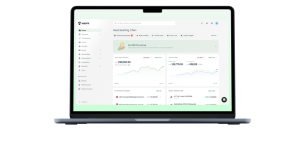
What is third-party billing for startups
Third-party billing is when you contract an outside source to take care of your billing and payment processing. Instead of staffing an internal billing team or handling accounts payable manually, the provider takes care of the invoicing, payment processing, and following up on past-due balances.
The difference founders miss: the provider does the operational work, but you get ultimate authority on every payment. Nothing happens without your sign-off.
Important context:
Outside the startup AP context, third-party billing can also refer to providers that handle customer billing, subscription charges, or claims processing in industries like healthcare and telecom. In this article, “third-party billing” refers specifically to outsourcing your accounts payable workflows: capturing vendor invoices, routing approvals, and executing payments on your behalf.
Why startups use third-party billing
You're managing 30 vendor invoices a month. Your finance person is chasing receipts, manually keying data, and still missing the monthly close by 3 days. That's the exact problem third-party billing is built to solve.
Startups often use third-party billing to
- streamline payment workflows,
- improve visibility into invoices and spending,
- support faster month-end closes, and
- manage cross-border payments more efficiently
- help establish stronger financial controls as the business grows
For many startups, third-party billing helps them reduce the administrative work. As transaction volumes grow, finance teams need systems that can scale without adding significant headcount.
How does third-party billing work
The basic workflow is the same 4 stages no matter what service you pick.
- Collect invoices
Your vendor emails, uploads, or integrates the invoice directly into your system. The supplier will scan it, often utilizing OCR technology to automatically pull out line items, quantities, and due dates.
- Verification
The system matches the invoice against your purchase orders or vendor contracts. If there’s a mismatch — an improper amount, a duplicate invoice, or a missing PO number — it gets detected before any payment moves.
- Routing for approval
Validated invoices are sent for approval through the account payable workflow you have set. For example, if a payment exceeds USD $5,000, it will go to a senior approver before being processed. The Provider handles the workflow. Your team has approval authority.
- Payment and reconciliation
Once approved, the provider will process payment via ACH, wire, eCheck, or virtual card. The transaction is recorded in your accounting system, which means less work to reconcile at the end of the month.
This means you have final approval at every step of your business. The supplier does the work; they don’t transfer money without you signing off on it.
How to implement third-party billing
Getting third-party billing up and running is less a matter of turning on software and more a need for harmonizing your team, systems, and approval protocols. There are 4 implementation processes most startups go through:
Selecting a provider: Shortlist suppliers that interact with your accounting system, accept payment methods you’d like to utilize, and can support the currencies you use most often.
Setting up approval workflows: Set defined approval levels and escalation procedures before bills start flowing through the system. For example, major spending may need founder approval, whereas vendor adjustments go to a finance leader.
Integration systems and test procedures: Connect your accounting platform, bank setup, and vendor information to the provider. Process and approve test invoices and reconcile payments prior to increased adoption.
Run a pilot: Start with a few merchants or types of invoices. Make sure invoices are collected correctly, approvals flow as expected, and payments are reconciled accurately before rolling out the procedure more extensively.
Treat it as a finance project, not a software implementation. 3. Structured deployment decreases risk of duplicate payments, missed invoices and reconciliation problems at month-end close
Types of third-party billing services
Not every provider is the same. The model you choose will rely on your volume of transactions and your internal capability and how much control you wish to retain.
Full-service outsourcing of AP
The provider handles most or all of your accounts payable functions. They do invoice capture, approval workflows, payment processing, and reporting. This is a good solution if you process over 200 invoices a month and don’t have your own AP personnel.
Partial or hybrid outsourcing
You have outsourced some functions like invoice processing and data entry but kept payment approvals in-house. This is a concept many Series A and B firms employ when they already have a finance head but wish to decrease manual effort.
Industry-specific billing services
Specialty providers who know their unique compliance needs are commonly used by healthcare organizations, law firms, and construction industries. If you work in a regulated field, you may need more than a generalist AP supplier.
Third-party billing benefits
Third-party billing can help startups streamline finance operations while maintaining visibility and control.
Less manual work
Just data entry, matching, and follow-up, manual processing of 100 invoices a month can take 15 to 20 hours. And a billing provider does all the operational handling so your team can focus on higher-value activities.
Speedier payment cycles
Vendors get paid promptly. That matters for early-stage enterprises that rely on goodwill and acceptable payment terms with suppliers. A consistent history of on-time payments can give your business more flexibility when negotiating payment terms with suppliers.
Higher precision
It is a genuine and regular difficulty to make duplicate payments. If a vendor gives you an invoice again and your team pays it twice, you've paid the same bill twice. These are caught by provider-level verification operations before payment.
Scale with minimum human intervention
From 50 to 500 invoices a month, a third-party provider can take that on, and you don’t need to hire an AP team commensurate to the volume. That flexibility is of considerable practical value to globally ambitious founders dealing with multi-currency vendor payments.
Audit trail
All invoices, approvals, and payments are recorded. Whether you’re in the middle of a fundraise or preparing for a financial audit, clear, documented AP records can help reduce the amount of time your team spends pulling data under pressure.
Third-party billing vs. in-house billing vs. finance automation
[Table:1]
The decision isn't binary. Many fast-growing startups leverage finance automation software from day one to keep data in-house, pairing it with a third-party managed service only when payment complexity or cross-border compliance demands extra human oversight.
Limitations of third-party billing
Third-party billing solves real problems, but it introduces trade-offs you should plan for before committing.
Provider reliability
When accounts payable depends on a third-party provider, your payment operations depend on their systems and support. Before signing, review their service levels, support responsiveness, and track record for handling payment issues.
Integration dependencies
If your provider doesn't connect directly to your accounting system — QuickBooks, Xero, or otherwise — you'll create reconciliation work rather than eliminate it. Always confirm the integration before you sign a contract.
Cost at lower volumes
Per-invoice pricing models make sense above a certain threshold. If you're processing a small number of invoices a month, the provider fees may exceed what it would cost to handle internally or with automation software.
Vendor data risk
Your provider handles sensitive vendor banking information and payment details. A vendor bank account change request that bypasses verification is a known fraud vector, but inaccurate vendor records can also create payment delays and reconciliation issues. Confirm that your provider has documented controls for validating vendor information and approving account changes.
Less flexibility on payment terms
Some providers work on fixed payment cycles. If you need to run an urgent payment outside that window, expect a manual process or an additional fee.
When third-party billing makes sense for startups
Use third-party billing when
- Invoice volume is growing, and manual processes are starting to create delays, duplicate payments, or reconciliation issues.
- Your team needs to scale accounts payable without immediately hiring dedicated AP staff.
- You're managing vendors across multiple markets, currencies, or payment methods.
- Finance is spending too much time on invoice processing and not enough time on planning, reporting, and business support.
How Aspire supports your billing workflow
Third-party billing services are designed to solve the gaps created due to the usage of fragmented systems for each operation. If you manage your vendor invoices, expenses, and cross-border payments across a single platform, you automatically reduce the opportunity to reconcile the information before paying the vendor.
With Aspire1, you can automate your accounts payable. You don’t necessarily need to outsource the entire AP process, and you will have access to retaining approvals, payment visibility, and financial data in-house.
Aspire offers expense management features including automatic spending categorization, receipt capture with text recognition, and integrations with QuickBooks and Xero to keep your books up-to-date without a third-party AP provider.
If you’re a founder with worldwide operations, managing vendor payments in different currencies, Aspire’s multi-currency capability with a business account1 means you may pay foreign suppliers without routing that through a separate billing provider.
FAQs
How much does third-party billing cost?
Most third-party billing services charge either per invoice or a monthly service fee. Accounts payable outsourcing prices typically vary from about USD $2 to USD $6 per invoice with monthly retainers ranging from USD $500 to USD $3,000 depending on invoice volume, payment complexity, and scope of services.
What is third-party billing in simple terms?
Third-party billing is when a business uses an external provider to manage invoicing, payment collection, or other billing-related tasks instead of handling them internally.
Is third-party billing the same as accounts payable outsourcing?
Yes. Accounts payable outsourcing is the umbrella phrase for offloading your AP function. Third-party billing is usually specific to the way the invoice is processed and the payment is made inside it.
What's the difference between a wire transfer and an ACH payment in third-party billing?
ACH payments are electronic transfers that normally clear in 1-3 business days and are utilized for USD payments domestically. Wire transfers are quicker and can be utilized across borders, but they are more expensive. Most billing providers have both. Knowing the terms of your vendor payments helps you choose the proper approach.
Does third-party billing require an EIN?
Yes. If you are a US-registered company, your provider will collect your EIN for the onboarding process. You may also need vendor tax information, such as Form W-9 details, to support tax reporting and compliance requirements. Ask your provider how vendor tax documentation is collected and maintained.
What's a routing number and why does it matter in billing?
A routing number identifies the bank for a wire transfer. Your third-party billing provider will need precise routing and account numbers for each vendor to make ACH payments. A mistake here causes a delay in payment and reconciliation concerns.
Can third-party billing handle multi-currency payments?
Multi-currency is supported by certain suppliers but not all. If you are paying vendors in currencies other than USD, check your provider’s supported currencies and FX cost structure before signing.