


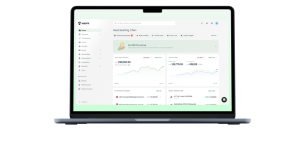
What is SaaS banking
SaaS banking refers to banking solutions and platforms created to manage the financial workflows that SaaS companies can use and embed into their platform for their own users. This can include API-connected banking accounts, multi-currency support, corporate card programs with spend controls, and AP automations.
Some of the best SaaS banking platforms are fintech companies that build on a licensed bank’s infrastructure through banking as a service or BaaS, and offer you additional SaaS-specific features and better UX.
Understanding BaaS helps you understand why these platforms can do things traditional banks can't and where the limits and risks of the model sit.
What is banking as a service (BaaS) and why SaaS founders need it
Banking as a Service, commonly referred to as BaaS, is a financial service industry business model whereby banks open up their infrastructure to fintechs and non-banking businesses, like SaaS platforms, enabling them to provide their customers with banking products despite not having a banking license.
The BaaS industry has three important participants – the brand or business, the BaaS platforms, and the sponsoring bank. To offer the BaaS solution, a brand or business links to the banking infrastructure through BaaS APIs and embeds banking functionality within its product. Your customer receives all the benefits of the bank while being completely unaware of the bank behind the services provided.
The 3 players in the BaaS ecosystem are:
- The brand or fintech - the customer-facing product. This is your app or platform. You own the user experience and the customer relationship.
- The BaaS middleware platform - the API layer that sits between the brand and the bank. Companies like Stripe Treasury, Unit, Synctera, and Column provide the middle platform, including compliance tools, ledger management, card issuance APIs, and pre-built bank connections that shorten your time to launch.
- The sponsor bank - the licensed, FDIC-insured financial institution holding the actual funds. This is a regulated entity responsible for capital requirements and requires regulatory accountability.
This architecture is what allows a company like Mercury to offer you a modern, API-connected banking experience without being a bank itself. Mercury's banking services run through partner banks Choice Financial Group and Column N.A. Aspire connects through Column N.A. Bluevine uses Coastal Community Bank.
BaaS vs. open banking vs. embedded finance vs. white-label banking
These terms get tangled constantly, but here’s how each of these is different:
[Table:1]
BaaS is the infrastructure that makes embedded finance possible. Open banking moves data; BaaS moves functionality. Most modern SaaS banking solutions use a BaaS model, whether they advertise it or not.
Top banking options for SaaS companies
The right SaaS banking solution depends on where you are as a business: what stage you're at, how international your operations are, how many people need access, and whether you want to embed banking into your own product or just run your company on a modern platform.
Here's how the leading options break down.
1. Mercury
Mercury is a digital finance platform for US-based startups. It offers modern banking facilities with basic expense management and Venture debt. It revolves mainly around banking and may get limiting when you’re scaling your finance requirements.
Mercury’s banking services run through partner banks Choice Financial Group and Column N.A.
Best for: US-incorporated SaaS platforms that want to open a business account online; a traditional banking experience with the convenience of a digital platform.
Pros:
- Accounting integrations with QuickBooks, Xero, and NetSuite
- 1.5% cashback on credit card spends
- Treasury product with up to 3.81% APY (requires USD $250,000 minimum balance)
- Extended FDIC coverage up to USD $5 million through sweep network
- No monthly fees on the base plan
Cons:
- High-yield treasury requires USD $250,000 minimum balance
- No multi-currency hold, international payments are automatically converted into USD before reaching your account.
- Primarily US-focused, you’ll need a US address to open a Mercury business banking account
2. Aspire
Aspire1 is a BaaS-powered fintech platform built for globally minded founders. Connected to Column N.A. as the underlying bank, Aspire offers a one-stop solution for SaaS companies using multi-currency* accounts, corporate cards2, AP automation, treasury yield3, and expense management.
Best for: Global SaaS companies and startups managing multi-currency operations and handling expense management and AP automation from one platform.
Pros:
- Hold USD*, EUR*, GBP*, HKD*, and CNY* in a multi-currency* bank account
- Corporate charge card with 1.5% uncapped cashback^ on all eligible spends
- Treasury3 of 3.67^%, with no minimum balance requirement
- AP automation for claims, bills, invoices, budgets, and expense management in one place
- International transfers to 98+ currencies*
- Real-time transfers for quick operations
- FDIC coverage1 up to USD $100 million through Column N.A. and sweep network
- Accounting integrations with QuickBooks and Xero
Cons:
- Does not replace dedicated BaaS middleware if you want to embed banking into your own product.
3. Brex
Brex is a popular choice for companies that spend heavily on travel expenses. Its unique reward point system allows founders to redeem them for discounts on future travel and expenses. It is a spend management platform that runs on Emigrant Bank and Column N.A. to offer you FDIC coverage of USD $6 million for business banking account balances.
Best for: High revenue Series A and beyond SaaS companies with growing finance teams.
Pros:
- High-limit corporate card with no personal guarantee
- Advanced AP automation and approval workflows
- Strong ERP integrations alongside QuickBooks and Xero
- Capital One powers Brex treasury product that offers you up to 3.71% APY
- FDIC coverage up to USD $250,000 on checking, USD $6M on vault
Cons:
- Not practical for early-stage or solo founders due to its high minimum balance requirement
- Yield on deposits requires moving funds into a separate treasury product, not earned on primary checking
- 3% markup on international payments, less competitive than Aspire or Wise that offer 1% and 0.1%, respectively.
- Reward points system complicated than flat cashback
4. Ramp
Ramp is one of the strongest spend management platforms for US SaaS companies running domestic operations. It offers a free tier and is built to eliminate manual expense reconciliation. You will still need a separate business bank account, as Ramp is not a bank.
Best for: US-based SaaS companies with growing teams that want AI-driven expense management and corporate cards layered on top of an existing bank account.
Pros:
- Free core platform
- Spend optimization that offers up to 5% savings
- AI-powered receipt capture, expense coding, and reconciliation
- 115+ accounting integrations including QuickBooks, Xero, NetSuite, Sage
- Bill pay and AP automation included
- Treasury product offering 2% on checking and 4.27% on investment accounts
- FDIC coverage up to USD $250,000, extended to millions with IntraFi network for checking accounts
Cons:
- Requires a separate primary business account
- No multi-currency accounts or international FX rails
- Ramp does not offer direct cashback on spend; instead, it optimizes your expenses to save.
- The investment accounts are not insured under FDIC
5. Relay
Relay focuses on financial organization over yield or credit. It offers multiple accounts, clear budget separation, and clean bookkeeper access. Relay is for founders wanting control over expenses and spend optimization.
Best for: Small SaaS teams that want clean budget separation between their finance operations like expenses, payroll, and project spend.
Pros:
- Up to 20 checking and 2 savings accounts per business
- Role-based team permissions and dedicated bookkeeper access
- Strong QuickBooks and Xero integrations
- FDIC coverage up to USD $3 million through Thread Bank
- No monthly fees, no minimum balance
Cons:
- No yield on checking balances
- No multi-currency, no international payroll support
- Not designed for embedding banking into your own product
6. Bluevine
Bluevine combines high-yield business checking with AP automation and credit access in one platform. It offers a practical combination for SaaS companies that want their idle cash working while also maintaining a credit line for growth.
Best for: Small sized SaaS companies looking for online banking solutions with high yield on checking without a minimum balance hurdle, AP automation, and access to working capital loans.
Pros:
- 1.3% to 3.0% APY on checking (no USD $250,000 minimum on upgraded plans)
- AP automation with QuickBooks Online sync
- Up to 50 sub-accounts for departmental budgeting
- Line of credit up to USD $250,000 for approved customers
- FDIC coverage up to USD $3 million
Cons:
- USD accounts only, no multi-currency or international payment rails
- Primarily US-focused, limited for globally distributed SaaS operations
7. Revolut Business
Revolut Business allows founders to hold and exchange 35+ currencies, and send them to 150+ countries. It offers team expense cards and accounting integrations in a single platform. It is one of the top banking options for SaaS companies with operations in Europe.
Best for: SaaS companies with EU teams, European customers, or regular multi-currency vendor payments, particularly those with GBP or EUR exposure.
Pros:
- Multi-currency transfer across 35+ currencies
- Competitive FX rates with transparent fee structure
- Team cards with spend limits on all plans
- QuickBooks and Xero integrations
- Strong mobile experience
Cons:
- Monthly fees required for full feature access, starting from USD $10/month
- No treasury product
- Customer support quality has been a consistent complaint from US business users
8. Wise Business
Wise is the clear choice when international payments are your primary pain point. Hold 40+ currencies, receive payments with local account details in 11, and pay vendors worldwide with FX starting from 0.1%.
Best for: SaaS companies paying global contractors or billing international customers and prioritizing FX transparency and low conversion costs above all else.
Pros:
- Lowest and most transparent FX fees of any platform compared here, from 0.1%
- Local account details in 11 currencies (AUD, CAD, EUR, GBP, USD, and more)
- 40+ currencies supported
- No monthly fee on the base plan
- QuickBooks and Xero integrations
Cons:
- Not a full banking platform, lacks corporate credit card, lending, charge card, etc.
- Interest only on USD, GBP, and EUR balances (not a full treasury product)
- FDIC coverage limited to USD $250,000
- Best used alongside a primary US business bank account, not as a standalone
9. Novo
Novo is a straightforward business checking account for solo founders, freelancers, and very early-stage SaaS companies that want zero friction and zero cost, with basic Stripe and Shopify integrations.
Best for: Pre-revenue or very early-stage SaaS founders who want a free, simple business account with basic invoicing and e-commerce integrations.
Pros:
- No monthly fees, no minimum balance, no transaction fees
- Built-in invoicing with Stripe and Shopify integrations
- Simple interface
Cons:
- No yield on checking, your idle cash earns nothing
- Not built for large teams or international operations
10. J.P. Morgan Chase Business
Chase is the right choice when you need a traditional banking relationship for SBA loans, commercial credit lines, or complex treasury services that digital-first platforms don't offer. Expect lower yield and less API connectivity in exchange.
Best for: Growth-stage or mature SaaS companies that need commercial lending, SBA access, or a branch network alongside their digital banking stack.
Pros:
- Largest US branch and ATM network, useful if you handle cash or need in-person services
- Full commercial banking suite: SBA loans, lines of credit, treasury management
- Strong fraud protection and enterprise security
- Recognized institutional brand for investor and enterprise customer relationships
Cons:
- Monthly fees and minimum balance requirements
- Lower APY on deposits vs. digital-first platforms
- Limited API-first integrations for SaaS-specific financial workflows
- Not suited for multi-currency operations or international-first SaaS companies
Quick comparison: top SaaS banking solutions
[Table:2]
Note: APY rates and FDIC coverage amounts are subject to change. Always verify current terms directly with each provider.
How to choose a SaaS banking solution: by stage
Here's a framework for matching your current position to the right choice.
Pre-seed / bootstrapped
You need a free account, zero friction, and basic integrations. Mercury, Relay, or Novo all work here. Mercury edges ahead if you expect to need accounting integrations and treasury yield once revenue kicks in. Novo is the simplest starting point if all you need is a business checking account.
Seed stage (domestic)
You're building out your finance stack. You need reliable AP automation, a corporate card your team can use, and accounting software that syncs automatically. Mercury or Ramp (layered on top of Mercury or Bluevine) cover most of this. Add Bluevine if you want yield on your checking balance without a high minimum.
Seed to Series A (globally distributed)
Your team spans multiple countries. You're paying contractors in EUR or GBP. Your subscription revenue arrives in different currencies and you want to reduce conversion losses. This is where US-centric platforms start to show their limits. Aspire is built for multi-currency accounts, real-time international transfers to 98+ currencies, AP automation, and treasury yield with no minimum balance.
Series A and beyond
You need enterprise-grade spend controls, high-limit corporate cards, ERP integrations, and complex AP approval workflows. For companies heading toward an IPO or needing traditional lending relationships, add Chase or another commercial bank to the stack.
Any stage: EU-adjacent or globally international
If you're billing European customers, paying EU contractors, or operating with significant GBP or EUR exposure, add Revolut Business or Wise Business to handle the FX layer efficiently. Aspire's multi-currency accounts also cover this if you want everything in one place.
What to look for in any SaaS banking solution
Before shortlisting any platform, answer these questions specifically for your business:
- What currencies do you operate in? If you hold, send, or receive in more than one currency, eliminate every platform that only supports USD from your shortlist immediately.
- What does your AP workflow look like? If you're managing vendor invoices, reimbursements, and bill pay across a team, you need a platform with AP automation.
- What accounting software are you on? QuickBooks and Xero integrations are near-universal now. NetSuite integration is the differentiator for mid-market and above. If you're on Sage or a less common system, check carefully.
- Do you need a credit or charge card? Debit cards work fine for small teams with tight controls. But if your team spends at scale, on cloud infrastructure, software, travel, or advertising, a charge card with real spend limits and cashback becomes meaningful.
- What's your treasury situation? Idle subscription revenue earning 0% is a missed opportunity. If you're holding USD $100,000+ in working capital, the difference between 0% and 3.5%+ APY is real money. Check what minimums apply.
- Do you have multi-entity needs? If you've incorporated in more than one country or are planning to, multi-entity support (and whether it's free or costs extra) matters more than it looks in a feature comparison.
- Do you want to embed banking into your own SaaS product? This is a fundamentally different decision from choosing a banking platform to run your own company on. See the section below.
SaaS companies that want to embed banking into their own product: the BaaS route
If you're a SaaS company that wants to embed financial products directly into your platform for your own customers, you're not just choosing a banking account. You're entering the BaaS stack as a builder.
This means evaluating BaaS middleware providers rather than business banking platforms:
- Unit: the most startup-accessible US BaaS middleware provider. Developer-friendly APIs, pre-built compliance tooling, FDIC-insured through bank partnerships. Good entry point for SaaS platforms wanting to launch embedded accounts, cards, or payments quickly.
- Synctera: similar model to Unit, strong on compliance infrastructure. Better suited to companies with moderate transaction volume that want more white-glove onboarding support.
- Stripe Treasury: accessible if you're already deep in the Stripe ecosystem for billing and payments. Easiest integration path for Stripe-native SaaS platforms. Limited outside the Stripe environment.
- Column N.A.: a chartered bank that also operates as its own middleware provider, offering direct bank access without a separate middleware layer. For SaaS companies willing to build more infrastructure in-house, Column offers more control.
What to evaluate if you're going the BaaS middleware route:
- Minimum volume requirements. Many platforms require meaningful monthly active users or transaction volume before they'll onboard you. Know this threshold before you build a roadmap around a specific provider.
- Who carries compliance. KYC, AML, and SAR filing obligations flow to you as the program manager, not to the middleware. Read every contract clause about liability before signing.
- Revenue share and interchange split. How interchange revenue from your card program is split between you, the middleware, and the sponsor bank shapes your unit economics at scale. A 30/70 split looks very different from 50/50 at USD $10 million in monthly card volume.
- Sponsor bank stability. The Synapse collapse in 2024 demonstrated that when a middleware provider fails, its sponsor banks and their end users absorb the consequences. Evaluate the underlying bank's regulatory standing, not just the middleware's feature set.
- Exit terms and data portability. If you need to migrate, can you port your customer data and ledger? Vendor lock-in is a structural risk in BaaS.
The US regulatory landscape: what SaaS founders need to know
Regulatory scrutiny of the BaaS model has intensified significantly since 2023. The FDIC, Federal Reserve, and OCC have all reiterated that banks cannot outsource regulatory responsibility to fintech partners or middleware providers. Multiple US sponsor banks received consent orders for deficiencies in their BaaS programs. Some exited the market entirely.
The Synapse collapse in 2024 made this concrete. When Synapse went down, thousands of end users couldn't access their accounts or funds. The middleware failure cascaded into sponsor bank balance sheets and regulatory standing. The discrepancy between middleware ledgers and actual bank records is what caused the crisis.
What this means for SaaS companies:
If you're using a banking platform to run your own business, the practical implication is to check your platform's sponsor bank.
If you're building embedded finance into your own product, you carry more direct regulatory exposure:
- KYC: You're expected to implement and maintain customer identity verification, not rely on the middleware to handle it generically.
- AML: Transaction monitoring, suspicious activity reporting, and SAR filing obligations flow to you as the program manager.
- FBO accounts: Most BaaS programs hold customer funds in a pooled "For Benefit Of" account at the sponsor bank, with a ledger tracking individual balances. FDIC pass-through insurance applies only if ledger records are accurate and maintained. Know your obligations here before you launch.
End notes
Your SaaS banking solution is part of your product infrastructure. The right choice reduces manual financial work, earns yield on idle revenue, connects cleanly to your accounting and payroll stack, and scales with you as your team and revenue grow.
For most US-based founders building domestically, Mercury is the reliable starting point. Layer Ramp or Brex on top if spend management becomes a priority as the team grows.
For globally distributed SaaS companies, Aspire handles tasks beyond US-centric platforms. For SaaS companies exploring embedded finance in their own product, the BaaS middleware decision is a separate and higher-stakes one. Evaluate Unit or Synctera, based on your volume, compliance capacity, and how much infrastructure you want to build in-house.
Disclosure: AFT US LLC, d/b/a Aspire, is a financial technology company, not a bank. The Deposit Account and banking services are provided by Column N.A., Member FDIC. FDIC deposit insurance covers the failure of an insured depository institution. Deposits in the Deposit Account are FDIC-insured through Column N.A., Member FDIC and Column's Sweep Program Network Banks. Certain conditions must be satisfied for pass-through FDIC insurance to apply.
Frequently asked questions
What are the top banking options for SaaS companies?
The top SaaS banking solutions depend on your stage and geography. For US-based startups, Mercury is the most popular starting point. For globally distributed SaaS companies managing multi-currency operations, Aspire handles multi-currency accounts, international AP automation, and treasury yield with no minimum balance. For spend management layered on top of a primary bank account, Ramp or Brex.
What is a SaaS banking platform?
A SaaS banking platform is a modern business banking solution built specifically to support the financial workflows SaaS companies run on. It includes recurring revenue management, API-first accounting integrations, multi-currency accounts, corporate cards with team controls, and AP automation. Most SaaS banking platforms are fintech companies that connect to a licensed bank through a BaaS (banking as a service) model.
What is the difference between SaaS banking and BaaS?
SaaS banking refers to banking solutions designed for SaaS companies to run their own financial operations on. BaaS is the infrastructure model that allows non-bank companies to embed banking products into their own platforms for their customers. The two often overlap: many SaaS banking platforms use BaaS infrastructure under the hood, and some SaaS companies use BaaS to embed financial features into their own product.
Do I need a banking license to use BaaS?
No. You connect to a licensed sponsor bank's infrastructure through an API, and the bank's charter ensures that the regulations are being followed. You carry compliance obligations around KYC, AML, and customer disclosures that you need to understand before you launch.
Which SaaS banking solution is best for international payments?
For pure FX transparency and low conversion costs, Wise Business leads. For a complete SaaS banking platform with multi-currency accounts, international AP automation, and real-time transfers to 98+ currencies, Aspire covers more ground. For EU-adjacent operations specifically, Revolut Business is competitive on FX and multi-currency.
What is the difference between an FBO account and a standard business account?
A standard business account is held in your company's name at a bank. An FBO (For Benefit Of) account is a pooled account held at a sponsor bank in trust for your end users. Their funds sit in a shared pool, and a ledger tracks individual balances. FBO accounts are how most BaaS programs hold customer funds. FDIC pass-through insurance applies to individual end users up to USD $250,000 only if specific record-keeping requirements are met.
What is the best bank for a SaaS startup at the seed stage?
Mercury is the most common choice for seed-stage SaaS startups: clean UX, strong accounting integrations, and a startup-native experience with no monthly fee. If your team is internationally distributed from the start, Aspire handles multi-currency operations that Mercury doesn't. If spend control is a priority as you scale headcount, layer Ramp on top.

.jpeg)