

What is bootstrapping?
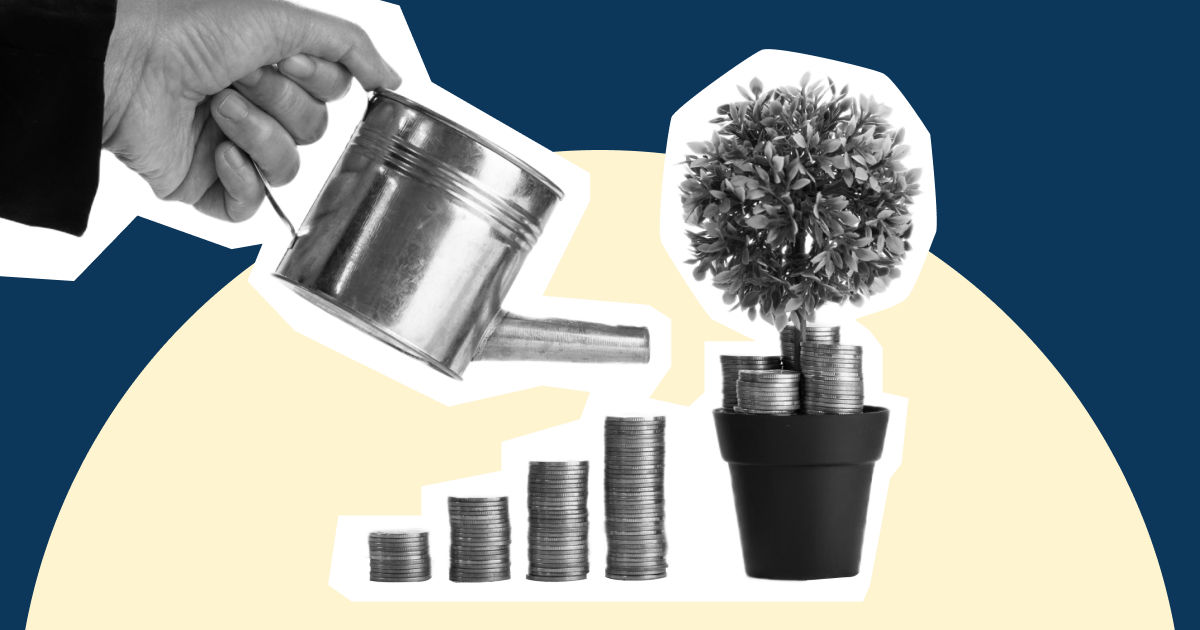
Bootstrapping means starting and scaling a business with your own money and early profits instead of relying on external funding like investors or loans. A bootstrapped startup is primarily funded through its own cash flow, which means growth depends on how consistently the business can generate and reinvest revenue.
How bootstrapping actually works
Bootstrapping works as a closed cash system. You fund the business with what you already have, make money right away, send invoices to clients, and use that same money to keep things going. How well you recycle that money through a basic loop of earning, collecting, and reinvesting will determine how much you grow.
Where funding comes from
In bootstrapping, funding does not come from outside sources. It comes from what you already have and what the business generates.
Personal savings
You start with your own capital. This is your initial runway and your only buffer. If things slow down, there is no backup plan. This is why the choices you make early on about hiring, expenditure, and tools have a direct effect on how long your firm lasts.
Early revenue
As soon as you begin selling, customer payments become the primary source of funding. This only works if bills are paid on time. If not, your money will be locked up even though you have documented income. The business depends on real cash coming in, not predicted income.
Pre-sales
In some circumstances, you get paid before you deliver the goods or service. This makes you less dependent on invoicing and late payments. This lets you pay for production or execution without having to spend any money up front, but it also puts pressure on delivery because the money is already committed.
How growth happens
Growth in bootstrapping is not driven by opportunity alone. It is driven by how much usable cash is available at any point.
Reinvesting revenue
You take what the business earns and put it back into operations. But you can only reinvest what has actually been received, not what is still pending in invoices. This might go into product improvement, basic marketing, or fulfilling demand. Cash on hand is directly related to growth.
Staying lean
You keep costs controlled. Fewer fixed expenses, minimal tools, and flexible resources. This helps extend your runway and reduces pressure during slow periods.
Gradual scaling
Expansion happens in steps. You grow only when revenue supports it. There is no sudden jump in capacity because there is no external capital to absorb the risk.
Bootstrapping vs external funding: key differences
No dilution: You do not give up ownership. You make the decisions, and no one else is pushing you in a certain direction.
Slower growth: Scaling takes longer when you don't have outside money. You construct based on what the business makes now, not what you think it will make in the future.
More personal risk: Your own money is on the line. If the firm has problems, it has a direct effect.
How money actually moves
Revenue does not arrive when you earn it. It arrives when invoices are paid. Expenses, on the other hand, follow fixed schedules that do not wait for your invoices to be cleared. This creates a gap between earning revenue and having usable cash in your account.
You earn, wait for payment, reinvest, and hit limits again. That cycle repeats. Growth is not driven by opportunity alone but by how much cash you can actually circulate at any point. This is why understanding cash flow becomes critical.
Bootstrapping examples
Bootstrapping changes by model, but the pattern stays the same. You earn early, use that cash to operate, and grow within limits.
Service-based example
You begin as a freelancer. A client pays USD $1,000. You use part of that to hire a contractor and deliver more work. Revenue funds capacity. If the client delays payment, your ability to pay the contractor gets affected immediately. Growth depends on cash timing.
Product-based example
You take pre-orders before production. Customers pay upfront. That cash funds manufacturing. There is no upfront inventory risk, but you now carry delivery pressure. The money is already committed.
SaaS example
You launch a basic product, for example, a simple project management tool for small teams. Initial costs include design, basic development, hosting, and essential tools. Early users pay monthly. That revenue funds further development and feature improvements. You build what people pay for, not what you want to build. Plans don't lead to growth; revenue does.
Benefits of bootstrapping
Bootstrapping does not reduce pressure. It makes it visible. You see exactly how cash moves, where it gets stuck, and what actually keeps the business running.
Full ownership and control
You keep your equity, but more importantly, you keep your direction. If a customer segment is not converting, you drop it. If pricing needs to change, you change it immediately. There is no need to justify decisions to anyone outside the business. This matters when conditions shift. You adjust based on reality, not expectations.
Financial discipline from day one
You do not spend casually because you cannot. A USD $29 tool, a USD $200 contractor task, and a small marketing test. Each one competes with your available cash. You start evaluating every expense against one question. Does this bring money in or support delivery? If not, it waits. That habit builds early and stays even when revenue improves.
Built around real customers
You stop building what customers do not pay for. If a feature takes 2 weeks to make but doesn't make any money, it is pushed down the list of things to do. If clients are continually asking for the same item and are prepared to pay for it, you should make that your plan. Your product is influenced by sales, not by what you think.
Faster decisions
You remove anything that slows execution. If a channel is not generating revenue, you stop spending on it. You make a process easier if it takes too long. You may see an issue and act on it right away. Speed comes from necessity, not preference.
No debt or repayment pressure
You are not working toward a repayment schedule or return target. But that does not remove pressure. It changes it. Instead of paying lenders, you manage cash gaps. Instead of investor updates, you track whether incoming cash can cover next week’s expenses.
Stronger operating habits
You learn to work within constraints. You negotiate payment terms. You ask for partial upfront payments. You delay non-critical costs. You structure work so that cash comes in earlier than it goes out. These are not strategies you learn later. They become how you operate.
More stable foundation
You grow only when the business can support it. You do not hire ahead of revenue. You do not expand based on projections. You wait until cash flow can carry the next step. This slows you down, but it also reduces forced corrections later.
Drawbacks of bootstrapping
You have control with bootstrapping, but it also increases risk. The same constraints that build discipline can slow you down or break operations if you mismanage cash.
High personal financial risk
You are investing your own money into the business. If a client doesn't pay or sales go down, the effects are immediate. You are not separating business risk from personal risk. Savings, credit lines, and financial stability are directly exposed. This is not theoretical. One delayed payment or failed project can affect your ability to operate next month.
Slower growth rates
Growth is limited by how much cash the business generates. You cannot scale ahead of revenue. You could not have the money to hire, make, or grow quickly enough to meet demand if it suddenly goes up. There are chances, but you can only take advantage of the ones that your money can support.
Resource and talent constraints
You make trade-offs on hiring and tools. Instead of building a full team, you rely on contractors or delay hires. Instead of the best tools, you use what you can afford now. This affects execution speed. Work takes longer, and output depends heavily on how efficiently you allocate limited resources.
Founder burnout
You carry multiple roles at once. You handle delivery, sales, operations, and finances because hiring is limited. Over time, this creates sustained pressure. It is not just about long hours. It is about constant decision-making with a limited margin for error.
Lack of strategic support
You operate without external guidance. There are no investors bringing networks, introductions, or structured advice. You depend on what you think is right and what you learn from your own experiences. This can make it harder to make good decisions, especially in new places.
Restricted operational capacity
Cash flow timing becomes a constraint. You may have revenue booked but not received. At the same time, expenses continue. This creates pressure when paying vendors, managing inventory, or handling unexpected costs. It's not just how much you make that matters; it's also when you get cash that matters.
The cash flow reality founders face
Bootstrapping exposes one truth quickly. The business does not run on revenue. It runs on cash that is already in your account.
Revenue is not cash
You close a deal. You send the invoice. The revenue shows up in your income statement. But nothing changes in your bank balance.
That gap matters. You can look profitable and still not have enough cash to pay next week’s expenses. Revenue records performance. Cash determines survival.
Timing gaps create pressure
Cash does not move in sync. Customers pay on 15, 30, sometimes 45-day terms. Your expenses do not wait. Contractors expect payment this week. Tools renew on fixed dates. Vendors do not align with your receivables.
So you operate in a constant mismatch:
- money earned now
- money received later
The longer this gap, the tighter your operating window becomes. You are not just managing money. You are managing timing.
Why profitable businesses still feel constrained
You can have strong margins and still feel stuck. Because profit does not solve timing. If your receivables are delayed and your payables are immediate, your cash gets locked. You start making trade-offs:
- delaying a hire even when demand is clear
- avoiding inventory purchase even when orders are coming
- cutting spend that could drive growth
This is where many founders get confused. The business works on paper but feels restricted in reality. The constraint is not demand. It is cash availability.
Real founder scenario
You finish a project for USD $8,000 and deliver the bill with 30 days to pay. The revenue is recorded. This week, a contractor needs USD $2,500. Your tools and subscriptions renew for USD $400. You also have ongoing operating costs. The cash from the project is not available yet.
Now you decide:
- Do you pay the contractor immediately or delay and risk delivery?
- Do you renew tools or cut something critical?
- Do you take on more work just to bridge this gap?
You are not solving for profit. You are solving for timing. That gap between when money is earned and when it arrives is where most pressure builds. Managing that gap is what keeps the business moving.
Where founders get bootstrapping wrong
Bootstrapping does not fail because of a lack of effort. It breaks when decisions ignore how cash actually behaves. Most mistakes look reasonable in the moment but create pressure later.
Confusing growth with stability
You see demand increasing. More customers, more inbound work, more activity. It feels like the business is stable. So you start committing to more delivery, assuming revenue will keep up.
The issue is that growth in activity is not the same as stable cash flow. If payments are delayed or inconsistent, you end up with more obligations than available cash. You are growing on paper but operating under strain.
Scaling before cash stabilizes
You hire, expand capacity, or increase spend based on expected revenue. The assumption is that incoming cash will cover the increase.
But when payments slip or costs rise unexpectedly, fixed commitments remain. Salaries, contracts, and subscriptions do not adjust automatically. This creates a situation where your cost base grows faster than your cash reliability.
Pricing too late
You delay charging or underprice early to win customers. It feels like a way to build traction.
But this sets a weak baseline. You attract customers who are sensitive to price and harder to convert later. When you try to adjust pricing, you face resistance or churn. Meanwhile, your costs remain real and immediate.
Overcommitting early
You take on more work than your current cash and capacity can support. This often comes from optimism. You expect future revenue to cover current commitments.
When delivery overlaps and payments are delayed, you start stretching timelines, delaying payments, or compromising quality. The business becomes reactive instead of controlled. Each of these mistakes follows the same pattern.
You make a decision based on expected outcomes. But bootstrapping runs on actual cash. That gap between expectation and reality is where most problems start.
Financial layers you can’t ignore
Bootstrapping forces you to look beyond surface metrics. What looks healthy in reports can still create pressure in operations. These layers explain why.
Income statement vs reality
Your income statement shows revenue, expenses, and profit over a period. It tells you whether the business made money on paper. But it does not tell you when cash arrives.
You can show USD $20,000 in revenue this month and still struggle to pay next week’s bills. That is because the income statement tracks performance, not liquidity. Founders who rely only on this view often overestimate how stable the business is.
Accounts payable pressure
Accounts payable represents money you owe vendors after receiving goods or services. This includes:
- software subscriptions
- contractor invoices
- vendor payments
These are not optional. They come with fixed timelines. The pressure builds when your payables are due before your receivables arrive. You are effectively financing the gap. This is where cash flow stress shows up first, not in profit, but in obligations.
EBITDA vs cash
EBITDA demonstrates how profitable a business is by excluding interest, taxes, and non-cash charges. It helps you realize how well the main business is doing. But it can mislead founders.
EBITDA removes real costs like debt, taxes, and asset wear. It can make the business look stronger than it feels in practice. You cannot pay expenses with EBITDA. You pay them with cash.
Profit vs survival
Profit answers one question. Are you making money? Survival answers another. Can you keep operating next week?
A business can be profitable and still constrained if cash is locked in receivables or tied up in operations. This is the gap founders feel. On paper, the business works. In reality, every decision still depends on when money actually arrives.
Structuring your business early
You can run without structure at the start. But once money, contracts, and risk increase, the informal setup starts creating friction.
When structure becomes necessary
It usually shows up through small issues.
- A client asks for a contract under a business name.
- An invoice gets delayed because your details do not match what their finance team expects.
- A vendor asks who they are legally dealing with.
At the same time, risk becomes personal. If something breaks in delivery or payment disputes arise, there is no separation between you and the business.
Why founders move toward a limited liability company
Most bootstrapped businesses start as a sole proprietorship because it is simple and requires minimal setup. But as the business grows, founders move toward an LLC for better separation.
You are not doing it for formality. You are doing it for separation. Payments move through the business, not your personal account. Contracts sit with the business, not you.
This changes how you think. You start tracking business cash separately. You see what the business actually earns and spends without overlap.
What changes after structuring
Payments become consistent. Clients pay the business, and invoicing becomes easier to manage. You take on compliance. Filings, taxes, and documentation become part of how you operate.
Your reporting improves. Numbers start reflecting the business, not a mix of personal and operational activity. Structuring does not make you grow faster. It makes your operations cleaner and your risk more contained.
Compliance shows up earlier than expected
You do not plan for compliance early, but it shows up as soon as you start paying people.
Hiring contractors early
Bootstrapped businesses rely on contractors to stay flexible. You pay per task instead of committing to salaries. But the moment you start paying regularly, compliance follows.
W-9 collection
Before you pay a contractor, you need their W-9. It captures their tax details and confirms how they are classified. If you skip this, you are creating gaps that show up later when you try to report payments.
Reporting obligations
If you pay a contractor above the required threshold, you may need to issue a 1099. This is how the Internal Revenue Service tracks non-employee income. It is not optional. It is part of operating in the US.
Operational decisions under constraint
Bootstrapping turns everyday decisions into trade-offs. You are not choosing the best option. You are choosing what the business can afford right now.
[Table:1]
Best practices for managing cash while bootstrapping
Bootstrapped businesses stay stable by controlling small decisions consistently. Strong cash habits reduce pressure and extend runway.
Hire based on real revenue
Avoid hiring based on expected growth. Use contractors or flexible resources until revenue becomes predictable.
Manage inventory carefully
Do not lock cash into inventory too early. Start small and scale only when sales are consistent.
Control tool and software costs
Audit subscriptions regularly. Keep only what directly supports revenue or delivery.
Delay the founder's salary until stable
Reinvest earnings back into the business until cash flow becomes reliable.
Track payment timing closely
Revenue is not cash. Send invoices immediately. Follow up consistently. Shorten payment cycles where possible.
Watch your next 90 days of cash
Track what is coming in and what is going out over the next few weeks. This helps you spot gaps before they create pressure.
Shift timing in your favor
Encourage faster payments from customers and negotiate longer timelines with vendors. Cash should come in before it goes out.
Keep a buffer when possible
Delays happen. Keeping a few months of expenses in reserve gives you room to operate without reacting to every delay.
Focus on pricing and customer quality
Cash pressure is not always a cost problem. Underpricing and slow-paying clients create hidden gaps. Charge based on value and work with customers who pay reliably.
Build predictable revenue where possible
One-time payments create uneven cash flow. Retainers, subscriptions, or repeat clients make cash easier to plan and manage.
Stay lean
Avoid fixed costs early. Keep operations flexible so you can adjust when revenue shifts.
Most founders track revenue. Few track timing. Strong businesses manage both.
Manage revenue with ease as you scale
You can manage cash manually at the start. A few invoices, a few expenses, and a rough idea of what is coming in. That stops working as the business grows.
More invoices go out. Payments arrive at different times. Expenses become recurring. Accounts payable builds up. What looked manageable earlier starts creating gaps.
At this stage, the problem is no longer effort. It is visibility. This is where tools like Aspire1 come in.
Aspire1 is not just a business account. It is a financial system designed for founders who are managing cash flow in real time. It brings your inflow, outflow, and spend into one place so you are not switching between tools or guessing your position.
Instead of managing everything separately, you can:
- Send and track invoices and receive payments globally without delays
- Manage accounts payable by tracking bills, due dates, and vendor payments in one place
- See real-time cash position, not just what your income statement shows
- Control expenses with corporate cards, budgets, and approval workflows
- Handle global payments and currencies without losing margin on FX
- Sync with accounting tools so your profit and loss statement reflects actual activity, not manual updates
This changes how you operate. You stop relying on estimates. You stop reacting late. You start making decisions based on what is actually happening in your business.
For a bootstrapped founder, that difference is not small. It affects:
- when you can afford to hire
- how you manage inventory without locking cash
- whether you can take on new work without creating pressure
- how clearly you understand your margins and EBITDA
Bootstrapping is not just about using your own money. It is about controlling how that money moves. Tools like Aspire1 do not change your constraints. They make them visible. And once you can see clearly, you make fewer mistakes.
How to decide if bootstrapping is right
Bootstrapping is not a default choice. It depends on how your business generates and uses cash.
Bootstrap if:
Early revenue is possible: You can charge from the start or within a short cycle. Cash comes in early enough to support operations.
Cost structure is flexible: You can rely on contractors, variable costs, and minimal fixed expenses.
Lean execution works: You can produce, market, and deliver without spending a lot of money up front. Big money doesn't make progress happen.
Don’t bootstrap if:
Your model is capital-heavy: You need significant upfront investment before generating revenue.
Your market is timing-sensitive: Speed of execution matters more than preserving ownership.
Your revenue cycle is long: Cash comes in late, while expenses need to be paid early. This creates sustained pressure.
The decision is simple in practice. If revenue can fund your next step, bootstrapping works. If growth depends on capital before revenue, it doesn't.
Conclusion
Bootstrapping works when revenue can fund your next step, but growth depends on how well you manage cash. An income statement or profit and loss statement shows performance, not timing. You still need control over invoices, accounts payable, and real cash flow. As the business grows, setting up an LLC and improving visibility become necessary. Bootstrapping is not just about funding. It is about control.
FAQs
What is bootstrapping in simple terms?
If you bootstrap your business, you use your own money and early profits to establish and expand it without getting help from investors or lenders.
Is bootstrapping risky?
Yes. You use personal funds and depend on cash flow timing. If payments are late or bills come up that you didn't foresee, it will immediately affect your business.
How long should you bootstrap?
You bootstrap as long as revenue can fund growth. When founders need more money than their cash flow can provide, they usually go for outside funding.
Can you bootstrap and raise later?
Yes. Many innovators start out by bootstrapping to get traction, and then they raise money once they have proven their idea, made sales, and gotten customer demand.
What is the difference between bootstrapping and funding?
When you bootstrap, you use your own money and income. Funding comes from outside sources, such as loans or investments, and usually comes with equity or repayment commitments.
Do you need an LLC to bootstrap?
No. You can start without one. But as contracts, payments, and risk grow, a lot of founders set up an LLC to keep things organized and separate.
What is a 1099 form in bootstrapping?
A 1099 form shows how much money was paid to contractors. You might have to give it to the IRS for tax purposes if you use freelancers.
How do you manage cash flow while bootstrapping?
You track inflow and outflow closely, push for faster payments, delay non-essential expenses, and prioritize spending that directly supports revenue or delivery.

.jpeg)