


What Is Accounts Payable?
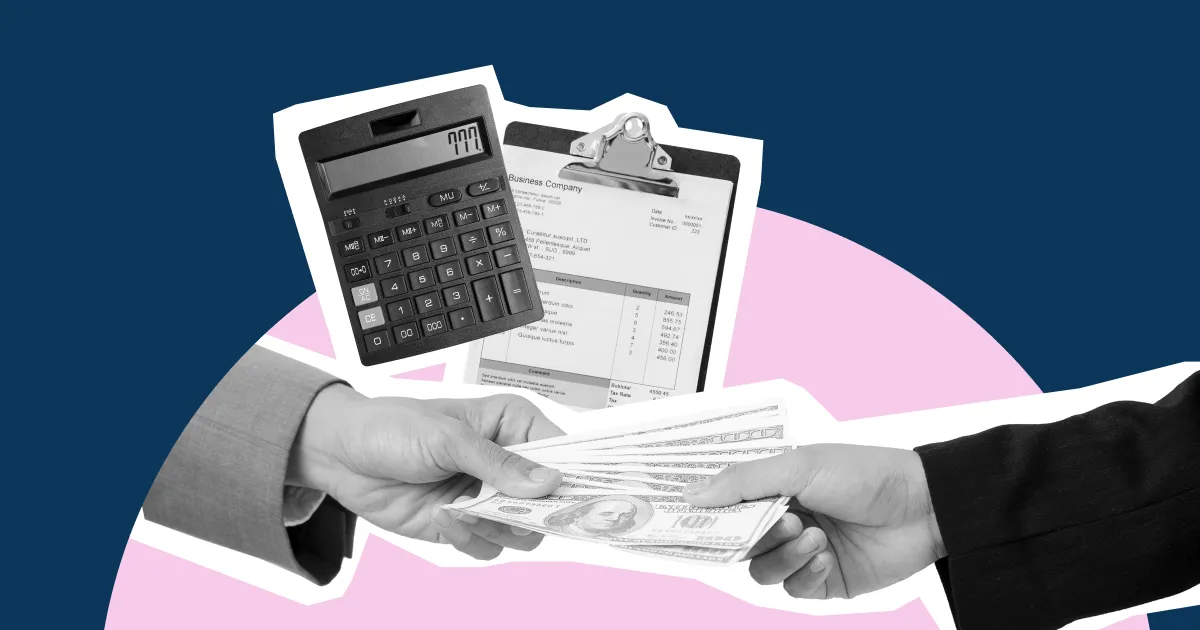
Accounts payable is a business function that tracks all the short-term payments a business owes to its vendors, suppliers, and other creditors. When you purchase goods or services on credit, the vendor sets a timeline for repayment, commonly 30, 60, or 90 days, depending on their guidelines and your relationship with them.
When you receive an invoice for a purchase, the accounts payable process involves debiting the company's balance sheet under assets and crediting the amount as a liability, reflecting money owed but not yet paid.
What Actually Qualifies as Accounts Payable?
When a company buys goods or services from a vendor with an agreement to pay later, it qualifies as accounts payable until payment is made. You'll generally receive an invoice for the purchase, and the process requires an entry in your books for that amount.
Accounts payable specifically relates to goods and services purchased for regular business operations: raw materials, office maintenance and supply, transportation and logistics, equipment, licensing, and leasing, among other things. Non-trade payables, such as accrued rent, dividends, or wages payable, do not qualify as accounts payable.
How Does Accounts Payable Differ From Trade Payables and Notes Payables?
These 3 terms get used loosely, but they mean genuinely different things:
Accounts payable may or may not include trade payables, depending on how a company structures its accounts. Notes payable, however, is always a separate liability category and never falls under accounts payable.
What Does a Typical Accounts Payable Process Look Like?
A simplified accounts payable process flow generally follows the same sequence:
- Place the order for the goods or services
- Receive the goods and the invoice from the vendor
- Verify the invoice against the order and delivery
- Make the relevant entry in the books of accounts
- Pay the vendor on time
- Close the accounts payable ledger entry once payment clears
At the end of this process, the specific accounts payable liability is cleared. Following this flow consistently is essential for avoiding both errors and fraud in company expenditure.
What Are the Best Practices for Managing Accounts Payable?
A few habits consistently separate a well-run accounts payable process from a chaotic one:
- Simplify the workflow: define who's responsible for what, and run monthly checks on whether the process is actually working
- Standardise invoicing: route every vendor invoice to 1 central location, whether entered manually or through software, to avoid duplication
- Use technology deliberately: automate the routine, mundane tasks so employees can focus on dispute management and other work that actually needs judgement
- Control vendor account creation: restrict who can create new vendor accounts, since this is a common fraud vector if left unchecked
- Review data regularly: scheduled checks catch human error, system error, and fraud before they compound
How Do You Actually Avoid Duplicate Invoice Recording?
Recording the same invoice twice is a common, costly error, more likely when invoices are entered manually. Even top-performing organisations see 0.8% of annual disbursements come back as duplicate or erroneous, with bottom performers seeing more than double that rate.
It inflates a company's liabilities and can quietly eat into margins if it goes unnoticed. A few specific habits prevent this:
- Maintain a single vendor master file, assigning a unique vendor code to each vendor to eliminate duplication at the source
- Double-check for mis-keying, since manually entered numbers or characters are easy to misread; automation with optical character recognition reduces this specific risk
- Request a single source document per invoice, rather than risking a quotation, statement, and invoice all getting recorded
- Centralise invoice intake, so an invoice sent by post and then re-sent by email as a reminder doesn't get recorded twice
- Track cleared invoices explicitly, so a payment already made isn't accidentally issued again
Why Does Managing Accounts Payable Well Actually Matter?
Ignoring accounts payable has consequences that reach well beyond the specific unpaid bill. Without a clear picture of what you owe, you lose an accurate read on your company's financial health, which can complicate getting credit or loans when you need them.
- Vendor relationships: a poor payment reputation can deter vendors and suppliers from working with you, directly affecting your supply chain
- Cash flow: knowing which vendors to prioritise prevents you from paying flexible creditors first while missing payments that are genuinely time-sensitive
- Credit standing: consistent, timely payment helps maintain the credit score that determines whether you can access financing when you need it
- Fraud prevention: a solid process makes it much harder for fake vendor accounts or duplicate invoices to slip through unnoticed
What Is Accounts Payable Automation, and What Does It Actually Change?
Accounts payable automation means handing part or all of the process over to software rather than manual entry. This typically includes converting invoices into digital format, matching them against purchase orders, routing them for approval, setting payment reminders, and executing payments directly to vendors.
Optical character recognition (OCR) and machine learning are usually behind the scenes. OCR converts paper invoices into digital data, while machine learning identifies patterns in that data over time, supporting better decisions about payment timing and cash flow.
Is Hong Kong Actually Moving Away From Manual Accounts Payable?
Not as quickly as the digital narrative suggests. According to the Hong Kong Association of Banks (HKAB), small and medium-sized businesses remain among the top 10 industries in Hong Kong that heavily rely on physical cheques.
SMEs sit alongside stockbrokers, charities, estate management firms, and legal and auditing practices on the HKAB's list of sectors still leaning heavily on cheques, a genuinely broader group than "just small business" might suggest.
This persists even as cheque usage in the region declines by 10-20% annually.
This gap matters practically. A business still processing cheques manually is exposed to exactly the errors and fraud risks this guide has covered.
Hong Kong's broader payments infrastructure is actively digitising, from real-time cross-border settlement to new regulatory frameworks for digital money, at a moment when a manual process falls further behind each year.
How Can Aspire Help Automate Your Accounts Payable Process?
Aspire's accounts payable automation software handles the full workflow in 1 place, rather than requiring a separate tool bolted onto your existing accounting setup.
- Forward an invoice by email and Aspire takes it from there: an AI assistant handles data entry, so nothing needs manual re-keying
- Schedule payments and get real-time visibility, seeing exactly what's due and what's already been paid without pulling a separate report
- Pay suppliers in their own currency, useful for businesses with overseas vendors where a domestic-only AP tool falls short
- Manage bills alongside everything else: cash flow, expense management, and payments all sit in the same dashboard rather than scattered across tools
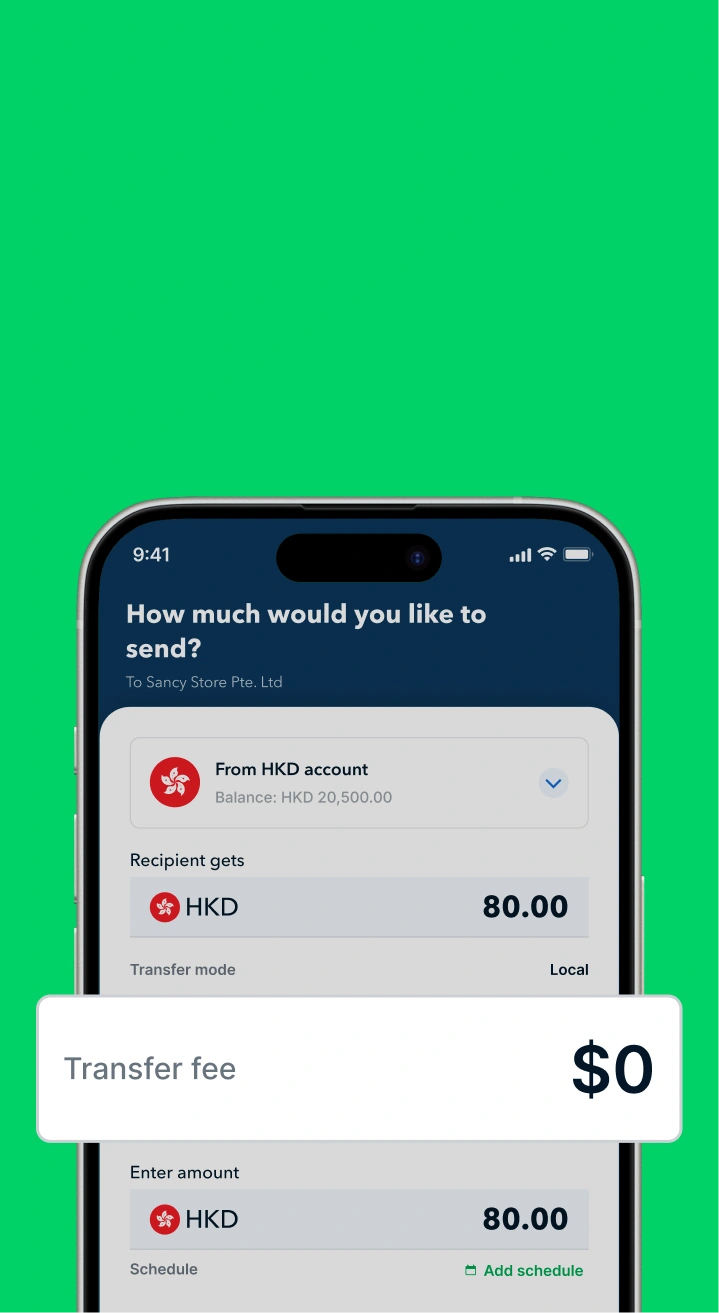
The workflow is deliberately simple: forward your bills to Aspire, turn on notifications, make any edits needed, and approve when ready.
Why Hong Kong Businesses Choose Aspire
Managing what you owe shouldn't mean drowning in manual invoice entry — Aspire is built to make accounts payable the easy part of running your business.
💱 FX spreads from 0.18%, up to 3x cheaper than traditional banks. This applies across 130+ countries and 40+ currencies through Aspire's multi-currency account. It's useful for anything from paying overseas suppliers to settling international payments without losing margin to markup.
💰 1.2% unlimited cashback applies on every corporate card transaction, with no monthly cap. It kicks in automatically on eligible spend, with no minimum threshold to hit first.
🌐 Local transfer network, not multi-hop SWIFT chains, is how Aspire routes most payments. This means faster settlement and fewer intermediary fees eating into your payment before it reaches the recipient.
💸 Fixed USD 8 inbound SWIFT fee, tracked end-to-end with SWIFT GPI, applies when SWIFT is the right rail for your payment. There are no surprise deductions from correspondent banks along the way.
⚡ Approved in as little as 1 business day, with no branch visits and no paperwork stacks. Applications are completed entirely online, from document upload to approval.
Open a free multi-currency business account built for Hong Kong SMEs, or explore how Aspire's corporate card fits into your day-to-day spend.
Frequently Asked Questions
What's the difference between accounts payable and trade payables?
Accounts payable is the broader umbrella term covering all short-term payment obligations a business owes. Trade payables specifically refers to amounts owed for inventory-related goods and raw materials. Accounts payable may include trade payables, but the reverse isn't necessarily true.
Are notes payable the same as accounts payable?
No. Notes payable refers to debt, loans, or other borrowings, and has nothing to do with goods or services purchased. It's always treated as a separate liability category from accounts payable.
How does duplicate invoice recording actually happen?
Usually through multiple source documents (a quotation, a statement, and an invoice all being recorded), invoices arriving through more than 1 channel (post and email), or simple mis-keying during manual entry. A single vendor master file and centralised invoice intake prevent most of these cases.
Why do Hong Kong SMBs still rely on cheques if digital alternatives exist?
Habit and existing vendor relationships play a large role, along with the administrative effort of switching an established process. The trend is genuinely shifting, with cheque usage declining 10-20% annually across the region, but adoption isn't uniform across business sizes and industries.
Does automating accounts payable really help capture early payment discounts?
Yes, indirectly but meaningfully. Faster, more accurate invoice processing means payments can go out earlier with confidence, which is exactly the condition needed to qualify for a vendor's early payment discount terms in the first place.


.webp)


.webp)