


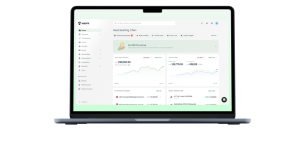
What Grasshopper business banking actually offers
Most fee-free business accounts pay you nothing beyond a debit card. The Grasshopper business checking account is the exception, which is why it keeps landing on founder shortlists. What actually stands out:
- Interest and cash back, together: Two ways to earn on the same balance, interest on what you hold plus cash back on qualifying debit spend for accounts that meet the program requirements, including a minimum average monthly balance. Most fee-free checking accounts hand you neither
- A charter of its own: Grasshopper is a national bank supervised by the Office of the Comptroller of the Currency, and it holds your deposits under FDIC insurance directly. No partner bank in the middle, which is not the norm for app-first banking
- Coverage that stretches: A multi-bank sweep can carry FDIC pass-through protection well past the usual single-bank ceiling. Worth caring about only if large balances tend to sit idle between rounds
- Accounting baked in: Autobooks runs invoicing and bookkeeping inside the account, and it syncs out to QuickBooks and Xero, the latter still in beta
- Lending under one roof: Money market savings, business loans, and Small Business Administration preferred-lender status shorten the path if you plan to borrow later
Checking comes in two tiers. Innovator targets everyday small businesses, while Accelerator is aimed at startups and adds an investor network and partner marketplace. If you are raising, the Accelerator draw is the network, not the banking, which is broadly the same across both.
Rates move, and Grasshopper is mid-acquisition, so treat today's figures as a snapshot. The table below covers what Grasshopper business banking does and does not do, so you can match it to your workflow. Confirm the current rates and fees on the provider's own page before you open.
[Table:1]
The free ACH and free incoming domestic wires quietly save money for any business paying and getting paid electronically all month. Cash deposits are limited to select MoneyPass ATMs, so if your business handles cash regularly, the process is clunkier than walking into a branch. Checks are softer: no checkbook of its own, though bill pay can still mail one.
Grasshopper banking pros and cons
Grasshopper banking suits a specific shape of company, so it helps to see the balance before you weigh the finer details.
Pros
- Earns while it sits: interest on your balance plus cash back on qualifying debit spend, rare for a no-fee account
- A bank, not a middle layer: its own charter, direct FDIC insurance, and ICS deposit sweep coverage that reaches past the single-bank limit
- Accounting built in: Autobooks invoicing and bookkeeping run inside the account and sync to QuickBooks and Xero (Xero still in beta)
- Startup extras: an investor network and partner marketplace on the Accelerator tier, plus a shorter borrowing path as a Small Business Administration preferred lender
Cons
- No branch banking: cash deposits are limited to select MoneyPass ATMs, which is a long way from walking into a branch. Grasshopper issues no checkbook of its own either, though bill pay can still mail a paper check
- Weekday-only support: nothing waiting for you over the weekend
- A thin shelf: no Zelle, and the product range beyond checking, savings, and lending is narrower than a full-service bank
- US-only: no multi-currency help the moment you pay or collect abroad
The cash limitation is the one that catches founders out. If your business handles physical cash regularly, this account will feel incomplete from day one. A pre-revenue startup that wants a clean, free account with good software will get far more from Grasshopper than a company running complex, multi-entity treasury.
Requirements to open a Grasshopper business account
Opening a Grasshopper business account is quick, but the eligibility rules are firmer than the marketing suggests. Know the gates before you start.
Who can open one:
- You are at least 18 and a US citizen or permanent resident with a verifiable address in one of the 50 states or Washington DC (US territories including Puerto Rico are not eligible)
- Your business is US-based
- Your entity is an accepted structure, including LLCs, corporations, partnerships, and sole proprietorships
- Your industry is not on Grasshopper's restricted list, which skews toward the higher-risk categories most digital banks avoid
What you need to have ready:
- Your business tax identification number
- Proof of business ownership
- Identification for the authorized signers
- Beneficial owner information for anyone holding a quarter or more of the business, directly or indirectly
The application is fast only if your paperwork is. Pull your incorporation documents, tax ID letter, and ownership breakdown together first, and the "apply in minutes" promise holds.
Where Grasshopper business checking falls short
Every Grasshopper business checking review owes you the limits, not just the perks. This is where most Grasshopper bank reviews go quiet, so each gap below is tied to the decision it affects:
- No branch banking: Cash deposits are possible but only at select MoneyPass ATMs, so if your business handles cash daily, the experience is far less convenient than a branch. Grasshopper issues no checkbook of its own, though bill pay can mail a paper check on your behalf
- Weekday-only support: Fine until a card locks on a Saturday and no one picks up. Price it in if your team hits money issues off-hours
- No Zelle, and a short menu: Peer-to-peer transfers feel dated without Zelle, and the product shelf stays thin, so a later want like certificates of deposit or deeper treasury may nudge you out
- An acquisition mid-flight: Enova agreed to buy Grasshopper back in late 2025, and the deal is working toward a close in the second half of 2026, pending sign-off. Ownership changes tend to move rates and features around, so get anything you are counting on in writing first
- Mixed reviews: Grasshopper holds a 4.1 out of 5 on Trustpilot across 400+ reviews, but 21% of those are one-star, with recurring complaints about accounts frozen or closed during compliance reviews. Keep a backup rather than route every dollar through one provider
Where Grasshopper business checking stands out
Most digital banks either charge you monthly or pay you nothing. Grasshopper does neither, and that alone puts it ahead of a crowded field. But the real differentiators go deeper than fees.
- Earning on idle cash without jumping through hoops: Interest kicks in from the first dollar across tiered balance levels, and cash back layers on top for accounts that meet the balance requirement. Competing fee-free accounts like Relay and Novo offer neither
- A charter you can verify, not a partner bank disclaimer: Grasshopper is regulated directly by the OCC and insures deposits under its own FDIC membership. That is a meaningful distinction from fintechs where your money quietly sits at a bank you did not choose and cannot evaluate
- Sweep coverage built for larger balances: FDIC pass-through protection extends well past the standard single-bank limit through the ICS deposit network, which puts it in the same conversation as Mercury and Brex for founders holding significant operating reserves between rounds
- SBA preferred-lender status: If you expect to borrow later, this shortens the approval path. Most digital banks either do not lend at all or route you to a third-party marketplace
- No transaction limits, no hidden volume fees: Unlimited ACH, free incoming domestic wires, and no cap on monthly transactions. For a high-volume business running frequent vendor payments, that adds up fast compared to accounts that start charging after a set number of transfers
The combination is what makes Grasshopper business banking unusual. Individually, other accounts match one or two of these. Very few match all five without a monthly fee attached.
Where Aspire1 fits for global-first founders
Grasshopper is a US-domestic account by design. The moment your business pays overseas suppliers, collects from customers in other currencies, or holds balances in more than one currency, you are the founder it was not built for. Converting twice, waiting on slow international transfers, and stitching together separate tools is exactly the friction Aspire1 was built to remove.
If your operating reality is invoices in one currency and vendors in another, an Aspire business account¹ lets you hold and move money across multiple currencies* from one place. You are not bouncing between a domestic bank and a separate FX tool to pay a supplier abroad. Founders spending across borders can also earn cash back on eligible spend with the Aspire corporate card², which keeps the reward logic that makes Grasshopper attractive while removing the single-market ceiling.
The two accounts are not really rivals. Grasshopper is a solid pick if your money stays inside the US and never arrives as cash. Aspire1 is the one to shortlist the day your payments cross a border.
The bottom line on Grasshopper business banking
Grasshopper business banking earns its reputation among startups for one reason: it is a real bank that charges no monthly fee and still pays you interest and cash back, wrapped in software founders actually use. For a US-based, cash-light company that runs everything online, it is one of the more compelling fee-free options going.
The trade-offs are just as real. No branches, cash deposits only at select ATMs, no checkbook of its own, no weekend support, a fairly bare product shelf, and an owner about to change hands. Weigh each of those against how your business runs day to day. And the moment your payments start crossing a border, Grasshopper stops being the right tool, which is where a multi-currency account* like Aspire takes over. So match the account to your workflow, check the live rates before you sign anything, and keep a second account on hand for whatever Grasshopper will not do.
Frequently asked questions
Is Grasshopper a real bank or a fintech that uses a partner bank?
Yes, a real one. Grasshopper carries a national bank charter under the Office of the Comptroller of the Currency and insures deposits directly with the FDIC. Nothing routes to a background partner bank, which is a big part of why it carries a 4.1 out of 5 on Trustpilot across 400+ reviews.
Can I deposit cash into a Grasshopper business account?
Not at a branch, but you can deposit cash at select MoneyPass ATMs. If your business handles cash regularly, that is a real limitation compared to a traditional bank with branches. On checks, Grasshopper issues no checkbook of its own, but you can send a paper check through bill pay or order checks from a third-party vendor.
What happens to my account with the Enova acquisition?
Enova has signed a definitive agreement to acquire Grasshopper, with closing expected in the second half of 2026 once regulators and shareholders sign off. Day-to-day, accounts carry on as normal. Terms can shift after any takeover, though, so anything you are relying on is worth getting confirmed in writing.
Does Grasshopper banking work for a business that pays international vendors?
Grasshopper can send international wires in USD through its platform and in foreign currency through Client Services, but all balances are held in USD only. It does not let you hold, receive, or manage funds in foreign currencies.
How long does it take to open a Grasshopper business account?
A few minutes if your documents are ready. Have your business tax identification number, proof of ownership, signer identification, and beneficial owner details prepared in advance, since missing paperwork is the most common reason applications stall.

.jpeg)