

.jpeg)
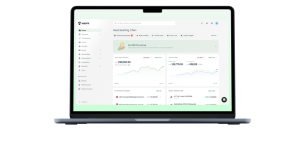
Rho business banking at a glance
Rho is a business-finance platform, not a traditional bank account. It’s built for US-incorporated companies that operate digitally and want checking, payments, cards, AP, and expense management in one place.
[Table:1]
*International payments and certain third-party/intermediary charges can have separate costs. Rho's current pricing lists $0 for subscription fees, checking minimum fees, per-user fees, same-day ACH, wires and checks.
What is Rho business banking?
Rho is a fintech company, not a bank. It uses a partner-bank model, with checking and card services provided through Webster Bank, N.A., Member FDIC. For your business, that means Rho handles the platform experience while its partner bank provides the underlying banking services and applicable FDIC deposit insurance.
Rho business banking also offers savings and Treasury products, but these may be provided through different financial institutions or structured differently from its checking account. Their applicable terms, conditions, providers, and FDIC insurance treatment may therefore differ from those of the checking account.
What is Rho business checking
Rho business checking is a business bank account for receiving, holding, and sending money, integrated with Rho’s broader payments, cards, expense, and bill-pay tools. Rho offers a debit card linked to the checking account. This is distinct from the Rho corporate card, which is a separate credit product for business spending and expense management.
Rho is built to support high transaction and transfer volumes, making it particularly suited to cashless businesses with substantial payment flows that want banking and financial operations in one platform.
Who is Rho Business Banking designed for
Rho may make sense if you’re:
- Building a startup or growth-stage company
- Operating a US-incorporated business
- Running a digital-first, cashless business
- Processing high volumes of ACH and wire payments
- A startup founder looking for streamlined financial operations
- An accountant or accounting firm managing business finances
- Looking to combine banking, cards, AP, expense management, and spend controls in one platform
Rho requires businesses to be incorporated in the United States. Depending on the business and ownership structure, the business must either have a US operating address or have a US-based business owner with a valid SSN. Rho also restricts certain industries and geographic locations.
Rho business banking features
Rho features go beyond a basic business checking account by combining payments, cards, expense management and finance operations in one platform.
Business checking
Rho provides business checking through its Webster Bank relationship. The account is designed for businesses that primarily move money electronically rather than deposit or withdraw cash. Rho advertises no subscription fee, no checking-account minimum fee, and fee-free core ACH, wire, and check payments.
Same-day ACH and wire transfers
Rho’s current pricing lists same-day ACH and wires at $0, which can be meaningful for businesses making frequent vendor, payroll, or operational payments.
[Table:2]
Timing can vary based on payment amount, destination, banking holidays, and the policies and processing times of receiving or correspondent banks. Rho specifically notes that it does not control external banks’ settlement policies.
International payments and FX
International payments can involve different costs depending on whether you send USD or convert funds into another currency.
[Table:3]
- Fee coverage: You can choose to cover recipient, correspondent, intermediary, and applicable SWIFT charges for a flat $15; otherwise, these fees may be deducted from the recipient amount.
- Estimated fees: Third-party fee totals are estimates and may differ from the final amount charged.
- Timing and corridors: Processing and tracking can vary by payment route, currency, and destination. Certain currencies, including IDR, PHP, INR, and MYR, may use local payment rails rather than SWIFT.
Bill pay and accounts payable automation
Rho currently states that accounts payable automation is included for customers without additional platform or user fees.
- Payment methods: ACH, domestic/international wires, checks, and single-use cards.
- Approval workflows: Custom approval routing with amount-based controls and mobile approvals.
- Bulk payments: Import a CSV to draft, review, schedule, and send multiple vendor payments.
- Vendor management: Add or invite vendors, bulk upload vendor records, and manage payment details.
- Invoice & document handling: Send invoices to a dedicated AP inbox or upload them; OCR extracts key invoice data and flags potential duplicates.
- Accounting synchronization: Sync bills and payments with QuickBooks Online, NetSuite, and Sage Intacct, including automatic bill-status updates after payment.
Expense management and spending controls
Use Rho’s expense management tools to set spending rules, permissions, and approval workflows. Set card controls by category and usage date to help finance teams prevent spending outside approved rules before a transaction happens.
Rho corporate cards
Manage employee spending with physical and virtual corporate cards that integrate with Rho’s expense-management system. Create virtual cards, assign spending controls, and manage employee spending from the platform.
One important limitation: Rho Cards cannot be used to withdraw cash from ATMs.
Treasury and cash management options
Rho also offers treasury and cash-management products for businesses with excess operating cash. These products sit separately from Rho checking account and may have their own eligibility requirements and fees.
For example, Rho Treasury currently requires:
- An approved Rho business account
- At least $50,000 in total deposits in Rho Treasury
- A business that is an eligible U.S.-registered entity, such as a corporation, LLC, partnership, or nonprofit
- A physical operating address in a supported jurisdiction
- Required business formation and identity/KYC documentation for beneficial owners, controllers, and authorized signers
- Compliance with Rho’s applicable eligibility, compliance, and partner-review requirements.
Business savings options
Rho offers business savings through American Deposit Management Co. and its partner banks. These accounts are separate from Rho’s checking relationship with Webster Bank. Review the applicable terms and FDIC structure below for the specific deposit product you use.
- Savings provider: American Deposit Management Co. (ADM), through its network of 400+ FDIC-insured partner banks.
- How coverage works: Your savings are distributed across participating banks, generally with no more than $250,000 held at each bank, allowing deposits to receive FDIC insurance at each institution.
- Maximum advertised coverage: Rho advertises up to $75 million in FDIC coverage per entity, subject to applicable FDIC rules and the terms of the deposit program.
- Separate from checking: These savings deposits are not held at Webster Bank. Rho’s checking relationship with Webster Bank is separate.
- What FDIC insurance covers: FDIC insurance applies to eligible deposits at the participating banks, subject to FDIC limits and ownership-category rules. It does not insure Rho or ADM themselves.
Accounting integrations
Rho connects with several major accounting platforms, helping finance teams reduce manual reconciliation. Rho currently lists native integrations with QuickBooks Online, NetSuite, and Sage Intacct, plus bank-feed support for Xero. Rho has also promoted an integration with Microsoft Dynamics 365 Business Central.
The practical benefit is less manual reconciliation and data entry. Transactions can flow directly into your accounting system, reducing the need for your team to repeatedly export, categorize, and re-enter transaction data.
Customer support
Rho provides access to dedicated specialists, alongside phone, email, and live chat support. Rho’s current help center says you can reach support by phone, email, or live chat, with 24/7 live support available through your Rho account.
Rho supports high-value transfers, which can matter for businesses moving large amounts of cash. For example, funding payroll, paying vendors, or moving excess cash between operating and savings accounts without having to split a large payment into multiple smaller transfers. This matters when banking issues can interrupt payroll, vendor payments, or cash movement.
What users say
Rho’s customer support receives generally positive feedback on G2, where it has a 4.7/5 rating from 122 reviews. Reviewers frequently mention responsiveness and ease of getting help.
Feedback on Trustpilot is more mixed: Rho has a 3.7/5 rating from 52 reviews, with both positive and negative experiences reported.
Ratings are third-party user reviews and may change over time.
Rho banking fees: how much does Rho business banking cost?
Rho’s $0 core pricing is one of its biggest selling points, but “free” does not necessarily mean every transaction or service is cost-free.
Rho fee overview
[Table:4]
*Rho business banking review notes that international and third-party/intermediary charges can apply in some circumstances.
What does Rho offer for free
Rho’s pricing lists $0 subscription fees, $0 per-user fees, and $0 checking minimum fees. Core payment, AP, expense, and accounting capabilities are included.
You can add users and expand your finance workflow without increasing your software subscription based solely on team size.
What Rho fees should you watch for
The main fee considerations come from international transfers and foreign-currency conversion.
If you send money internationally, check the foreign-currency conversion rate and any intermediary, correspondent, or SWIFT charges. Rho currently lists a 1% FX fee for foreign-currency transfers. For international USD wires, Rho says it doesn’t add an additional international-wire fee. Other banks or the SWIFT network may still charge fees.
Does Rho require a minimum balance or opening deposit
Rho currently advertises no minimum deposit requirement for its business checking account and no checking-account minimum fees. Its pricing page lists Rho checking account minimum fees at $0, while its business banking page describes the checking account as free to use.
Rho business banking requirements
Rho isn’t available to every business, so check Rho account requirements before applying.
[Table:5]
Who can open a Rho account
Your business entity must be incorporated in the United States. Rho says businesses can have owners worldwide, but an eligible entity must meet its US incorporation and operating-address/ownership requirements.
Rho also screens businesses against prohibited or high-risk industries. Its published restrictions include betting, cannabis, certain money-service businesses, pawn shops, and other high-risk activities.
What documents do you need
You’ll need:
- Articles of incorporation or other formation documents
- EIN documentation
- Business information and ownership details
- Identification for relevant owners or controllers
- SSN or other identity-verification information when required
- A qualifying business operating address
Rho says its application requires legal documents, including articles of incorporation and an EIN. It may also request information about ultimate beneficial owners and other company representatives.
Can a sole proprietor open a Rho account
No, not if you operate as an unincorporated sole proprietor. Rho’s current eligibility guidance says your business must be incorporated in the United States. If you operate as a sole proprietor without a separate incorporated business entity, you don’t meet this stated eligibility requirement.
Are there industry or location restrictions
Yes. Rho restricts certain industries and geographic locations. Businesses offering illegal products or services aren’t eligible, and Rho may also restrict certain high-risk industries. Certain countries and locations are also excluded.
How to open a Rho business checking account
Opening a Rho account is primarily digital. Have your business and identification details ready to keep the verification process moving.
1. Confirm your business is eligible
Check that your company is US-incorporated and meets Rho’s requirements for operating address, ownership, and industry.
2. Gather your business documents
Have your formation documents, EIN documentation, ownership information, and identification details ready. Keep your EIN documentation available, as Rho requires it to complete the onboarding process.
3. Submit your application
Complete the Rho application with your company, ownership, and identification information. If you leave the application in progress, Rho says you can return to it later using the same email address you used to start it.
4. Complete verification
Rho and its banking partners verify your identity and business during onboarding. They may request additional information based on your company and application.
5. Fund and set up your account
Once approved, connect your account to your accounting software, configure users and permissions, and set up payment, card, and expense workflows. Rho integrates with accounting platforms including QuickBooks Online, NetSuite, and Sage Intacct.
Pros and cons of Rho business banking
Rho combines $0 core pricing with banking, AP, cards, and expense management. The trade-offs depend on how your business manages cash, payments, and financial operations.
[Table:6]
Is Rho business banking right for your business
The right banking platform depends on how you manage, move, and spend money. Use these factors to assess whether Rho fits your business:
[Table:7]
Looking for alternatives to Rho? Several digital banking and financial-management platforms offer similar or complementary services, with differences in areas such as startup banking, corporate spending, cash access, and international payments. See our guide to Rho alternatives for a detailed comparison.
Bottom line
Rho is not a traditional bank, and that’s the point. It combines bank-account functionality with financial-operations software. Its $0 core pricing and integrated workflow make it worth considering for businesses that don’t need cash access or traditional branch services.
For companies with significant international payment or multi-currency* needs, Aspire1 is particularly useful if you want business accounts1, corporate cards2, expense management, and international payments in one platform. If you need international payments, compare the applicable FX* and transaction costs before you open an account. Aspire’s US offering also has eligibility requirements, including a qualifying US Nexus, so check your eligibility before applying.
Frequently asked questions about Rho Business Banking
Is Rho a real bank?
No. Rho is a fintech company, not a bank. Webster Bank, N.A., Member FDIC, provides its checking and card services.
Is Rho Business Banking FDIC-insured?
Eligible Rho checking deposits are held through its partner bank, Webster Bank, N.A., Member FDIC, and may qualify for FDIC insurance subject to applicable limits and requirements. Other Rho products, such as savings, may use different partner-bank arrangements. Check the specific product’s disclosures for details.
How much does Rho Business Banking cost?
Rho currently charges $0 for its core subscription, per-user fees and checking minimum fees. Same-day ACH, wires, and checks are also listed at $0. International transactions and third-party charges may add costs. Foreign-currency transfers currently carry a 1% FX fee.
What are Rho's account requirements?
Rho requires eligible businesses to be incorporated in the US and meet its business, ownership, address, and compliance requirements. Be prepared to provide formation documents, EIN information, and identity details for relevant owners or controllers.
Can a sole proprietor use Rho?
Generally, no. Rho’s published eligibility requirements specify US-incorporated entities, so a standard unincorporated sole proprietorship isn’t eligible.
Does Rho accept cash deposits?
No. Rho doesn’t support cash deposits, and Rho Cards can’t be used for ATM cash withdrawals. If you handle physical cash, consider a provider such as BMO or Bluevine instead.
What are the best alternatives to Rho?
The right Rho alternative depends on what you need most. Mercury is a strong digital-first option for startups; Aspire1 is worth considering if you need international payments and multi-currency* tools; Brex is particularly strong for corporate cards and spend management; Bluevine is worth considering if you want interest-earning balances and cash-deposit options; BMO is better suited if you need traditional banking, ATM access, and cash deposits.