



What Is MPF?
MPF is a defined contribution retirement scheme, meaning both employer and employee pay a fixed percentage of salary into an individual account each month, rather than the government promising a fixed payout later.
The money is invested by a private trustee and belongs to the employee, growing (or shrinking) with investment performance over time.
It's regulated by the Mandatory Provident Fund Schemes Authority (MPFA), a statutory body independent of the government, established under the Mandatory Provident Fund Schemes Ordinance. As of the most recent MPFA statistics, the system holds around HKD 1,550 billion in total assets across roughly 4.75 million scheme members.
Why MPF Exists
Before MPF launched in 2000, only around 3 in 10 Hong Kong workers had any formal retirement provision. MPF was introduced specifically to close that gap, making retirement saving compulsory rather than optional for the vast majority of the workforce.
Who Needs to Be Enrolled in MPF?
Most employees and employers in Hong Kong must participate, but the rules depend on age, income, and employment type.
- Full-time and part-time employees aged 18 to 64, employed for a continuous period of 60 days or more, must be enrolled.
- Self-employed persons are also required to contribute, based on their own relevant income rather than a salary.
- Casual employees in construction and catering fall under separate Industry Schemes, with contributions calculated on a daily rather than monthly basis.
Who's Exempt
Not everyone falls under MPF. Common exemptions include:
- Employees already covered by another statutory scheme, such as civil servants or subsidised school teachers with existing pension arrangements.
- Members of an ORSO (Occupational Retirement Schemes Ordinance) scheme who hold a valid MPF exemption certificate.
- Overseas employees working in Hong Kong for 13 months or less, or who are already covered by an overseas retirement scheme.
- Domestic staff, self-employed hawkers, and a small number of other specific categories defined under the MPF Schemes Ordinance.
How MPF Contributions Work
Standard Contribution Rate
Both employer and employee contribute 5% of the employee's relevant income each month. "Relevant income" generally means wages, salary, commissions, and most cash allowances, though it excludes certain 1-off payments.
Minimum and Maximum Income Levels
The 5% rate doesn't apply uniformly across all income levels — there are floor and ceiling thresholds that change the calculation.
- Below HKD 7,100 per month, the employee isn't required to contribute, but the employer must still pay their 5% share.
- Between HKD 7,100 and HKD 30,000 per month, both employer and employee contribute 5% of actual income, with no cap.
- At or above HKD 30,000 per month, contributions are capped at HKD 1,500 per month each for employer and employee, regardless of how much higher the salary goes.
[Table:1]
This cap matters for budgeting. A business hiring a senior employee on HKD 80,000 a month still only pays HKD 1,500 in MPF contributions for them, the same as a business paying someone exactly HKD 30,000.
A Worked Example
Consider a Hong Kong startup hiring its first 2 employees: an operations associate on HKD 20,000 a month and a marketing manager on HKD 45,000 a month. The associate's MPF costs the business 5% of HKD 20,000, or HKD 1,000 a month, on top of salary.
The marketing manager's income exceeds the HKD 30,000 threshold, so despite the higher salary, the employer's MPF cost is capped at HKD 1,500 a month rather than 5% of the full HKD 45,000.
Budgeting both correctly means the founder needs to know which side of the threshold each hire falls on, not just apply a flat 5% assumption.
Voluntary Contributions
Beyond the mandatory 5%, both employers and employees can choose to contribute more.
- Employers can make voluntary contributions on top of the mandatory 5%, often as part of a broader benefits package to attract talent.
- Employees can make Tax Deductible Voluntary Contributions (TVC), a specific contribution type that can reduce their personal salaries tax liability, separate from the standard mandatory contribution.
- Voluntary contributions aren't subject to the same HKD 1,500 cap that applies to mandatory contributions, giving more flexibility for businesses that want to offer a stronger retirement benefit.
Voluntary contributions are entirely optional and don't carry the same enrolment deadlines or penalties as the mandatory scheme, but they're worth knowing about when structuring a competitive compensation package.
MPF vs ORSO: What's the Difference
Some businesses, particularly larger or longer-established ones, use an ORSO scheme instead of MPF.
[Table:2]
Setting up a new ORSO scheme today is uncommon — most new businesses default to MPF simply because it's the standard, straightforward option. Companies with an existing ORSO scheme predating MPF can apply for an MPF exemption certificate to continue using it instead.
Employer Obligations and Deadlines
Enrolment Timing
New employees must be enrolled within 60 days of their start date. This applies regardless of whether they're on probation — probationary status doesn't delay or exempt the MPF obligation.
Ongoing Contribution Deadlines
Contributions are due on a regular monthly cycle tied to each employee's pay cycle. Late or missed contributions can trigger both civil and criminal penalties, including fines and, in serious cases, imprisonment for responsible individuals at the company.
This makes MPF one of the few payroll-adjacent obligations where personal liability is a real risk, not just a company one.
Record-Keeping
Employers are expected to keep clear records of contributions made for each employee, which trustees and the MPFA can request during compliance checks. Employees can also independently verify whether their employer has paid correctly through the MPF Contribution Enquiry Line.
Good record-keeping matters most during disputes or audits, since the burden of proving contributions were made correctly and on time sits with the employer. A business that switches trustees, restructures payroll systems, or grows quickly is particularly at risk of gaps forming in its contribution history if records aren't consolidated carefully.
The 2025 Offsetting Arrangement Abolition
This is the single biggest MPF change in years, and many SMEs haven't fully adjusted their cost planning for it.
What Changed
Since MPF began in 2000, employers were allowed to use the employer-paid portion of an employee's MPF contributions to offset statutory severance payments and long service payments owed when that employee left.
This offsetting arrangement was abolished on 1 May 2025, under the Employment and Retirement Schemes Legislation (Offsetting Arrangement) (Amendment) Ordinance.
What It Means for Employers
Severance and long service payments must now be funded entirely in cash, separate from whatever has already been paid into an employee's MPF account. For businesses with longer-tenured staff, this can meaningfully increase the real cost of redundancies or restructuring compared to before 2025.
Businesses that haven't already done so should factor this into cash reserves and workforce planning, rather than assuming MPF contributions will continue to cushion severance costs the way they did for the scheme's first 25 years.
A government-run 25-year Subsidy Scheme partially reimburses employers for post-transition severance and long service costs, though the subsidy ratio decreases over time. It's designed as transitional relief, not a permanent replacement for the old offsetting arrangement.
The eMPF Platform
Hong Kong's MPF administration is also going through a major digital transition, separate from the offsetting change but relevant to the same employers.
What eMPF Replaces
The eMPF Platform consolidates what used to be 12 separate trustee portals into a single, centralised system. Rather than logging into a different portal for each trustee a business might use, employers manage enrolment, contributions, and records through 1 unified interface.
What Employers Can Do on eMPF
- Enrol new employees within the statutory 60-day window, directly through the platform.
- Submit contribution details for automatic calculation against current statutory caps.
- Pay contributions via FPS, direct debit, e-cheque, or online banking, available 24/7.
- Manage access permissions for different HR staff, accountants, or administrators handling MPF on the business's behalf.
The platform is being rolled out progressively as each trustee completes onboarding, so check with your specific MPF trustee about your transition timeline rather than assuming every scheme has already moved over.
Common Mistakes Employers Make With MPF
A handful of avoidable errors come up repeatedly, especially for businesses hiring their first few employees.
- Treating probation as exempt from MPF. The 60-day enrolment clock starts from the employment start date, not the end of probation.
- Miscalculating contributions for income near the thresholds. A raise that pushes someone just above HKD 30,000 changes their contribution to the flat HKD 1,500 cap, which is easy to miss in a manual payroll process.
- Assuming MPF still offsets severance. Since May 2025, this is no longer true, and budgeting as though it still is can create a serious cash shortfall during layoffs.
- Missing the 60-day enrolment deadline for new hires. This is one of the most commonly penalised compliance failures for small employers.
- Not verifying contributions were correctly processed. Relying solely on payroll software without periodically checking trustee statements can let errors go unnoticed for months.
How MPF Fits Into Payroll and Cash Flow Planning
MPF isn't just a compliance checkbox — it's a recurring cost that needs to be built into how a business plans payroll and hiring.
The employer contribution is a real, additional cost on top of gross salary, not something deducted from the employee's pay. A business budgeting a new hire's total cost needs to include the employer's 5% (or the HKD 1,500 cap) alongside salary, not just the headline salary figure itself — Aspire's MPF calculator is a quick way to check this before extending an offer.
For businesses managing payroll across a growing team, timing MPF contributions consistently against each payroll cycle avoids the scramble of calculating and paying contributions late. This matters even more now that offsetting no longer cushions severance costs, making accurate ongoing budgeting more important than it used to be.
This is also worth factoring in earlier than payroll itself — when drafting employment contracts for new hires, or when calculating the true cost of hiring overseas employees who may fall under different MPF rules depending on their visa status.
Getting the full cost picture right at the hiring stage avoids surprises once the business is already committed to a salary.
When Can Employees Withdraw Their MPF?
Employer obligations don't end once contributions are made — employees will eventually ask when they can access the funds, and having a basic answer ready is useful.
- Reaching age 65 is the standard withdrawal trigger, allowing full access to accrued benefits.
- Early retirement from age 60 is permitted under specific conditions set by the scheme.
- Permanently leaving Hong Kong to settle elsewhere allows early withdrawal, subject to proof requirements.
- Total incapacity, terminal illness, or death also trigger early withdrawal rights for the employee or their estate.
Employers generally aren't involved in the withdrawal process itself, since it's handled directly between the employee and their trustee, but it's a common question new hires ask, and being able to point them to the right process reflects well on how the business handles HR basics.
MPF and Setting Up a New Business
For a newly incorporated Hong Kong company hiring its first employees, MPF registration is one of several administrative steps that follow closely after business registration.
MPF enrolment isn't automatic just because a company is registered. It requires actively selecting a trustee and setting up a scheme before the 60-day clock on the first hire starts running out.
Can Employers Switch MPF Trustees?
Businesses aren't locked into their first trustee choice permanently, though switching involves more than just picking a new provider.
- Employers can change MPF trustee, typically citing reasons like fees, investment options, or service quality.
- Existing employee accounts and accrued benefits transfer to the new scheme, rather than being lost in the switch.
- The eMPF Platform is expected to simplify this process over time, since a unified system reduces the friction of migrating records between trustees compared to the previous 12-portal structure.
Switching trustees mid-year can temporarily complicate payroll administration, so most businesses time a change to align with a natural break, such as the start of a new financial year.
Why Hong Kong Businesses Choose Aspire
Staying on top of MPF is 1 part of running payroll smoothly — Aspire helps take care of the rest of your business's financial operations.
💱 FX spreads from 0.18%, up to 3x cheaper than traditional banks. This applies across 130+ countries and 40+ currencies through Aspire's multi-currency account. It's useful for anything from paying overseas suppliers to settling international payments without losing margin to markup.
💰 1.2% unlimited cashback applies on every corporate card transaction, with no monthly cap. It kicks in automatically on eligible spend, with no minimum threshold to hit first. Over time, it quietly turns routine business spend into working capital.
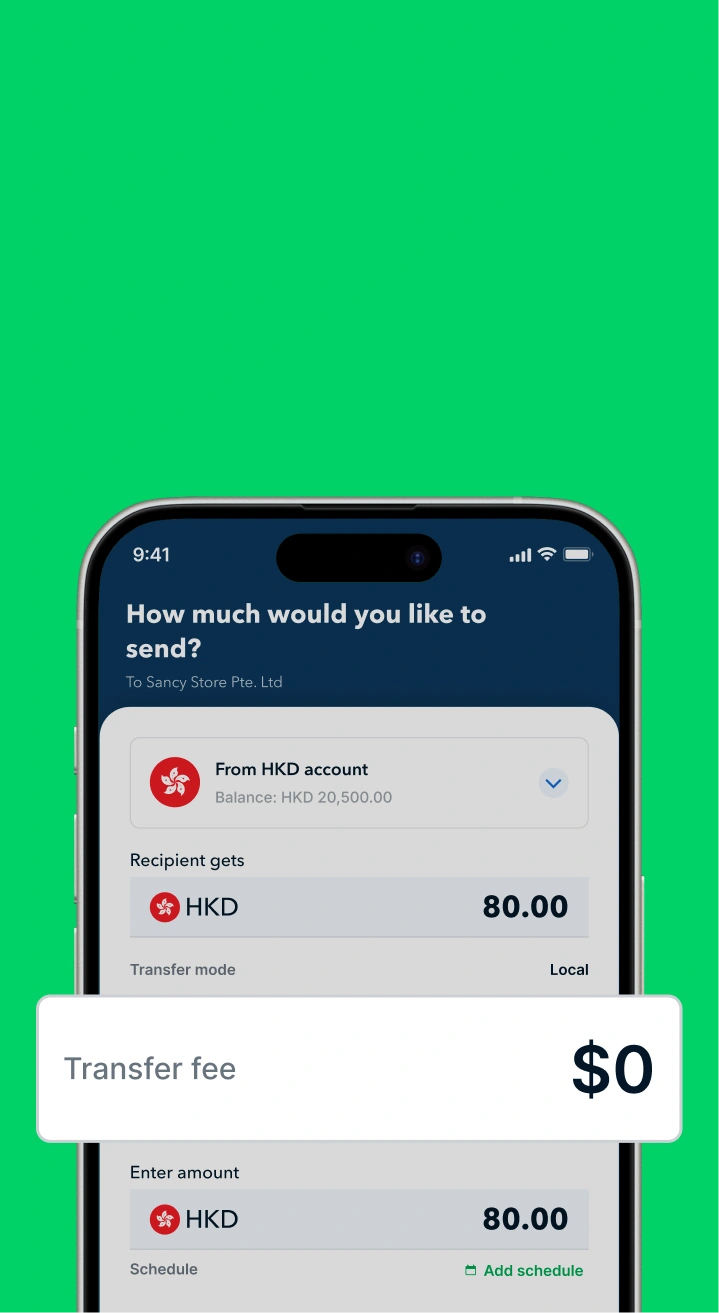
🌐 Local transfer network, not multi-hop SWIFT chains, is how Aspire routes most payments. This means faster settlement and fewer intermediary fees eating into your payment before it reaches the recipient. It also reduces the chance of funds being held up for review at a correspondent bank along the way.
💸 Fixed USD 8 inbound SWIFT fee, tracked end-to-end with SWIFT GPI, applies when SWIFT is the right rail for your payment. There are no surprise deductions from correspondent banks along the way, so the amount you're quoted is the amount that arrives. You can also download payment confirmation instantly from the app, without calling the bank.
⚡ Approved in as little as 1 business day, with no branch visits and no paperwork stacks. Applications are completed entirely online, from document upload to approval. There's no waiting weeks on a relationship manager to call you back.
Open a free multi-currency business account built for Hong Kong SMEs, or explore how Aspire's corporate card fits into your day-to-day spend.
Frequently Asked Questions
When must a new employee be enrolled in MPF?
Within 60 days of their start date, regardless of whether they're on probation. This is a statutory deadline, not a guideline.
Is MPF still used to offset severance pay?
No. As of 1 May 2025, the offsetting arrangement was abolished, and severance and long service payments must now be funded entirely in cash, separate from MPF contributions.
Are all employees required to join MPF?
Most full-time and part-time employees aged 18 to 64, employed 60 days or more, must be enrolled. Exemptions exist for certain groups, including civil servants, ORSO scheme members with exemption certificates, and some overseas staff on short-term assignments.
What happens if an employer fails to make MPF contributions on time?
Late or missed contributions can result in civil and criminal penalties, including fines and potential imprisonment for responsible individuals at the company, in addition to any surcharges applied by the trustee.
Do self-employed people need to contribute to MPF?
Yes. Self-employed persons must contribute 5% of their relevant income, subject to the same minimum and maximum income thresholds that apply to employees, and can choose to contribute monthly or annually.





.webp)