


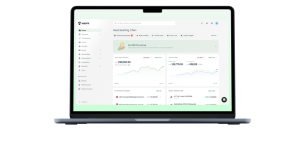
Business vs personal checking account: Key differences
Often, business and personal checking accounts are confused because of their similar features. But they are different and used for different purposes. Here are the key differences between a business vs personal checking account:
[Table:1]
What is a personal checking account?
A personal checking account is a bank account used for managing daily individual finances. It lets you safely save your money and quickly do things like get your paycheck, pay your bills, shop with a debit card, get cash from ATMs, and send money online.
In the US, personal checking accounts are commonly used for expenses like rent, utilities, groceries, subscriptions, and loan payments. Most accounts also come with features like mobile banking, bill pay, debit cards, and monthly statements.
Personal checking accounts are generally easy to open and require minimal documentation, such as a government-issued ID and Social Security number or ITIN.
What are the benefits of a personal checking account?
A personal checking account is meant for managing your money on a daily basis and is usually the easiest way to bank. Here are the main benefits:
- Simple to use
Personal checking accounts are great for everyday tasks like paying bills, shopping, sending money, and cash withdrawals.
- Lower maintenance fees
Many personal checking accounts have low monthly fees or no fees at all. That makes them a practical option for everyday banking.
- Provides easy access to banking services
Most personal accounts come with features such as debit cards, ATMs, mobile banking, and direct deposit.
- Easy access to cash
A personal checking account provides easy access to cash through ATMs, bank withdrawals, and online transfers.
- Easy to set up
Opening a personal checking account is usually straightforward. Most banks require only basic documents, and setup can often be completed quickly.
- Access to personal banking benefits
Some personal accounts include extras like cashback, rewards, or bundled savings features, depending on the bank.
- Expense tracking and budgeting
These accounts offer detailed monthly statements that provide a clear record of spending, allowing you to manage personal budgets effectively.
What is a business checking account?
A business checking account is designed specifically for managing business finances such as receiving client payments, paying vendors, managing payroll, handling recurring bills, and tracking cash flow.
In the US, business checking accounts are structured for higher transaction volumes and provide additional tools like multi-user access, corporate card support, bookkeeping integrations, and payment systems like ACH.
Business checking accounts are commonly used by freelancers, startups, sole proprietors, LLCs, partnerships, and corporations.
What are the benefits of a business checking account?
A business checking account does more than store your balance. It allows you to track your business income and spending, so you can manage the cash flow clearly and keep your financial records organized as you scale. Here are the main benefits:
- Easier tax preparation
A business checking account makes it easier to track business income and expenses in one place. This is especially important in the US, where business owners must report income to the IRS and keep records for deductible expenses such as software, travel, office supplies, and marketing. Having a separate business account also helps when filing Schedule C (for sole proprietors) or business tax returns for LLCs and corporations.
- Higher limits on transactions
Business checking accounts normally allow higher limits on deposits, withdrawals, transfers, and ACH payments than personal accounts. This is helpful as your business grows and your transaction volume increases.
- Supports ACH transfers and vendor payments
ACH (Automated Clearing House) transfers are widely used for vendor payments, payroll, and recurring billing. A business checking account is designed to support ACH transactions efficiently, while personal accounts may have restrictions or may get flagged if used frequently for commercial transactions.
- Increases your professional credibility
A business checking account allows you to send and receive payments under your registered business name. This makes invoicing cleaner and helps you appear more professional when working with US clients, vendors, or partners.
- Access to business banking tools
Business checking accounts often include features such as payroll support, invoicing, merchant services, corporate cards, and integrations with accounting software such as QuickBooks or Xero. These tools simplify business operations.
- Helps you build your business credit
A business checking account helps establish a financial footprint for your company. Over time, this can help you qualify for business credit cards, loans, and financing options in the US.
- Spend limits and employee access controls
Many business accounts allow multiple cards for employees and partners. You can set spending limits, restrict spending categories, and track expenses in real time. This helps control costs and prevents misuse of business funds.
- Helps with legal protection
A separate business account helps maintain legal separation between business and personal finances. This is especially important for LLCs and corporations. If business and personal funds are mixed, it can weaken liability protection and make it harder to prove that the business operates as a separate legal entity.
- Protects personal funds from business liabilities
If your business faces debt claims, disputes, or lawsuits, having a separate business checking account helps ensure your personal funds are not directly mixed with business funds. While legal protection depends on business structure, separating funds is one of the most important steps to reduce personal risk.
Can I use a personal checking account for business?
Yes, you can use your personal checking account for business, especially if you are just starting out or operating as a freelancer. Many freelancers and early-stage startups use a personal checking account to manage business expenses initially, reducing the hassle of paperwork and avoiding business account fees.
However, in the long run, it is not recommended to use your personal account for business transactions. Using the same account for personal and business expenses creates confusion during bookkeeping, makes it harder to identify tax deductions, and increases the risk of errors when filing taxes. It can also create issues when tracking profitability, reconciling statements, or preparing financial reports.
In the US, this can also create issues when paying contractors and reporting expenses. For example, if you hire freelancers and issue 1099 forms, keeping business payments separate makes recordkeeping much easier.
Banks may also consider frequent business-related activity on a personal account a violation of account terms. This could lead to restrictions or account closure.
Most importantly, if your business is registered as an LLC or corporation, using a personal account can weaken legal separation and expose you to liability risks.
So, if your business is growing, working with vendors, or handling frequent payments, switching to a business checking account is usually the best option.
Are business checking accounts FDIC-insured?
Yes, business checking accounts can be FDIC-insured, as long as the account is held at an FDIC-insured bank (or NCUA-insured if it is a credit union). FDIC insurance generally covers deposits in business checking, savings, and money market deposit accounts, as well as CDs. The extent of insurance coverage generally varies based on the ownership type. It is as follows:
[Table:2]
Business bank accounts for sole proprietors typically fall under the single account ownership category, while accounts for LLCs and incorporated businesses fall under the corporation, partnership, or unincorporated association category.
For sole proprietors, personal and business deposits are treated together under one owner, meaning a personal and business checking account at the same bank would be combined and insured up to USD $250,000 total.
LLCs, on the other hand, are legally separate entities, so even a single-member LLC’s deposits are insured separately from the owner’s personal accounts. However, if an LLC holds multiple accounts at the same bank, such as a business checking account, savings account, and CD, the deposits across those accounts are added together and insured up to USD $250,000 total under the same ownership category.
How does a business checking account shield your personal savings?
Many people assume a business checking account is only useful for tracking income and expenses. But in reality, it also plays an important role in protecting your personal finances.
In the US, if your business is registered as an LLC or corporation, you are expected to maintain a clear separation between business and personal funds. If personal and business transactions are mixed, it may weaken your legal protection and make it harder to prove that the business operates as a separate legal entity.
This matters because if your business ever faces situations such as lawsuits, unpaid vendor disputes, debt collection, contract breaches, or legal claims, your personal savings and assets could be at risk if proper financial separation is not maintained.
Opening a dedicated business checking account is one of the simplest and most effective ways to establish that separation and reduce liability exposure.
Conclusion
The difference between a business vs personal checking account comes down to purpose. A personal checking account is built for day-to-day spending, while a business checking account is designed to handle business income, vendor payments, payroll, and higher transaction volumes.
In the US, separating your accounts also makes tax reporting easier, improves bookkeeping, and helps ensure you stay compliant with IRS documentation requirements. It also strengthens legal separation if your business is structured as an LLC or corporation.
So, if you’re ready to streamline your business finances, consider opening an Aspire Business Account1. Aspire helps founders and entrepreneurs open a business bank account digitally, make transactions in 98+ currencies, and send and receive money globally, with a 1.5% cashback^ on eligible card spend.
If you're ready to streamline your business's financial operations, Aspire offers a one-stop platform for managing all your expenses.


.jpeg)