


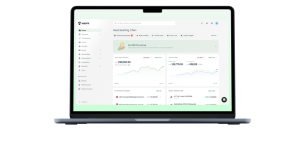
Chase vs Wells Fargo: quick verdict
- Choose Chase when integrated card acceptance (like QuickAccept), business credit card options, and a wider ATM network matter most to how you operate.
- Choose Wells Fargo when its entry account's higher included transaction allowance and relationship-led branch banking better fit your business.
Neither bank is automatically the better fit for cross-border operations. That's a separate consideration, covered in the international payments section below.
Traditional institutions offer real value for branch-heavy operations. The trade-offs look different once a business moves online or starts operating across borders, which is where the comparison gets more specific than "which bank is bigger."
Chase vs Wells Fargo: at-a-glance comparison (2026)
JPMorgan Chase overview
Chase is a division of JPMorgan Chase & Co., offering a full range of financial tools from opening a checking account at Chase and payment acceptance to credit cards and lending.
The core idea is simple: to give you one place to manage daily banking, payments, and access to credit.
With Chase QuickAccept, you can take credit card payments directly through the Chase mobile app, a genuine convenience for businesses that need to accept in-person or on-the-go payments without separate hardware.
Chase maintains over 5,000 branches and 15,000+ ATMs nationwide, making it a strong choice for businesses that value in-person banking alongside integrated digital payment tools.
Chase key features
Here are some of the core capabilities you can access through Chase business banking.
- Business checking accounts
Chase offers several business checking accounts across different tiers, structured for businesses with different transaction volumes and cash needs. Entry accounts focus on basic transactions, while higher tiers support larger transaction volumes and wire activity. (See the pricing breakdown below for exact fees and waiver requirements.)
- Payment and merchant services
Chase provides merchant payment tools that let you accept card payments online, in person, or through mobile devices, integrated directly with your Chase account.
Business credit cards
Chase offers a range of business credit cards with cashback, travel points, or airline mile rewards, commonly used by businesses to manage operational spend and earn rewards on that spend.
Business loans and credit lines
Chase also offers financing products including SBA loans, commercial loans, and business lines of credit for companies that need working capital.
Strengths
- Large nationwide branch and ATM network
- Strong ecosystem of business credit cards
- Integrated merchant payments through QuickAccept
- Access to loans and credit lines
Limitations
- Fees scale with account tier and require meeting specific balance or activity thresholds to waive (see pricing below)
- Limited global banking capabilities
- No built-in multi-currency operating accounts
Chase pricing
Chase offers several business checking tiers designed for different transaction volumes, per Chase's official account pages.
Business Complete Banking
Chase's entry-level account costs $15 per month, waivable by maintaining a $2,000 minimum daily balance or meeting qualifying activity requirements. It includes electronic deposits and access to merchant tools like QuickAccept.
Performance Business Checking
This tier supports higher activity levels, with around 250 included transactions per month and additional wire transfer benefits. Pricing starts at $40 per month, waivable with a $35,000 combined average beginning-day balance.
Platinum Business Checking
Designed for companies moving larger sums of capital, this account allows more than 500 monthly transactions and includes fee benefits for wire transfers. Pricing starts around $95 per month, waivable with a $100,000 minimum daily balance per statement period.
Choose Chase if:
- You handle regular cash deposits and value branch access
- You want QuickAccept or other integrated merchant services
- You want a strong ecosystem of business credit cards
- Your transaction volume or cash balances justify a paid tier's included benefits
For example, a restaurant handling frequent card and cash transactions can use Chase's QuickAccept merchant services to settle card payments quickly while still having branch access for cash deposits.
If your business pays contractors or vendors internationally, for example, a SaaS company paying developers in Europe and Asia, you'll likely need additional tools to handle those payments, since Chase's global banking capabilities are limited.
Wells Fargo overview
Wells Fargo approaches business banking differently. While it also offers checking accounts and payment services, the bank is especially known for relationship-driven banking and lending, particularly through SBA programs.
Wells Fargo offers access to approximately 4,700 branches and 11,000+ ATMs nationwide, providing reliable physical infrastructure for businesses handling cash deposits or needing in-person support.
For businesses planning to finance expansion, equipment purchases, or commercial real estate, Wells Fargo often appears on the shortlist because of its established lending network.
Wells Fargo key features
Here are some of the core financial services available through Wells Fargo.
- Business checking accounts
Wells Fargo provides three checking tiers designed for different transaction volumes and operational needs — Initiate, Navigate, and Optimize. See the pricing breakdown below for exact fees, waivers, and included transactions.
- Savings and cash management tools
Standard Wells Fargo business savings accounts generally start at a base rate of 0.01% APY, with higher rates accessible through specific balance tiers, linking premium checking accounts, or moving funds into time-deposit products like CDs.
- Business credit cards
Like most major banks, Wells Fargo offers business credit cards with rewards, introductory APR promotions, and cashback options.
- Business lending
Wells Fargo provides a wide range of lending services, including SBA loans, equipment financing, and commercial real estate lending.
Strengths
- Established SBA lending network
- Nationwide branch coverage
- Relationship-driven banking, with dedicated support for businesses that want it
Limitations
- Monthly fees and waiver conditions vary by tier and require meeting specific balance thresholds
- No built-in multi-currency operating account
- International payments run primarily through traditional wire transfers
- Digital workflow depth may not match specialized spend management platforms
Wells Fargo pricing
Wells Fargo structures its business checking around three tiers, per Wells Fargo's official US business banking page.
Initiate Business Checking
Wells Fargo's entry-level account costs $15 per month, waivable with a $2,000 minimum daily balance or $5,000 in combined balances. It includes 100 transactions and $5,000 in cash deposits per statement period, with a $25 minimum opening deposit.
Navigate Business Checking
Built for higher activity, Navigate costs $25 per month and includes 250 transactions and $20,000 in cash deposits per statement period, with its own balance-based waiver options.
Optimize Business Checking
Designed for businesses with the highest transaction and cash-handling volumes. Given how frequently tiered pricing shifts, check Wells Fargo's official business banking page for current Optimize terms before committing.
Choose Wells Fargo if:
- SBA lending or other structured financing is part of your growth plan
- you prefer relationship-driven banking with dedicated support
- your transaction and cash deposit volume fit one of Wells Fargo's checking tiers
For example, if you run a construction company as a contractor in Texas, applying for an SBA 7(a) loan may lead you to consider Wells Fargo because of its established lending network.
Lending and credit access: SBA loans and interest rates
If your growth strategy involves borrowing, the differences between Chase and Wells Fargo's lending options are worth comparing directly.
Both banks offer SBA financing alongside conventional business loans, commonly used for equipment purchases, real estate, or expanding physical operations. Beyond the loan type itself, the details that actually affect your borrowing experience include:
- Eligibility requirements: vary by loan program and business profile
- Fees: origination, packaging, and other costs beyond the advertised rate
- Collateral requirements: differ by loan size and structure
- Processing responsibility: how much of the application each bank handles directly versus routing through SBA channels
- Existing banking relationship: some lenders weigh this in underwriting decisions
Both banks follow structured underwriting procedures, which typically involve documentation review, credit analysis, and a multi-step approval process.
Wells Fargo may deserve consideration where SBA lending is central to your plans, but actual approval odds, pricing, and timing depend on your specific business and loan structure, not on which bank you apply to in general. The only reliable way to compare is to request actual written offers from each lender and compare total borrowing cost, not just the headline rate.
Pro tip for founders
When comparing lenders, don't focus only on the advertised loan interest rate or APR. Traditional banks often include origination or packaging fees that increase the total cost of borrowing Ask for the full fee schedule before committing.
International payments and foreign exchange
Chase and Wells Fargo both handle international payments through wire transfers rather than a standing multi-currency account. Here's how they compare:
- Reach: Chase covers 240+ countries and territories; Wells Fargo covers 200+.
- Initiation: Both support online or in-branch wires.
- Currency: Both offer USD or the recipient's local currency, depending on destination.
- Cost: Both charge a wire fee plus their own exchange rate markup. (Check each bank's current wire schedule for exact costs before comparing).
- Holding foreign currency: Neither offers a standing account for holding balances in other currencies.
For example, a SaaS startup in Austin paying developers in Poland and designers in Argentina would send a separate wire for each payment. A handful of transfers a month is manageable this way. Frequent, multi-currency payments that need to reconcile automatically start to add real overhead, that's usually when a specialist platform is worth evaluating alongside your bank account.
How does Bank of America compare
Bank of America is the third major national bank that businesses consider alongside Chase and Wells Fargo. Its entry-level Business Advantage Fundamentals account charges a $16 monthly fee waived for the first 12 months on any new account, then waivable ongoing with a $5,000 combined balance, $500 in debit card spend, or Preferred Rewards for Business membership.
It includes 20 free non-electronic transactions and $5,000 in free cash deposits per statement cycle in line with Chase's entry tier, though lower than Wells Fargo's 100-transaction allowance.
Where Bank of America does pull ahead is overdraft costs: $10 per item, capped at two per day, versus $34 at Chase and $35 at Wells Fargo, a real difference for businesses that occasionally run tight on cash flow.
At a glance: $16/month, waived for the first 12 months, then waivable at a $5,000 combined balance; $10 overdraft fee, capped at two per day.
Wells Fargo business account vs Chase business account
Here's how the two banks' core business checking accounts stack up on the numbers that matter most day to day. This compares each bank's entry-level tier only: Chase Business Complete Banking and Wells Fargo Initiate Business Checking.
Wells Fargo vs Chase: which bank is the best
Chase tends to be the stronger fit where merchant acceptance, business credit card selection, and a larger nationwide ATM footprint matter most to how you operate.
Wells Fargo tends to be the stronger fit where the entry account's higher transaction allowance and relationship-led branch banking carry more weight, particularly for businesses that value in-person support.
Both banks remain reasonable choices for cash-heavy, domestic-first businesses that value branch access. Neither is automatically the better fit for businesses running global operations or leaning heavily on financial automation; that comes down to what each bank's account actually supports, not which bank is "bigger."
When an online finance platform may be a better complement
For businesses that operate across borders, hire internationally, or want more built-in automation than a traditional checking account offers, it's worth considering a platform like Aspire alongside a bank account.
With an Aspire business account,¹ you can:
- Open an account online with $0 monthly maintenance fees
- Operate with no minimum balance requirements
- Access multi-currency accounts* in 13 currencies
- Issue corporate cards² with built-in spend controls
- Sync transactions automatically with QuickBooks or Xero
Aspire is registered in the United States as a Money Services Business (MSB) and is built for founders managing cross-border operations. Many businesses use Aspire alongside a traditional bank account, keeping branch access and established banking relationships where they're useful, while handling international payments, multi-currency operations, and expense controls through a purpose-built platform.
Choose Aspire if:
- Your business doesn't need branch access or in-person cash deposits
- You make frequent cross-border payments
- Your team needs digital spend controls, not just a shared card
- You meet Aspire's current US eligibility and card requirements
A quick note on what Aspire actually is: Aspire is a fintech, not a bank. In the US, the Aspire Deposit Account and related banking services are provided by Column N.A., Member FDIC. Non-USD currency accounts are provided separately by Aspire HK and are not FDIC insured. Aspire's corporate card is a secured commercial charge card, subject to eligibility, with the outstanding balance due in full daily.
With an Aspire business account, verified capabilities include:
- No monthly account maintenance fee
- No minimum balance requirement on the US Deposit Account
- International payment capabilities across supported currencies
- Virtual cards with built-in spend controls
- Direct integrations with QuickBooks and Xero
Pro tip for founders
If you expect to raise venture funding, choose a bank your investors are comfortable wiring money into. Many founders keep a traditional US bank account for domestic transfers and pair it with a platform like Aspire to handle cross-border payments, multi-currency operations, and team spend controls.
Final thought
Choosing between Chase and Wells Fargo comes down to the business's operational fit. Chase suits businesses that lean on merchant services and a broad business card ecosystem. Wells Fargo suits businesses that want a higher entry-level transaction allowance and relationship-led branch banking. For domestic, branch-led operations, either bank can work well.
If your business pays contractors abroad, moves money across currencies, or needs tighter spend controls, you may need more than a traditional account provides. That's where a platform like Aspire can fit alongside your bank.


.jpeg)