


Types of high limit business credit cards
There’s no fixed number that qualifies as high limit business credit cards. What matters is how the limit works. You’ll see three models:
- Fixed limits (traditional credit cards): You’re assigned a limit based on your credit profile. It can increase over time, but it’s relatively static. Many LLC credit cards fall into this category.
- Charge cards (no preset limit): You don’t get a fixed number. Your limit adjusts based on spend patterns, payment history, and business health. You usually pay in full each cycle.
- Dynamic or revenue-based limits: Limits scale with your business. Providers look at cash flow, balances, and activity instead of just credit score.
Quick verdict: Choose fixed high limit business credit cards if your spend is predictable and you want straightforward approval tied to credit. Go with charge cards if you prefer disciplined, full-cycle repayments and cleaner books. Pick dynamic or revenue-based limits if your spend fluctuates or is scaling because these adapt better to growth.
What low limits actually cost your business
Low limits rarely break things immediately. They show up gradually as your spend increases and operations become more complex. What looks manageable early on starts creating friction once volume picks up.
- Payments fail mid-cycle even when cash is available, because the limit is capped
- Teams delay or split transactions just to get payments through
- Ad spends, subscriptions, and vendor payments compete for the same headroom
- Finance ends up managing limits instead of actual spend
- Workarounds increase as volume grows—manual tracking, multiple cards, missed visibility
- You lose a clean view of how money is actually moving through the business
10 best high limit business credit cards in 2026
Not all high limit business credit cards behave the same once you start using them at scale. Some expand with your business. Others stay tied to underwriting decisions made on day one. A few give you visibility and control across spend, not just access to it.
Here’s how the top 10 options actually work when your monthly spend starts increasing.
[Table:1]
Stripe Corporate Card
Stripe’s corporate card fits into the newer category of high limit business credit cards where spend capacity is closely tied to your Stripe account activity. Instead of a fixed credit line, limits are influenced by your payment volume, balances, and overall cash flow within the Stripe ecosystem.
It’s often considered among business credit cards without personal guarantee. The setup works best if your revenue is already flowing through Stripe, but that dependency can shape how flexible the card feels outside that ecosystem.
Key features:
- Limits based on Stripe payment volume and balance
- No personal guarantee required
- Real-time spend tracking within Stripe dashboard
- Virtual and physical cards for teams
- Native integration with Stripe payments and reporting
Price: No annual fee
Learn more: https://stripe.com/corporate-card
Ramp Corporate Card
Ramp sits in the category of top corporate credit cards with higher limits that expand based on your company’s financial position rather than a preset number.
Ramp is often considered alongside no pg business credit card options, where approval depends more on cash balance than personal credit exposure. However, it often expects businesses to maintain a meaningful cash balance (commonly around $250,000 or more), partly tied to how funds are held within FDIC-insured partner accounts. It operates as a charge card, so repayment is expected in full each cycle. That said, the value shows up more clearly when your financial workflows are already structured.
Key features:
- No preset spending limit
- Approval based on business cash flow
- Built-in expense management and automation
- Vendor-level spend insights
- Accounting integrations
Price: No annual fee
Brex Card
Brex is positioned among virtual credit card providers offering high credit limit card setups tied closely to your company’s cash position. Instead of a traditional credit line, limits are influenced by how much capital the business holds, which can make spend capacity feel directly linked to liquidity.
Brex is also commonly positioned among business credit cards without personal guarantee, where approval is tied to business metrics rather than the founder’s personal credit. It uses a charge card structure, so balances are settled regularly. Controls are strong, but the dependency on cash balances can shape how flexibly you use it.
Key features:
- Limits tied to cash balance
- No personal guarantee required
- Virtual cards for teams and vendors
- Built-in expense tracking
- Integrations with accounting tools
Price: No annual fee
Learn more about Brex credit cards.
American Express Business Platinum Card
This is one of the best high limit credit card options in the traditional ecosystem. Instead of a fixed limit, it offers a “no preset spending limit,” which adjusts based on usage, credit profile, and payment history.
Approval relies more heavily on personal credit compared to newer platforms. It follows a charge card model, so repayment is due in full. While it offers flexibility in spend, controls are more traditional, focused on reporting rather than real-time operational visibility.
Key features:
- No preset spending limit
- Rewards on travel and business spend
- Expense tracking and employee cards
- Global acceptance
Price: USD $695 annual fee (subject to change)
Explore the American Express Business Platinum Card.
Capital One Venture X Business
Capital One’s offering is a business credit card with a high limit that combines a fixed credit line with the flexibility of revolving credit. Limits are assigned based on both personal and business credit, making approval more predictable but also more founder-dependent.
Unlike charge cards, you can carry a balance, which helps manage timing gaps in cash flow. Controls are straightforward, though less built for layered spend management across teams.
Key features:
- High fixed credit limits
- Ability to carry balances (revolving credit)
- Travel rewards and benefits
- Employee cards with spend tracking
Price: USD $395 annual fee
Read more about Capital One Venture X Business.
Chase Ink Business Preferred
Chase Ink is a more traditional entry in the high limit business credit cards category, where your limit is defined upfront and increases over time based on usage and creditworthiness.
Approval depends largely on personal credit, which makes it accessible but ties the account closely to the founder. It uses a revolving structure, so balances can carry forward. It covers the basics well, though it doesn’t adapt dynamically as spend or operational complexity increases.
Key features:
- Fixed credit limits with potential increases
- Rewards on business categories (travel, ads, etc.)
- Employee cards
- Purchase protection
Price: USD $95 annual fee
Learn more about Chase Ink Business Preferred.
Bluevine Business Credit Card
Bluevine’s setup leans toward businesses already using its banking ecosystem. Limits are influenced by account activity and cash flow, which ties spending capacity to how money moves through the account.
Approval works more smoothly if you’re already within their system. It offers more repayment flexibility than strict charge cards. Controls are functional, but not deeply layered for complex team structures or multi-level approvals.
Key features:
- Limits based on cash flow and account usage
- Integration with Bluevine banking
- No monthly fees
- Basic expense tracking
Price: No monthly maintenance fee for the core account. Any costs are typically tied to specific services like payments or advanced features, depending on usage.
Find more information about Bluevine Business Credit Cards.
Divvy (by Bill.com)
Divvy blends budgeting with business credit cards with high limits by tying limits to financial performance and layering spend controls on top. Approval is based on business health rather than just credit score. It typically follows a charge card structure, with regular repayment cycles.
The standout feature is budget-based control — you can allocate spend before it happens. That structure works well for disciplined teams, though it requires more active management as spending patterns evolve.
Key features:
- Adjustable limits based on business performance
- Budget-based spend controls
- Real-time expense tracking
- Virtual and physical cards
Price: Costs are generally tied to how the platform is used, particularly around payment workflows and extended features.
Learn more about Divvy (by Bill.com)
U.S. Bank Business Altitude Connect Card
This option sits within more traditional business credit cards with no annual fee (introductory or conditional). It offers a fixed credit limit based on creditworthiness, with periodic reviews over time. Approval relies on credit history and financial profile.
It follows a revolving structure, allowing flexibility in repayment. The setup is stable and predictable, though less responsive to real-time changes in business performance or spending patterns.
Key features:
- Fixed credit limits
- Travel and category-based rewards
- Employee cards
- Expense tracking tools
Price: Free intro annual fee, then around USD $95 depending on variant
Explore more features of U.S. Bank Business Altitude Connect Card.
Wells Fargo Business Elite Card
Wells Fargo’s offering is one of the traditional high limit business credit cards where limits grow gradually based on credit history and account usage. Approval is credit-driven, often requiring a solid financial track record. It uses a revolving structure, giving flexibility in repayments.
It works reliably for established businesses, though the setup is more static and less tailored to businesses looking for real-time control or faster scaling of spend capacity.
Key features:
- Gradually increasing credit limits
- Rewards or cashback options
- Employee cards
- Standard expense tracking
Price: USD $0–$125 depending on card and structure
Founders’ insight: Most founders think high limit business credit cards are about access to more credit. But they’re about removing the need to think about credit at all while you’re operating. When your limits match your spend, approvals stop failing, payments stop breaking, and your team stops waiting on finance to unblock things. That’s when high limit business credit cards setup actually starts working.
Find out more information on Wells Fargo Business Elite Card.
How to choose between high limit business credit cards
Traditional issuers rely heavily on personal credit scores. Newer providers may function closer to a business credit card no personal credit check model, where underwriting is based on cash flow, balances, and transaction activity instead. The points below are where that usually shows up. Here are some of the many factors you need to consider:
Here’s what actually matters:
- How limits scale: Do they increase as revenue grows, or stay fixed?
- Repayment structure: Can you revolve balance, or is it pay-in-full?
- Expense visibility: Can you track spend across teams without exporting data into spreadsheets?
- Virtual card support: Most modern businesses rely on virtual business credit cards to control subscriptions, ads, and vendor payments.
- Global usability: If you operate across markets, currency support matters more than rewards.
- Fees that show up later: Some business credit cards with no annual fee still charge through FX spreads, transaction limits, or hidden costs.
- Personal guarantee requirements: Some business credit cards without personal guarantee shift risk assessment to business cash flow instead of founder credit. This matters if you want to avoid tying personal liability to company spend.
If your cash flow is predictable and you want flexibility, a revolving structure can give you breathing room between payments. If you’d rather keep things clean and avoid carrying balances, charge cards keep usage and repayment tightly aligned.
If your spend changes month to month, fixed limits can become a constraint. Dynamic limits tend to adapt better, but only if your business activity supports it.
If multiple people are spending, controls matter more than rewards. The ability to track, limit, and approve spend in real time becomes more useful than points or perks.
And if your operations are spread across tools, vendors, or countries, the card needs to fit into that system. Otherwise, you’ll end up stitching workflows together manually.
How to get a high limit business credit card
Getting a high limit business credit card comes down to how clearly your business can be verified and underwritten. Here’s what the process usually looks like:
- Submit business and personal details: You’ll provide your business name, entity type, address, and basic founder details. Some providers also ask for SSN, others focus more on business identity.
- Provide tax and registration information: Depending on your setup, this can include your EIN, business registration documents, or incorporation details. Sole proprietors may use SSN instead.
- Share financial data or connect accounts: Modern providers often ask you to connect your business bank account. This gives them visibility into revenue, cash balance, and transaction patterns.
- Underwriting and approval: Traditional issuers rely heavily on personal credit scores. Newer platforms assess business performance, cash flow, and account activity to determine limits.
- Limit assignment: You’re either given a fixed limit or a dynamic one based on your financial profile. This is where high limit business credit cards differ the most.
- Card issuance and setup: Once approved, you can issue physical or virtual cards, set spend limits, and configure how the card will be used across your business.
How modern businesses are rethinking credit altogether
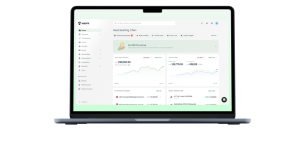
As spend grows, the gap between traditional credit cards and how businesses actually operate becomes clearer. Fixed limits, delayed visibility, and manual tracking start to slow things down. Here, virtual corporate cards like Aspire1 tend to work better.
You get 1.5% unlimited cashback^ on every spend. It also supports multi-currency* payments across 150+ currencies and integrates directly with tools like QuickBooks and Xero. There’s no annual fee, with pricing tied to usage such as payments, FX, and related operations.