



API
Smarter integration with Aspire's API
Automate your processes and tech stack with our APIs for full automation and control
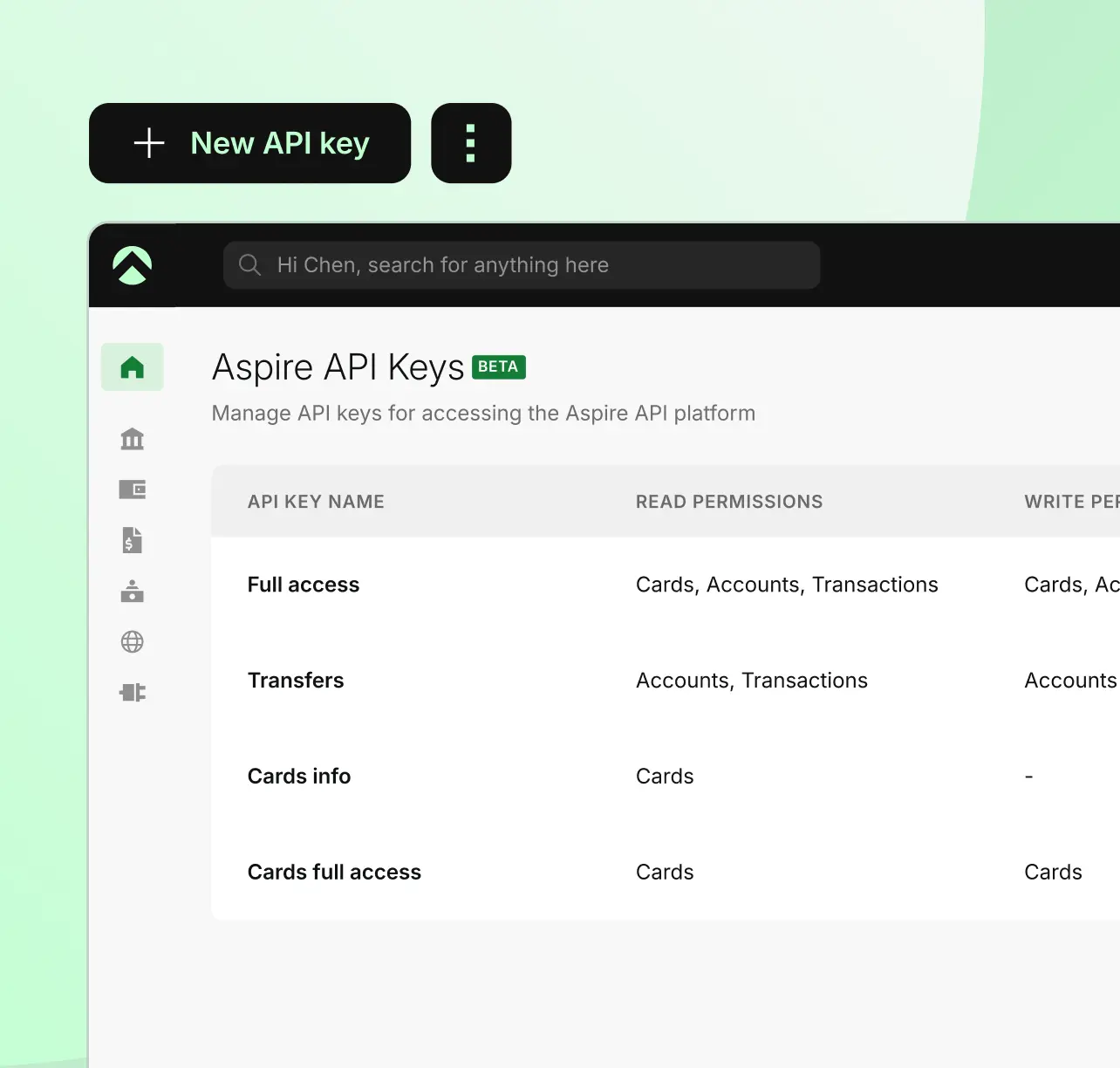
Trusted by 50,000+ modern businesses
4.5 rating









Automate everything with precision
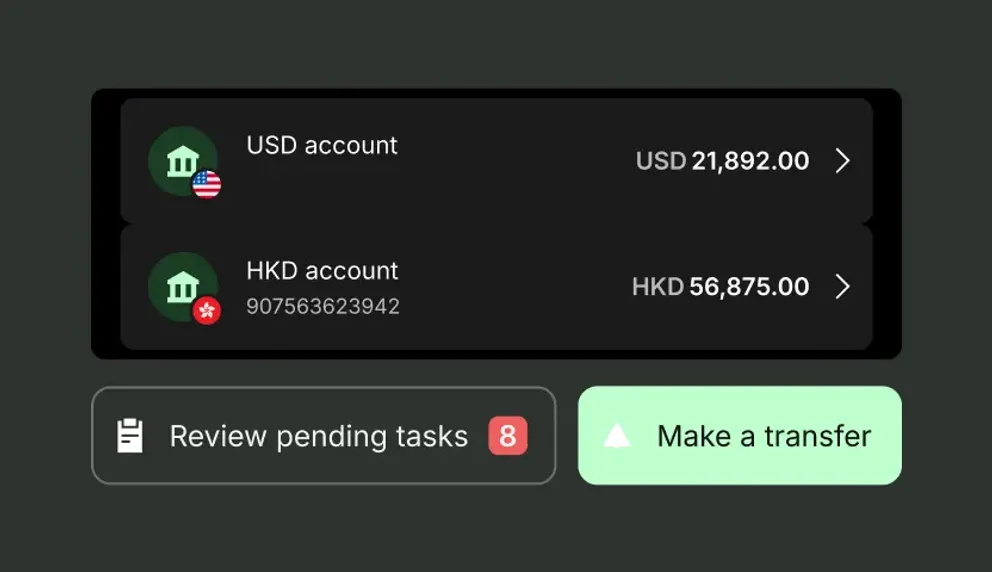
Guaranteed control and accuracy
Reduce errors caused by manual processes, while enforcing compliant spending with approvals, budgets, and other spend management capabilities

Automated financial operations
Make mass payments to your suppliers or vendors, connect to your ecommerce platforms or your accounting software
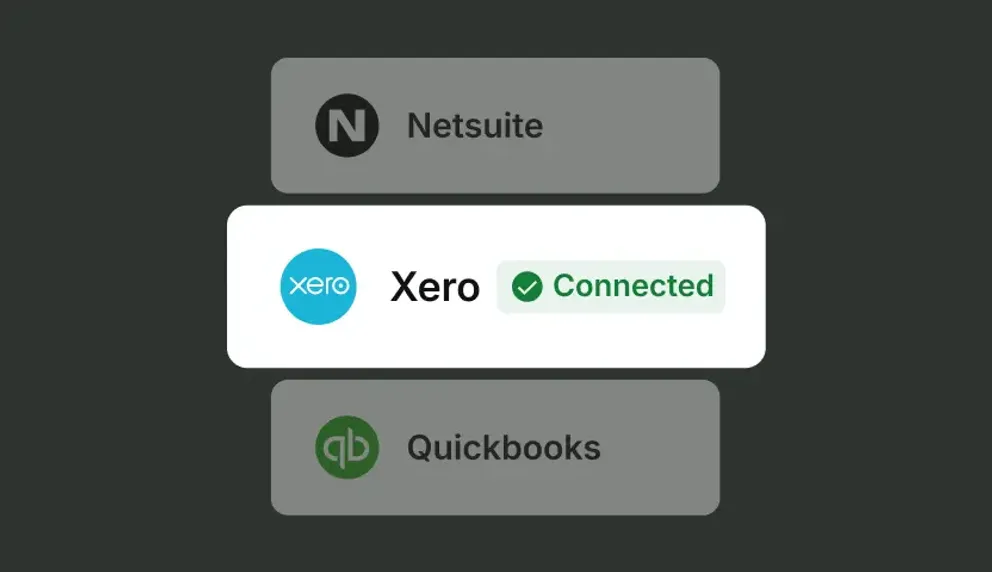
Seamless integration and support
Aspire's developer-friendly API, sandbox environment, and dedicated support simplifies every step of integration
Fast, secure, programmatic payouts worldwide
Automate payouts directly from your Aspire multi-currency business accounts
Send international payments in 30+ currencies at great FX
Enjoy fast local payouts in as little as one business day

Issue virtual cards to your teams at scale
Gain real-time visibility of company spend for each card used by your teams
Set spend limits with merchant locks, transaction controls to prevent misuse
Issue virtual cards to pay in 30+ currencies

Connect to your ecommerce platforms
Easily integrate our payment APIs with popular ecommerce platforms - Woocommerce, Magento, Odoo, and more
Know your code? Connect to our payment API service with just a few lines of code
Get dedicated onboarding assistance from our care team for faster deployment

Developer friendly, easy-to-integrate APIs
Access clear, concise API documentation made for developers
Access your own sandbox testing environment for seamless testing and integration
Get notified on transfer status in real time with webhooks
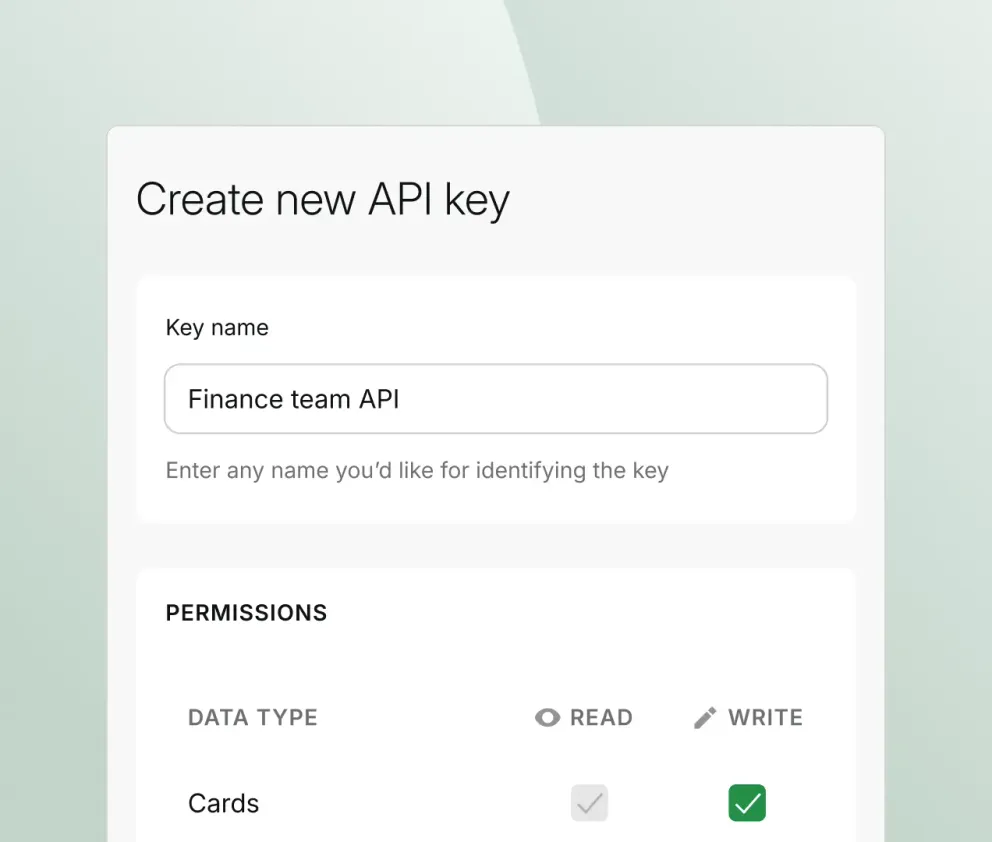
Hear it first from our customers

Gregory Van
CEO of Endowus
 Read the case study
“As a startup, we needed more flexible solutions to support our increasing needs, as well as ones that’d make the most financial sense in supporting our growth.”
- Saved per year
- $111,000
- Saved per year
- 900hr

Holly Qian
Head of Finance at First Page
 Read the case study
“By leveraging Aspire, First Page aimed to establish tighter control over our financial outflows, ensuring that all media spending stayed within the allocated budget limits. This was crucial for maintaining financial discipline and ensuring that our company’s marketing efforts were both effective and sustainable.”
- Saved per year
- $80,405
- Saved per year
- 2,834hrs

William Chong
Finance Director at Glints
 Read the case study
“In the past, we used different devices for calls, music, and work. Just like smartphones brought everything together, Aspire elegantly combines corporate cards, FX, business accounts, payables, and much more, into one user-friendly interface.”
- Saved per year
- $28,037
- Saved per year
- 860hrs
Free up time and automate expense processes

FAQ about Aspire APIs
A card issuing API (Application Programming Interface) is a set of tools and protocols that allows developers to integrate card issuance and management functionalities into their applications or platforms. These APIs enable businesses to create, distribute, and manage virtual or physical payment cards. Here are some key features and functionalities typically provided by card issuing APIs:
- Card Creation: Generate new virtual or physical cards with specific parameters (e.g., card type, spending limits, expiration dates).
- Card Activation: Activate issued cards for use by the cardholder.
- Card Management: Update card details, set spending limits, freeze/unfreeze cards, and handle card renewals or replacements.
- Transaction Monitoring: Track and manage transactions made with the issued cards, including real-time notifications for spending activity.
- Compliance and Security: Ensure that card issuance and usage comply with relevant regulatory requirements and incorporate security features to protect against fraud.
- Customization: Personalize cards with branding elements such as logos, colors, and designs. Integration with Payment Networks: Connect with payment networks like Visa, Mastercard, or others to enable transactions.
Card Issuance APIs allow businesses (e.g. e-commerce platfroms, marketing agencies etc.) to facilitate card issuance and management via card issuing platforms (e.g. Aspire, PayPal, Stripe etc.).
There are usually multiple steps involved in the Card Issuance API process. The first step is authentication, in which the company gives the API specific instructions, then authenticated by an API key. These instructions include elements like the customer's identity, the kind of card to be issues, spending caps, and so forth.
The issuing platform then undertakes validations and compliance checks to ensure the request meets the regulatory requirements, card network protocols and other predefined validations.
Once approved, the API uses the details provided in the API call earlier to create the cards by setting up business accounts, spending limits, card type etc. For physical cards, activation may be required, while virtual cards are usually activated automatically.
The process concludes with the API sending confirmation, from the issuing platform to the business, about each issued card, including card details and user information. The API also enables businesses and individual users to manage their cards, make transactions, and track their spending in real-time.
Card Issuance APIs provide several advantages - faster time-to-market, more personalization, real-time spend tracking, higher financial transparency, better risk and compliance management, and more control over card features and restrictions are a few of these. Additionally, it enables companies to better serve customers, employees and vendors while promptly adapting to changing market demands.
A payout generally refers to the distribution of funds or rewards to individuals or entities following a transaction or agreement. This could involve disbursing payments, earnings, dividends, or incentives to shareholders, employees, or partners.
Aspire's Payout API seamlessly integrates your 3rd party software to your Aspire multi-currency business account via API. Through this integration, you gain the ability to automate and streamline your payout processes, facilitating efficient fund distribution to suppliers, employees, and partners. This integration ensures efficiency and convenience in managing your business's payments while leveraging the benefits of Aspire's robust payment capabilities.
With a Payout API, you can automate the distribution of funds to various recipients such as suppliers, employees, and partners, saving time and reducing manual errors. Seamlessly integrate the API into your existing systems to streamline financial processes and enhance operational efficiency. Additionally, track and monitor transactions in real-time, providing transparency and control over your payout operations.
A payment gateway is a secure network that allows customers to transfer funds to you. It acts as a bridge between a customer's bank and an online merchant's website or application during a financial transaction. Its primary purpose is to authorise and process payments, ensuring that sensitive financial data is transmitted securely.
There are various reliable payment gateways to choose from for online transactions. Notable ones include PayPal, Stripe, Square, and Authorize.Net.
Selecting the best payment gateway site for your business is crucial for seamless and secure online transactions. While several options are available, it often comes down to your specific requirements. Stripe and PayPal are popular choices, known for their versatility and global recognition. Stripe's developer-friendly interface and PayPal's widespread acceptance make them strong contenders. Additionally, consider factors like transaction fees, supported payment methods, and the ease of integration when making your decision. Ultimately, the best payment gateway will align with your business needs and provide a seamless checkout experience for your customers.