



The Business Owner's Handbook to Payments & Payment Methods

Aaron Oh

Run business payments across two or three entities and different currencies, and the cracks show fast. Either it's a supplier payment stuck in FX conversion, a subsidiary's spend you can't see until month-end, or an approval chain that lives in someone's inbox.
The payment method you choose for each transaction type is what determines whether your finance team has real-time control or is reconciling blind. Bank transfers, cards, PayNow, and cross-border rails: each comes with different trade-offs on speed, cost, visibility, and reconciliation effort.
This guide breaks down how businesses actually move money in Singapore today, so you can match the right method to the right transaction.
What are the most common types of business payments in Singapore
Business payments in Singapore cover both what you pay out to vendors, payroll, and suppliers and what you collect through customer payments, invoices and receivables. They typically move through a mix of bank transfers (PayNow, FAST), credit and debit cards, digital wallets like GrabPay and ShopeePay, and buy now, pay later options such as Atome. The right mix depends on your industry, your customers' preferences, and how much you're willing to trade off between speed, cost, and convenience.
Business payments in Singapore in 2026: a quick comparison
| Payment method | Speed | Typical cost | Best for |
|---|---|---|---|
| PayNow Corporate | Near-instant | Often free or low fixed fee, bank-dependent | Domestic B2B payments, supplier settlement, collections via UEN |
| FAST bank transfer | Same-day, often instant | Low, bank-dependent | Larger domestic transfers, payroll, scheduled payments |
| Credit and debit cards | Instant authorisation | 1.5–3.5% processing fee typically | Recurring subscriptions, higher-value purchases, rewards-driven spend |
| Digital wallets (GrabPay, ShopeePay) | Instant | Merchant fee, varies by provider | Consumer-facing checkout, smaller transactions |
| BNPL or Buy now, pay later (Atome, Grab PayLater) | Instant for customer, delayed settlement for merchant | Merchant fee, average 4–6% | Consumer purchases, younger demographics |
| Wire transfer (SWIFT) | 10-minute transit; can be 1-5 days for delivery | Fixed fee plus FX spread | Cross-border supplier payments, large one-off transactions |
| Multi-currency account transfer | Instant to same-day, depending on rail | Low, often no conversion fee within held currencies | Businesses paying or receiving in multiple currencies regularly |
What are the various ways in which businesses make payments
Business payments generally fall into two categories: one-time payments for specific things, and recurring payments that happen on a set schedule
Let's look at them more closely to see how businesses manage their money effectively.
Ad-hoc payments
An ad-hoc payment is a one-time or irregular payment made for a specific purpose. Unlike regular transactions, these payments are spontaneous and don't follow a set schedule. You might make ad-hoc payments in response to unique needs or unexpected expenses, addressing specific circumstances as they arise.
- Cross-border supplier settlements: One-off payments to an overseas vendor outside your regular payment cycle, often involving FX conversion.
- Intercompany transfers: Moving funds between entities to cover a subsidiary's short-term cash needs or fund a new market entry.
- FX hedging settlements: Settling a forward contract or hedge position tied to a specific transaction rather than a recurring schedule.
- M&A or corporate transaction payments: Deal-related payments — deposits, escrow funding, advisory fees — that fall outside normal operating spend.
- Unplanned capital purchases: Equipment or asset purchases that weren't part of the budgeted capex cycle.
- One-off compliance or legal payments: Regulatory filings, audit fees, or legal settlements tied to a specific event.
Recurring payments
Recurring payments are those regular transactions where a set amount of money is automatically deducted or charged at scheduled intervals. You likely encounter this for various services or subscriptions essential to your business operations.
These automatic and predictable payments occur monthly, quarterly, or annually. This may involve an agreement between you (the business owner) and the service providers or vendors, ensuring a smooth and continuous flow of financial transactions.
- Multi-entity payroll: Consistent salary payments across different subsidiaries, often in different currencies.
- Vendor contracts in multiple currencies: Ongoing payments to suppliers or service providers billed in USD, EUR, or other non-SGD currencies.
- Loan and debt servicing: Scheduled repayments on business loans or credit facilities.
- SaaS and software stack payments: Recurring subscription charges across the tools your finance and ops teams run on.
- Lease and facility payments: Regular payments for office space or equipment leases, potentially across multiple locations.
- Corporate tax and statutory payments: Scheduled tax and compliance payments across the jurisdictions you operate in.
Benefits of having multiple business payment methods
Diversifying how you handle business payments brings real operational advantages beyond just convenience:
- Lower reconciliation overhead: Matching the payment rail to the transaction type such as PayNow for domestic speed or wire transfer for cross-border, reduces the manual work of tracing and matching transactions across entities.
- Reduced FX and transaction costs: Different rails carry different cost structures. Routing payments through the lowest-cost method for each currency pair adds up meaningfully at volume.
- Risk mitigation across banking partners: Relying on a single bank or rail creates a single point of failure. Spreading payment methods and banking relationships protects against disruption.
- Better audit and compliance readiness: Diverse payment methods, tracked in one system, make it easier to produce a clean audit trail across entities and jurisdictions.
- Stronger negotiating position: Businesses that aren't locked into one payment rail or banking partner have more leverage in fee negotiations and vendor terms.
How business payments differ by industry
The right payment mix also depends on what kind of business you're running. Here's how it breaks down by industry and business model.
For e-commerce
It's essential to align payment options in an e-commerce business with customer demographics and preferences. Prioritising integration with popular e-wallets and BNPL providers can help reach a wider user base. It's also crucial to ensure the adoption of secure payment gateways to safeguard customer data and offer an optimal checkout experience by providing easily accessible payment options.
Recommended Payment Modes:
- Digital Wallets: Fast, familiar checkout that reduces cart abandonment, especially for mobile-first shoppers.
- GrabPay: Known for loyalty programs.
- PayNow: Facilitates real-time bank transfers.
- NETS Pay: Trusted, especially for offline payments.
- Credit Card Payments: Ideal for higher-value purchases.
- Debit Cards: Convenient for everyday transactions.
- Buy Now, Pay Later (BNPL): Gaining popularity, especially with younger demographics.
- Other Options: Offline Payments (e.g., COD) or Bank Transfers for B2B transactions.
For SaaS business
Payment options should be aligned with billing cycles and the currencies your customers pay in. For B2B SaaS selling into multiple markets, the priority is minimising failed recurring charges and reconciling revenue across currencies cleanly.
Recommended Payment Modes:
- Digital Wallets: Support fast, low-friction recurring billing without repeated manual entry.
- GrabPay: Known for loyalty programs and integration.
- PayNow: Facilitates real-time transfers for recurring charges.
- NETS Pay: Trusted for smaller subscriptions.
- Corporate Cards: Convenient for automatic recurring payments.
- Credit Card Payments: Widely used, especially for rewards.
- Buy Now, Pay Later (BNPL): Ideal for flexible payment options.
- International Payment Methods: Consider Alipay or WeChat Pay for global customers.
For professional services
For professional services firms working with corporate clients, payment methods need to match deal size and client expectations. Larger engagements typically move through bank transfers or staged payments, while day-to-day retainers and smaller invoices can run through faster digital rails.
Recommended Payment Modes:
- Bank Transfers: standard for larger, formal transactions.
- Direct Bank Transfers: Ideal for more significant transactions.
- PayNow: Quick and convenient for smaller payments.
- FAST: Facilitates instant interbank transfers for more significant amounts.
- Credit Card Payments: Still popular, especially for higher-value services.
- Additional Considerations: Online Invoicing Platforms, Stage Payments, Deposits and Retainers, and Cash (use cautiously for smaller transactions or specific preferences).
For traders and cross-border businesses
Import/export and trading businesses deal with foreign-currency invoicing, supplier payments in multiple countries, and FX exposure as a constant operational factor. The priority is minimising conversion cost and settlement time on high-value, cross-border transactions.
Recommended Payment Modes:
- Wire transfers (SWIFT): Standard for large cross-border supplier payments where the receiving bank requires a formal international transfer.
- Multi-currency accounts: Hold and pay in the currencies you transact in most, avoiding unnecessary conversion on every transaction.
- PayNow cross-border links: A growing option for transfers to Thailand, India, and Malaysia, where available.
- Letters of credit: Still relevant for larger trade transactions requiring payment guarantees between unfamiliar counterparties.
- FX forward contracts: Used to lock in exchange rates for future scheduled payments, reducing exposure to currency swings.
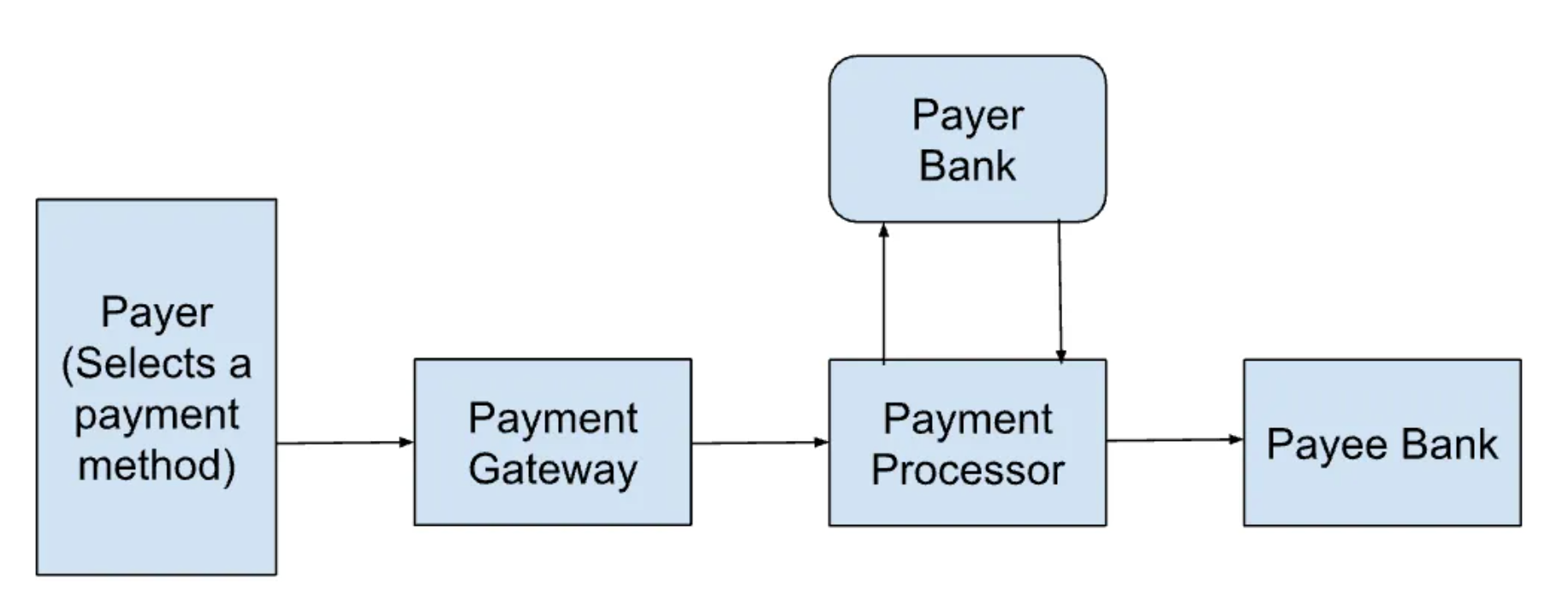
How does the payment process unfold
- The payer initiates the transaction by entering payment details.
- The payment gateway encrypts and transmits this data to the payment processor.
- The payment processor forwards the encrypted data to the payer's bank for authorisation.
- The payer's bank verifies the payment details and responds to the payment processor.
- The payment processor communicates the response to the payment gateway.
- The payment gateway relays the response to the payer and the business.
- If the transaction is approved, the payment processor coordinates the funds transfer from the payer's bank to the business's bank.
Here’s what the process looks like:
What is payment method vs payment processor vs payment gateway
| Payment Method | Payment Processor | Payment Gateways | |
|---|---|---|---|
| Definition | Various ways to make payments, e.g., cash, debit and credit card payments, digital wallets | Entities facilitating the transaction process | Service to secure payment information |
| Role | Represents the form of payment | Facilitates transaction process and fund transfer | Ensures secure transmission of payment information |
| Service | An option to pay via different accounts/online payment and offline | Handles transaction authorisation and fund transfer | Facilitates communication between involved parties |
| Examples | Credit cards, cash, checks, digital wallets like Google Pay, Apple Pay | Stripe, Square, PayPal | Authorize.Net, PayPal Checkout, Braintree |
What should shape your business payment strategy
Five things tend to separate a payment setup that scales from one that quietly breaks under growth:
- Who you're actually paying and collecting from. A trading business settling supplier invoices across borders has a different risk profile than a SaaS company collecting monthly domestic subscriptions. The right strategy starts with your counterparties, not with a list of available methods.
- Where your customers are, and how they're transacting. A business moving from brick-and-mortar to online needs to account for card acceptance and digital payment infrastructure it may not have needed before. Geography and channel shape which methods are actually relevant.
- The cost of friction. A wire transfer fee is visible. The hours your finance team spends reconciling mismatched payment data across entities usually aren't, and it's often the larger cost.
- How well payments integrate into your existing financial infrastructure. A payment method that doesn't sync with your accounting and reporting systems creates manual reconciliation work downstream, regardless of how fast or cheap it looks at the point of transaction.
- Regulatory standing, especially as you scale. Prioritising MAS-regulated rails and PCI DSS-compliant providers is what keeps due diligence simple when you're raising capital, going through an audit, or expanding into a new market.
- Whether it holds up at your next stage. A payment setup that works for a single-entity domestic business often breaks the moment you add a second entity or start transacting in a second currency. Build for where the business is going, not just where it is.
Key considerations for setting up business payments
Once you've settled on the right mix of payment methods, a few practical steps determine how smoothly that setup actually runs.
UEN registration and bank linkage
To use PayNow Corporate, your business needs to register its UEN with a participating bank, linking it to your business account. This is typically done through your bank's corporate portal and takes a few business days to activate.
Approval workflows and authorisation limits
Decide who can initiate and approve payments before you need to. For multi-entity businesses, this often means different approval chains per entity, with clear thresholds for who can sign off on what value of transaction.
Bank and channel limits
PayNow-FAST caps out at S$200,000 per transaction at the network level, but individual banks can set lower limits on top of that. Confirm your actual limits with your bank rather than assuming the network maximum applies, especially if you're processing high-value supplier or payroll payments.
Multi-currency account setup
If your business pays or collects in more than one currency, set up multi-currency accounts before you need them, not reactively after a cross-border payment gets delayed. This also applies to which currencies you actually hold versus convert on demand.
Integration with your accounting stack
Confirm any payment platform or bank channel connects to your accounting software before committing to it. Reconciliation problems are far easier to prevent at setup than to fix after months of manually matched transactions.
Data and documentation for audit readiness
Keep a clean record of registrations, approval policies, and payment mandates as you set things up.
SGQR integration for in-person and invoicing
If you're using PayNow Corporate, your UEN payment flow can be combined into a single Singapore Quick Response (SGQR) code, which is a national standard that bundles PayNow alongside other schemes like NETS and supported e-wallets into one scannable code. This is useful for shopfronts and invoices alike.
Managing business payments across multiple entities or currencies
Aspire gives finance teams one place to control payments across entities and currencies with multi-currency accounts, competitive FX rates, and real-time visibility into spend, without stitching together separate banking relationships per market.
For businesses that also need to manage collections, Aspire's receivable management tools help streamline invoicing and cash flow tracking, with integrations that sync directly to your accounting software.
Frequently Asked Questions
How do multi-entity companies manage payments across markets?
Multi-entity companies typically centralise payment operations through a single platform that gives visibility across all entities, rather than managing separate banking relationships per subsidiary. This makes it possible to track spend, approve payments, and reconcile transactions consistently, regardless of which entity or currency is involved.
Is PayNow Corporate suitable for cross-border or B2B payments?
PayNow Corporate is built for domestic Singapore transactions using a company's UEN rather than a personal mobile number, making it well-suited for local supplier payments and collections. More than 350,000 business entities in Singapore now use it, and MAS's PayNow Generation 2 initiative is expanding its role in business payments further. However, PayNow Corporate runs over FAST, which caps transactions at S$200,000, meaning larger domestic payments need to go through GIRO or MEPS+ instead. For cross-border B2B payments, businesses still rely on wire transfers, multi-currency accounts, or PayNow's growing cross-border links to select markets like Malaysia and Thailand.
What is the fastest payment method in Singapore?
FAST, which stands for Fast And Secure Transfers, is a recently introduced electronic funds transfer service. It allows customers of participating banks to swiftly transfer Singapore Dollar funds from one bank to another within Singapore. This service is available 24/7, 365 days a year, providing almost instantaneous fund transfers.
Are there discounts for using a particular payment method?
Yes, businesses often incentivise specific payment methods by offering discounts or exclusive promotions to encourage preferred transaction channels.
What's the best way for a Singapore business to collect customer payments?
Most Singapore businesses collect customer payments through a mix of PayNow, card payments via a payment gateway, and digital wallets for consumer-facing transactions, while B2B collections increasingly run through PayNow Corporate using a company's UEN. The right mix depends on whether your customers are consumers or other businesses and how much checkout friction affects conversion for your specific business.
Sources
- Transfer Funds to Other Bank Accounts in Singapore: https://www.dbs.com.sg/personal/support/bank-local-funds-transfer-transfer-to-other-bank-accounts.html (2026)
- Credit Card Processing Fees: https://www.nerdwallet.com/business/software/learn/credit-card-processing-fees (6 March 2026)
- Buy Now, Pay Later Statistics 2026: Market Size, Adoption, Trends, and Risks: https://www.chargeflow.io/blog/buy-now-pay-later-statistics (20 Aug 2026)
- How long does a Swift payment take?: https://www.swift.com/payments/how-long-does-swift-payment-take (2026)
This blog is for general information only and does not constitute financial, legal, tax, or professional advice. Aspire’s services are subject to the terms outlined in our 'Terms of Service' and 'Pricing' pages. We make no guarantees as to the accuracy, completeness, or timeliness of the content, and past results do not indicate future performance. Always consult a qualified professional before acting on any information provided.
Aaron Oh
Writer
Aaron is a seasoned content writer specialising in finance, insurance and tech industries. With a writing history at S&P Global, EdgeProp, Indeed, Prudential, and others, Aaron leverages finance knowledge and business insights to help businesses improve productivity and performance.
Aspire Launchpad
Supercharge your finance operations with Aspire
Find out how Aspire can help you speed up your end-to-end finance processes from payments to expense management.

Latest articles
E-commerce •
E-commerce fulfilment in Singapore: Complete guide for businesses
Learn how e-commerce fulfilment works in Singapore, from warehousing and order processing to delivery, costs, and choosing the right fulfilment partner.

E-commerce •
3PL for ecommerce warehousing in Singapore
Learn how 3PL warehousing works for e-commerce businesses in Singapore, its benefits, how it works and how to choose the right provider.

E-commerce •
Singapore ecommerce tax: GST rules, registration & filing explained
How Singapore ecommerce tax works: GST registration threshold, rates on imports, and filing your GST return as a seller.
Start your journey with Aspire
Open your free account