


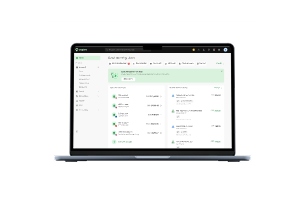
What is a foreign currency account
A foreign currency account lets your business receive, hold, and send money in currencies other than Australian dollars without converting funds immediately. This gives you more control over currency conversion, helping you choose when to exchange funds based on market conditions instead of converting every payment as it arrives.
Here's how a foreign currency account works:
- Hold funds in foreign currencies until you're ready to convert or spend them
- Receive payments from overseas customers without automatically converting funds into AUD
- Pay international suppliers and contractors directly in their preferred currency
- Convert currencies when exchange rates are more favourable, rather than at the time of each transaction
- Reduce unnecessary conversion fees and FX margin costs by avoiding repeated currency exchanges
- Access local currency account details in selected markets, making it easier for overseas customers to pay you using domestic payment methods
Foreign currency account vs multi-currency account
Although the terms are often used interchangeably, they aren't always the same:
- Foreign currency account: Typically lets you hold and transact in one foreign currency, such as USD or EUR.
- Multi-currency account: Allows you to manage multiple currency balances from a single account, making it a better fit for businesses that regularly receive or make payments across different markets.
What to look for in a foreign currency account
Foreign currency accounts vary widely in features, pricing, and flexibility. Focus on the capabilities that help you manage international payments efficiently while keeping costs low.
Supported currencies
Make sure the account supports the currencies you use, as some providers offer only a few while others support many. Choose one that fits your current needs and future plans.
Foreign exchange costs
Exchange rates tell only part of the story. FX margins and currency conversion fees can have just as much impact on what you pay, especially if your business sends or receives international payments regularly.
International payment capabilities
Look for fast, reliable transfers and broad global coverage. This helps you send and receive money without delays. According to the Bank for International Settlements, only 35% of global cross-border retail payments are credited within one hour, highlighting why payment speed remains an important factor for businesses managing international cash flow.
Local account details
Local currency account details let customers pay you like a domestic transfer. This makes payments easier and can reduce fees.
Business tools and integrations
Some accounts include extras like expense tracking, corporate cards, and accounting integrations. These can save time but aren’t essential for everyone.
Compare the top foreign currency accounts in Australia
The best foreign currency account in Australia depends on how your business operates. Some providers focus on low-cost international payments, while others combine multi-currency accounts with broader finance tools such as expense management and accounting integrations.
[Table:1]
*Supported currencies vary by provider and may change over time. Check each provider's website for the latest currency coverage before opening an account.
† Requires an eligible linked AUD business account, which may have its own fees.
6 best foreign currency accounts in Australia
The best foreign currency account for your business depends on where you receive payments, how often you make international transfers, the currencies you work with, and whether you need additional finance tools beyond a foreign currency bank account.
Here's how the best foreign currency accounts in Australia compare.
1. Aspire
Aspire is an all-in-one finance platform for founders managing international payments, expenses, and multi-currency operations. It combines a business account with expense management, virtual cards, and accounting integrations.
Trusted by 50,000+ founders globally, it offers 100% online account opening and seamless integration with Xero and QuickBooks.
Key features
- Multi-currency business account
- Free local transfers via NPP and BECS
- Instant virtual cards (compatible with Apple Pay and Google Pay)
- Built-in expense management
- Native Xero and QuickBooks integrations
- Budget controls for teams and projects
- Earn 1% unlimited cashback on all FX card spend
Supported currencies: AUD + 12 additional currencies planned
Pricing highlights
- No setup fees
- No monthly fees
- No minimum balance requirements
Ideal for: Startups, e-commerce businesses, marketing and creative agencies, and growing businesses with international operations.
[Table:2]
2. Wise Business
Wise Business is a popular choice for businesses that regularly receive and send international payments. It stands out for its local account details in multiple markets, transparent FX pricing, and a multi-currency account designed for cross-border transactions.
Key features
- Local account details in multiple markets
- Multi-currency balances
- International transfers
- Mid-market exchange rate with transparent fees
Supported currencies: 22 currencies
Pricing highlights
- No monthly fee
- Pay-as-you-go pricing
- Currency conversion fees apply
Ideal for: Freelancers, exporters, and service businesses with overseas clients.
[Table:3]
3. Airwallex
Airwallex caters to businesses managing payments across multiple markets. Alongside multi-currency accounts, it offers corporate cards, expense management, and global payment infrastructure for businesses with more complex international operations.
Key features
- Multi-currency business account
- International transfers
- Local account details in supported markets
- Corporate cards
- Expense management
- Accounting integrations
Supported currencies: 20+ currencies
Pricing highlights
- Plans from AUD $29/month (waived if eligibility requirements are met)
- FX fees vary by transaction type
Ideal for: High-growth companies, international e-commerce brands, and global operations teams.
[Table:4]
4. Westpac
Westpac offers foreign currency bank accounts alongside its broader business banking services. It's a suitable option for businesses that prefer working with an established Australian bank while managing international payments.
Key features
- Foreign currency accounts
- International payments
- Online banking access
- Optional foreign currency overdrafts
Supported currencies: 12 currencies
Pricing highlights
- No monthly account fee
- Currency conversion and transaction fees may apply
Ideal for: Established businesses and founders that prefer traditional banking.
[Table:5]
5. NAB
NAB's Foreign Currency Account is designed for businesses that want to manage international transactions while keeping their banking within the NAB ecosystem. It supports foreign currency payments alongside NAB's broader business banking services.
Key features
- Foreign currency bank accounts
- International payments
- Online banking access
- Integration with NAB business banking services
Supported currencies: 16 currencies
Pricing highlights
- No monthly account fee
- Transaction and currency conversion fees may apply
Ideal for: Existing NAB business customers and established businesses with international transactions.
[Table:6]
6. Commonwealth Bank
Commonwealth Bank offers international currency accounts as part of its business banking portfolio. It's a practical choice for businesses that already bank with CommBank and want to manage foreign currency transactions within the same banking relationship.
Key features
- Foreign currency bank accounts
- International payments
- Online banking access
- Business banking services
Supported currencies: 18 currencies
Pricing highlights
- No monthly account fee
- An eligible linked AUD business account is required
- Currency conversion and transaction fees may apply
Ideal for: Established businesses and businesses wanting a large banking provider
[Table:7]
Foreign currency account fees explained
The cost of a foreign and international currency account goes beyond the monthly fee. Depending on how often you send, receive, or convert money, transaction and foreign exchange costs can have a much bigger impact on your total expenses.
- Monthly account fees: Ongoing charges for maintaining the account. Some providers don't charge a monthly fee.
- Account maintenance fees: Additional fees for account administration or failing to meet eligibility requirements.
- Currency conversion fees: Charged each time you exchange one currency for another.
- FX margins: The markup added to the exchange rate. Even a small FX margin can significantly increase costs over time.
- SWIFT transfer fees: Charges for sending or receiving payments through the SWIFT network.
- Receiving payment fees: Some providers charge to receive international payments or funds in certain currencies.
- International transfer fees: Fixed or variable fees for sending money overseas, separate from currency conversion costs.
Key takeaway: While account fees are easy to compare, FX margins often have a much greater impact on the total cost of sending, receiving, and converting foreign currencies.
What local currency account details should you look for
Receiving international payments becomes much simpler when your provider offers local currency account details. Customers can pay you using a domestic bank transfer, which is often cheaper and more straightforward than an international wire.
Understanding IBANs
An International Bank Account Number (IBAN) is a standardised account identifier used across many countries, particularly in Europe.
Businesses that receive payments in euros (EUR) often need an IBAN so customers can pay them through local banking networks rather than more expensive international payment methods.
Understanding SWIFT codes
A SWIFT code identifies the bank receiving an international payment. It helps route funds securely between financial institutions across different countries.
You'll typically need a SWIFT code when sending or receiving international wire transfers, especially if the payment is made outside local payment networks.
Local bank account details for receiving payments
Local receiving account details let your business collect payments as though you have a domestic bank account in another country. This can make it easier for overseas customers to pay you and help reduce payment friction.
A business invoicing customers in the UK, for example, can provide local GBP account details instead of international banking details. Customers pay as they would any domestic supplier, helping avoid unnecessary friction during the payment process.
Bring your international payments, expenses, and finances together
The best foreign currency account in Australia depends on how your business operates. Consider the currencies you work with, how often you send and receive international payments, the FX costs you'll incur, and whether you need additional tools to manage growing financial operations.
If you're looking for more than just a foreign currency account, Aspire brings your business finances together in one platform. It combines multi-currency accounts, free local transfers via NPP and BECS, expense management, budget controls, and virtual cards to help reduce manual admin work as your business grows.
For founders managing international operations, an integrated finance platform can simplify everyday financial workflows while giving teams greater visibility and control.
FAQs
1. Can I open a foreign currency account online in Australia?
Yes. Many fintech providers and some banks let businesses open a foreign currency account online. Eligibility requirements, verification steps, and onboarding times vary between providers.
2. Can I hold multiple currencies in one business account?
Yes, if you choose a multi-currency account. These accounts let you hold balances in different currencies without opening a separate account for each one.
3. Is a foreign currency account worth it for small businesses?
If you regularly invoice overseas customers or pay international suppliers, a foreign currency account can help reduce conversion costs and simplify cross-border cash flow management.
4. Can I receive USD, EUR, or GBP without converting them to Australian dollars?
Yes. Many providers let you receive payments in major foreign currencies and hold the funds until you decide to convert or spend them, depending on the account's capabilities.
5. How long does it take to open a foreign currency account?
Digital-first providers can often approve applications within a few business days, while traditional banks may take longer, depending on their onboarding and verification processes.
6. Do all foreign currency accounts provide local receiving account details?
No. Some providers offer local account details in selected markets, while others only support international wire transfers. Check this feature if you regularly receive payments from overseas customers.







































.jpeg)





.jpeg)


.jpeg)