


Do you legally need a business bank account as a sole trader?
In Australia, there is no law requiring a dedicated business bank account for sole trader use. You can operate using a personal account, but most accountants advise against it.
The ATO expects accurate records of business income and expenses, especially if registered for GST or lodging a tax return. Using a personal account complicates this unnecessarily.
What is a sole trader?
A sole trader operates a business in their own name without forming a separate legal entity. It is the simplest and most common business structure in Australia and is popular among freelancers, tradespeople, consultants, and small business owners.
When registering as a sole trader, you apply for an ABN through the Australian Business Register. Unlike a company registered with ASIC, a sole trader and their business are legally the same, meaning you are personally responsible for any debts or liabilities.
Can you use your personal bank account for business?
Technically, yes. But doing so creates problems that tend to compound over time. When personal and business transactions sit in the same account, separating them for your tax return becomes a time-consuming exercise involving a lot of guesswork.
You might miss deductions, misreport income, or spend hours reconciling statements you could have avoided entirely. Most banks also restrict the use of personal accounts for commercial purposes, so using one for business could technically breach your agreement with the bank.
This is why opening a sole trader business account is strongly recommended.
Why open a separate business bank account?
Opening a dedicated sole trader business account brings real, practical benefits beyond tidiness.
Separates personal and business finances
Keeping your finances separate is an important step you can take as a sole trader. It draws a clear line between what belongs to you personally and what belongs to the business. This matters when dealing with clients, suppliers, lenders, and the ATO.
Simplifies tax returns and ATO compliance
At tax time, having a single account dedicated to business transactions makes it straightforward to calculate your income, expenses, and GST obligations.
You are not sifting through grocery purchases and Netflix subscriptions, trying to work out what was a legitimate business expense. Your records are clean, complete, and easy to hand over to your accountant.
Tracks income and expenses more efficiently
A business account gives you a real-time view of your financial position. You can see what is coming in, what is going out, and how your business is performing at any point. That visibility is essential for managing cash flow, especially in the early stages when income can be irregular.
Links to accounting software
A dedicated sole trader business account integrates seamlessly with software like Xero and MYOB. Transactions import automatically, reducing manual entry steps and the risk of errors.
Presents a professional image to clients
When you invoice clients, receiving payments into a business account rather than a personal one signals that you take your business seriously. It builds credibility, particularly with larger clients or businesses that have their own compliance processes to follow.
Helps manage cash flow
Good cash flow management starts with having a clear picture of your finances. A dedicated business account makes it easier to forecast upcoming expenses, identify slow periods, and plan ahead.
When you are not constantly disentangling personal and business spending, you can focus on actually running your business.
Types of sole trader bank accounts
Not all business accounts work the same way. Understanding what is available helps you choose the right combination for where your business is right now.
Business transaction accounts
A business transaction account is your everyday working account. It handles incoming payments from clients, outgoing payments to suppliers, and day-to-day expenses. This is the account you will use most often and the one that typically connects to your accounting software and payment systems.
When looking for the best business account for sole trader use in Australia, a transaction account with low or no monthly fees, easy online access, and strong integration with accounting tools is usually the starting point.
Business savings accounts
A business savings account lets you set aside funds you do not need immediately, such as money reserved for your quarterly GST obligations or tax return. These accounts typically pay interest on your balance, so your money works for you while it sits.
Separating your reserves into a savings account also reduces the temptation to spend funds that are earmarked for tax or future expenses. It is a straightforward way to stay on top of your obligations without scrambling at the end of the financial year.
Business overdrafts
A business overdraft allows you to draw down beyond your account balance up to an agreed limit. It acts as a short-term buffer for cash flow gaps, such as when a client pays late or an unexpected expense lands before your next invoice clears.
Overdrafts can be a sensible tool when used carefully. They are best treated as a safety net rather than a regular source of working capital, since the interest costs add up quickly if you rely on them too heavily.
Specialist business accounts
Some financial providers offer accounts built specifically for certain types of businesses or needs. These might include accounts with built-in expense management tools, virtual cards for team spending, or currency features for businesses that deal with international clients.
Specialist accounts are worth exploring once your business has grown past the basics and you need more than a standard transaction account can offer.
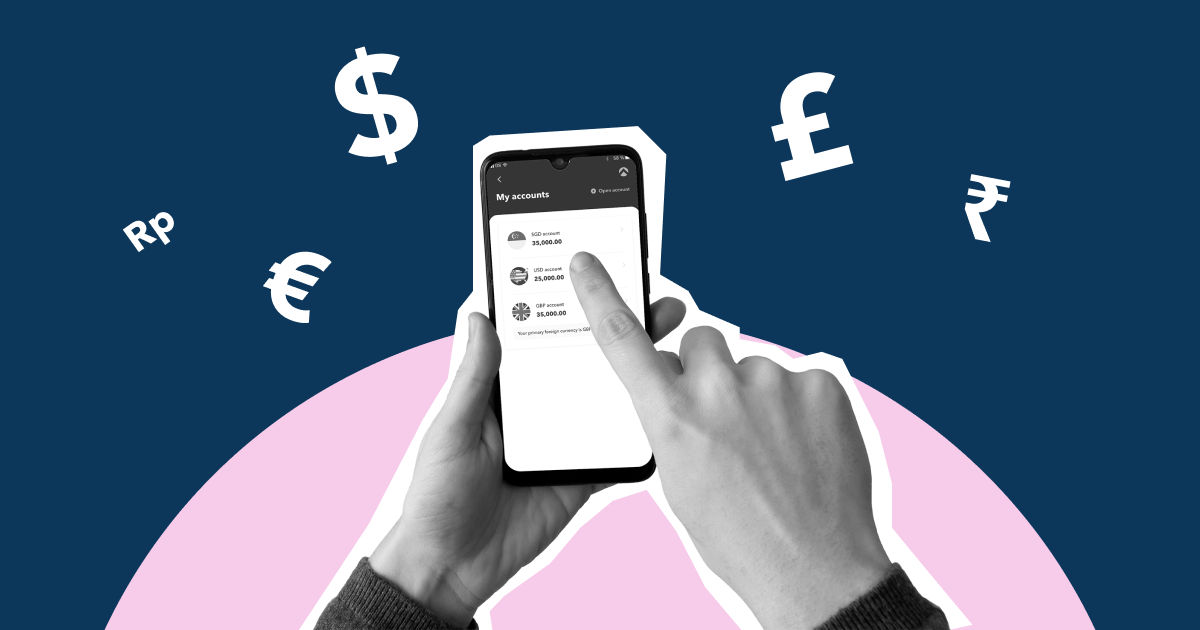
Foreign currency accounts
If you work with overseas clients or pay international suppliers, a foreign currency account can save you a significant amount in conversion fees.
Rather than converting every payment at your bank's exchange rate, you hold funds in the relevant currency and convert when the rate is favourable. For sole traders doing business across borders, this type of account can make a meaningful difference to your margins over time.
What is the best bank account type for a sole trader?
For most sole traders, a business transaction account is essential. Adding a business savings account helps you set aside funds for GST or tax returns, while a business overdraft supports unpredictable cash flow. Across all options, we recommend that you look for low fees, digital access, and integration with Xero or MYOB.
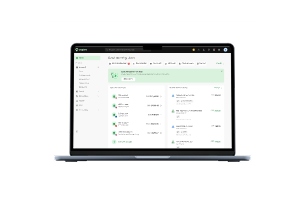
One option worth considering is Aspire. Aspire offers a business account for sole trader use with multi-currency support, expense management, and accounting integrations, making it ideal for growing businesses without traditional banking complexity. If you anticipate selling products overseas or working with clients in multiple markets, we make it simple and affordable to do so.
FAQs
Here are some common questions sole traders have about setting up and managing a business bank account in Australia.
Do I need an ABN to open a business bank account?
Most Australian banks and financial providers will require you to have an ABN before opening a dedicated business account, as it confirms your status as a registered business entity.
Can I use the same account for GST and income tax?
You can use your business transaction account for both, but many sole traders find it easier to transfer GST funds into a separate business savings account as they are collected, so the money is set aside when the BAS lodgement date arrives. Certain savings accounts also accumulate interest, allowing your funds to grow while they sit.
Does opening a business account affect my personal credit?
Opening a business bank account generally does not affect your personal credit score, though applying for a business overdraft or credit facility may involve a hard credit check that could have a minor impact.
What should I look for in a sole trader business account?
When choosing a sole trader business account in Australia, prioritise low fees, seamless integration with accounting software like Xero or MYOB, easy online access, and features that match your day-to-day banking needs.


.jpeg)
























.jpeg)



.jpeg)
.jpeg)