


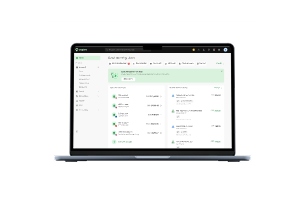
Types of HSBC Australia business bank accounts
First, let’s look at the core business bank accounts HSBC offers in Australia. Each account type suits different business sizes, sectors, and levels of international exposure.
Below are the main options and their suitability for different business needs.
[Table:1]
Key features of the HSBC business transaction account
Understanding available features helps you assess how well an account supports your operations. The right tools can reduce overhead and improve cash flow management. These features also play a critical role in scaling your business efficiently and maintaining visibility as operations grow.
[Table:2]
HSBC business account fees and pricing
Business bank accounts generally have a range of fees and pricing features that impact your overall cost of banking. HSBC's transaction accounts typically feature no monthly account fees. There are also no transaction fees on standard electronic transactions in Australia.
Accounts may include a Business Visa Debit Card with unlimited electronic transactions. Fees can vary by business segment and account type.
Foreign currency and savings accounts carry no ongoing monthly fees. However, interest rates and bonus conditions vary depending on activity levels. This allows businesses to manage funds efficiently without unexpected charges.
International payment fees may apply for some transactions. This is especially likely through correspondent banking networks or trade finance services.
HSBC disclosures highlight that other fees may apply and recommend reviewing the relevant terms and conditions. All accounts are covered by the Financial Claims Scheme, protecting eligible deposits.
Pros and cons
When weighing up HSBC's business accounts, consider both strengths and limitations. Making a final decision is easier with a balanced view, as outlined below.
[Table:3]
Who is eligible? Eligibility requirements
To open a business account with HSBC Australia, you generally must be a registered business entity. This means holding a valid ABN and often an ACN if you are a company.
You must comply with regulatory criteria under APRA, ASIC, and AFSL frameworks. Relevant identification documents are also required. Non-residents and foreign-owned entities may face additional scrutiny during the application process.
Eligibility involves identity verification. Businesses may also need to provide PAYG and BAS registration details to the ATO. Specific requirements differ by account type and business size, ensuring the bank can offer appropriate services for each business.
Documents required to open an HSBC business account
Typical documentation for opening a business account includes the following:
- Proof of business registration (ABN and ACN where applicable)
- Director and shareholder identification
- Proof of address and identity of authorised signatories
- Business structure documentation
- Relevant tax identifiers, such as GST registration if applicable
- Financial statements or proof of projected activity
These requirements help comply with Australian regulatory standards and ensure safe banking practices.
How to open an HSBC business account
Opening a business account with HSBC typically follows these steps:
- Determine the account type that fits your business needs, such as a Business Transaction Account or Foreign Currency Account
- Gather the required documentation, including ABN, ACN, identity and address proofs
- Submit an application either online via HSBC's secure portal or in person at a local branch
- Complete identity verification checks as requested by HSBC and provide any supplementary information
- Once approved, activate your online banking access and order any associated debit cards
The process varies if you're opening accounts from overseas or need multiple account types. HSBC may also request additional supporting documents for foreign-owned or complex entities.
HSBC business banking support
HSBC offers customer support channels to help businesses manage their accounts. Through HSBCnet, 24/7 features like LiveChat and virtual assistance are available. Relationship managers and phone support are also accessible for tailored assistance.
Branch visits remain an option for businesses preferring face-to-face service. Response times and service quality may differ across business segments. Experiences may vary depending on account type and complexity.
Alternatives to HSBC business accounts
If HSBC doesn't align with your needs, Aspire Australia offers a modern alternative focused on cross-border entrepreneurs and flexibility.
Fees tend to be more transparent, which suits cost-conscious businesses. Account setup is straightforward, with no lengthy branch visits required. In addition, fintech platforms like Aspire often provide faster onboarding, intuitive dashboards, and built-in tools.
Aspire lets you handle invoicing, expense tracking, and multi-currency management, making it a strong option for digitally focused businesses.








.jpeg)



































.jpeg)





.jpeg)


.jpeg)