


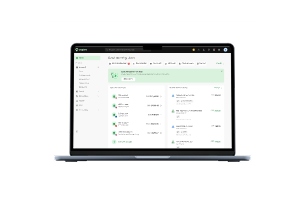
What is a business bank account
A business account is a dedicated account used solely for business transactions. It keeps your personal finances separate from your business income and expenses.
When opening a business bank account, you are laying the groundwork for a clear financial record. This helps you manage bookkeeping, tax reporting, and financial planning more easily. A proper account structure simplifies your business account application process and reduces errors.
It also builds credibility. Clients and partners are more likely to trust a business that operates through a professional account rather than a personal one. This is especially true when the structure of your business bank account aligns with your operations.
Starting with a separate account ensures you can scale smoothly without future account complications.
Do you need a business bank account in Australia
Whether you need a separate account depends on your business. However, even when not legally required, setting up a business bank account is beneficial for efficiency and compliance. It also improves financial visibility, supports better cash flow management, and reduces the risk of errors during tax time.
Your obligations and considerations will vary depending on your business structure, as detailed below.
Sole traders
As a sole trader, you are not legally required to open a separate account. Still, choosing to set up business bank account systems early makes tax reporting easier and reduces confusion. Understanding what you need to open a business bank account helps simplify the setup process.
Partnerships
Partnerships should open a business bank account to manage shared finances. The account ensures transparency and simplifies profit distribution. Using a dedicated account also makes partnership accounting clearer.
Companies (Pty Ltd)
Companies must open a dedicated business bank account. A registered company is a separate legal entity, so personal accounts cannot be used for business transactions. Knowing how to open a business account at this stage avoids compliance issues and keeps finances distinct.
Trusts and SMSFs
Trusts and self-managed super funds require separate accounts to meet compliance obligations. Trustees must manage funds strictly for their intended purpose when they open a business bank account for regulated structures. Correct documentation ensures a smooth business account application.
Types of business bank accounts in Australia
Not all business bank accounts serve the same needs. Choosing the right type depends on how your business operates and your short- and long-term goals.
Many businesses use more than one account to organise their finances effectively and maintain control over spending and budgeting. The right combination of accounts improves cash flow visibility, supports financial planning, and keeps operational funds separate from savings.
Understanding how each account type functions will help you choose the right starting point for your day-to-day operations.
Business transaction accounts
These are everyday accounts used for receiving payments, paying suppliers, and managing cash flow. They are the most common choice when you first open a business bank account.
Transaction accounts often come with features like debit cards, online payment portals, and automated invoicing, which simplify daily operations. Choosing the right business transaction account can make managing expenses, tracking revenue, and reconciling accounts much easier.
Business savings accounts
Savings accounts help you set aside funds for taxes, growth, or emergencies. They often complement your primary account after opening a business bank account. Many also offer interest earnings, flexible access to funds, and automated transfers to help build reserves consistently over time.
Business term deposits
Term deposits lock funds for a fixed period in exchange for higher interest rates. They suit businesses with surplus cash after they create business bank account structures for daily use. Using term deposits strategically can enhance long-term financial planning and optimise cash reserves.
Foreign currency accounts
If you deal with international clients, these accounts allow you to hold and transact in multiple currencies. They’re essential when opening a business bank account online with global capabilities. They also help reduce conversion costs and simplify cross-border payments and international invoicing processes.
Business overdraft facilities
Overdrafts provide short-term credit linked to your account. They help manage cash flow gaps once you set up business bank account operations.
Overdraft facilities can be particularly useful during seasonal fluctuations or when unexpected expenses arise. They give businesses the flexibility to maintain operations without disruption.
Bank vs Fintech: What is the difference?
Traditional banks and fintech platforms both offer business accounts. However, they differ in structure and experience when you decide how to open a bank account in Australia. Banks provide physical branches, long-standing reputations, and a full suite of financial services.
That being said, processes can be slower and more document-heavy during the business account application stage. Fintech providers focus on speed and digital convenience. You can often open a business bank account online within minutes, with streamlined verification and built-in tools for convenience.
Fintech also allows founders to create business bank account access without visiting branches. The choice depends on your priorities. If you value speed and automation, fintech may suit you better.
If you need in-person support, a traditional bank will feel more familiar. Weighing both options helps you match the right services to your operational needs.
What to look for when choosing a business bank account
Choosing the right account affects your daily operations. You need to evaluate features that align with how your business runs before you open a business bank account.
Here are the key factors to consider:
- Monthly fees and transaction fees, including hidden costs
- Online banking experience and mobile app functionality
- Integration with accounting tools like Xero or MYOB
- International payment capabilities and FX rates
- Access to overdraft or credit facilities
- Availability of branches if you need in-person support
- Quality and responsiveness of customer support
Each of these directly impacts your efficiency when setting up a business bank account. A low-fee account with poor usability can cost more time than it saves money. It’s also important to consider scalability, security features, and how well the account supports future growth as needs evolve.
Knowing how to open a business bank account while evaluating these features ensures you select a suitable provider.
Monthly fees and transaction fees
Some accounts charge monthly maintenance fees, while others operate on a pay-per-transaction model. Always check for limits and excess charges before you open a business bank account. Understanding fee structures early can help you avoid unexpected costs and optimise cash flow.
You’ll also want to compare fee waivers, introductory offers, and pricing tiers based on your transaction volume.
Online banking and mobile app
A strong digital platform allows you to manage payments, track spending, and approve transactions on the go. It should also offer real-time notifications, secure access controls, multi-user permissions, and seamless navigation for efficient day-to-day financial management.
Look for features like invoice creation, expense categorisation, and integrations that streamline your financial workflows further.
Accounting software integration
Integration reduces manual data entry. It keeps your books accurate and saves hours each month once you set up business bank account systems.
Linking your account with tools like Xero or MYOB ensures financial records are always up to date.
International payment capabilities
If you operate globally, look for competitive FX rates and low transfer fees when you open a business bank account online. You should also consider transfer speed, supported currencies and payment tracking. Your provider should offer local receiving accounts to reduce costs and simplify international transactions.
Overdraft and credit facilities
Access to credit helps manage cash flow fluctuations, especially in early growth stages after opening a business bank account.
Having overdraft options available ensures your business can continue operations without disruption during peak periods or unexpected expenses.
Branch access
Some businesses still require physical banking capabilities, such as cash deposits or face-to-face support. Having access to nearby branches can be helpful for resolving complex issues, verifying documents, or handling large transactions securely.
Customer support
Reliable support matters when issues arise. Delays can disrupt operations after your business account application is completed.
Choosing a provider with responsive service ensures you can resolve account issues quickly after setting up an account.
Best business bank accounts in Australia
Australia offers a mix of traditional banks, regional providers, and fintech options for business accounts.
Big Four Banks (CommBank, NAB, ANZ, Westpac)
The major banks provide comprehensive services, including lending, merchant facilities, and in-branch support. They are well established and widely trusted. However, applying for such accounts can take longer.
Regional Banks (BOQ, Bendigo, Suncorp)
Regional banks often offer more personalised service. They may have competitive fees and local expertise. Their digital capabilities can vary, so it is important to compare features carefully before opening a business bank account.
Fintech Alternatives
Fintech platforms like Aspire focus on speed and simplicity. You can open a business bank account online, manage finances digitally, and automate routine tasks with ease. They are especially useful for founders operating across borders or managing remote teams.
Aspire also simplifies the application process, making it easier to handle everything from verification to account activation in one platform.
Documents required to open a business bank account
Before starting your business account application, you need to prepare the necessary documentation. Requirements vary by structure but generally follow certain regulatory standards.
Here’s what you typically need:
- Proof of identity for all owners or directors
- Australian Business Number (ABN) or Australian Company Number (ACN)
- Business registration documents
- Proof of business address
- Partnership or trust agreements, if applicable
Proper preparation is key to a smooth application process.
Sole traders
You usually need personal identification and your ABN. Some providers may ask for proof of business activity when you open a business bank account.
Partnerships
All partners must provide identification. A partnership agreement may also be required during the application process.
Companies
Directors must verify their identity. You will also need your ACN and company registration documents.
Trusts
Trust deeds and trustee identification are required. Additional documents may be needed, depending on the trust structure.
How to open a business bank account in Australia
Understanding how to open a bank account in Australia for your business becomes easier when broken down into clear steps.
The process is straightforward, especially if you choose a digital-first provider. You can also open an account online, which simplifies verification and document submission.
Here is how to go about it:
- Register online using your email and basic details
- Enter your business information, including structure and registration numbers
- Upload identification documents for verification
- Complete the business account application review process
- Get approved and start using your account
Many providers now allow you to open a business bank account online without visiting a branch. You’ll be able to start operating faster as a result.
Once approved, you can immediately begin sending invoices, receiving payments, and managing expenses after setting up your account.
How to switch business bank accounts
Switching accounts may sound complex, but it’s manageable with a structured approach. Start by confirming that your new account is fully operational. Then, update your payment details with clients, suppliers, and service providers.
Transfer your balance and close your old account only after all transactions have cleared. You’ll avoid missed payments or disruptions, ensuring a seamless transition. It’s also a good idea to monitor both accounts temporarily, reconcile recent transactions, and notify your accountant.
Maintaining accurate financial records throughout this process helps prevent discrepancies and ensures continuity in your reporting and compliance.
FAQs
Here are quick answers to common questions about opening a business account.
What do you need to open a business bank account?
You need identification, business registration details, and relevant legal documents, depending on your structure. Preparing these ensures a smooth business account application.
Can you open a business bank account online?
Yes, many providers allow you to open a business bank account online with digital verification. This typically involves uploading documents, verifying your identity electronically, and completing the application without visiting a physical branch location.
How long does it take to open a business account?
Opening a business account can take anywhere from a few minutes to several days, depending on the provider and verification process. Simpler structures and digital providers are usually faster, while traditional banks may require additional checks and documentation review.
Is it free to open a business bank account in Australia?
While opening a business bank account is usually free, most providers charge ongoing fees, depending on the account type. These may include monthly maintenance fees, transaction fees, or charges for additional services like international transfers.
Can you use a personal bank account for business in Australia?
While opening a business bank account is usually free, most providers charge ongoing fees, depending on the account type. These may include monthly maintenance fees, transaction fees, or charges for additional services like international transfers.


.jpeg)





































.jpeg)





.jpeg)


.jpeg)