

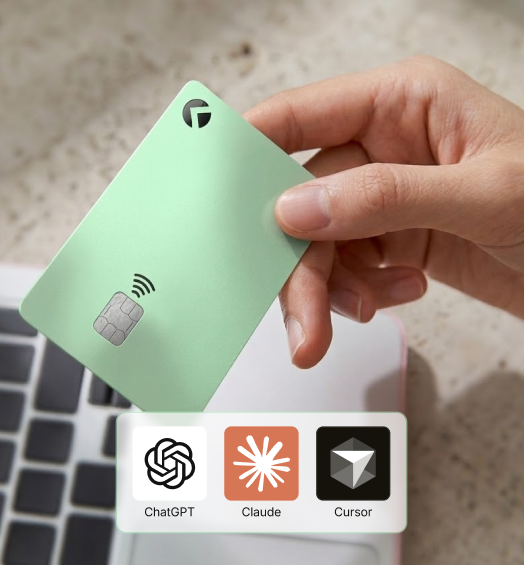
A year ago, OpenAI had more than four times as many paying clients as Anthropic among Singapore startups. Today, that ratio has narrowed to just 1.5×. Anthropic's Claude customer base grew 258% year-on-year, while total spend increased 17×. Over the same period, ChatGPT's customer base grew 79%.
The findings come from Startup Signals: Decoding the Forces Shaping Asia's Next Generation of Businesses, a new report from Aspire analysing anonymised and aggregated transaction data from more than 10,000 businesses across Singapore and Hong Kong. The report examines the spending patterns that sit at the centre of modern company-building: AI and software, payroll, travel and workspace.
While much of the conversation around startups focuses on fundraising, valuations and market conditions, this report examines what businesses are actually doing day-to-day — where they're investing, how they're hiring, the tools they're adopting and how they're scaling.
AI is core infrastructure
The number of Singapore startups using AI tools grew 42% year-on-year. But the more significant shift is in how they use them.
Companies running three or more AI platforms simultaneously more than doubled, suggesting AI has moved beyond experimentation and into core operational infrastructure, with specialised tools serving specialised functions across coding, content creation, research, customer support and workflow automation.
Additionally, Claude now accounts for 37% of all AI platform spend despite having fewer users than ChatGPT, reflecting growing adoption among startups drawn to its developer tooling, workflow integrations and agent-based use cases.
Building global companies from day one
The report also highlights how startup operating models continue to evolve. Payroll activity increased sharply across Southeast Asia, with the Philippines growing 19% and Malaysia 52% as payroll destinations. Meanwhile, India recorded its first decline in the dataset, falling 9% year-on-year.
One in five Singapore startups now pays workers on an ad-hoc basis, pointing to a growing contractor and freelance workforce operating alongside traditional teams. Median payroll fell from US$3,535 to US$3,318 year-on-year, while compensation among higher earners remained largely unchanged.
Business travel also remains a strategic investment despite continued pressure on operating costs. Singapore startup travel spend grew 11% year-on-year, with flights increasing 35% and accounting for nearly half of all travel expenditure.
The office is evolving, not disappearing
Despite years of discussion around remote work, physical offices continue to play a significant role in startup operations. Office-related spending now accounts for 44% of infrastructure costs — exceeding cloud and remote work tooling combined. However, the nature of that spending is changing. Fixed lease and utility costs contracted while coworking spend nearly doubled, with IWG growing 90% and WeWork 80%.
The findings suggest startups are recommitting to physical presence while favouring flexible workspace models over long-term commitments.
"Startups often act as an early indicator of where broader business adoption is heading," said Andrea Baronchelli, co-founder and CEO at Aspire. "They move faster, experiment more freely and respond to economic pressure sooner than larger organisations. What's striking is how quickly these patterns are evolving. Many of the trends highlighted in this report barely existed a year ago, and by the end of this year the landscape could look very different again. What we're seeing is the emergence of a new generation of businesses that are increasingly AI-native, globally distributed and able to scale with far greater flexibility than before."
About the report
Startup Signals: Decoding the Forces Shaping Asia's Next Generation of Businesses draws on anonymised and aggregated transaction data from more than 10,000 businesses across Singapore and Hong Kong. The analysis compares two complete fiscal years: FY24–25 (1 April 2024 – 31 March 2025) and FY25–26 (1 April 2025 – 31 March 2026).



.webp)