


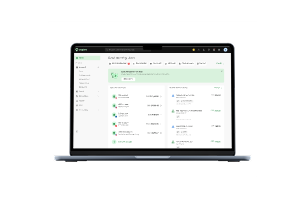
What is cash flow forecasting
A cash flow forecast is an estimate of the cash you expect to receive and spend over a set period. Rather than looking at past performance, it helps predict how much cash your business is likely to have in the future.
It includes expected customer payments, supplier invoices, payroll, taxes, loan repayments, and other planned cash movements to estimate the cash available over the forecast period.
For example, if your business expects to receive SGD $300,000 next month, but most customers pay after 45 days while payroll and supplier payments are due sooner, your cash flow forecast will highlight a potential cash gap. This gives you time to adjust payment schedules, delay non-essential spending, or arrange short-term financing before your operations are affected.
Should your business use a cash flow forecast?
Yes. If your business has regular operating expenses, delayed customer payments, seasonal revenue, or growth plans, a cash flow forecast can help you make better financial decisions before cash becomes a constraint.
While no forecast is perfectly accurate, it gives you a realistic view of future cash inflows and outflows. That visibility helps you plan spending, prepare for payment delays, and identify potential cash gaps early. As your business grows, automated cash flow forecasting tools can reduce manual work and make forecasts easier to maintain.
Why cash flow forecasting matters for growing businesses
As your business grows, every financial decision affects something else. Hiring employees, increasing inventory, entering new markets, or investing in new products all require confidence that you’ll have enough cash when payments become due.
Cash flow forecasting gives you that visibility. It helps you make informed decisions based on future cash availability rather than your current bank balance.
1. Plan business investments with confidence
Growth typically involves spending money in advance․ Whether you want to hire staff, expand your advertising budget, or increase the amount you buy from your suppliers, forecasts show if there will be sufficient cash coming into the business to support this increased spending without harming day-to-day operations.
2. Identify funding needs before they become urgent
Businesses do not always need finance because they need to make a profit; they might need additional working capital to wait for sales made on credit to be paid‚ or they might need cash during a busy trading period․
Identifying these periods in a cash flow forecast gives you more time to consider funding options‚ rather than needing a last-minute solution․
3. Build confidence with investors and lenders
Investors and lenders are keen to know how your business plans to fund its future needs․
A detailed cash flow forecast shows that you have considered projected income‚ business expenses‚ repayments and various scenarios before requesting external funding․
4. Prepare for changes in demand
There are seasonal fluctuations in revenue and expenditures․
For example‚ a retailer may need to stock up on inventory just before the holiday shopping season‚ or a consulting firm may have slow periods in between large client assignments and be busier at other times․ Monthly cash flow forecasting can help you anticipate and prepare for these fluctuations․
5. Make faster decisions when opportunities arise
Business opportunities are often time-sensitive․
Whether you want to negotiate a better deal with your suppliers, invest in new equipment, or move into a new market, an up-to-date cash flow forecast shows you whether you can afford to do those things without putting pressure on your day-to-day operations.
Types of cash flow forecasting
Most businesses use either the direct or indirect method of cash flow forecasting. The right approach depends on the level of detail you need, the decisions you’re making, and how far ahead you’re planning.
Founder’s insight: Many growing businesses use both methods. Direct cash flow forecasting helps you manage day-to-day cash needs, while indirect cash flow forecasting supports longer-term planning, budgeting, and growth decisions.
1. Direct cash flow forecasting
Direct cash flow forecasting estimates future cash movements using expected customer receipts and planned business payments. Because it relies on actual cash transactions, it’s the preferred method for short-term cash planning.
It’s most useful when you need to:
- Prepare for payroll and tax payments.
- Manage supplier payment schedules.
- Monitor cash availability over the coming weeks.
- Reduce the risk of unexpected cash shortfalls.
Businesses that review their cash position regularly often use this method because it provides a clear view of expected inflows and outflows.
2. Indirect cash flow forecasting
Indirect cash flow forecasting starts with projected financial statements and adjusts for non-cash items, changes in working capital, and other accounting movements to estimate future cash availability.
It’s commonly used for:
- Annual budgeting
- Business expansion
- Fundraising
- Strategic financial planning
Although it provides less operational detail than the direct method, it offers a broader view of your business’s future financial position.
Direct vs indirect cash flow forecasting: Key differences
Choosing between the direct and indirect methods depends on your business goals and planning horizon. The table below highlights the main differences to help you decide which approach is more suitable for your business.
[Table:1]
Many businesses benefit from using both methods together. Direct cash flow forecasting helps manage day-to-day operations, while indirect cash flow forecasting supports longer-term business planning and growth.
How to create a cash flow forecast
A reliable cash flow forecast is built on realistic assumptions rather than perfect predictions. Whether you’re using a spreadsheet or forecasting software, the process remains largely the same.
1. Choose your forecasting period
The first step is deciding how far ahead to forecast․
The timeframe should be appropriate for the decision․
Short-term (generally 4 to 13 weeks) forecasts are used in daily cash planning․ Longer-term (generally 12-month) forecasts are used in the budgeting process․ Longer forecasts can be used as a planning tool for expansion‚ fundraising‚ or major expenses․
2. Record your opening cash balance
Use the actual balance across your business bank accounts at the start of the forecast.
This opening balance becomes the starting point for every calculation, so it’s important to use accurate figures.
3. Estimate future cash inflows
Next, estimate the cash you expect to receive during each period.
Common cash inflows include:
- Customer payments
- Subscription revenue
- Loan proceeds
- Investment funding
- Grants or other business income
Where possible, use expected payment dates rather than invoice dates to improve accuracy.
4. Estimate future cash outflows
List every payment your business expects to make during the same period.
Typical cash outflows include:
- Payroll
- Supplier payments
- Rent
- Software subscriptions
- Taxes
- Loan repayments
- Marketing expenses
- Inventory purchases
- Other operating costs
Recording when each payment is due gives you a clearer picture of future cash availability.
5. Calculate your projected closing balance
Once you’ve estimated your inflows and outflows, calculate your closing balance using this formula:
Opening balance + Total cash inflows − Total cash outflows = Closing balance
For example:
- Opening balance: SGD $80,000
- Total cash inflows: SGD $180,000
- Total cash outflows: SGD $158,000
- Projected closing balance: SGD $102,000
The final balance of one period becomes the opening balance of the following period․
Regularly review your forecast and revise it as necessary when your collections from customers‚ costs‚ or business conditions change․ Your forecast is most valuable when it is based on current information․
Cash flow forecast example
The example below shows how a simple monthly cash flow forecast could look for a growing business.
[Table:2]
So this example shows that a forecast is about getting to grips with the cash implications of future receipts and payments․
For example‚ if a large customer pays their invoice later‚ or an unexpected expense arises‚ then your predicted closing balance will have changed․ Review your forecast regularly so that you are aware of changing circumstances.
Cash flow forecast template
A cash flow forecast template provides a structured way to estimate future cash movements. Whether you’re using a spreadsheet or forecasting software, including the right information makes your forecast easier to update and more reliable.
A typical template should include:
- Forecast period – Weekly, monthly, or another timeframe that matches your planning needs.
- Opening cash balance – The cash available at the beginning of the forecast.
- Expected cash inflows – Customer payments, subscription revenue, funding, grants, and other expected receipts.
- Expected cash outflows – Payroll, supplier payments, rent, taxes, loan repayments, software subscriptions, and operating expenses.
- Net cash movement – The difference between total inflows and total outflows.
- Closing cash balance – The projected cash available at the end of the period.
- Assumptions or one-off transactions – Notes for irregular income, planned investments, or large upcoming expenses that may affect the forecast.
If your company's cash flow is reasonably straightforward‚ perhaps you can use a cash flow forecast template Excel workbook‚ modifying the formulas to create a monthly cash flow forecast to compare with your actual figures․
How to analyse a cash flow forecast
Creating a cash flow forecast is only the first step. The real value comes from understanding what the numbers reveal and using those insights to make better cash flow management decisions.
Rather than focusing only on your projected closing balance, review the forecast as a whole. The questions below can help you identify potential risks and opportunities before they affect your business.
1. Is your projected cash balance sufficient throughout the forecast period?
Review your cash position across each week or month, not just at the end of the forecast. A positive closing balance can still hide short periods where available cash falls below what you need to cover operating expenses.
2. Which cash inflows and outflows have the greatest impact?
Identify the transactions that have the biggest influence on your cash position, such as payroll, supplier payments, tax obligations, or large customer receipts. Understanding these cash movements helps you plan ahead and prioritise spending more effectively.
3. Are your forecasting assumptions still realistic?
Compare expected cash movements with actual results. If customer payments, operating costs, or sales regularly differ from your forecast, update your assumptions so future forecasts better reflect how your business operates.
4. How would your business respond to different scenarios?
Scenario planning helps you prepare for changes before they affect your finances. Consider how your forecast would change if:
- A major customer paid 30 days later than expected.
- Sales were lower than forecast for one month.
- Supplier costs increased unexpectedly.
- You needed to invest in new equipment sooner than planned.
Reviewing these scenarios helps you understand the financial impact of potential changes and gives you more confidence when making business decisions.
Common cash flow forecasting mistakes to avoid
Even a well-prepared cash flow forecast can become less reliable if it isn’t maintained properly. Avoiding these common mistakes will help you make better financial decisions and improve forecasting accuracy over time.
1. Treating forecasts as static documents
A forecast should be updated as your business changes. New sales, unexpected expenses, and delayed customer payments can quickly affect your projected cash position, so review your forecast regularly.
2. Using unrealistic assumptions
Base your forecast on actual payment patterns rather than best-case scenarios. If customers usually pay after 45 days, assuming they’ll pay within 30 days can lead to cash shortfalls.
3. Overlooking irregular expenses
One-off costs such as annual software renewals, insurance premiums, tax payments, equipment purchases, or bonus payments can have a significant impact on cash flow. Including them creates a more accurate forecast.
4. Relying on a single forecast
Business conditions can change quickly. Reviewing optimistic, expected, and conservative scenarios helps you understand how different outcomes could affect your cash position and prepares you to respond more effectively.
5. Keeping forecasting separate from daily financial data
A forecast is most useful when it’s based on current financial information. Keeping it aligned with your invoicing, expenses, and payment activity reduces manual work and makes it easier to spot changes early.
When is it time to move beyond spreadsheets
Once your business grows enough that you need to manage multiple bank accounts‚ currencies, or business entities‚ doing forecasting in Excel or spreadsheets can become unmanageable‚ resulting in outdated data‚ inaccurate formulas and formula errors‚ and difficulties in version management․
You may have outgrown spreadsheet forecasting if you:
- You update forecasts across multiple files regularly: Managing several spreadsheets increases the risk of inconsistent data and version control issues.
- You operate multiple business entities or bank accounts: Consolidating financial information manually becomes more time-consuming as your business expands.
- You manage payments in multiple currencies: Tracking exchange rates and cash balances across currencies adds another layer of complexity to forecasting.
- You update rolling forecasts frequently: Revising them by hand can slow financial planning and decision-making.
- You spend more time preparing data than analysing it: If most of your effort goes into collecting and updating information, there’s less time to focus on the financial decisions that drive growth.
This is where automated cash flow forecasting comes in․ By connecting your accounting software‚ expense management software, and bank accounts, you can reduce your manual work and always get the most up-to-date cash flow forecast․
You will then no longer spend hours updating spreadsheets‚ but will have time to forecast your cash position and make business decisions․
How is AI changing cash flow forecasting
As your business grows, cash flow forecasting becomes harder to manage manually. More customers, suppliers, payment schedules, and business entities mean more financial data to review. Keeping forecasts accurate in spreadsheets can quickly become time-consuming.
This is why many businesses are adopting AI cash flow forecasting and predictive cash flow forecasting solutions. Rather than replacing financial judgement, these tools help you produce more accurate forecasts by analysing historical patterns alongside real-time financial data.
For example, AI can identify customers who regularly pay late, recognise seasonal fluctuations in revenue or expenses, and adjust forecasts as new transactions are recorded. This gives you a more current view of your expected cash position without rebuilding your forecast from scratch.
Modern cash flow forecasting with AI platforms can also help you:
- Identify unusual cash movements before they affect liquidity.
- Automatically update forecasts as invoices are paid, bills are recorded, or new transactions occur.
- Compare forecasted and actual cash flows to improve forecasting accuracy over time.
- Model different business scenarios before making decisions such as hiring, expanding, or investing.
AI doesn’t remove uncertainty from financial planning. Instead, it supports faster, more informed decisions by reducing manual work and helping you respond more quickly as business conditions change.
How Aspire supports better cash flow forecasting
Accurate cash flow forecasting starts with accurate financial data. When your banking, expenses, invoices, and payments are spread across different systems, building and maintaining a reliable forecast becomes more time-consuming.
Aspire brings together business banking, expense management, accounts receivable, accounts payable, and financial reporting in one platform. With financial information in one place, your team can spend less time gathering data and more time understanding future cash positions.
As your business grows across multiple entities or markets, centralised financial data makes cash flow management and forecasting more efficient. Instead of manually consolidating information from different accounts, you can work with up-to-date financial data that supports faster planning and more informed business decisions.
Whether you’re preparing a monthly cash flow forecast or planning for long term growth, Aspire helps reduce manual financial work so your team can spend more time analysing future cash movements.
Final thoughts on cash flow forecasting
A cash flow forecast helps you prepare for future cash needs before they affect your day to day operations. By estimating future cash movements, you can prepare for upcoming expenses, respond to changing business conditions, and plan growth without losing sight of your financial position.
No forecast will be perfectly accurate, but reviewing and refining it regularly makes it far more valuable than relying on assumptions alone.
Whether you’re managing day to day operations or planning your next stage of growth, treating cash flow forecasting as an ongoing process helps you respond more effectively as business conditions change.
Cash flow forecasting: FAQs
Q1. What is cash flow forecasting?
Cash flow forecasting is the process of estimating the cash your business expects to receive and spend over a future period. A cash flow forecast helps you anticipate cash shortages or surpluses so you can plan spending and make more informed financial decisions.
Q2. How often should you update a cash flow forecast?
There’s no fixed schedule. A monthly cash flow forecast is suitable for many businesses, while those with higher transaction volumes or rapidly changing cash positions may benefit from updating their forecast weekly or more frequently.
Q3. What is the difference between cash flow management and forecasting?
Cash flow forecasting estimates future cash movements, while cash flow management focuses on monitoring and controlling your current cash position. Together, they help you plan and maintain healthy business finances.
Q4. Can I create a cash flow forecast in Excel?
Yes. A cash flow forecast template in Excel is a practical option for businesses with straightforward finances. As your business grows, automated cash flow forecasting tools can reduce manual updates and improve accuracy.
Q5. What should a cash flow forecast include?
A cash flow forecast should include your opening cash balance, expected cash inflows, expected cash outflows, net cash movement, and projected closing balance. Reviewing a cash flow forecast example can also help you build a more reliable forecast.
Q6. How does AI improve cash flow forecasting?
AI cash flow forecasting analyses historical and real-time financial data to identify trends, update forecasts automatically, and improve forecasting accuracy. It helps finance teams spend less time maintaining forecasts and more time making informed business decisions.




.webp)