


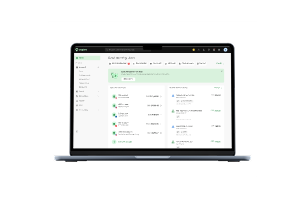
What is EOR payroll
An EOR is a third-party agency that businesses appoint as the legal employer of the international team members hired in the country. EOR payroll is a dedicated solution offered by the agency for processing and managing payroll for those international team members.
An EOR in Singapore will be responsible for filing taxes, payroll processing, CPF contributions, drafting employment contracts and statutory filings such as IRAS reporting. The EOR fees in Singapore typically range between SGD $300 and SGD $800 per employee per month.
Important limitation on work pass sponsorship:
In July 2024, MOM clarified that the work passes are meant for foreigners employed by companies with a local presence in Singapore, including a representative office, subsidiary or any other registered entity.
As a result, an EOR cannot sponsor work passes for foreign nationals whose actual work is being performed for an overseas organisation with no local presence in Singapore. For foreign national hires, founders must typically pursue one of the following measures:
- Incorporating a local entity in Singapore for sponsoring the work pass directly.
- Using a Singapore-based partner or sponsor with a genuine local relationship.
- Alternative passes that are not tied to any single employer, such as ONE Pass for high-earning and senior talent.
- Short-term visit passes for temporary engagements in Singapore.
Why does payroll compliance still matter
For founders hiring across borders, payroll isn’t just something administrative. It’s a legal employment clause that varies from one country to another. Without compliant payroll management, your international hiring in Singapore can trigger legal troubles. Singapore’s strict employment regulations make EORs essential for founders who want to hire compliantly.
Traditional payroll vs. Employer of Record payroll service in Singapore
[Table:1]
How does EOR payroll work
Singapore is among the top-ranked business destinations in Asia, offering strong IP protection, political stability and a deep talent pool across all domains. For founders expanding their business into Southeast Asia, Singapore stands as one of the first hire locations.
So, all entrepreneurs and founders expanding their business into Singapore must understand the EOR payroll mechanics and evaluate its effectiveness. Here’s how it works for different tasks under payroll management:
Employment contracts, onboarding and tax registration
- The Employer of Record payroll services begin at the very initial stage of employment, even before the first salary is disbursed. Payroll is directly dependent on accurate onboarding of employees.
- All employees must be registered with social security and local tax systems before the payroll can legally commence for them.
- EORs prioritise employment contracts, statutory enrolment and tax registration, as these factors determine the payroll of employees and how they will be reported to authorities.
Salary processing, social contributions and statutory deductions
- Upon completion of onboarding, EOR payroll then handles salary processing attributes.
- This involves calculating gross-to-net pay, alongside taking into account the employer contribution and statutory deductions under local laws in Singapore.
- EOR payroll is accountable for all major legal employment obligations in Singapore, such as income tax withholding, pension contributions, social contributions, and health insurance deductions.
- In Singapore, CPF applies to PRs and citizens. Employers contribute 17% and employees 20%, for everyone aged 55 or below. The monthly wage ceiling limit for 2026 is SGD $8,000. Foreign employees on work passes are excluded from the CPF. EORs take this into account while handling your foreign employment needs.
- EORs are also responsible for paying the SDL, which is 0.25% of the monthly wages (Min of SGD $2 and max of SGD $11.25), applicable to all employees, local or foreign.
- An Employer of Record payroll service provider ensures accurate gross-to-net calculations, following timely remittance of contributions and taxes. They help businesses comply with the local employment rules and thresholds.
Payslips, payment timelines and employee benefits
- With salary calculations done, EOR payroll then manages payslip generation as per the MOM rules under the Employment Act of Singapore, followed by payment timelines and statutory benefits under local labour laws. Such elements stand critical for maintaining employment compliance in Singapore.
- Payslips must be issued to employees with salary payment, or within 3 working days after. Employers must also retain the payslip or payroll records for the current period, plus the preceding 2 years. EOR providers ensure they adhere to this requirement.
- EOR payroll service providers will ensure your payslips are compliant with all details highlighted, such as bonuses, paid leaves, allowances and others. This helps you avoid penalties for violating payslip laws in the country.
- Managing timely payment and payslip handover also falls under Singapore’s employment compliance, and EOR providers take care of it.
Shared responsibilities between client company and EOR payroll provider in Singapore
As a founder, you might wonder what payroll responsibilities fall on your team and what you can delegate to the EOR provider. With EOR payroll, the obligations are clearly divided between the client company and the legal employer. Below is a clear representation of the same:
Responsibilities of EOR payroll provider:
Under the EOR payroll model, the legal employer takes full responsibility for adhering to legal compliance associated with employee payments in Singapore. With this, it transfers the complex regulatory obligations to your legal employer, having profound local understanding. EOR will also be accountable for ensuring all payroll processes align with local tax and labour laws in Singapore. The responsibilities include:
- Calculating gross-to-net salary of employees while adhering to the local taxation laws.
- Issuing MOM-compliant payslips with all the essential disclosures.
- Remitting and withholding social contributions and income tax.
- Submitting the payroll reports to associated local authorities.
- Monitoring the regulatory changes and adapting business payroll to them.
- Processing payroll in local currency.
- Dealing with foreign exchange conversion.
- Ensuring timely disbursements of salary through the local banking systems.
- Filing IR21 tax clearance for departing foreign employees.
Responsibilities of business founders/client company:
With the EOR handling payroll compliance, the client company will have complete control over the workforce strategy and employee compensation decisions. Due to this separation of responsibilities, founders will maintain operational authority over the EORs, while still outsourcing the strenuous legal and administrative complexity. The responsibilities will include:
- Compensation packages of employees and salary levels
- Incentive and bonus structures
- Job roles, reporting lines and responsibilities
- Performance evaluation
- Promotions
When to choose EOR payroll vs. traditional payroll services in Singapore?
Choose EOR payroll when you are:
- Expanding your business operations to Singapore, and having no legal entity within the country.
- Testing your services or business operations in the Singapore market.
- Dealing with complex labour laws, employment regulations and other administrative hurdles in the country.
- Seeking a comprehensive suite of workforce management services including assistance with employee relations, performance, employee benefits and others.
- Seeking low regulatory risk through proper compliance with payroll, hiring and immigration laws.
Choose traditional payroll services when you are:
- Operating with the existing legal entities in your target countries, and only need someone to support you with payment processing.
- Managing just the simple payroll needs such as basic wage calculations, payment distribution and tax processing.
- Controlling your payroll costs by partnering with a narrow scope of service and paying only a small fee per disbursement cycle or employee.
- Handling the HR functions internally, and want to outsource only the administrative part of the payroll.
Pay your global talent compliantly with Aspire EOR payroll
Hire employees from across 150+ countries and pay them compliantly to achieve a diversified workforce, working towards helping your business thrive. Aspire EOR lets you hire international team members without setting up a legal entity.
We offer a single account to aid your global hiring, payroll and comprehensive company finances. Powered by Deel’s legal infrastructure, Aspire EOR helps you with employment contracts, compliance checks, payroll timelines and employee benefits. You retain control over your workforce strategy, operations and compensation decisions.
Ready to build your global team with EOR payroll? Explore Aspire EOR and learn how you can hire international team members compliantly.
FAQs
1. What is EOR payroll?
EOR payroll is the process of managing compensation, taxation and statutory compliance of international employees. EORs are third-party agencies that will legally employ international team members on behalf of a client company. These providers will handle payroll processing, employment contracts, local labour law compliance, currency exchange and tax withholding requirements.
2. Do EORs have more control over my team?
No, EORs are responsible for handling legal employment and payroll responsibilities, while you, as a founder, still retain operational control over the workforce strategy, employee performance and business goals.
3. Is EOR payroll more expensive than traditional payroll services?
Yes, EOR payroll is generally more expensive than traditional payroll services, mostly because of the broader scope of solutions it offers. However, they eliminate the need for hiring local HR, infrastructure and legal teams when you operate internationally. So you get better value for the money spent on your international business expansion.
4. Can I still use traditional payroll services without having a legal entity in Singapore?
No, traditional payroll services require you to have a legal entity registered in Singapore. EOR payroll is a better option if you don’t want to invest in setting up a formal legal presence within the country.
5. What will happen if the client company decides to set up its own legal entity in Singapore later?
In that case, the EOR will transfer the employment and payroll to your new entity within a few weeks' time. There will be a need for new contracts, bank accounts, CPF registration, and other such documentation for a smooth transition.





.webp)