


What is Shopify and why Singapore businesses choose it
Shopify is a hosted e-commerce platform that lets you build and run an online store. According to Shoprank, 37.7% of all Singapore e-commerce stores use Shopify as their platform. The advantages are clear – no managing servers, security updates, or PCI compliance. While that saves time, it's not the main reason businesses around the world choose Shopify.
The key benefit here is control. Unlike e-commerce platforms like Shopee and Lazada, Shopify allows merchants to be in charge of their brands, customer information, and checkouts. You will be able to create an email list, implement loyalty programs, and sell directly to your clients. You can even control your own audience with Shopify.
Founder Tip: If your product is a common everyday product (think, phone cases) and you're optimising for discovery, a marketplace-first strategy with a lean Shopify store often outperforms an all-in Shopify launch.
Where Shopify suits Singapore-based founders
- Cross-border ready: Shopify supports multi-currency pricing, localised checkout, and Shopify Markets, making it easier for e-commerce stores to expand into nearby markets like Malaysia, Indonesia, and Australia.
- Strong app ecosystem: Founders can add battle-tested apps for subscriptions, loyalty, customer support, and accounting without having to write code on their own.
- Flexible payments: Shopify supports multiple payment providers, giving Shopify businesses in Singapore more options beyond a single processor.
Why Shopify is growing in Singapore
Three forces are pushing more Singapore founders onto Shopify as compared to other marketplaces or website builders.
1. Cross-border demand is now the default
Singapore's small domestic market means most ecommerce brands here are cross-border by necessity. Many sell into Malaysia and Indonesia via Shopify Markets, fulfill orders from Australian customers, or source from China.
2. Omnichannel expectations have caught up with small and medium-sized enterprise budgets
Shopify POS now makes it realistic for a founder running a pop-up at a market or a physical retail counter to sync inventory with the online store without a separate system. In fact, according to the same Shoprank research, 52% of all Shopify stores in Singapore have a physical distribution store.
3. DTC economics reward owned infrastructure
DTC (Direct-to-consumer) is a business model where brands sell directly to customers through their own website instead of relying on third-party marketplaces or retailers.
Paid social advertising is getting more expensive. To survive, brands need to own their customer relationship: email retargeting, post-purchase flows, loyalty programs. None of that works if you're just a listing on someone else's marketplace. You need your own checkout.
Many Shopify stores today are launched by sellers who first proved demand on Shopee or Lazada. They now use Shopify to build a brand, own customer relationships, and reduce marketplace commissions.
Shopify pricing in Singapore
Shopify's core subscription plans are billed in USD globally, and Singapore is no exception for the three main tiers; only the entry-level Starter plan is currently shown to Singapore visitors in SGD $7/month.
[Table:1]
How to set up Shopify in Singapore
Shopify's own onboarding is very intuitive and friendly. It's the order of decisions that actually matters, because doing them out of sequence is the single biggest source of relaunch rework.
- Register a business: You can create a Shopify account before registering the business with ACRA. However, you need to register a business first to get a business bank account, integrate payment gateways, and issue invoices that comply with GST rules.
- Choose a Shopify plan: For most new businesses, the Basic plan should be sufficient at the beginning. Later, you can upgrade to other plans.
- Choose a suitable theme: It is recommended that you choose a theme according to your catalogue size and requirements rather than its design.
- Organise your products: Organise your products, collections, variants, and tags properly since this will save you a lot of time.
- Configure shipping first: Configure shipping zones and rates prior to enabling payments as the cost of shipping will determine your pricing strategy.
- Configure taxes: Keep GST off until your business becomes GST-registered.
- Connect your domain: Connect your domain using a Shopify domain name or DNS.
- Enable payments: Enable Shopify Payments (if available), local payments such as PayNow or GrabPay.
- Test your store: Test your store by placing a test order, processing a refund, and testing the shipping, tax, and checkout configuration.
- Track your performance from the start: Set up analytics before running any product or store launch.
Launch checklist
[Table:2]
Shopify Seller Center and Shopify Login for Singapore businesses
If you're setting up your first Shopify store in Singapore, one of the first things you'll notice is that there's no separate Shopify Seller Center like on Shopee or Lazada. That often catches first-time founders off guard.
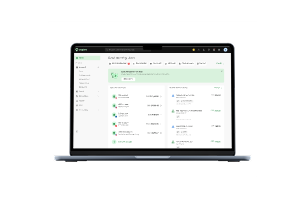
Instead, Shopify gives every merchant a single Shopify Admin dashboard where you manage your entire business. After creating your store, you'll use your Shopify login (sometimes searched as seller Shopify login) to access everything. This includes from adding products and processing orders to configuring payment gateways and tracking sales.
Whether you're searching for Shopify Seller Center, or Shopify login, they all lead to the same place: your Shopify Admin dashboard.
From your dashboard, you can:
- Add and manage products
- Process and fulfill customer orders
- Configure shipping and tax settings
- Connect payment providers such as Shopify Payments, HitPay, or Stripe
- Install apps from the Shopify App Store
- Monitor sales, traffic, and customer insights
Founder tip: Bookmark your Shopify Admin login page once your store is set up. Many first-time founders end up searching for "Shopify login" every time they want to access their store, but saving the direct login page makes it quicker.
Payment gateways for Shopify stores in Singapore
Shopify Payments covers cards and several accelerated checkout methods, but many Singapore merchants still choose another gateway such as HitPay to offer PayNow and additional local payment options.
[Table:3]
Decision matrix
- Selling mainly in Singapore? Use Shopify Payments + HitPay to support credit cards, PayNow, and the payment methods most local shoppers prefer.
- Selling internationally? Consider gateways that support multi-currency settlement or local payout currencies to reduce foreign exchange costs. Shopify Payments Advanced now supports multi-currency payouts too.
- Selling higher-value products? Add Atome or GrabPay PayLater to improve conversion rates for categories like fashion, beauty, and electronics.
Common mistake:
Relying only on Shopify Payments because it's the easiest option. Many Singapore shoppers expect PayNow at checkout. If you only accept cards, you may create unnecessary friction and lose conversions. Add local payment methods early and test your checkout experience before scaling traffic.
GST and compliance for Shopify sellers in Singapore
Singapore's GST rate is currently 9%, effective from 1 January 2024, and the Inland Revenue Authority of Singapore (IRAS) confirms no rate change for 2026.
GST registration becomes compulsory once your taxable turnover exceeds SGD $1 million over a 12-month period. If you're below that threshold, you can register voluntarily, but for most new stores, the extra compliance isn't worth it.
What this means practically for a new Shopify founder:
- Only charge GST if you're registered or legally required to register: Most new Shopify stores should keep GST turned off until they're required or choose to register voluntarily.
- Monitor your turnover: If you're approaching SGD $1 million in taxable turnover, review it regularly to avoid late GST registration.
- Know the OVR rules: Overseas businesses selling digital services or low-value goods into Singapore may be subject to the Overseas Vendor Registration (OVR) regime.
- Plan for e-invoicing: InvoiceNow is being rolled out in phases for GST-registered businesses, so planning for compatibility early can reduce future compliance work.
Founder tip: In Singapore, cards remain popular, but PayNow and GrabPay are now mainstream checkout options. Supporting local payment methods can reduce checkout friction.
Register Your Business with ACRA
If your business is profit-based, then ACRA registration is mandatory, regardless of whether your business is an online shop or not. A sole proprietorship registration process is fast, whereas a Pte Ltd structure is ideal for scaling and financing.
Comply with the requirements of the PDPA Act
If you are gathering personal customer data like names, emails, and order history, then you must ensure that you have privacy policies in place and have the customer's consent.
Shopify apps every Singapore merchant should consider
[Table:4]
Ten mistakes Singapore founders make on Shopify
It is relatively easy to establish a Shopify store in Singapore. However, even minor setup errors will affect payments, taxation, cost, and customer experience. Here are some of the most frequent mistakes you should avoid when setting up your ecommerce store.
- Relying only on Shopify Payments: Add a PayNow-enabled gateway like HitPay before launch to support local payment preferences.
- Enabling GST too early: Keep GST disabled until you're registered, and monitor your turnover as you approach the registration threshold.
- ACRA registration timing: Register your business after commencing business operations to make banking and payment gateway approval easier.
- Choosing a theme solely based on aesthetics: Choose a theme which is suitable to your catalogue size and features and not only how it looks.
- Installing multiple applications: Begin with core applications and install others only if they meet your operational needs.
- Not checking FX charges: If you pay for your goods/services in foreign currency, always check FX rates. When your sales rise, FX charges can add up and eat into your profits.
- Enabling all Shopify Markets simultaneously: Begin with Singapore and then move on to other markets.
- Underestimating delivery costs: Ensure that you know how much it will cost you to send your goods using courier services before setting shipping rates.
- Budgeting only for the Shopify subscription fee: Ensure that you budget for app subscriptions, themes, transaction fees, and development costs.
- Failing to conduct a test order: Carry out a test order and refund before you launch your store.
Optimising your Shopify store for growth
Once your store is live, the next priority is attracting qualified traffic and converting more visitors into customers.
1. Optimise for local search
Use relevant keywords in your page titles, meta descriptions, product descriptions, and image alt text. If you're targeting Singapore customers, naturally include local keywords where appropriate.
2. Improve your storefront
High-quality product images, clear product descriptions, customer reviews, and a fast, mobile-friendly checkout can all help improve conversion rates. Make it as friction-less and appealing as you can.
3. Track what matters
Connect Google Analytics and Google Search Console to monitor traffic, identify your best-performing pages, and find opportunities to improve your store over time. Keep a look at what your competitors are doing, and fix your strategy accordingly
Managing your finances as your Shopify business grows
As your business grows, you'll need to handle a lot of expenses. You will have to pay suppliers, track SaaS subscriptions, handle accounting, and also manage multiple currencies.
For people just starting out with Shopify, it is easy for your business finances to end up spread across multiple banks, and spreadsheets. Aspire brings these financial workflows together in one place. You can hold and manage multiple currencies, pay overseas suppliers, issue virtual corporate cards, and track expenses for your business, all from a single platform.
Ready to devote more time growing your Shopify store? See how Aspire helps ecommerce businesses handle payments, expenses, and cash flow.
Frequently asked questions
Do I have to be ACRA registered to sell on Shopify?
If you're carrying on the activity for profit on a continuing basis regularly buying stock to resell, taking orders as a business, yes, regardless of whether you're "just testing" or running it solo from home. There's no online-only exemption.
Can I accept PayNow on my Shopify store?
Yes, but not through Shopify Payments directly. You'll need a gateway like HitPay that integrates PayNow into Shopify's checkout, typically via a free plugin from the Shopify App Store.
Which Shopify plan is best for a Singapore founder?
Basic, for the large majority of new stores. Upgrade to Grow once your monthly sales volume is high enough so that the lower transaction-fee percentage saves you more than the extra subscription cost.
Can I sell internationally from a Shopify store in Singapore?
Yes. Shopify supports international selling through features such as Shopify Markets, multi-currency pricing, localised domains, and integrations with international shipping providers. Many Singapore businesses start by selling locally before expanding into nearby markets like Malaysia, Indonesia, and Australia.
Do I need a business bank account for Shopify in Singapore?
While you can create a Shopify store without one, a business bank account is generally required to receive payouts from payment gateways, separate business and personal finances, and simplify bookkeeping. If you've registered your business with ACRA, opening a dedicated business account is recommended before you start accepting orders.
Can I connect my Shopify store to Shopee or Lazada?
Yes. Many Singapore merchants sell on Shopify alongside marketplaces like Shopee and Lazada. Inventory management apps and omnichannel tools can sync products, inventory levels, and orders across multiple sales channels, reducing manual work and helping prevent overselling.
How much does it cost to start a Shopify store in Singapore?
For most new businesses, expect costs beyond just the Shopify subscription. In addition to your monthly plan, you may pay for a domain name, premium themes, paid apps, payment processing fees, marketing, and shipping. Starting lean with the Basic plan and only adding paid tools when needed is usually the most cost-effective approach.
Is Shopify a better choice than Shopee or Lazada?
It depends on your goals. Marketplaces like Shopee and Lazada are excellent for reaching existing shoppers quickly, while Shopify gives you full control over your brand, customer relationships, pricing, and checkout experience. Many successful Singapore businesses use both: marketplaces to acquire customers and Shopify to build a long-term, independent brand.




.webp)