


What is a chargeback
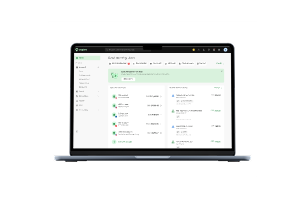
A chargeback is a reversal of a card transaction after a cardholder disputes the charge with their issuing bank. The issuer reviews the claim and, when the dispute proceeds, the merchant's acquirer or payment processor notifies the merchant and provides an opportunity to respond.
Visa's Singapore merchant guidance describes disputes as a reversal of transaction value from the issuer to the acquirer and usually from the merchant bank to the merchant.
Chargeback vs. refund: what's the difference?
A refund is a payment returned by the merchant, while a chargeback is a transaction reversal initiated through the customer's card issuer after the customer disputes the payment.
[Table:1]
The key difference is who controls the process. A refund is a merchant-controlled resolution. A chargeback enters a formal dispute process involving the cardholder's issuer, the merchant's acquirer or payment processor, and the relevant card scheme.
Chargeback vs. payment dispute: what's the difference?
The terminology varies across payment providers, but the concepts are closely related.
A payment dispute is a customer's challenge to a transaction. A chargeback is the formal reversal process that can follow that challenge. Your payment processor may therefore call the case a "dispute" even though the financial impact is a chargeback.
For your team, these three things matter more than the label:
Why is the customer disputing the transaction? When is your response due? What evidence supports your position?
What is different about chargebacks
The underlying card dispute process still depends on the applicable card scheme and your acquiring relationship. But Singapore merchants operate within a local payments and regulatory environment.
Your acquirer or payment provider matters
Singapore's Monetary Authority of Singapore (MAS) regulates payment services under the Payment Services Act. Its Financial Institutions Directory lists businesses providing merchant acquisition services, including major payment institutions.
In practice, your payment processor or acquirer is the first place to check for the exact:
- response deadline
- evidence requirements
- dispute categories
- submission process
- applicable fees
- escalation procedure
Visa's Singapore merchant guidance also directs merchants to their acquirer for further information about applicable dispute rules and practices.
PayNow is not the same as a card payment
PayNow is widely used in Singapore for instant SGD transfers between participating banks and major payment institutions through FAST. Consumers can also use PayNow through SGQR for merchant payments.
That means you shouldn't apply a card chargeback workflow to every payment dispute.
For example:
- Visa/Mastercard card payment: follow the applicable card-scheme dispute process through your acquirer or processor.
- PayNow payment: work through the participating bank or payment institution and the relevant PayNow process.
Keeping these workflows separate makes reconciliation and dispute handling easier.
Singapore consumer rules still matter
Chargeback operations aren't a substitute for meeting your obligations to customers.
Singapore's Consumer Protection (Fair Trading) Act (CPFTA) protects consumers against unfair trading practices, including conduct that may reasonably deceive or mislead consumers or involve false claims.
For your business, clear pricing, product details, terms, and refund policies help prevent chargebacks and keep your customer experience compliant.
Why do chargebacks happen
Chargebacks usually fall into a few recurring categories. Knowing which one dominates your chargeback disputes is the first step toward reducing them.
Unauthorised transactions
A third party uses payment credentials without the legitimate cardholder's authorisation.
E-commerce creates more exposure to this type of fraud because the card isn't physically presented. Fraud screening, transaction monitoring and authentication can help reduce the risk.
ABS's Singapore card-dispute guidance specifically covers unauthorised card-not-present transactions and advises cardholders to contact their issuing bank promptly when they identify unauthorised use.
First-party or friendly fraud
Friendly fraud, also called first-party fraud, occurs when a legitimate cardholder disputes a transaction they made or received. Sometimes the dispute comes from genuine confusion. Sometimes it's intentional. Visa identifies friendly fraud as a challenge for merchants and recommends using relevant transaction and customer information when addressing applicable chargeback disputes.
Common examples include:
- The customer doesn't recognise your billing descriptor.
- A household member made the purchase.
- The customer forgot about a recurring payment.
- The customer believes an order wasn't delivered.
- The customer disputes a legitimate purchase instead of requesting a refund.
This distinction stands out because fraud controls alone won't solve every first-party dispute. Clear transaction details, purchase records and post-purchase communication matter too.
Billing and merchant errors
Some chargebacks start with a preventable mistake:
- Duplicate charges
- Incorrect amounts
- An agreed refund that wasn't processed
- Charges after cancellation
- Incorrect transaction information
Visa's Singapore merchant guidance specifically flags duplicate transactions and incorrect transaction records as potential sources of disputes. Mastercard and American Express also have their own dispute and chargeback rules, so the applicable process, reason codes, evidence requirements and response timeframes can vary by card scheme.
Addressing these billing and operational issues is an important part of chargeback fraud prevention, as they often cause disputes without any sophisticated fraud involved.
Delivery and fulfilment problems
Customers may dispute a purchase when:
- An order never arrives
- Delivery is significantly delayed
- Tracking information is missing or inaccurate
- The order goes to the wrong address
- The product differs materially from its description
ABS includes non-delivery and unfit goods or services among the common card-dispute scenarios covered by its Singapore guidance. Visa also recommends keeping customers informed about delivery delays and retaining relevant transaction and delivery records.
Subscription and recurring billing problems
Recurring payments create another common source of disputes. Customers may forget they subscribed, misunderstand renewal terms, or believe they canceled successfully.
For subscription businesses, clear enrolment terms, confirmation messages and accessible cancellation options reduce avoidable disputes.
How does the chargeback process work
The exact process varies by card scheme, issuing bank, acquirer and processor. ABS's Singapore guidance covers disputes involving international card schemes including Visa, Mastercard, American Express, JCB and UnionPay.
A typical card-chargeback flow is:
[Table:2]
1. The customer disputes the transaction
The cardholder contacts their issuing bank and explains why they believe the transaction is unauthorised, incorrect, or otherwise disputable.
ABS advises Singapore cardholders to contact their issuing bank as soon as possible. It notes that most banks require the dispute-resolution form within 14 days from the card statement date, although the applicable requirements can vary by bank and case.
That consumer-side timeframe should not be confused with your merchant response deadline.
2. The issuing bank reviews the claim
The issuing bank assesses the cardholder's claim against the applicable dispute process. If the dispute proceeds, the merchant's acquirer or payment processor receives the case.
3. The merchant receives the case
Your processor or acquirer provides the dispute details, including the reason and response deadline. Don't treat this as a routine accounting entry. The deadline starts the clock on your response.
4. You review the reason and evidence
Start with the reason code or dispute category.
A delivery dispute needs different evidence from an unauthorised-payment dispute. A subscription dispute needs different evidence again.
5. You submit your response
If you believe the chargeback is invalid, you can respond with evidence through your acquirer or processor. This response is commonly called representment.
Visa's Singapore merchant guidance tells merchants to find the relevant transaction record and send an accurate copy to their acquirer promptly.
6. The case is reviewed under the applicable rules
The available evidence is assessed against the relevant card-scheme and dispute rules. Depending on the case, additional review or escalation may follow.
The important point is that a long evidence package isn't necessarily a strong one. Relevant evidence is stronger than irrelevant volume.
How much do chargebacks cost e-commerce businesses
The transaction amount is only part of the cost.
You can also absorb:
- Chargeback or processor fees
- Lost merchandise or fulfilment costs
- Employee time
- Payment and dispute-management costs
- Customer-service effort
- Potential monitoring or risk-management consequences
There isn't one standard Singapore chargeback fee. Your actual cost depends on your acquiring bank, payment processor, card scheme, merchant agreement and the type of dispute.
Visa Singapore notes that merchants can lose the transaction amount and related merchandise, while also incurring internal handling costs. That is why a low-value chargeback can still be expensive to handle.
Why does chargeback rate matter?
Payment partners monitor dispute and fraud activity because unusually high levels can create broader payment risk.
The exact monitoring thresholds depend on the card scheme, market and applicable program. Visa's current rules include regional requirements under its Visa Acquirer Monitoring Program (VAMP), so Singapore merchants should use the thresholds communicated by their acquirer rather than rely on a generic percentage.
The practical takeaway: track your chargeback rate and reasons, not just the SGD value you lose.
How to prevent chargebacks in e-commerce
You don't prevent chargebacks with one fraud tool. You reduce them by removing the reasons customers have to dispute legitimate transactions.
1. Screen risky transactions before approval
The first step is separating third-party fraud from first-party fraud.
[Table:3]
ABS's Singapore dispute guidance also recognises different evidence and processes for unauthorised card-not-present transactions, including transactions with and without authentication.
No individual signal proves fraud. Look for patterns, then apply the appropriate controls.
Use fraud signals such as transaction history, device information, velocity, customer behaviour and authentication results to identify suspicious payments. The goal isn't to block every unusual order. Overly aggressive fraud rules can reject legitimate customers and create unnecessary friction.
2. Use 3D Secure where it makes sense
3-D Secure (3DS) adds an authentication layer to eligible online card transactions.
Visa Singapore describes 3D Secure as an additional security layer for e-commerce transactions that helps validate whether the transaction is being initiated by the rightful account owner.
In qualifying circumstances, successful authentication can also affect liability for certain fraud disputes. The exact outcome depends on the card scheme rules and transaction circumstances.
Use 3DS as part of your fraud strategy, not as a replacement for one.
3. Make your billing descriptor recognisable
A customer who doesn't recognise your business name on their card statement may assume the transaction is fraudulent.
Use the merchant name customers recognise. Visa Singapore specifically recommends submitting the merchant name most prominently displayed to customers to reduce disputes caused by unrecognisable merchant names.
Also keep your checkout, receipt and statement information consistent.
4. Make refunds and cancellations easy
A customer who can't reach you may go straight to their bank. Make your refund and cancellation policies:
- Easy to find
- Written in plain language
- Consistent with how your team actually operates
- Available before purchase
- Simple to follow after purchase
Singapore's CPFTA also prohibits unfair practices such as misleading consumers or making false claims, making clear and accurate customer-facing information an important part of your broader e-commerce operation.
If you're responsible for the problem, a prompt refund is usually a cleaner resolution than letting it become a chargeback.
5. Set realistic delivery expectations
Tell customers when their order ships and when they can expect it to arrive.
If something changes, communicate the new date before the customer has to ask.
Keep shipment, tracking and delivery records. They can become useful evidence if a delivery dispute reaches the chargeback stage. Visa Singapore specifically recommends informing cardholders about delivery delays and new expected delivery dates.
6. Keep product information accurate
Your product page should match what the customer receives.
Pay particular attention to:
- Product specifications
- Dimensions
- Materials
- Compatibility
- Pricing
- Images
- Availability
Singapore's CPFTA covers misleading or deceptive conduct, so accurate product and pricing information serves both customer trust and regulatory compliance.
7. Give customers an easy way to reach you
Make support visible before and after purchase.
Your support team also needs enough transaction and order information to resolve issues without sending customers between multiple teams.
Good support won't prevent every dispute. It gives customers a simpler path than going directly to their bank.
8. Manage subscriptions deliberately
For recurring payments, make the following clear before enrolment:
- Price in SGD or the relevant transaction currency
- Billing frequency
- Renewal terms
- Cancellation process
Give customers an accessible way to cancel or manage the subscription.
Keep cancellation records so your team can establish exactly when a customer requested cancellation if a dispute follows.
9. Resolve disputes before they become chargebacks
Not every customer problem needs to reach the formal dispute stage.
Visa's Singapore operation offers pre-dispute services such as Order Insight and Rapid Dispute Resolution, which are designed to provide transaction information or resolve eligible cases before they progress through the full dispute process.
If your processor or acquirer offers pre-dispute alerts or similar tools, they can give you an opportunity to refund, clarify a purchase or resolve a customer issue before a chargeback is created.
E-commerce chargeback prevention checklist
Before you scale your payment volume, make sure you can answer "yes" to these:
- Do customers recognise the name on their card statement?
- Are your refund and cancellation policies easy to find?
- Are your prices, product descriptions and terms clear and accurate?
- Do your checkout terms match how your business actually operates?
- Do customers know when their orders will arrive?
- Can customers track shipments?
- Can customers reach support without hunting for contact details?
- Do you use appropriate fraud controls and authentication?
- Can subscription customers easily manage or cancel recurring payments?
- Do you keep card disputes separate from PayNow and other payment workflows?
- Do you monitor chargebacks by reason and product?
- Do you use chargeback data to fix the underlying operational problem?
How to dispute a chargeback
Don't treat every chargeback as a fight you have to win.
Should you dispute every chargeback?
No.
Consider disputing a chargeback when:
- The transaction was legitimate.
- You fulfilled your obligations.
- The dispute's reason doesn't match what happened.
- You have relevant evidence.
- The expected recovery justifies the effort.
Consider accepting it when:
- Your business clearly made the error.
- You already owe the customer a refund.
- Your evidence is weak.
- The amount recovered isn't worth the operational effort.
This decision keeps your dispute team focused on cases where evidence can actually change the outcome.
Step 1: Check the reason
Read the reason code or dispute category before collecting evidence.
Don't send the same generic evidence package for every case.
Step 2: Check the deadline
Your processor or acquirer provides the applicable response deadline.
Set an internal deadline before it. That gives your team time to find missing records and resolve submission issues.
Visa Singapore advises merchants to respond promptly and provides transaction-record guidance for dispute handling.
Step 3: Gather evidence that answers the claim
Depending on the dispute, useful evidence can include:
- Order confirmation
- Transaction record
- Customer account activity
- Authentication results
- Product or service details
- Shipping and tracking records
- Delivery confirmation
- Customer communications
- Refund records
- Cancellation records
- Terms accepted at checkout
The evidence should answer one question:
What proves that the customer's stated reason for the dispute doesn't apply?
Keep Singapore's data-protection rules in mind
Chargeback evidence can contain personal data such as names, addresses, contact details and account activity.
If you're operating in Singapore, the Personal Data Protection Act (PDPA) requires organizations to make reasonable security arrangements to protect personal data in their possession or control. It also includes obligations around retention and overseas transfers.
So don't collect or retain more customer data than you need simply because it might be useful for a future dispute.
Step 4: Write a focused response
Use a simple structure:
[Table:4]
For example:
The customer claims the order was not received. The order shipped to the address provided at checkout and delivery was confirmed on [date]. The attached order record, tracking history and delivery confirmation establish fulfilment.
Keep the response factual. Don't bury the strongest evidence under unnecessary commentary.
Step 5: Submit it through the required channel
Submit the response through your processor, acquirer or dispute-management system before the deadline.
Preparing the evidence isn't enough. The response has to reach the required system on time.
Step 6: Record the outcome
Track:
- Dispute reason
- Transaction value
- Evidence submitted
- Response date
- Outcome
- Recovered amount
- Root cause
This turns individual disputes into data you can use to improve the business.
Chargeback protection vs. chargeback insurance
These terms aren't standardized across providers, so focus on the actual coverage, not the label.
What is chargeback protection?
Chargeback protection generally means a provider takes on some defined chargeback risk under specific conditions.
Coverage may include:
- Fraud screening
- Liability transfer
- Reimbursement for eligible losses
- Waived chargeback fees
- Dispute-management support
- Pre-dispute alerts
The exact coverage depends on the provider and your merchant agreement.
What is chargeback insurance?
Chargeback insurance generally refers to an arrangement that reimburses specified eligible losses in exchange for a fee or premium.
Coverage varies by provider. Some policies may exclude:
- Friendly fraud
- Merchant errors
- Subscription disputes
- Product-quality disputes
- Refund-related disputes
Read the exclusions before comparing the price.
Do you need either?
Consider additional protection when chargebacks create a material financial or operational risk.
Before buying, ask:
- Which dispute types are covered?
- Are there transaction or annual limits?
- Are fees included?
- Are merchant errors excluded?
- Are friendly-fraud disputes covered?
- Do you have to use the provider's fraud tools?
- What happens if your dispute rate increases?
- Does the product prevent disputes or only absorb eligible losses?
Protection can reduce financial exposure. It can't fix the billing, fulfilment or customer-experience problem that caused the dispute.
How to build an effective chargeback management process
Once dispute volume grows, individual case handling isn't enough. You need a repeatable process.
Create one workflow
Use a simple flow:
Notification → classification → evidence → decision → response → outcome → root cause
Automate evidence collection and routine notifications where the volume justifies it.
Assign clear ownership
Give every case an owner.
That person or team is responsible for:
- Reviewing the dispute
- Deciding whether to accept or contest it
- Gathering evidence
- Submitting the response
- Tracking the outcome
Ownership prevents cases from sitting between finance, payments, fraud and customer support.
Track the metrics that explain the problem
At minimum, track:
- Chargeback rate
- Chargeback volume
- Chargeback value in SGD
- Dispute reason
- Win rate
- Recovery rate
- Response time
- Chargeback fees
- Product-level dispute rate
- Payment-method dispute rate
For Singapore businesses accepting several payment methods, keep card disputes separate from PayNow and other payment-rail issues. PayNow transactions use a different funds-transfer infrastructure and should not be mixed into a card chargeback ratio.
Turn disputes into operating decisions
Use the data to assign an action:
[Table:5]
This is the point of chargeback management: reduce the next dispute, not just close the current one.
Bottom line
Chargebacks aren't only a payment problem. They often expose gaps in billing, fulfillment, fraud controls, or customer support. For your business, the goal is to identify why customers dispute transactions, prevent avoidable disputes, and contest legitimate ones with focused evidence. Keeping card chargebacks separate from payment rails such as PayNow also helps you track the right risks and metrics.
As your payment volume grows, keeping transaction records, receipts and supporting documentation organised becomes increasingly important, not just for reconciliation, but also when you need to investigate or respond to a dispute. Aspire lets businesses match receipts to transactions and sync transaction and expense data with accounting platforms such as Xero and QuickBooks, helping keep the records behind your payments connected and easier to retrieve.
FAQs
1. How long does a customer have to file a chargeback?
There isn't one universal Singapore chargeback deadline. The applicable timeframe depends on the card scheme, dispute reason, issuing bank, transaction and other circumstances.
For Singapore cardholders, ABS advises contacting the issuing bank as soon as possible and notes that most banks require a dispute-resolution form within 14 days from the card statement date. That's a cardholder-side bank requirement, not a universal merchant chargeback deadline. As a merchant, follow the deadline provided by your acquirer or payment processor.
2. How long does a Singapore merchant have to respond to a chargeback?
There isn't one universal Singapore merchant deadline. Your acquirer or payment processor provides the applicable response period based on the card scheme, dispute type and transaction. Build an internal buffer rather than waiting until the final day.
3. How long does the chargeback process take?
There isn't one universal timeline. ABS says that, for Singapore cardholder disputes, resolution can range from approximately four weeks for simple cases to around 12 weeks for more complex cases, assuming the required documentation is provided promptly.
Your actual merchant-side timeline can differ depending on the card scheme, dispute type, acquirer and any further review.
4. What happens if a merchant ignores a chargeback?
Failing to respond within the applicable timeframe can result in the chargeback being upheld.
You can also lose the opportunity to present evidence that might have supported your position.
Your processor or acquirer should provide the exact consequences and submission deadline for the case.
5. What evidence is strongest in a chargeback dispute?
The strongest evidence directly addresses the customer's reason for disputing the transaction.
For a delivery dispute, that may be shipment and delivery records. For an unauthorised-payment dispute, authentication and transaction information may matter more. For a subscription dispute, enrolment, billing and cancellation records can be important.
Visa Singapore recommends accurate transaction records and prompt submission through the acquirer.
6. Can a customer file a chargeback after receiving a refund?
A customer can still initiate a dispute, depending on the circumstances and timing.
If you've already refunded the transaction, keep the refund record and transaction details. Those records help establish what happened and can support your response if a dispute is raised.
7. What happens if a merchant wins a chargeback dispute?
If the merchant successfully contests the dispute, the disputed funds may be returned or the reversal may be reversed, depending on the applicable card-scheme process.
Record the outcome anyway. A successful dispute recovers money from the current case; root-cause analysis helps prevent the next one.





.webp)