

What the Nium global card offers Singapore businesses in 2026
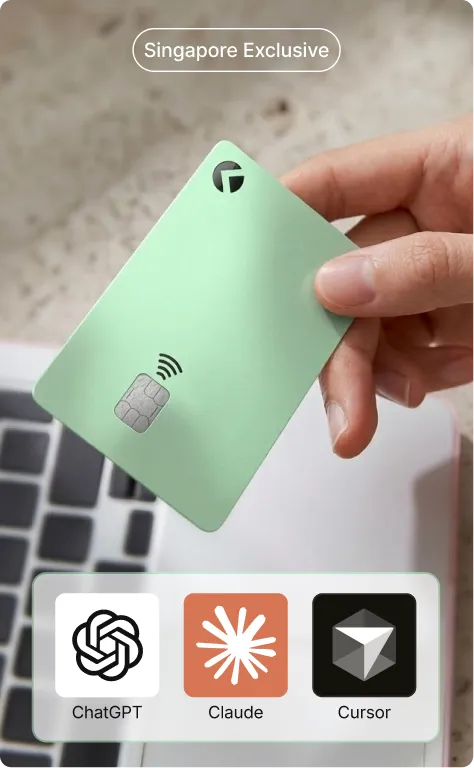
Nium's global card issuance platform lets Singapore businesses issue and manage virtual and physical cards across 30+ markets through a single platform, making it a strong fit for companies with international operations1.
- Issue and track both virtual and physical cards with no need for a BIN sponsor or local licensing
- Supported on Visa and Mastercard networks, maximising acceptance for cardholders travelling or spending internationally
- Top up multi-currency wallets to control spending behaviour, with flexible funding from your bank, cards, or direct debit
- Customise card design and branding, with compatibility for both Google Pay and Apple Pay2
- Set specific spend limits, rules, and merchant category controls at point of issue to manage team spending at scale
- Real-time fraud detection with monitoring and pattern analysis to reduce financial risk
- Access 24/7 customer support and comprehensive reporting to manage card programmes effectively3
Why businesses look for alternatives to the Nium global card in 2026
Nium's global card is a powerful infrastructure platform, but its positioning means it is not the right fit for every Singapore business.
- Nium is built primarily as a B2B infrastructure and API platform, meaning businesses that need a ready-to-use card product out of the box will face a more complex setup process
- Pricing is not publicly disclosed and requires direct engagement with Nium's sales team, making it difficult for SMEs to evaluate costs upfront
- The platform is designed for businesses launching their own card programmes, meaning it is better suited to fintechs, enterprises, and platforms rather than SMEs looking for a simple corporate card
- Features like receipt capture, accounting integrations, approval workflows, and bill payments are not part of the core offering, requiring businesses to build or integrate these separately
- The level of customisation and technical setup required may be beyond the resources of early-stage or lean finance teams
- Businesses that need a straightforward card with expense management, reimbursement flows, or accounting sync built in will likely find dedicated spend management platforms a more practical choice
Quick comparison of Nium global card alternatives in 2026
[Table:1]
Data as of March 2026. Note: Fees and features are subject to change. Confirm current rates directly with each provider before committing.
Best Nium global Card alternatives for Singapore businesses in 2026
Wise Business card
Wise Business is designed for companies that prioritise transparent foreign exchange pricing and smooth international payments, rather than a comprehensive expense management system.
Key features of the Wise Business card:
- Instant issuance of virtual cards for quick and easy onboarding
- Affordable physical cards for team usage
- Ability to set spending limits at both card and user levels
- Access to the mid-market exchange rate with low and transparent fees (typically around 0.25%)
- Integrations with popular accounting tools such as Xero, FreeAgent, NetSuite, Odoo, QuickBooks, Zoho Books, FreshBooks, and more
- Strong security features, including 3D Secure and multi-layer verification
Pricing:
- No monthly subscription fee
- Pay-per-use model for transactions, including currency conversions and transfers
- One-time setup fee of SGD $997
Considerations:
Wise Business is not built as a full expense management solution. It does not include features such as approval workflows, receipt capture, or automated reconciliation. It also does not support bill payments or local payment systems, which may limit its ability to handle end-to-end financial operations. As these are debit cards, there are no credit or financing options available.
Payoneer corporate card
The Payoneer corporate card is a debit card built for businesses that receive and manage cross-border payments. It focuses on enabling global spending with multi-currency support, rather than offering a complete expense management solution.
Key features of the Payoneer corporate card:
- Spend in 70+ currencies, with 0% FX on select currencies such as USD, EUR, GBP, and CAD
- Issue a large number of virtual cards (up to 600), along with physical cards for teams
- Pay-as-you-go model with no upfront setup fee
- Supports international ATM withdrawals with fixed per withdrawal charges
- Ability to set daily or monthly spending limits at the card level
- Cashback benefits available in select regions, based on eligibility
- Integrations with accounting tools such as QuickBooks and NetSuite
- Security features, including 3D Secure and spend controls
Pricing:
- No activation fee, but an annual fee of USD $29.95 applies if the minimum receiving threshold of USD $2,000 over a 12 month period is not met
- FX fees typically start from around 1% above mid-market rates, with higher charges for certain currency conversions
Considerations:
Payoneer is primarily designed for payments and international transfers, not as a full expense management platform. It does not offer features such as approval workflows, receipt capture, or automated reconciliation. Accounting integrations are limited in scope, and bill payment functionality is not supported, which may restrict its use for end to end financial operations.
OCBC business debit card
The OCBC business debit card is a Mastercard debit card designed for Singapore-based SMEs that want a simple, no fee card with cashback on everyday business expenses, backed by a well-established local bank.
Key features of the OCBC business debit card:
- Earn 1% cashback on categories such as digital marketing, software services, online retail, and travel (capped at SGD $80 per month as bonus rebate)
- Earn unlimited 0.2% cashback on all other spend, with no cap
- No annual fee and no minimum spend requirement
- Available as both a physical and digital card, with instant access via the OCBC Business Mobile App or OCBC Velocity
- Access to over 1,200 ATMs across Singapore via Mastercard or NETS, along with global ATM access
- All transactions are directly debited from your business account, with a single consolidated statement
Pricing:
- No annual or activation fee8
- No minimum spend requirement
- Standard bank foreign exchange rates apply for overseas transactions
- Exact FX rates are not publicly disclosed
Considerations:
The OCBC business debit card is primarily suited for local SGD spending and does not offer a multi-currency wallet, which may limit its usefulness for businesses with frequent international transactions. It also lacks built-in expense management features such as approval workflows, receipt capture, and accounting integrations. Additionally, capabilities like spend controls, virtual card issuance, and team-level budgeting are not available.
Aspire corporate card
Aspire is a comprehensive finance platform designed for growing businesses. It brings together corporate cards, expense management, bill payments, and accounts payable into a single system, reducing the need for multiple tools to manage company spending.
Key features of the Aspire corporate card:
- Issue up to 200 virtual cards per user, with higher limits available on premium plans at an added cost
- FX fees start from 0.22% on the Basic plan, while the Premium plan offers 0% FX on the first SGD 13,000 converted each month
- Multi-level approval workflows and budget tracking by client, project, or team, directly linked to card usage
- Automated receipt capture with hourly sync to Xero, along with integrations with QuickBooks, Osome, NetSuite, FreshBooks, Zoho, Deskera, Jurnal, Sage 50, Wave, and Zahir
- Earn 1% cashback on marketing and SaaS spend
- Built-in security features such as 3D Secure authentication, instant card freeze, spend limits, merchant locks, and real-time monitoring
Pricing:
- No annual card fee across all plans
- First physical card is free, with additional cards priced at SGD $15 each
- Virtual cards are issued at no cost
- Overseas ATM withdrawals cost SGD $5 per transaction, excluding operator charges
- FX fees start from 0.22%, with Premium users benefiting from 0% FX on the first SGD $13,000 converted each month
Considerations:
Some advanced capabilities are available only on higher-tier plans. These are debit cards and do not provide any credit or financing facility.
Key factors to evaluate when choosing a corporate card in 2026
Choosing a corporate card today is not just about enabling payments. It is about how well the card fits into your workflows, supports business growth, and gives you clear control over spending.
Here are the key factors to consider:
1. Look at total cost, not just fees
Do not stop at the annual fee. Evaluate the full cost of usage, including:
- Interest rates for credit cards
- Foreign exchange markups
- Hidden or platform charges
- ATM withdrawal fees
2. Prioritise expense visibility
A good corporate card should help you track and manage spend, not just process it. Look for:
- Real-time expense tracking
- Automated reports
- Centralised dashboards
3. Ensure strong spend controls
As your team grows, managing spend becomes more important. Choose cards that offer:
- Per-user spending limits
- Merchant or category restrictions
- Approval workflows
4. Check global usability
For businesses with international exposure, the card should support:
- Multi-currency usage or wallets
- Competitive FX rates
- Wide global acceptance
5. Look for accounting integrations
The card should fit into your existing financial stack. Consider:
- Integrations with accounting tools
- Automated reconciliation
- Easy data exports
6. Evaluate card flexibility
Managing cards across teams should be simple. Look for:
- Both virtual and physical card options
- Instant issuance for employees
- Easy onboarding and deactivation
7. Understand the credit structure
Different cards serve different purposes. Choose based on your cash flow needs:
- Credit cards with interest-free periods
- Charge cards with full repayment cycles
- Debit or prepaid cards for tighter control
8. Match rewards to your spend
Rewards should reflect how your business spends. Evaluate:
- Cashback on categories like SaaS or marketing
- Redemption flexibility
- Any caps or limits
9. Check security features
Security is non-negotiable. Make sure the card includes:
- Instant transaction alerts
- Card controls like freeze or block
- Fraud monitoring systems
10. Plan for scalability
Think long term. The right card should:
- Grow with your business limits and usage
- Support multi-entity or global operations
- Offer advanced capabilities like automation or insights
Conclusion
The Nium global card works well for businesses that need to build and manage their own card programmes across multiple markets, with a high degree of flexibility and control.
For businesses that need a ready-to-use solution for day-to-day spending, Aspire offers a more complete setup, along with an integrated business account. It includes built-in expense management, invoice management, approvals flows, accounting integrations, and local payment capabilities, helping you manage finances more efficiently as your business scales.
Open an Aspire business account to get started.
Frequently asked questions
Who is the Nium global card best suited for?
It is best suited for fintechs, enterprises, and platforms that want to launch their own card programmes or manage payments across multiple markets at scale.
How is Nium different from corporate cards like Aspire or Wise?
Nium is an infrastructure platform that enables businesses to issue their own cards, while options like Aspire or Wise provide ready-to-use corporate cards with built-in features for managing business spend.
Are Nium’s pricing and fees transparent?
Pricing is not publicly disclosed and typically requires direct engagement with Nium’s sales team, which can make it harder for businesses to compare costs upfront.




.webp)