


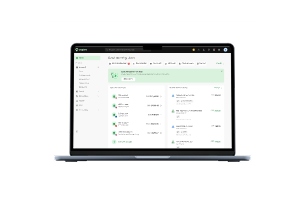
What is Amazon FBA Australia
Fulfilment by Amazon (FBA) is Amazon's order fulfillment service for sellers. You send eligible products into Amazon's network, where your inventory is stored. Once a customer places an order, Amazon takes care of packing and shipping it to the customer. They also take care of customer service and returns.
Founders are mainly responsible for deciding what to sell and keeping enough inventory available to meet demand. The wider commercial side of the business still sits with you, including product listings, pricing, marketing, and applicable business requirements.
What does Amazon FBA Australia handle
Once your products enter an Amazon FBA warehouse Australia location, Amazon takes care of the operational side of getting eligible orders to customers. This generally includes:
- Storage: Keeping your inventory within Amazon's network until it is sold
- Order processing: Picking and packing products when a customer places an order
- Shipping: Dispatching eligible orders to the customer
- Customer support: Handling customer service for FBA orders
- Returns: Managing returns under Amazon's applicable policies
This means founders don't need to run their own warehouse or handle the day-to-day packing and shipping of individual orders. They may still use a 3PL for storage or fulfilment arrangements for their non-FBA stock.
What you still handle
FBA can take a significant amount of operational work off your plate, but Amazon doesn't run the wider business for you. You'll still be responsible for things like:
- Product selection and sourcing: Deciding what to sell and how you're going to get your products
- Product listings: Listing your products and making sure the information and images are accurate
- Pricing: Deciding what to charge and whether running promotions makes sense for your products
- Inventory planning: Keeping track of your stock and making sure you have more on the way before you run out
- Marketing and advertising: Finding ways to get your products in front of more potential customers
- Business and product requirements: Making sure you're meeting the relevant tax, product safety, labelling, import and other applicable regulatory requirements
Amazon can handle much of what happens after an order is placed, but the decisions behind what you sell and how you run the business still sit with you.
[Table:1]
Amazon FBA Australia eligibility and product restrictions
Not every product can be sold or handled through Amazon FBA. Before you commit to inventory, there are a few different sets of requirements to consider:
- Selling restrictions: Some categories or brands require Amazon's approval, while certain products cannot be sold by third-party sellers
- Product compliance requirements: Your product may need to meet applicable Australian safety, labelling, certification, or regulatory requirements
- FBA acceptance requirements: A product can be eligible for sale on Amazon but still be ineligible for FBA due to Amazon's product or handling restrictions
- Dangerous goods requirements: Products that may pose a risk when they're stored, handled, or transported are classified as ‘dangerous goods’ (or hazmat) and require additional information, documentation, or approval before they can be fulfilled through FBA
- Size and weight limits: Products larger than 116 cm × 116 cm × 102 cm or heavier than 23 kg are generally prohibited from FBA, subject to limited exceptions
Check that your product clears all four areas, rather than assuming that being able to list something on Amazon automatically means it can be sent through FBA.
How to start Amazon FBA in Australia
1. Choose what you want to sell
When figuring out how to start Amazon FBA in Australia, your first decision is what you're going to sell. Before committing money to inventory, look beyond whether a product simply appears popular. As a founder, you'll also need to consider whether you can compete, whether the product is suitable for FBA, and whether the numbers work for your business.
If you're weighing up a few product ideas, these questions can help narrow down your options:
- Is there enough demand? Look for evidence that customers are actively buying the type of product you're considering
- Can you compete? Consider how crowded the market is and whether you have a clear reason customers might choose your product
- Can you actually sell it through FBA? Check the relevant selling restrictions, product requirements, and FBA acceptance rules before committing to inventory
- Do the numbers leave enough room for profit? Before ordering inventory, factor in sourcing, logistics, and applicable Amazon FBA Australia fees, including fulfilment and storage costs that can vary based on your product's dimensions. Don't compare your supplier price with the selling price alone
For a founder, the goal is to find a product with enough demand that you can realistically compete with and sell profitably, rather than simply chasing the most popular product you can find.
2. Set up your business and seller account
Once you've chosen a product, you'll need to get the business side in place before starting with Amazon FBA Australia.
Before selling, work out which Australian business and tax registrations apply to your structure and activities. Most businesses need an ABN, while registrations such as GST depend on your circumstances. The Australian Government's Business Registration Service can help you work out which registrations apply to your business and complete them in one place.
The next step in understanding how to start Amazon FBA in Australia is to register as an Amazon seller. Once your account is set up, Seller Central is where you'll manage your listings, inventory, sales, and much of the day-to-day side of running your Amazon business.
3. Create your product listing
With your seller account in place, you can create the listing customers will see when shopping on Amazon FBA Australia. Your listing should clearly explain what you're selling and give customers enough information to make a purchase decision.
This usually includes:
- Product information: Add an accurate title, description, and relevant product details
- Images: Use clear product images that show customers what they're buying
- Pricing: Set a selling price that accounts for your product costs and applicable Amazon FBA Australia fees
- Required details: Go through Amazon’s required details for your product and make sure your listing complies with all their listing requirements and applicable product rules
A clear and accurate listing makes it easier for your customers to understand your product. Before publishing, double-check that the details and images match the product you're actually sending into Amazon FBA Australia's network.
4. Prepare your inventory for FBA
Before sending products to an Amazon FBA warehouse Australia location, you'll need to prepare them according to Amazon's requirements. This can include rules around packaging, labelling, product handling, and other preparation requirements.
As the founder, make sure these requirements are sorted before your inventory leaves the supplier or warehouse. Products that aren't prepared correctly may need additional work before Amazon FBA Australia can process them.
Check the current requirements for your product type and make sure your supplier knows what needs to be done before shipping. Amazon also offers some optional prep services for a per-unit fee, although availability depends on the product and service.
5. Create an inbound shipment
Next, you'll need to create an inbound shipment through Seller Central. This tells Amazon what you're sending and lets you follow the relevant instructions for getting your products into the Amazon FBA Australia network.
Follow the shipment instructions provided in Seller Central before arranging delivery. Understand where your inventory needs to go and how the shipment should be prepared.
6. Send your inventory to Amazon
Then arrange for your inventory to be delivered to the Amazon FBA warehouse Australia location specified in Seller Central. Amazon will receive and process the shipment before placing the products into its network for storage.
After your inventory has been received, keep an eye on your stock levels through Seller Central so you know when it's time to arrange your next shipment.
7. Manage sales and inventory
After your products go live, your work shifts to managing how the business performs. Founders should keep an eye on pricing, advertising, stock levels, and when it's time to replenish inventory.
It's also worth monitoring your costs as sales grow. Amazon FBA Australia fees can affect your margins, particularly as your inventory levels and sales activity change, so review them alongside your product performance rather than looking at revenue alone.
What are the Amazon FBA Australia fees
Your total cost of selling through Amazon FBA Australia depends on several factors. Some fees apply only when you make a sale, others are charged for storing or managing your stock within Amazon's network.
Amazon FBA Australia fees aren't a single fixed charge. What you pay can vary depending on your selling plan, product category, dimensions, weight, and how long your inventory remains in Amazon's network.
The main fees and costs to consider include:
[Table:2]
Because Amazon updates its fee schedules, founders should regularly check the rates for their specific product before placing a large inventory order. The Amazon FBA Australia fees that matter to one business may look very different from those affecting another product category or inventory model.
What costs should founders consider beyond Amazon FBA Australia fees
Amazon's published fees are only one part of the cost of running an inventory-based business. A major factor founders can miss when considering whether Amazon FBA Australia makes financial sense is the cost of everything outside Amazon's service fees.
- Product sourcing: What you pay suppliers to manufacture or purchase your inventory
- Freight and logistics: The cost of moving products from your supplier to Australia and then into Amazon's network
- Import costs: Duties, taxes, and customs-related costs that may apply when importing goods
- Product preparation: Packaging, labelling, inspection, or other work needed before Amazon can accept your inventory
- Advertising: Spending to promote your products and generate sales
- Returns: The cost of returned inventory and any impact on the product's ability to be resold
- Business and compliance costs: Expenses related to running your business and meeting relevant requirements, including accounting, registrations, and payment fees
For Australian founders sourcing inventory or paying suppliers overseas, these costs can also involve multiple currencies and international payments. Aspire’s multi-currency business account lets you manage payments and business finances in one place, making it easier to keep track of the costs sitting outside Amazon’s FBA fees.
How does the Amazon FBA warehouse in Australia process work
An Amazon FBA warehouse in Australia, also known as a fulfilment centre, is where Amazon receives and stores your inventory so it's ready to be processed when customers place orders.
The warehouse process generally works like this:
- Create an inbound shipment: In Seller Central, you tell Amazon what products and quantities you're sending
- Follow Amazon's shipment instructions: Amazon provides the relevant destination and preparation requirements for the shipment
- Send your inventory: Arrange for the products to be delivered to the Amazon FBA warehouse Australia location specified in your shipping plan
- Amazon receives the inventory: The shipment is received, processed, and added to Amazon's inventory system
- Orders are fulfilled: When a customer places an order, Amazon picks and packs the product before shipping it to the customer
For founders, the key thing is to follow the shipment instructions provided in Seller Central rather than making assumptions about where inventory should be sent.
Can founders choose where their inventory is sent
Generally, founders can't simply choose which Amazon FBA warehouse their inventory goes to. The destination is provided through the shipping plan created in Seller Central, and can vary depending on the shipment.
For founders, the practical thing is to wait for Amazon's instructions before arranging transport. Depending on the shipment, Amazon may offer different inbound options based on factors such as product size and weight or available capacity.
However, Amazon has fulfilment centres across major Australian cities, including Melbourne, Sydney, Perth, and Brisbane. This means there are fulfilment locations across the country, although the specific location assigned to your shipment will depend on Amazon's instructions in Seller Central.
Amazon FBA Australia vs fulfilling orders yourself
One of the biggest decisions when building an ecommerce business is whether to handle orders yourself or outsource the operational side to Amazon FBA Australia. What Amazon FBA Australia is worth to your business ultimately depends on what you're giving up in fees and control in exchange for less hands-on order management.
[Table:3]
Is Amazon FBA Australia worth it for you
Founders considering Amazon FBA Australia need to weigh the pros and cons for their specific situation. Depending on your products, profit margins, expected sales volume, existing infrastructure, and the level of control you want over your operations, FBA can either simplify the business or drive up unnecessary costs.
Amazon FBA Australia may be a better fit if:
- You've got room in your margins: Your products can accommodate FBA fees and other selling costs while still leaving you with a worthwhile profit
- Orders are starting to grow: Handling a higher volume yourself would mean spending more on space, staff, equipment, or other resources
- You don't have a setup yet: You'd rather not build and manage your own storage and order-handling operation
- You want to spend less time packing: Outsourcing the order process gives you more time to focus on growing the business
Self-fulfilment may be a better fit if:
- Your margins are already tight: Taking on additional FBA fees could make it harder to stay profitable
- You already have things sorted: Your business has the space and processes to handle orders efficiently
- You want more control: You want to manage how products are packed and delivered to customers yourself
- Your products are tricky to handle: Certain products may be expensive or difficult to store and send through the FBA model
- Your inventory moves slowly: FBA storage fees continue to accrue while your stock sits in Amazon's fulfilment centres, and aged-inventory surcharges can apply after 271 days
Making the most of Amazon FBA Australia
The decision shouldn't come down to which option looks cheaper on paper. Consider your expected sales volume and existing setup, along with the profit left after your selling costs. Amazon FBA is a fulfilment model, not a guarantee of profitability, so your margins and wider operating costs still matter, including how you manage payments and business finances.
FAQs
- What is Amazon FBA Australia?
Amazon FBA Australia is Amazon's order fulfilment service. You send eligible inventory to Amazon, which stores, packs, and ships products while handling applicable customer service and returns.
- How to start Amazon FBA in Australia?
Choose a product, set up your business and seller account, create your listing, prepare your inventory, and finally, create an inbound shipment through Seller Central.
- How much does Amazon FBA cost in Australia?
Costs vary by product and selling plan. The Individual plan is AUD $0.99 per item sold, while the Professional plan is AUD $49.95/month, excluding GST. Additional FBA charges vary based on your product's size, weight, category, and storage time.
- Does Amazon FBA Australia handle shipping and returns?
Yes. For eligible FBA orders, Amazon handles packing, shipping, customer service, and returns under its applicable policies.
- Can I choose which Amazon FBA warehouse to send my inventory to?
Generally, no. Amazon provides the destination through your Seller Central shipping plan, which can vary depending on the shipment.
- Is Amazon FBA Australia worth it for Australian founders?
It depends on your margins, expected sales volume, and existing setup. FBA can reduce day-to-day order work, but the costs still need to make financial sense for your business.


.jpeg)






























.jpeg)



.jpeg)


.jpeg)