


What is cash basis accounting? (definition and how it works)
Cash basis accounting is precisely what it sounds like. You record money when you receive or spend it.
You invoice a customer AUD $15,000 on Monday. You have AUD $0 in earnings. They pay on Friday. You record AUD $15,000 in revenue.
Then on the first of the month you receive a bill for AUD $750. You record an expense of AUD $0. You pay on the fifteenth. You post the AUD $750 expense.
Why it's simple: Your books directly match your cash movements. You get clear visibility of money flowing in and out. No complex reconciliations needed.
The limitation: Cash basis accounting does not recognize accounts receivable as revenue until payment is received, nor does it record accounts payable as expenses until payment is made. Consequently, the accounting records provide an accurate representation of cash flows but do not reflect outstanding customer invoices or unpaid supplier obligations. A significant contract worth AUD $750,000 will not be recorded as revenue until funds are received. Similarly, invoices issued three months prior that remain unpaid do not appear in the financial records, and committed supplier payments that have not yet been processed remain unrecorded.
What is accrual accounting? (meaning, definition, and how it works)
Accrual accounting means recording revenue when you earn it and expenses when you incur them, regardless of when money changes hands. This matters because it shows your business's true financial position: what you've earned, what you owe, and what you're owed.
You invoice a client for AUD $15,000 on Monday. You immediately record AUD $15,000 in revenue. They pay on Friday, next month, or later, the timing doesn't affect your books. Revenue has been recorded.
You are billed on the 1st for AUD $750. You record the expense right away, even if you don't pay it until the 15th or next month.
Why it's more complex: Your books and your bank account diverge. You may show AUD $75,000 in revenue but only have AUD $7,500 in cash (because invoices haven't been paid yet). This requires you to track accounts receivable (money customers owe you) and accounts payable (money you owe suppliers) and to reconcile these with your bank balance.
The advantage: Your books show revenue and expenses matched to the period they relate to, giving a more complete picture of your financial performance. That AUD $750k deal is recorded in your revenue the moment you close it, not when the cash arrives. Unpaid supplier bills appear as liabilities. You see your profit before cash arrives. This fuller financial view is valuable for contracts, stakeholder reporting, and external decision-makers who need to understand your business's actual financial position.
The key differences between accrual and cash accounting: side-by-side comparison
To determine the best accounting method for your business, you need to understand how each method records and reports transactions. Here is a comparison of cash and accrual accounting:
[Table:1]
Understanding the difference between accrual and cash accounting is important because it determines how much you know about your business's financial position. Cash accounting gives you clear visibility of money flowing in and out, making it simpler to manage. Accrual accounting shows earned revenue and incurred expenses regardless of payment timing, giving you a fuller financial picture, but it requires additional reconciliation and tracking. The right choice depends on your business structure, complexity, and reporting needs.
How each method affects your real business
Simple immediate-payment business
Cash accounting: Works well for businesses where customers pay immediately (e.g., retail, immediate service delivery). Cash flows in as soon as the transaction occurs, so your books accurately reflect your financial position day-to-day.
Accrual accounting: Adds unnecessary complexity if there are no outstanding receivables or payables to track.
Professional services business that invoices customers
Cash accounting: If clients take 30 days to pay invoices, your books won't show earned revenue until payment arrives. You may show little to no income in months when you've completed significant work.
Accrual accounting: Records revenue when the service is delivered and creates accounts receivable for unpaid invoices. This shows the true financial position, what you've earned versus what you've actually been paid.
Subscription or long-term-contract business
Cash accounting: Revenue appears only when customers pay. For subscription businesses with monthly or annual billing, this approach creates timing mismatches that obscure how the business actually performs each period.
Accrual accounting: Matches revenue to the period in which the service is delivered and expenses to the period they relate to. This method provides a clearer view of profitability for each period and aligns revenue recognition with the delivery of service.
Growing business with external financial reporting needs
Cash accounting: Limits your ability to provide stakeholders (lenders, investors, and board members) with a complete financial picture. Outstanding invoices and unpaid bills remain invisible.
Accrual accounting: Provides a fuller view of financial obligations and earned revenue, supporting financial statements prepared under Australian Accounting Standards. This is particularly important if you need to report to lenders, investors, or other external parties who assess your financial health.
Benefits of accrual accounting for a growing business
Accrual accounting provides a fuller view of your financial position as complexity increases. These are the key benefits as your business grows:
1. Real profit visibility: Accrual accounting provides better matching of income and expenses to the periods they relate to and greater visibility into accounts receivable and accounts payable. This shows you what you've earned and what you owe, not just what's in your bank account.
2. More complete information for lenders: Lenders may request accrual-basis financial statements to assess your financial position more completely. However, lending decisions depend on broader underwriting factors, including cash flow, collateral, and business performance. Accrual accounting supports more thorough financial assessment.
3. Supports more formal financial reporting: External stakeholders (lenders, investors, and board members) often expect financial statements prepared under Australian Accounting Standards, which use accrual accounting. This is particularly important for formal fundraising, partnership agreements, or external governance requirements.
4. Multi-period and multi-currency visibility: If your business operates across multiple periods (subscriptions, long-term contracts) or multiple currencies (international operations), accrual accounting tracks receivables and payables across these dimensions. This is essential for understanding your true obligations and revenue pipeline when doing business internationally or on extended terms.
5. Forecasting and working-capital visibility: Accrual accounting reveals your accounts receivable and accounts payable, giving you visibility into cash timing. This lets you predict when cash will actually arrive, plan for working-capital needs, and make hiring or investment decisions with more complete information.
6. More complete records of outstanding obligations: Accrual accounting creates a complete record of income you've earned but not yet received and expenses you've incurred but not yet paid. This is valuable for financial planning and understanding your actual business commitments.
7. Scalability: Accrual accounting systems become increasingly useful as your business grows and transaction complexity increases. Managing hundreds of invoices, multiple contracts, and complex expense matching becomes far easier with accrual-based infrastructure in place.
Cash vs. accrual accounting for income tax and GST in Australia
Income tax
The Australian Taxation Office (ATO) recognizes both cash and accrual accounting methods for business income. However, the method you use must give an appropriate and substantially correct reflection of your income.
The ATO considers several factors when assessing whether your chosen method is appropriate, including:
- Business size and type
- Nature of your accounting practices
- Industry norms
- Whether your business has material receivables or payables
There is no universal turnover threshold that automatically requires one method over the other. The appropriate method depends on your specific business circumstances.
Important: Accounting profit and taxable income are not automatically the same. Tax law determines what income is assessable and what deductions are allowed, and the timing of recognition can differ based on the tax accounting method that is appropriate for your business.
GST
GST accounting is a separate decision from income tax accounting.
Businesses with aggregated turnover under AUD $10 million can generally choose to account for GST on a cash basis (recording GST when you receive payment, not when you invoice). Most larger businesses use non-cash GST accounting (recording GST when you invoice, regardless of payment).
Useful Australian nuance: It is possible for a business to use cash accounting for GST while using a non-cash method for income tax. The ATO has explicitly recognized that this combination is permissible, depending on your business circumstances.
For specific guidance on your situation, consult the ATO's resources or a tax professional familiar with your industry and business model.
Which accounting method should you choose?
The right method depends on your business characteristics. Use this table to consider which approach may suit you:
[Table:2]
How to use this table:
Review the characteristics that match your business. If most align with the "Cash may suit" column, cash accounting may be simpler. If most align with "Accrual may suit," accrual accounting will likely give you a clearer financial picture.
Size and resources matter: As Business.gov.au notes, consider your business size, operational complexity, and the resources available for accrual accounting. Modern software can make accrual accounting easier, but it still requires more tracking than cash.
Important: Tax and reporting requirements can override your preference. Income-tax treatment and GST accounting rules depend on your specific business circumstances, and external stakeholders (lenders, investors, and partners) may have their own requirements. Confirm the appropriate method with an accountant before finalizing your choice.
Switching from cash to accrual accounting
Switching accounting methods necessitates meticulous planning to ensure tax compliance, accurate financial records, and successful implementation. It requires accountant/bookkeeper time, opening-balance adjustments, data cleanup, software configuration, and team training. Here's how to do it successfully:
1. Confirm that accrual is appropriate with your accountant
Before switching, discuss your business circumstances with your accountant. They can advise whether accrual accounting is the right choice for your business stage, structure, and reporting needs. Changing methods requires you to adjust your opening balances and create catch-up entries to reflect unpaid invoices and bills at the switchover date.
2. Choose an effective date and determine tax and reporting implications
Work with your accountant to select an effective switchover date. A financial-year boundary (1 July in Australia) can simplify administration and record-keeping. However, the appropriate timing and any tax adjustments depend on your specific business circumstances. The ATO requires transactions within a financial year to use the relevant method consistently for income-tax reporting purposes. Discuss timing with your accountant to understand any mid-year implications before you decide.
3. Capture outstanding accounts receivable and accounts payable
List all unpaid customer invoices and supplier bills as at your switchover date. These become your opening accounts receivable and accounts payable balances. Incomplete opening balances create confusion and unreliable records from the outset. Invest the time upfront to capture this data accurately; it's a one-time task that forms the rest of your switch.
4. Configure accounting software, integrations, and reconciliation
Accrual accounting requires you to maintain accounts receivable, accounts payable, and regular reconciliation between your books and bank account. Set up your accounting software and any connected tools before you record your first accrual transaction. Configure automated invoice tracking and expense sync to reduce manual work. Establish a regular reconciliation schedule (weekly or monthly) and make it mandatory. Consistent reconciliation catches errors early and keeps your books reliable.
5. Review the opening periods carefully and train relevant team members
After switching, review your first few months of accrual records to identify any discrepancies or gaps in opening balances. Train your team on accrual principles so they understand why revenue is recognized when you bill (not when paid) and why matching invoices to payments matters. Ensure everyone follows consistent processes. Team alignment and understanding of accrual principles are critical to successful adoption.
The next step
Reducing the operational workload of accrual accounting
Cash and accrual accounting each have distinct roles. Cash accounting is simpler to operate and provides clear visibility of money flowing in and out, useful when your business has few outstanding invoices or bills and you need straightforward bookkeeping. Accrual accounting is more detailed and provides a fuller financial picture by showing earned revenue, incurred expenses, and outstanding receivables and payables, which are valuable when your business has material AR/AP, contracts, or formal reporting requirements.
Neither method is automatically correct for every business. The right choice depends on your business structure, complexity, reporting needs, and regulatory context. Your accountant can advise which method is appropriate given your circumstances, including any income tax or GST considerations specific to your situation.
If you use or are considering accrual accounting, invoice and payment reconciliation can consume significant time, particularly as your business grows. Manual matching of invoices to payments, tracking outstanding receivables, and keeping accounting records up to date creates operational friction that many small teams struggle to sustain.
Automation and accounting software can reduce the operational workload of reconciliation and invoice matching. However, tools are complementary to, not replacements for, solid accounting practices and professional guidance.
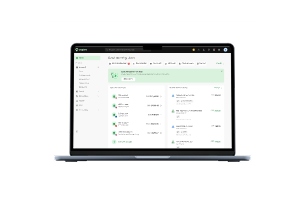
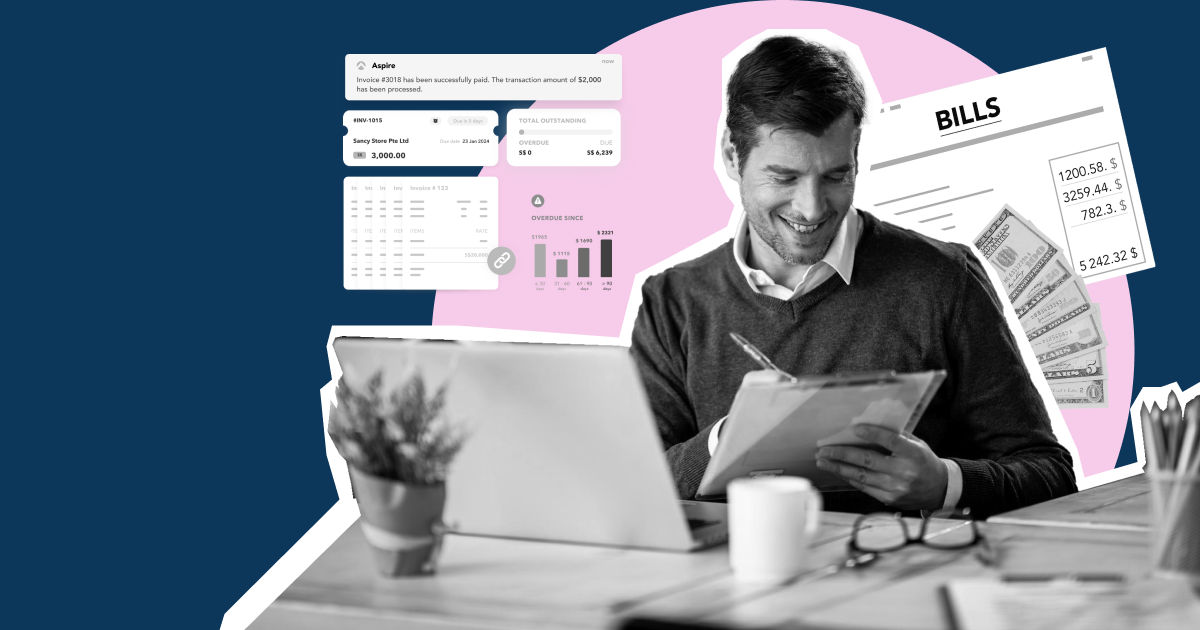
Aspire's invoice management can reduce this operational bookkeeping workload. The module automatically synchronizes invoices with Xero or QuickBooks, and payments received into an Aspire account are automatically matched to their corresponding invoices. This reduces manual entry and spreadsheet management, freeing your team to focus on other priorities.
However, invoice management is distinct from accounting treatment. Aspire handles the operational side, capturing and matching transactions, while your accounting system and accountant remain responsible for accounting policies, revenue recognition judgments, accrual adjustments, tax treatment, and financial reporting.
How it works:
- Invoice creation: Create invoices with embedded payment details, making it easier for customers to pay
- Payment options: Accept payments via bank transfer, card, Apple Pay, and Google Pay
- Automatic matching: Payments deposited to your Aspire account are automatically matched to invoices and marked as paid
- Cash flow visibility: Track paid and unpaid invoices in one place and forecast when payments will arrive
- Accounting software sync: All transactions sync to Xero or QuickBooks, keeping your accounting records aligned with actual account activity
This operational efficiency makes accrual accounting more manageable for growing businesses, while your accountant handles the accounting judgments that determine how transactions are ultimately recorded and reported.
The goal is to choose a method that gives you reliable financial information without creating an unsustainable operational burden and then sustain it consistently as you grow.
Frequently asked questions (FAQs)
I'm turning over AUD $750k. Do I have to switch to accrual accounting?
A: Not automatically. Turnover alone doesn't determine which accounting method is appropriate for income-tax purposes. The ATO considers your business circumstances, type, accounting practices, and whether you have material receivables or payables. The appropriate method depends on these factors, not a universal turnover threshold.
GST accounting is a separate decision. If your business is GST-registered and has aggregated turnover under AUD $10 million, you may choose cash GST accounting; most larger businesses use non-cash GST accounting.
A lender or investor may request accrual-basis financial statements as part of their underwriting requirements, but the decision depends on their lending criteria, not a universal rule.
To determine which method suits your business, consult your accountant. They can assess your specific circumstances and advise on the appropriate income-tax method, GST treatment, and any implications for external reporting or financing.
What is the main difference between accrual and cash accounting?
The core difference is timing. Cash accounting records money when it physically arrives or leaves your account. Accrual accounting records revenue when you earn it (invoice) and expenses when you incur them (receive bills), regardless of when payment is made. Accrual accounting also captures accounts receivable (money customers owe you) and accounts payable (money you owe suppliers), giving you a more complete financial picture.
What are the benefits of accrual accounting compared to cash?
A: Accrual accounting provides several practical advantages. It matches income and expenses to the periods they relate to, giving you stronger period-based analysis. It captures accounts receivable and accounts payable, so you see both money owed to you and money you owe. This fuller financial position helps you understand your obligations and cash timing.
Accrual accounting also supports formal financial reporting where required by lenders, investors, or other stakeholders. However, it requires more recordkeeping and reconciliation than cash accounting, so the benefits depend on whether these features are valuable for your specific business.
Can I do both? Use cash accounting for taxes and accrual for my records?
A: Different accounting methods can apply to different purposes in Australia, but the situation requires careful structuring. GST accounting and income-tax accounting are separate decisions. For example, you may use cash-basis GST accounting while your income tax method depends on your business circumstances. Similarly, internal management reporting can use a different basis from your tax calculations, provided you reconcile them properly for compliance.
However, don't create an informal hybrid approach without professional guidance. If you use different methods for different purposes, you need to ensure:
- Your internal records and tax returns reconcile consistently
- Your GST return (BAS) uses the correct GST method
- Your income tax return reflects the appropriate income tax method
- Any differences between management reporting and tax reporting are properly documented
Discuss your situation with your accountant to confirm which accounting methods are appropriate for tax purposes, how your books should be structured, and how to reconcile any differences between internal reporting and tax reporting.
My business is simple: I get paid immediately. Do I still need accrual?
A: Not necessarily. Cash accounting may be appropriate if your business is simple, has few or no outstanding invoices or bills, and customers pay immediately. Business.gov.au notes that cash accounting can suit smaller businesses with predominantly immediate cash transactions.
However, the decision depends on your specific circumstances. Consider whether:
- You have any material accounts receivable (unpaid invoices) or accounts payable (unpaid bills)
- External stakeholders (lenders, investors, partners) require accrual-basis financial statements
- Your income tax or GST treatment favors one method over another
- Your business complexity is likely to increase over time
If your situation is genuinely simple and your tax/reporting requirements support cash accounting, it can remain workable. Discuss your specific circumstances with your accountant to confirm which method is appropriate and compliant.
How do I know if my business is ready for accrual accounting?
A: Consider switching to accrual accounting when one or more of these signals apply to your business:
- Material receivables or payables: You have outstanding invoices or bills that represent a significant portion of your revenue or expenses
- Contracts or subscriptions: You have longer-term customer relationships where revenue is earned over multiple periods
- Inventory: You hold stock that needs to be tracked and matched to sales
- More complex revenue or expenses: Your business has accruals, prepayments, or timing mismatches between when you incur costs and when you earn revenue
- Formal financial-reporting needs: Lenders, investors, partners, or other stakeholders are asking for accrual-basis financial statements
- External governance requirements: You're required to prepare financial statements under Australian Accounting Standards
If none of these apply and your business genuinely has simple, immediate cash transactions with few outstanding invoices or bills, cash accounting may still be appropriate. However, it's worth discussing with your accountant, particularly if you anticipate any of these signals emerging as your business grows.
Will switching to accrual accounting change my tax bill?
A: Not necessarily, but it can change the timing. Switching accounting methods can alter when assessable income and deductions are recognized across tax periods, depending on the tax treatment applicable to your business. Accounting profit and taxable income are not automatically the same; tax law determines what is assessable income and what is deductible, and the timing of recognition can differ based on the appropriate accounting method for tax purposes.
For example, recognizing revenue when you invoice (accrual) rather than when you receive payment (cash) may accelerate your assessable income into an earlier year. Similarly, recording expenses when you receive bills (accrual) may accelerate deductions.
Don't assume the switch is tax-neutral. The actual tax impact depends on your business circumstances, the income-tax method the ATO considers appropriate, and how your income and deductions are distributed across years. Discuss the switchover with your accountant before you make the change so you understand any tax implications.
What happens if I send an invoice but never get paid? Do I still record it as revenue?
A: Yes, on an accrual basis, you record revenue when you invoice, regardless of whether payment is received later.
If the client never pays and the amount becomes uncollectible, your accounting treatment depends on the applicable accounting standards. You may need to record an impairment or write-off of the accounts receivable to reflect its uncollectible status in your financial records.
However, the accounting write-off and the tax deduction for bad debts are separate. The ATO has its own requirements for deducting bad debts, including tests around when a debt is genuinely uncollectible and how it must be documented. A bad-debt deduction under tax law doesn't automatically follow from an accounting write-off, and vice versa.
This is an area where accounting treatment and tax treatment can diverge. Discuss uncollectible receivables with your accountant to ensure you're handling both the accounting recognition and any tax deduction correctly.
Can Aspire help me manage accrual accounting?
A: Aspire can automate parts of the invoice, payment, and reconciliation workflow. Aspire's invoice-management module syncs with Xero and QuickBooks, automatically matching payments received into your Aspire account to invoices and marking them paid. This reduces manual data entry and helps keep your operational records aligned with your accounting software.
However, Aspire automates the operational data flow, capturing and matching transactions, rather than determining accounting treatment itself. Your accountant remains responsible for proper revenue recognition, accrual adjustments, and ensuring your books reflect the correct accounting treatment under applicable standards.
Automation of invoice and payment matching can make accrual accounting more manageable operationally, but it's complementary to, not a substitute for, solid accounting practices and professional review.















.jpeg)























.jpeg)


.jpeg)
.jpeg)